



























How to connect a headset to a landline phone
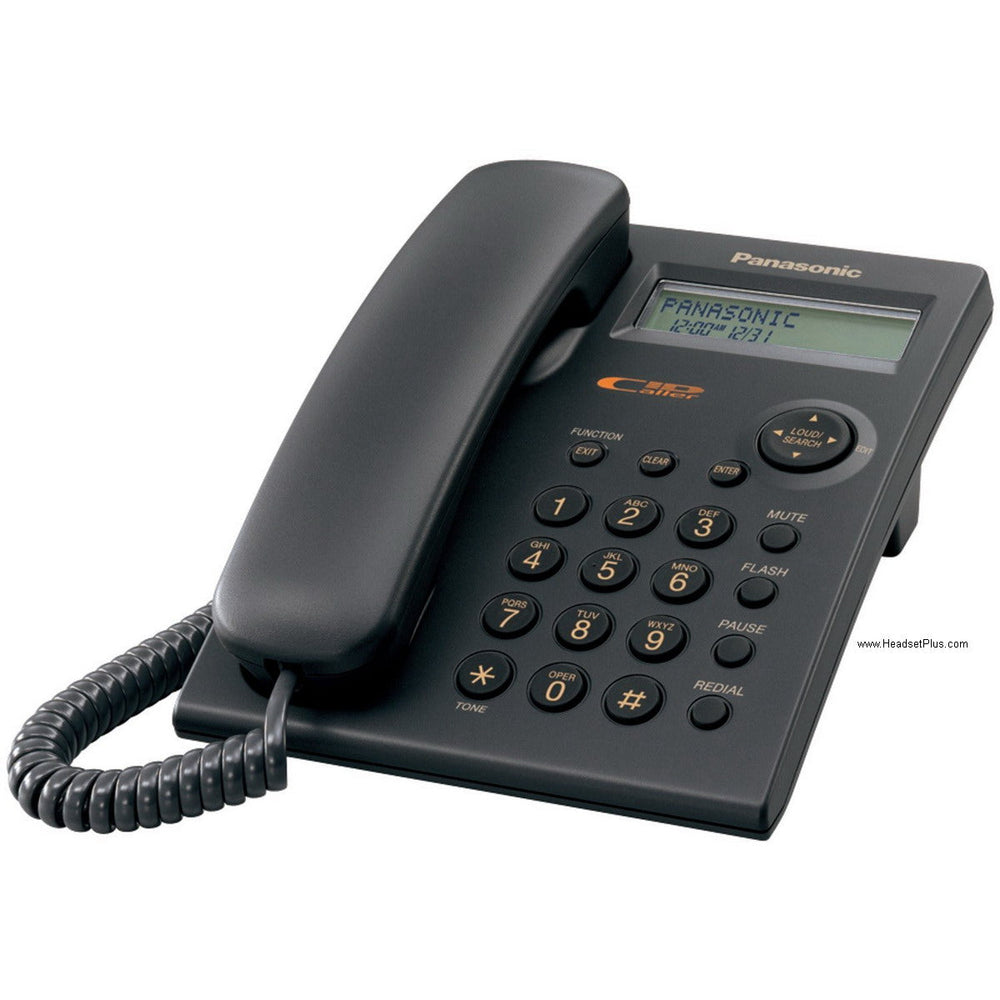
How to connect a headset to a landline phone depends entirely on which socket the phone is willing to give you. A business desk phone with a dedicated headset port and a headset key takes a corded headset directly, and nothing else is required. A phone without that port still works, but the headset has to borrow the handset port, which means an inline amplifier goes into the socket the coiled handset cord came out of, and the handset then plugs into the amplifier. A cordless home handset with a 2.5 mm jack takes a 2.5 mm headset instead. A wireless headset plugs into none of these directly: its base does, and the base needs both a matching cable and some way of taking the phone off hook. Read the sockets before you shop, because that one look decides every part you buy afterwards.
What decides this before you spend anything
- A handset cord plug has four positions and four contacts, while the RJ11 on your wall is a six-position connector and is not a headset port.
- A headset key on the phone is the quickest test for whether you can skip the amplifier entirely.
- Poly Quick Disconnect exists as a standard 4-pin and a digital 6-pin version, and the amplifier has to match the one your headset uses.
- No dial tone from a wireless headset is usually the compatibility switch on the base rather than a fault in the headset.
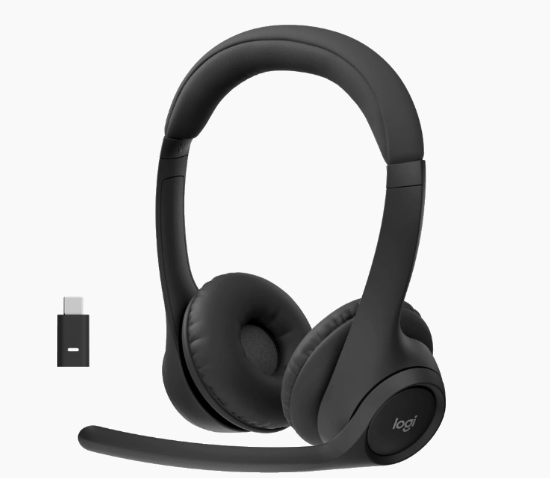
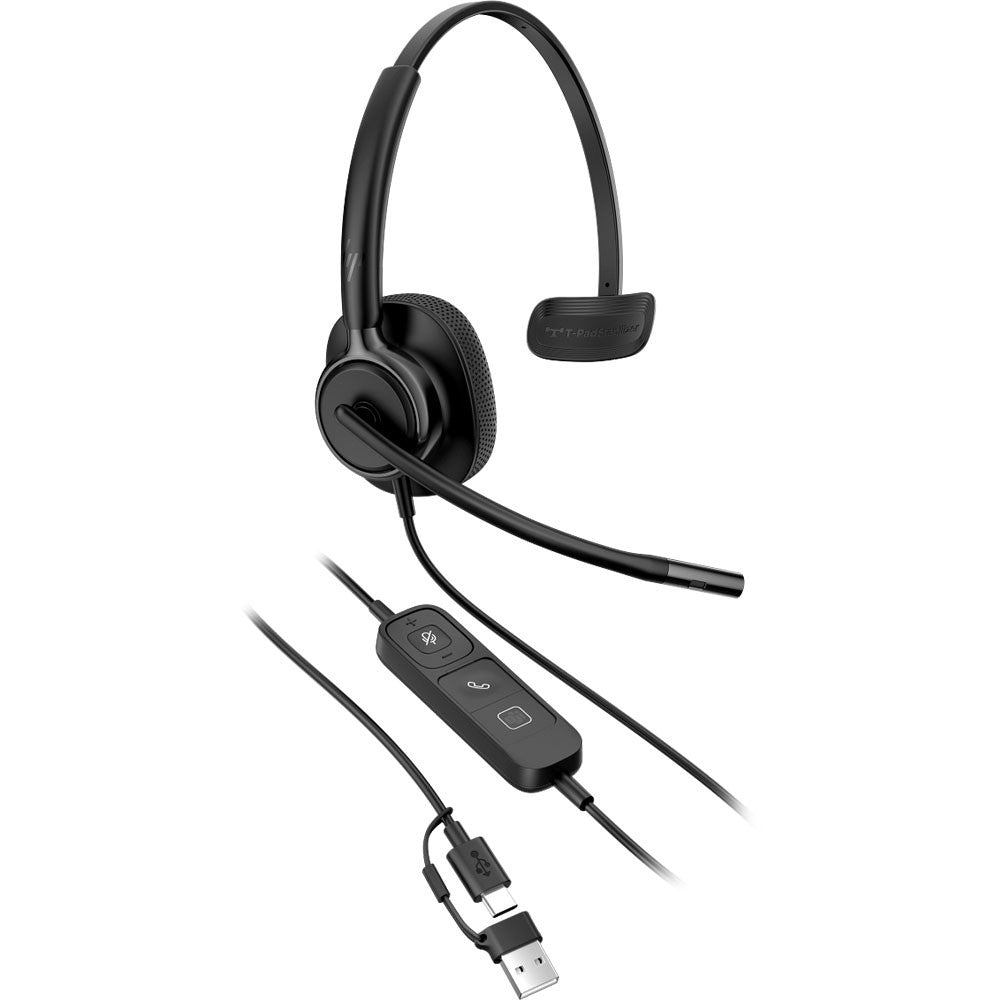
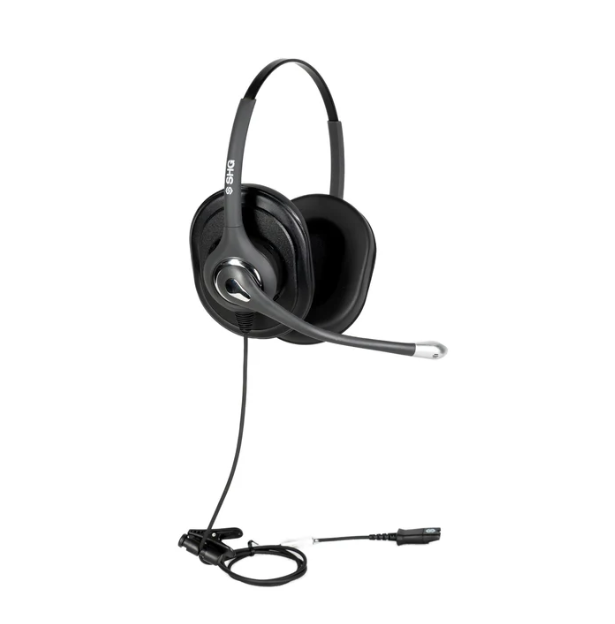
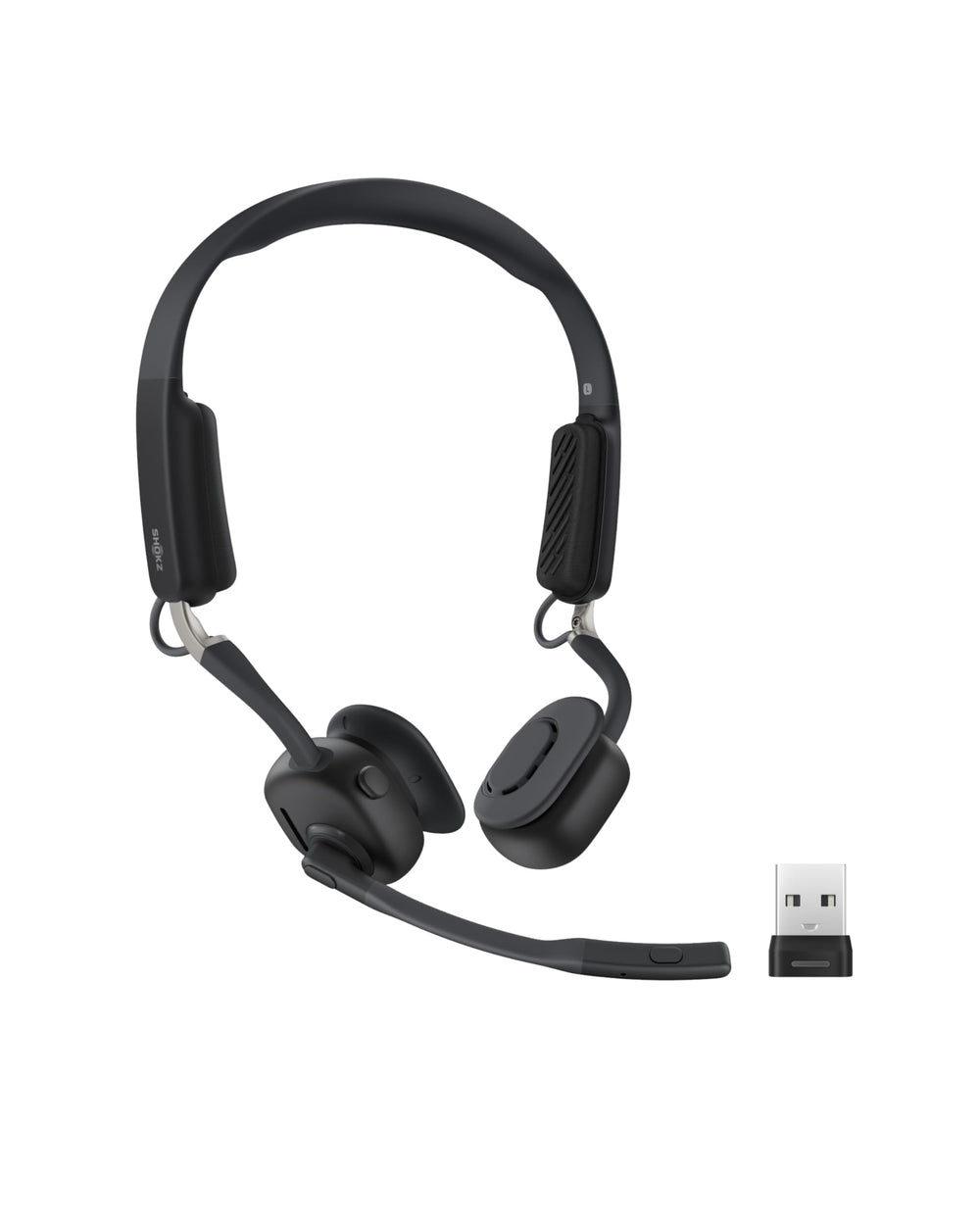
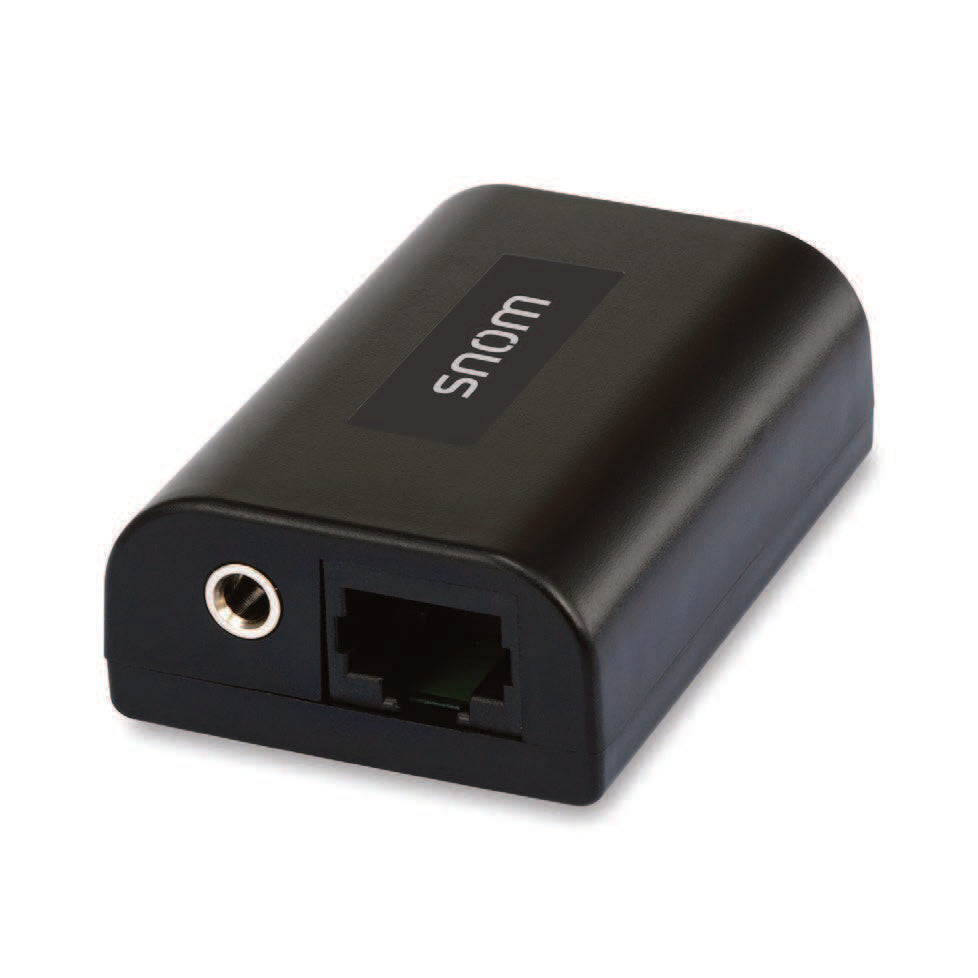
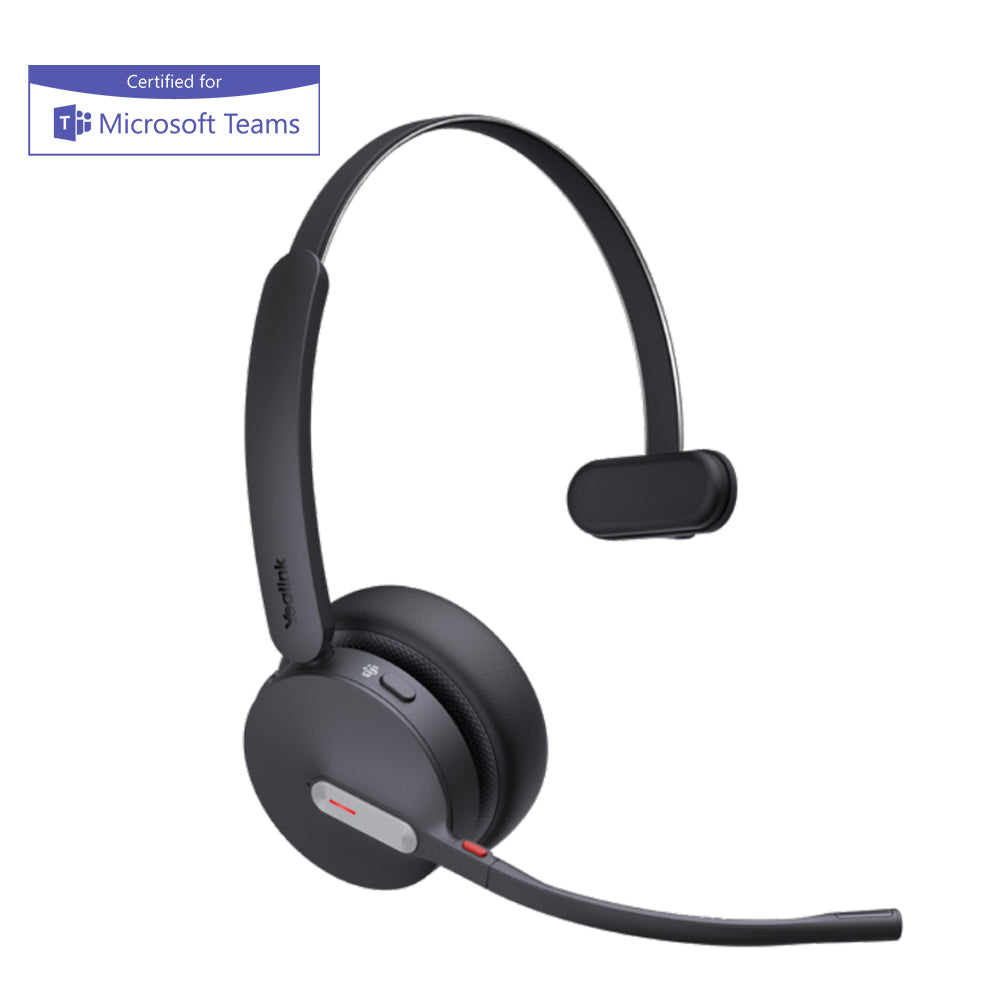
Once you know which socket your phone has, you can browse the headsets that work with landline phones.
Almost every wrong headset purchase for a desk phone traces back to the same thirty seconds: someone glanced at the back of the phone, saw two sockets that looked identical, and guessed. Turn the phone over and read them properly first, because the sockets are the only part of this that is not a matter of preference.
Three sockets on the phone, and one of them is not for you
A landline phone gives you at most three places a headset could go, and the wall line jack is not one of them. That jack is an RJ11, the six-position connector used for wired telephones, so it is physically wider than the plug on the end of a handset cord, which has four positions and four contacts.
The other two sockets are the handset port, where the coiled cord lives, and on business phones a separate headset port, usually marked with a small headset icon. Both take that same four-contact plug, which is exactly why this goes wrong so often: a corded headset physically clicks into either one, and into the wrong one it does nothing at all.
RJ9: A four-position, four-contact modular plug: the connector on a telephone handset cord, also sold under the names RJ10 and RJ22, and the plug most corded office headsets end in.
If you are ordering parts over the phone or reading a spec sheet, all three names mean the same physical connector, so a cable listed as RJ22 and one listed as RJ9 are not two different things you need to choose between.
A headset key on the phone means you can plug in directly
If the phone has a button with a headset icon on it, you can plug a corded headset straight into the headset port and answer with that button, and there is no amplifier in the shopping list. This is the setup most modern VoIP desk phones ship with, and it is the one that takes about four seconds to install.
The one thing worth checking before you order is which Quick Disconnect the headset uses. Poly builds a standard 4-pin QD and a digital 6-pin QD, and its amplifiers split along the same line: the MDA524 QD serves standard 4-pin headsets while the MDA526 QD serves the digital 6-pin ones. The two plugs look close enough that they get ordered interchangeably, and they are not interchangeable. Phones in this group are the straightforward case, and most current headsets for desk phones are built assuming you have one.
No headset port means the amplifier takes the handset's place
When there is no headset port, the headset hardware borrows the handset port instead, which is the same fallback Poly documents for its own wireless bases: connect to the headset port if the phone has one, otherwise connect to the handset port. For a corded setup that means an inline amplifier goes into the socket you just freed, the handset plugs into the amplifier so you can still lift it, and the headset plugs into the amplifier as well.
Volume is the other reason people end up shopping for an amplifier, usually after a complaint that the caller is too quiet. Before treating that as a headset problem, it helps to know that the phone's own volume control has a ceiling written into federal rules.
That requirement is measured to ANSI/TIA-4965-2012 and applies to telephones manufactured in or imported into the United States on or after February 28, 2020. The practical reading is that turning the phone up is a bounded fix, so if someone wearing hearing aids still cannot hear comfortably at maximum, the phone is not broken and a different headset will not move the number either.
Match the socket to the hardware
Here is the whole decision in one place, written the way you would use it standing over the phone with it turned upside down.
| What is on the phone | What plugs into it | What else you need |
|---|---|---|
| Headset port plus a headset key | Corded headset, four-contact plug | Nothing |
| Handset port only | Inline amplifier | The handset stays connected, plugged into the amplifier |
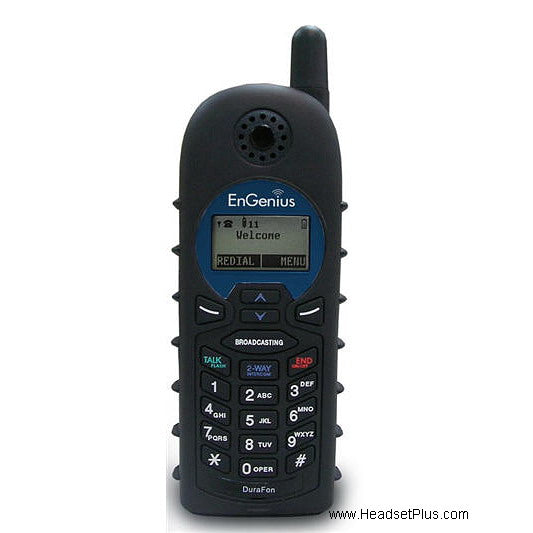
| 2.5 mm jack on a cordless handset | 2.5 mm corded headset | A shorter straight cord if the coiled one gets in the way |
| Either port, wireless headset | The headset's charging base | Telephone interface cable, plus an EHS cable or a handset lifter for remote answer |
| RJ11 wall line jack | Nothing | This is the phone line, not a headset connection |
The 2.5 mm row is the one that catches home users out, because on a cordless phone that jack sits on the handset you carry around rather than on the base station, and a headset built for a desk phone will not reach it.
With a wireless headset, the base does the connecting
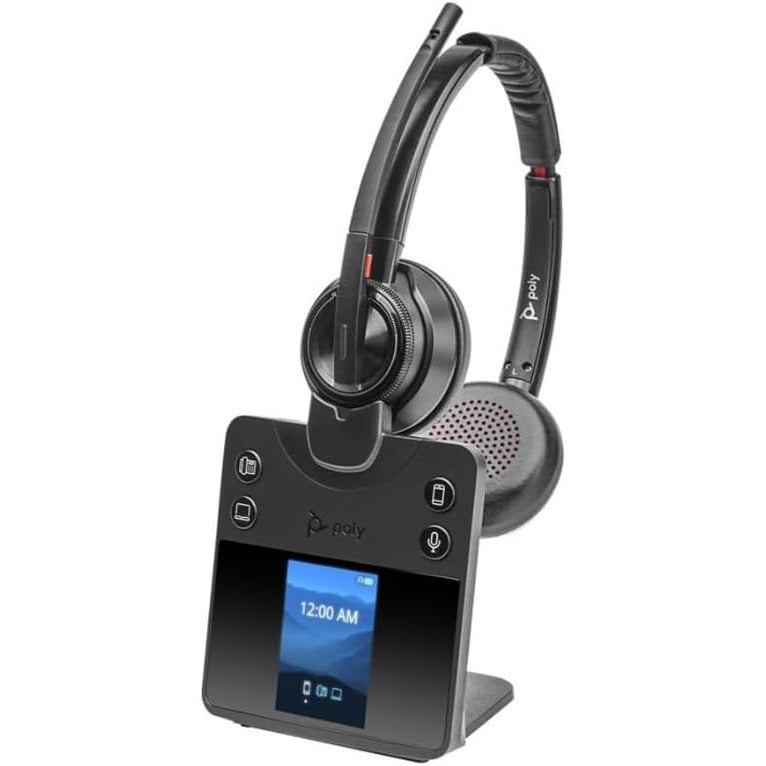
A wireless headset never touches the phone, since its charging base makes every connection and every setup problem you are going to have lives on that base rather than on your head. Two things about it are worth knowing before the box arrives.
The first is the radio. DECT 6.0 in North America runs in the 1920 to 1930 MHz band, which the FCC set aside for unlicensed personal communications devices, so it sits below the 2.4 GHz that Wi-Fi and Bluetooth are already fighting over in your office. That separation is most of why a DECT headset holds a call across a floor when a Bluetooth one starts breaking up.
The second is the compatibility switch, and it is the single most common support call in this category. Poly's own Savi quick start guide points at it directly: if you do not hear a dial tone, open the side panel of the base and adjust the middle switch, which runs from A to G. Setting A is the default and works for the majority of desk phones, D is for Cisco phones, and Cisco phones connected with an EHS cable go back to A. A silent headset out of the box is nearly always this, not a dead unit.
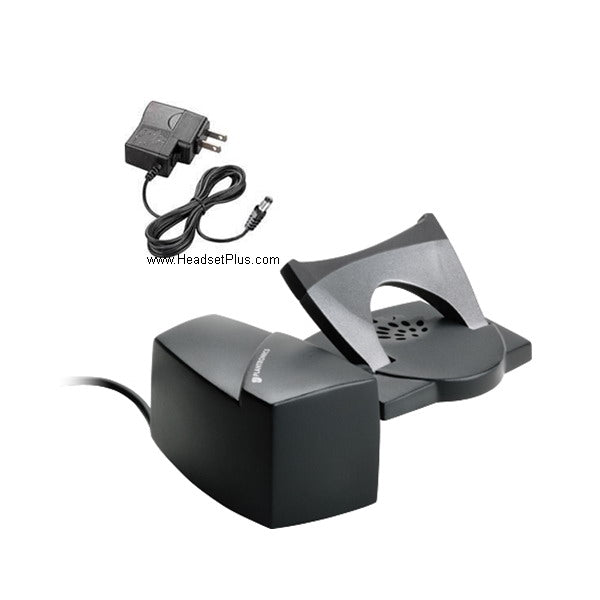
Answering from across the room needs one more part on top of that. An EHS cable does it electronically through the phone's own call control, while a handset lifter does it mechanically by raising the handset off the cradle when you press the button on your headset. Which one you can use is decided by the phone, and the settings differ enough between manufacturers that it is worth reading a walkthrough written for yours, such as our nec phone headset setup guide or the one covering mitel headset setup.
How to choose a telephone headset once the connection is settled
With the connection decided, three things are left: how many ears it covers, what the microphone has to reject, and whether the same headset also has to work on a computer. None of them can rescue a wrong connector, which is why they come last.
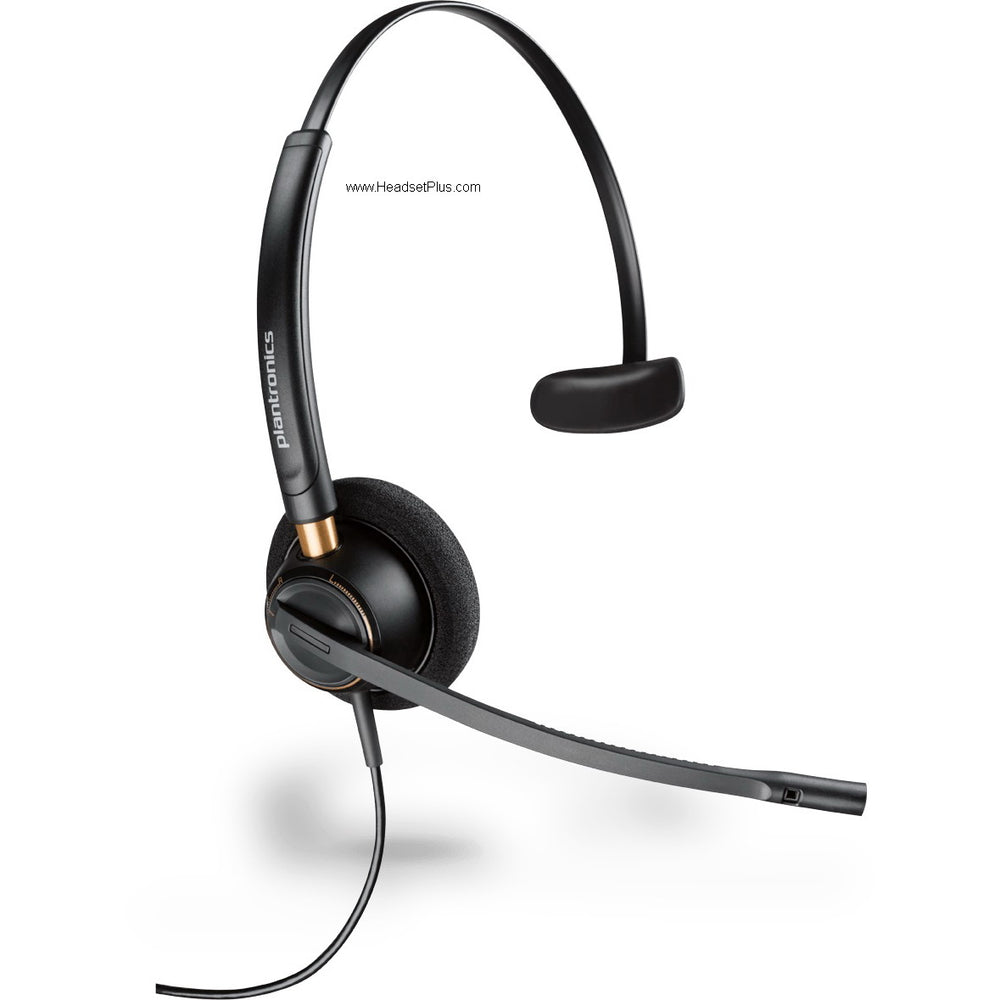
One ear keeps you in the room, which matters if colleagues talk to you between calls or you need to hear the floor. Two ears is the right call in a room loud enough that you find yourself pressing the earpiece harder against your head. For the microphone, a noise-canceling boom sits close to your mouth and is aimed at the person on the other end, not at you, so the improvement it makes is one you never hear yourself.
If the same person is also on Teams or Zoom calls, choose the amplifier rather than the headset for that: a QD audio processor with USB gives you one headset for desk phone and PC calls, with the electronic hook switch integration bought separately. Otherwise a plain corded wired phone headset is the cheaper and more reliable buy, because there is no battery in it to die halfway through a shift.
How do I connect a Plantronics headset to a phone?
A Plantronics or Poly headset ends in a Quick Disconnect plug rather than a phone connector, so it always meets the phone through a second part. On a desk phone with a headset port, that part is a QD cable or amplifier plugged into the headset port. On a phone without one, it is an inline audio processor sitting between the phone and its handset. Check which QD the headset uses first, because Poly ships a standard 4-pin QD and a digital 6-pin QD, and the amplifier has to match: the MDA524 QD takes standard 4-pin headsets and the MDA526 QD takes the digital 6-pin ones.
Why is there no dial tone in my wireless headset?
A wireless headset with no dial tone is usually set to the wrong configuration letter on its base rather than being faulty. Poly's Savi quick start guide says to open the side panel of the base and adjust the middle switch, which runs from A to G. A is the default and works for most desk phones, D is the setting for Cisco phones, and Cisco phones connected using an EHS cable go back to A.
Can I plug a headset into the telephone jack in the wall?
No. The wall jack is an RJ11, the six-position connector used for wired telephone lines, and a headset plug has only four positions and four contacts, so it does not belong there. A headset connects to the phone itself, either at the dedicated headset port or at the handset port by way of an amplifier or a wireless base.
Comments (0)