























What Mitel headset setup actually changes
Mitel headset setup comes down to two things: the audio mode in the phone's settings, and whether the plastic adapter is still sitting in the headset jack. On a 6800i series SIP phone, the Set Audio menu offers four audio modes, and only Headset, Speaker/Headset and Headset/Speaker route call audio to a headset. Speaker keeps calls on the handset and the handsfree speakerphone, which is why a perfectly good headset can seem dead on arrival. On a 5320e, 5330e or 5340e running MiVoice Office 250 there is no such menu: you dial feature code 317 and the display reads HEADSET MODE ON. For the jack itself, Mitel fits a plastic adapter inside it. An RJ9 4-pin headset plugs straight in. A DHSG or EHS headset with an RJ45 6-pin or 8-pin connector needs that adapter removed first.
What decides whether the headset works
- Audio mode Speaker keeps calls on the handset and speakerphone, so a headset plugged in under that setting produces nothing at all.
- Mitel's 6867i guide tells you to remove the plastic headset jack adapter for a DHSG or EHS headset with an RJ45 connector.
- MiVoice Office 250 phones use feature code 317 instead of a settings menu, and that mode disables the handset and speakerphone while it is on.
- Headset microphone volume is a separate setting from call volume, with Low, Medium and High to choose from.
Three families of Mitel desk phone turn up on office desks, and each one enables a headset a different way. The model number printed on the phone decides which of the procedures below you need, so start there rather than with the headset.
Work out which Mitel family the phone belongs to
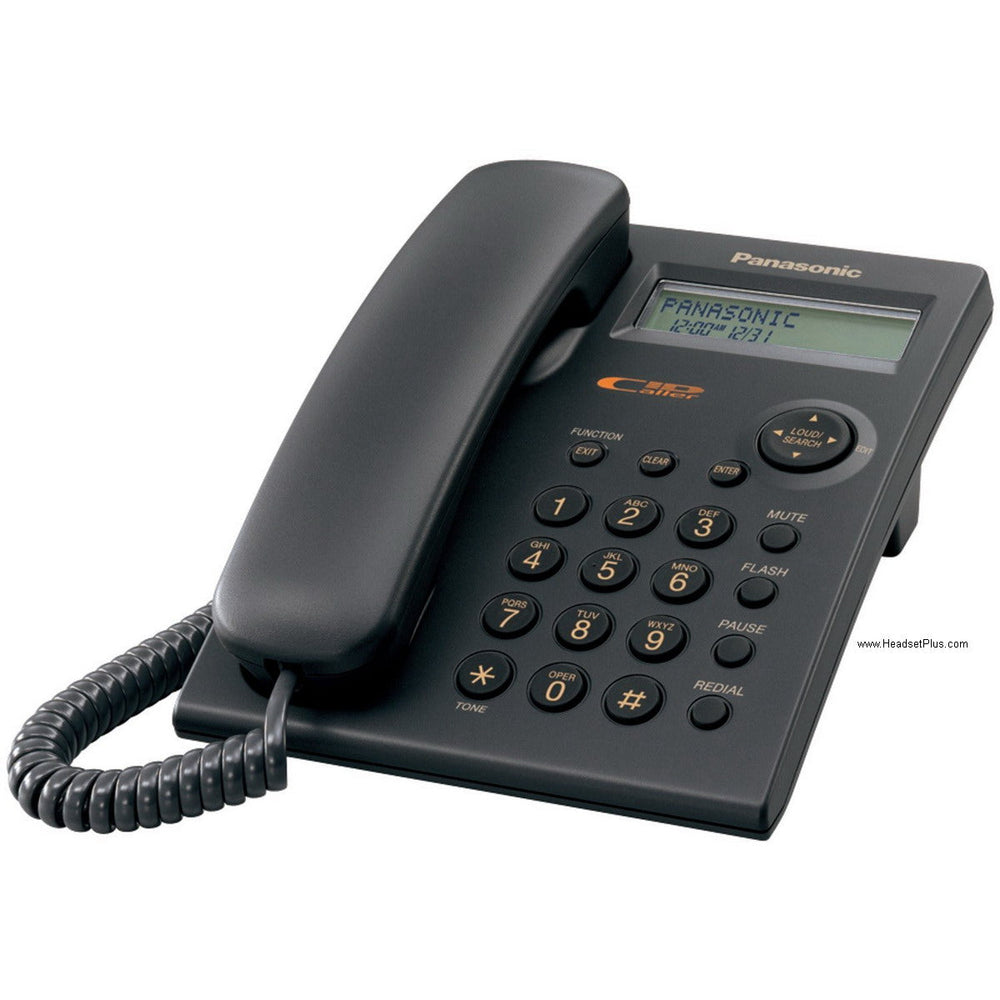
The menu that enables a headset is not in the same place on a 6800i SIP phone, a 6900 series phone and a 5300 series phone, so the model number settles which procedure applies. A 6863i or 6867i has an Options key and a Set Audio menu underneath Preferences. A 6920, 6930 or 6940 accepts analog and DHSG/EHS headsets through a modular RJ22/RJ45 port and USB headsets through the USB port, which Mitel's 6930 guide describes as two separate connections rather than one. A 5320e, 5330e or 5340e running MiVoice Office 250 has no headset menu at all, and hunting through its settings for one is how people lose twenty minutes.
DHSG/EHS headset: A DHSG or EHS headset: one that connects to a Mitel phone with an RJ45 6-pin or 8-pin plug rather than the 4-pin RJ9 plug an ordinary corded headset uses.
Switch the audio mode on a 6800i series phone
On a 6800i series phone the headset stays silent until Audio Mode is set to a value that includes it, and the whole job is five moves through the Options list.
Plug the headset in first
Insert the headset cord into the headset jack on the back of the phone until it clicks into place. Mitel's 6867i guide is blunt about that port: it is for headset use only, and plugging any other device into it may damage the phone and voids the warranty.Open Set Audio
Press the Options key to enter the Options List, select Preferences, then select Set Audio. On the 6863i this is where both the audio mode and the headset microphone volume live.Select Audio Mode
Choose Audio Mode from the Set Audio menu. Four values are offered: Speaker, Headset, Speaker/Headset and Headset/Speaker.Pick the value that matches how you take calls
Headset lets you make or receive all calls on the handset or the headset, switching between them with the key on the phone. Headset/Speaker sends an incoming call to the headset first, and pressing the key again swaps back and forth between headset and handsfree speakerphone. Speaker/Headset does the same in reverse, speakerphone first. Speaker keeps calls on the handset and speakerphone only.Save it, then listen for dial tone
Save the selection before you back out of the menu; on the 6863i that is the Set key. Press the headset key to obtain a dial tone or to answer an incoming call.
If dial tone arrives in the headset, the port and the cord are both fine and nothing else needs proving. The same key switches between handsfree and headset once a call is running, so a caller who wants the room to hear does not have to hang up and redial.
The plastic adapter in the headset jack
The headset jack on a Mitel phone ships with a small plastic adapter fitted inside it, and whether you leave it there depends entirely on the plug at the end of your headset cord. A corded headset ending in an RJ9 or RJ22 4-pin connector goes straight in and clicks into place with the adapter untouched.
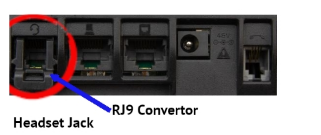
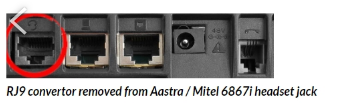
A DHSG or EHS headset ending in an RJ45 6-pin or 8-pin connector will not seat until that adapter comes out, which leaves a visibly wider opening.
What people get told
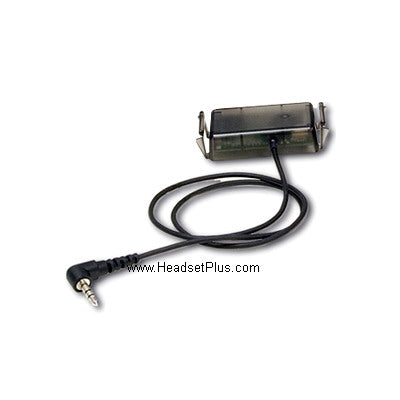
The plastic RJ9 converter is a separate part, and a phone that has lost it can no longer take a corded headset.What Mitel's guide says
The adapter is meant to come out. Mitel's 6867i guide has you remove it on purpose so a DHSG or EHS headset with an RJ45 6-pin or 8-pin connector will seat properly.Look into the jack before you order, because the plug on the cord has to match what is actually in front of it. That is a ten second check and it decides which corded phone headset you should be buying.
5300 series phones use a feature code instead of a menu
On a 5320e, 5330e or 5340e running MiVoice Office 250, headset mode is a dialed feature code rather than a settings entry. Dial 317 and HEADSET MODE ON appears on the display; dial 317 again and it reads HEADSET MODE OFF. The part that catches people is what that mode does to everything else: while headset mode is on you cannot use the handset or the speakerphone, so it has to be turned back off before anyone can pick up the handset at that desk. Disconnecting the headset enables the handset automatically, which is the quick way out for a colleague who is stuck. Mitel's guide adds two conditions worth knowing before you buy: the headset must be hearing aid compatible, and if it has a power-saving mode, the system administrator should enable the Headset Connect Tone feature so the first seconds of an incoming call are not lost.
Set the headset microphone volume separately
Headset microphone volume is its own setting and is not touched by the volume keys you use during a call. On the 6863i it sits at Options, then Preferences, then Set Audio, then Headset Mic Volume, offering Low, Medium and High, with Medium as the default. That is the setting to move when callers say you sound distant or too loud, before anyone starts swapping headsets to fix it. Getting the headset answering from a dedicated key is a different job again: if the phone has no headset key, assigning a mitel headset button to a programmable key is what puts one there.
The controls on the headset itself do less than you expect
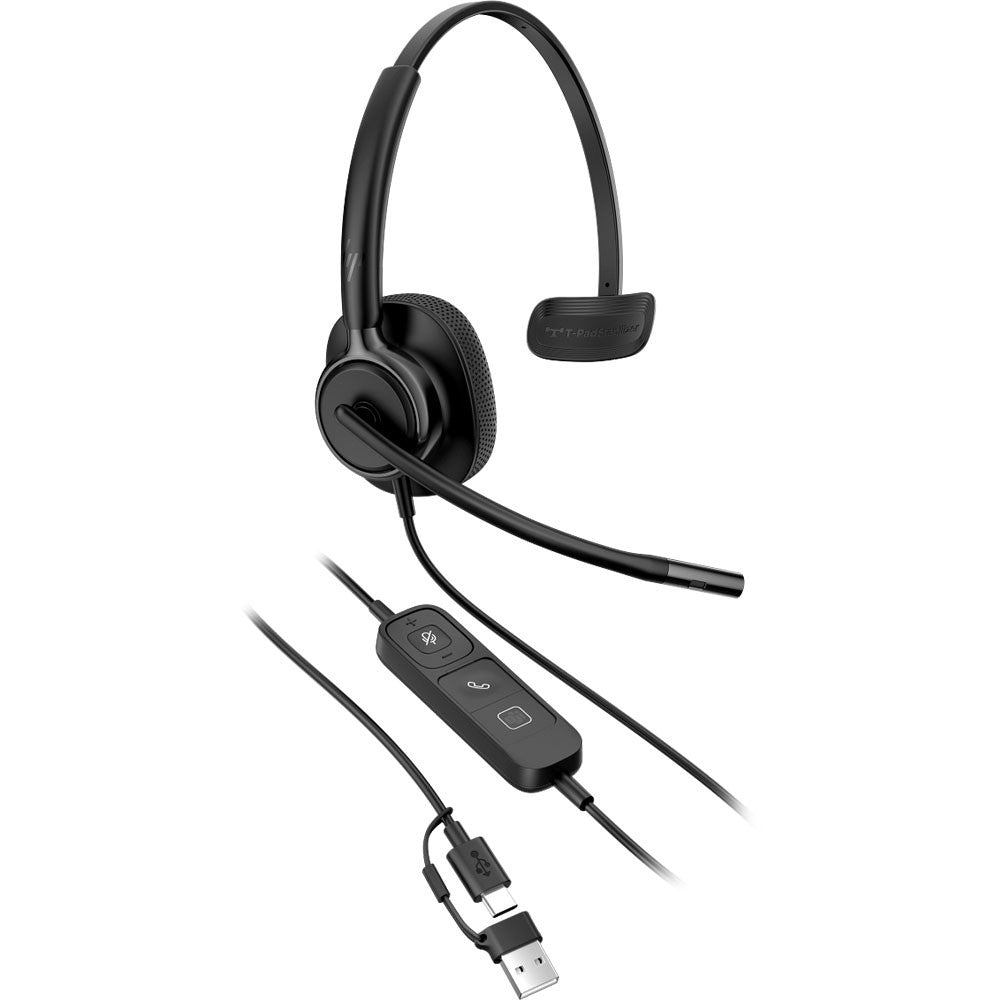
Answering, ending and muting calls are what Mitel's 6930 guide supports from a headset's own controls, and it states that headset features beyond those are not supported. Anything past those three belongs to the keys on the phone, so a headset chosen for its inline control panel will not buy you much on a Mitel desk phone. That is worth knowing before paying for controls you will not reach.
Why is there no dial tone in my headset on a Mitel 6867i?
On a Mitel 6800i series phone the usual cause is the audio mode. With Audio Mode set to Speaker, calls are made and received on the handset and the handsfree speakerphone only, so a working headset produces nothing. Set Audio Mode to Headset, Headset/Speaker or Speaker/Headset under Options, Preferences, Set Audio, save it, then press the headset key.
Do I need to remove the plastic adapter in the Mitel headset jack?
Only for a DHSG or EHS headset. Mitel's 6867i guide says a headset with an RJ9 or RJ22 4-pin connector goes into the jack as it is, and that a DHSG or EHS headset with an RJ45 6-pin or 8-pin connector needs the plastic headset jack adapter removed before the cord will click into place.
Why can't I use the handset after turning on headset mode on a Mitel 5330e?
Headset mode on the Mitel 5320e, 5330e and 5340e disables the handset and the speakerphone by design. Dial 317 again to turn it off and HEADSET MODE OFF appears on the display. Disconnecting the headset also enables the handset automatically.

Comments (0)