























Identifying a qd cord set from its markings
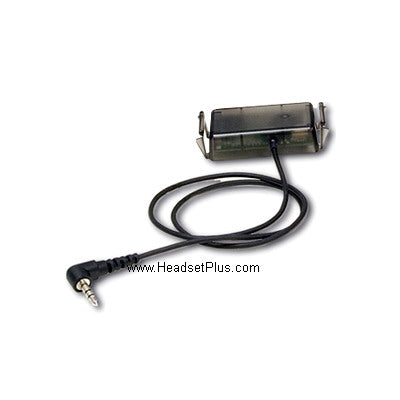
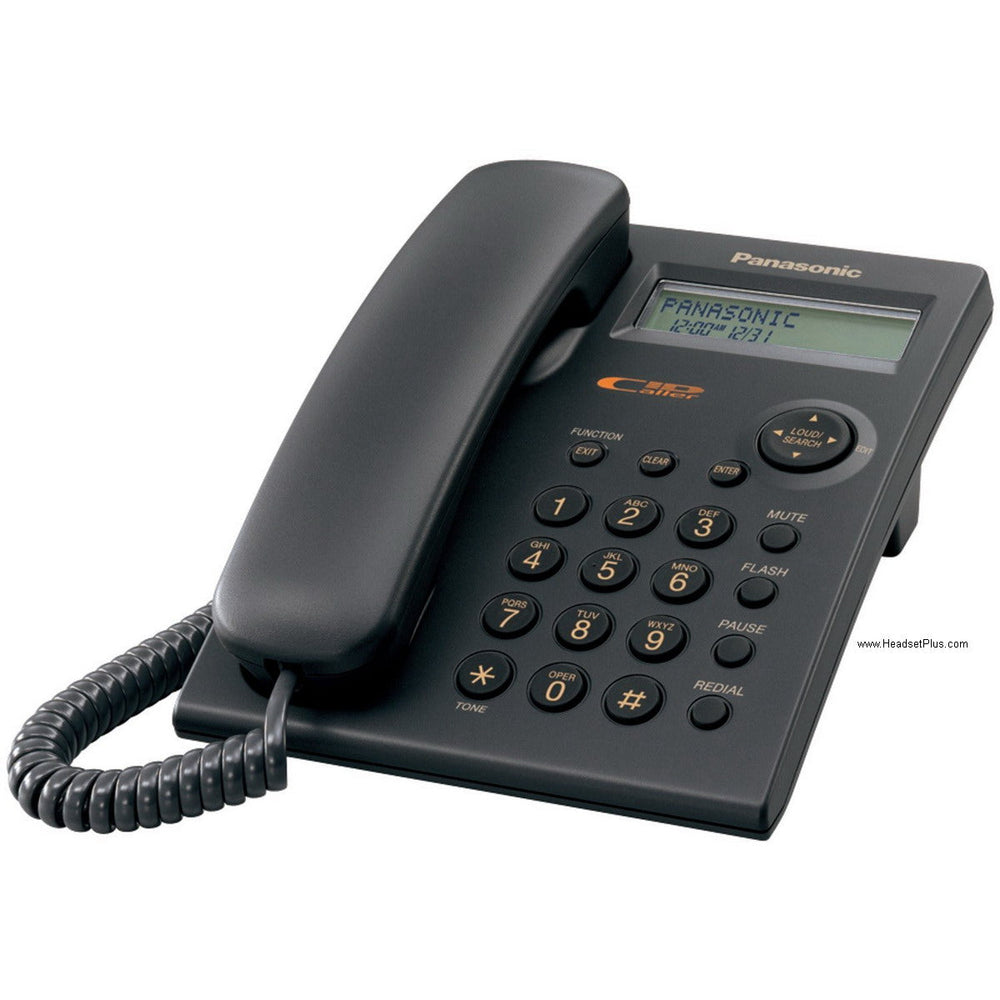
A qd cord set is the bottom cable that joins a quick disconnect headset to a phone, and you identify the one in your hand from three things: the code embossed on the QD plug, the size of that plug, and the color of the modular plug on the phone end. An A10 marking on a large plug with a smoke RJ9 is the A10 cable, used on Nortel, NEC and ShoreTel. No marking on a small plug with a clear RJ9 is the Reverse Polaris U10P-S, used on Yealink, Snom and Grandstream. The same shape with a smoke RJ9 is the standard Polaris U10P for Polycom. HIS and HIC are embossed by name and both serve Avaya, different generations of it. Brands never cross: a Plantronics headset takes a Plantronics cable, and a Jabra headset takes a Jabra cord.
The three things that identify a cable
- The code on the QD plug: A10, HIC, HIS, or nothing at all.
- The size of the QD plug, large or small.
- The color of the modular plug: smoke RJ9, clear RJ9, or RJ45.
- Brand never crosses. Plantronics headsets take Plantronics cables.
Two versions of the same problem arrive constantly: a drawer of headset cables nobody can tell apart, or a pile of headsets that stopped working the day the office changed phone systems. Both have the same cheap fix, and it is almost never buying new headsets.
Why the cable is the part that changes
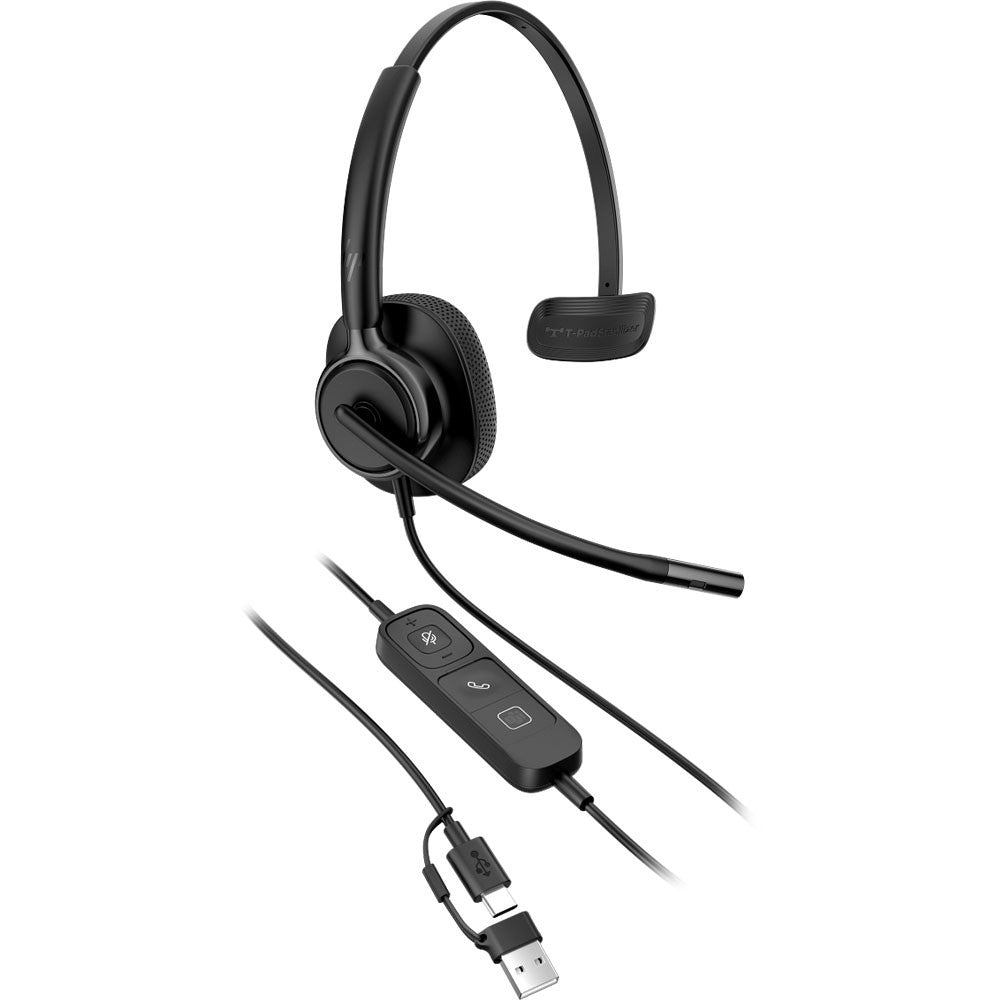
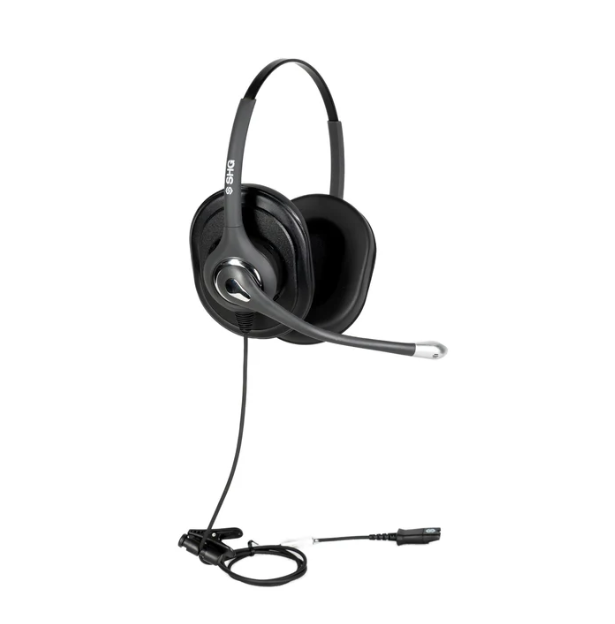
A quick disconnect headset is built in two pieces so the two can be mixed and matched. The headset top is the expensive half, shaped to someone's head and tuned to their voice. The bottom cable is a length of wire with a plug on each end, and it is the only part that has to know anything about the phone on the desk.
That split is why a phone migration does not have to mean a headset order. The tops still work. Only the cables underneath them are now wrong, and a cable costs a fraction of the headset it serves.
What gets assumed
We changed phone systems, so the old headsets are useless and we need all new ones.What is actually true
Almost never true for QD headsets. The headset top still works; only the bottom cable has to match the new phone. The one rule is that brands do not cross-mix, so a Plantronics headset needs a Plantronics cable and a Jabra headset needs a Jabra cord, however similar the two plugs look.Where the markings actually are
The code sits on the flat face of the QD plug, embossed into the plastic rather than printed, which is why it survives years in a drawer but disappears under a thumb. Hold the plug at an angle to a light and the raised letters show up; straight on under office lighting they often do not. A10, HIC and HIS are the three you will find. A blank face is itself a reading, because several cables in the range carry no code at all.
Plug size is the next thing to settle, and it is easier with two cables side by side than with one alone. The large plug and the small plug differ enough to see once compared, and the difference splits the range roughly in half. The modular end is the fastest of the three to read: hold it against white paper and smoke and clear separate immediately, where against a desk they can look the same.
The identification table
Plantronics does not label every cable clearly, so identification runs on the three features above rather than on a printed name. Find the row that matches what you are holding, and the last column tells you which phones it belongs to.
| Cable | QD plug | Modular plug | Phones it serves |
|---|---|---|---|
| A10-16 standard | A10 embossed, large | Smoke RJ9 | Nortel, NEC, ShoreTel |
| A10-12 high output | A10 embossed, large, identical to the A10-16 | Smoke RJ9 | Nortel and Norstar where volume runs low |
| Cisco M12 and M22 | No marks, small | Clear RJ9 | Cisco 7900, 8900, 9900 |
| HIS | HIS embossed | RJ9 | Avaya 1600, 9600, J100 |
| HIC | HIC embossed | RJ9 | Other Avaya models with a headset port |
| U10P Polaris | No marks, small | Smoke RJ9 | Polycom IP and VVX |
| U10P-S Reverse Polaris | No marks, small | Clear RJ9 | Yealink, Snom, Grandstream |
| U10P-S19 | No marks, small | Clear RJ45 | Aastra, Siemens |
| 2.5mm SPA cable | No marks | 2.5mm jack | Cisco SPA, Linksys SPA |
The two rows people confuse are the Polaris and the Reverse Polaris. They are the same size, both unmarked, and the only visible difference is the color of the modular plug: smoke for the Polaris, clear for the Reverse. Ordering by name alone is how the wrong one arrives, so check the color on the cable you are replacing.
A few older cables end in a 2.5mm plug rather than a modular one, and the Avaya HIP-1 has been discontinued. Everything else in that table works with any Plantronics H-series or EncorePro headset top, which is the point of the system.
When the cable has no markings at all
An unmarked plug narrows the field rather than ending the search, because only four rows in that table are unmarked and they separate cleanly on the other two features. A small plug with a smoke RJ9 is the Polaris. The same plug with a clear RJ9 is the Reverse Polaris. A clear RJ45 instead of an RJ9 is the U10P-S19, and a 2.5mm jack on the end rules out the RJ9 family altogether.
That leaves the Cisco M12 and M22 cable, which is also small and clear, sharing its two visible features with the Reverse Polaris. Where those two are the remaining candidates, the phone settles it faster than the cable does: a Cisco 7900 or 8900 takes the Cisco cable, and a Yealink, Snom or Grandstream takes the Reverse Polaris. If neither phone is on the desk any more, the cable is not worth identifying. Order by the phone you are moving to.
Labeling them so this does not happen again
The drawer problem is worth ten minutes once. Wrap a flag of masking tape around each cable an inch below the QD plug and write the phone family on it rather than the part number, because the person who opens the drawer in two years will know what phones the office runs and will not know what a U10P-S is.
Do the same to the spares as they arrive, before they go in the drawer, and keep one cable of each type on the shelf rather than a stack of the type you happened to order last. A mixed floor needs a mixed spares box, and the cost of the whole box is less than one headset.
A10-12 against A10-16, the low-volume fix
If a Nortel or Norstar phone gives you headset volume too low to work with, the cable is the likely fix rather than the headset. The A10-12 and the A10-16 carry the same A10 marking and look identical in the hand, but they are different parts.
That extra output is the whole reason the part exists. The A10-12 is the standard cable in Europe, Australia and New Zealand, where telephone design standards differ from North America, and it doubles as the fix for low volume on some Nortel and Norstar phones here. Fit it only when volume is genuinely too low. On a phone that did not need it, the extra output can arrive as distortion or echo instead, which reads as a faulty cable and is not.
Ordering the replacement
Two things decide the order: the marking on the cable you are replacing, or the make and model printed on the underside of the phone. Either one is enough on its own, and having both removes the guesswork entirely.
Quirks worth knowing before you commit. Some Polycom models pair the U10P Polaris only with specific headset tops, the EncorePro HW510, HW520, HW540, HW710 and HW720 among them. Cisco's cable and its remote-answer setup both vary by series. For a Jabra headset the equivalent part is the GN1200 smart cord, which carries a switch that has to be set to match the phone.
If the cable in your hand matches nothing above, the plug generation is worth checking next, and the plantronics qd connector guide covers the three shapes Plantronics has used. If the headsets themselves are what you are short of, the quick disconnect headset range is where the tops live. Or call 877-999-3838 with the phone model and we will name the cable.
How do I identify a Plantronics QD headset cable?
Identify a Plantronics QD cable by three features: any code embossed on the QD plug, which is A10, HIC, HIS or nothing; the size of that plug, large or small; and the color of the modular plug on the phone end, smoke RJ9, clear RJ9 or RJ45. An A10 on a large plug with a smoke RJ9 is the A10 cable. An unmarked small plug with a clear RJ9 is the Reverse Polaris U10P-S.
What is the difference between the Polaris and Reverse Polaris cables?
The Plantronics Polaris U10P and Reverse Polaris U10P-S are the same size and both unmarked, and the difference is the color of the modular plug. The Polaris has a smoke RJ9 and serves Polycom phones. The Reverse Polaris has a clear RJ9 and serves Yealink, Snom and Grandstream. Checking the color is the only reliable way to tell them apart before ordering.
What is the difference between the A10-12 and A10-16 cables?
The A10-12 and A10-16 look identical and share the same A10 marking, but the A10-12 carries 6 dB more volume output. The A10-12 is the fix for low headset volume on some Nortel and Norstar phones, and it is the standard cable in Europe, Australia and New Zealand. Fit it only where volume is genuinely too low, because the extra output can produce distortion or echo on a phone that did not need it.
Do Plantronics and Jabra cables work interchangeably?
No. Plantronics and Jabra cables are not cross-compatible even though the QD plugs look similar. A Plantronics headset requires a Plantronics bottom cable, and a Jabra headset requires a Jabra cord such as the GN1200 smart cord. Match the cable brand to the headset brand rather than to the shape of the plug.

Comments (0)