What the plantronics qd connector is and which version you have
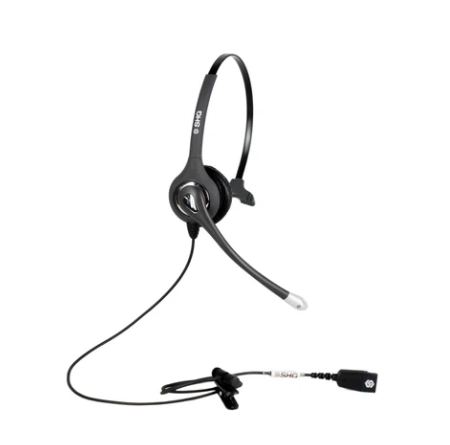
The plantronics qd connector is the flat plug in the middle of a Plantronics or Poly headset cable that separates the headset from the bottom cable running to the phone. QD stands for quick disconnect. Pulling it apart places the call on hold and lets you leave the desk without taking the headset off, and it is what allows one headset to serve several phone systems over its life, because only the cable below the plug is specific to the phone. Three physical versions have shipped: the original from before 2005, a redesign used from 2005 to 2008, and the version on every headset built since 2008. The pre-2005 connector does not mate with current cables, so on hardware that old the generation has to be settled before a replacement cable is ordered.
Before you order a replacement cable
- Headsets built from 2008 onward all use the current connector.
- The pre-2005 connector does not fit anything current.
- Pulling the QD apart holds the call rather than ending it.
- Jabra's quick disconnect looks similar and is a different system.
The connector is the reason a corded headset can outlive three phone systems. It is also the reason a cable order occasionally arrives and will not click into anything, which happens on hardware old enough that the plug itself has changed shape underneath it.
Quick Disconnect: The proprietary Plantronics connector joining an H-series or P-series headset to its bottom cable: a flat plug, separable by hand, that holds the call when pulled apart and lets one headset move between phones by changing only the cable below it.
What separating the connector actually does
Pulling the two halves apart puts the call on hold, which is the same result as pressing hold on the phone without reaching for the phone. Reconnecting picks the call back up. That is the behavior the connector was designed around.
The practical version of that is a shift where nobody hangs up by accident. An agent takes a call, needs a supervisor or a file from a printer two rooms away, and separates the plug on the way out rather than transferring, parking or apologizing. The caller hears hold. The headset stays on. Nothing about the phone had to be touched, which matters most on the phones where hold is buried two menu levels down.
The second consequence is the one with money attached. Because the headset and the phone-specific cable are separate parts, a phone migration is a cable order rather than a headset order. A drawer of dead headsets after an office phone change is nearly always a drawer of working headsets waiting for the right cable underneath them.
The three generations, and the one that does not fit
The connector has been redesigned twice since the 1990s, and only the oldest change breaks compatibility. Anything built from 2008 onward takes any current Plantronics or Poly QD cable, which covers the entire EncorePro range and everything sold today.
| Generation | Period | Mates with current cables | What to do |
|---|---|---|---|
| Original | Before 2005 | No | Replace both halves; a current cable will not connect |
| First redesign | 2005 to 2008 | Yes | Order by phone brand as normal |
| Current | 2008 onward | Yes | Order by phone brand as normal |
Poly states that its QD models work with any Poly QD adapter, and for anything bought in the last fifteen years that holds without qualification. The generation question only arises on equipment old enough to predate the current design, which in practice means a headset that has been in a drawer since before the redesign rather than one in daily use.
The reasonable assumption
All Plantronics QD cables fit all Plantronics QD headsets, because that is the point of a standard connector.Where it breaks
True for everything from 2005 onward, and not true before that. The original pre-2005 connector will not mate with current hardware however both halves are labeled. If the headset dates from the early 2000s, budget for replacing both the top and the cable rather than the cable alone.The variants that share the name
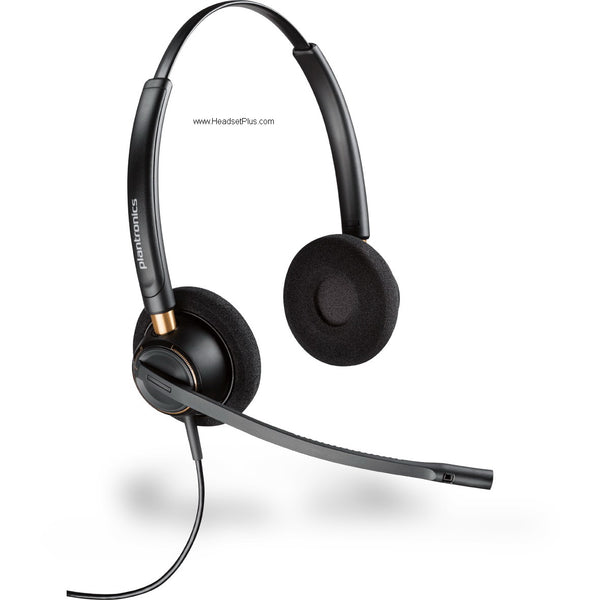
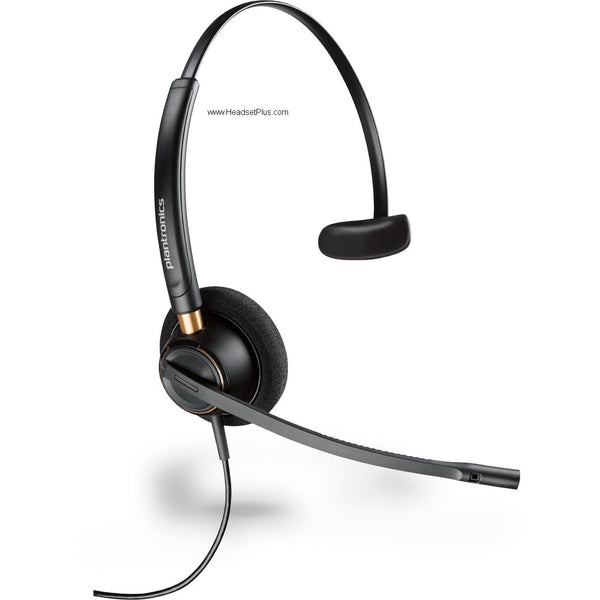
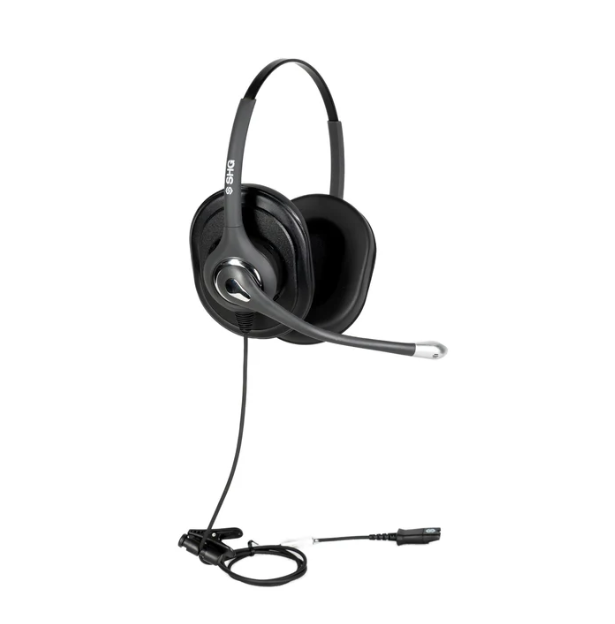
Generation is not the only thing that splits the range, because Plantronics has shipped three different plugs under the quick disconnect heading and they are not versions of one another. The standard QD is the one the generations above describe, and it is what the EncorePro HW510 through HW720 carry.
Polaris is the second. It is an older Plantronics plug with its own cable family, the U10P and its variants, and the PW-series headsets we sell are an HW top supplied with the A10 cable already fitted for that reason. A Polaris cable and a standard QD cable are not alternatives to each other; they belong to different headsets.
The third is the digital six-pin QD, which appears on models whose part numbers end in D. An HW510D is the digital sibling of the HW510, and the difference is not cosmetic: the six-pin plug carries a digital signal and pairs with the Poly DA90 rather than with any analog bottom cable. Ordering an analog cable for a D model is one of the few mistakes in this area that no adapter rescues.
Reading the part number settles which of the three you are holding faster than inspecting the plug. HW510 is standard QD, PW510 is Polaris, HW510D is digital six-pin, and the same pattern runs through the rest of the range.
Why a Jabra cable will not do
Jabra runs its own quick disconnect system, and the two are not interchangeable in either direction. The plugs look broadly similar at arm's length, which is exactly why the mistake gets made: a Plantronics cable will not serve a Jabra headset, and a Jabra cord will not serve a Plantronics one.
The rule that avoids it is to match the cable brand to the headset brand rather than to the shape of the plug. Brand is printed on the headset top in every case, so this is a five-second check that saves a return.
Mixed floors are where this bites. An office that has bought on price over several years usually owns both brands, the headsets end up in one drawer, and the cables end up in another. Sorting the two drawers by brand once is worth more than any rule about plugs, because after that the wrong cable can no longer reach the wrong headset.
Getting from the connector to the phone
The headset ships with no phone connector at all, which is deliberate: the connector is a boundary, and three different things can sit below it depending on what the headset has to reach.
A QD bottom cable is the first and the most common. It goes to a phone with a dedicated headset port, and it is chosen to match the phone brand rather than the headset.
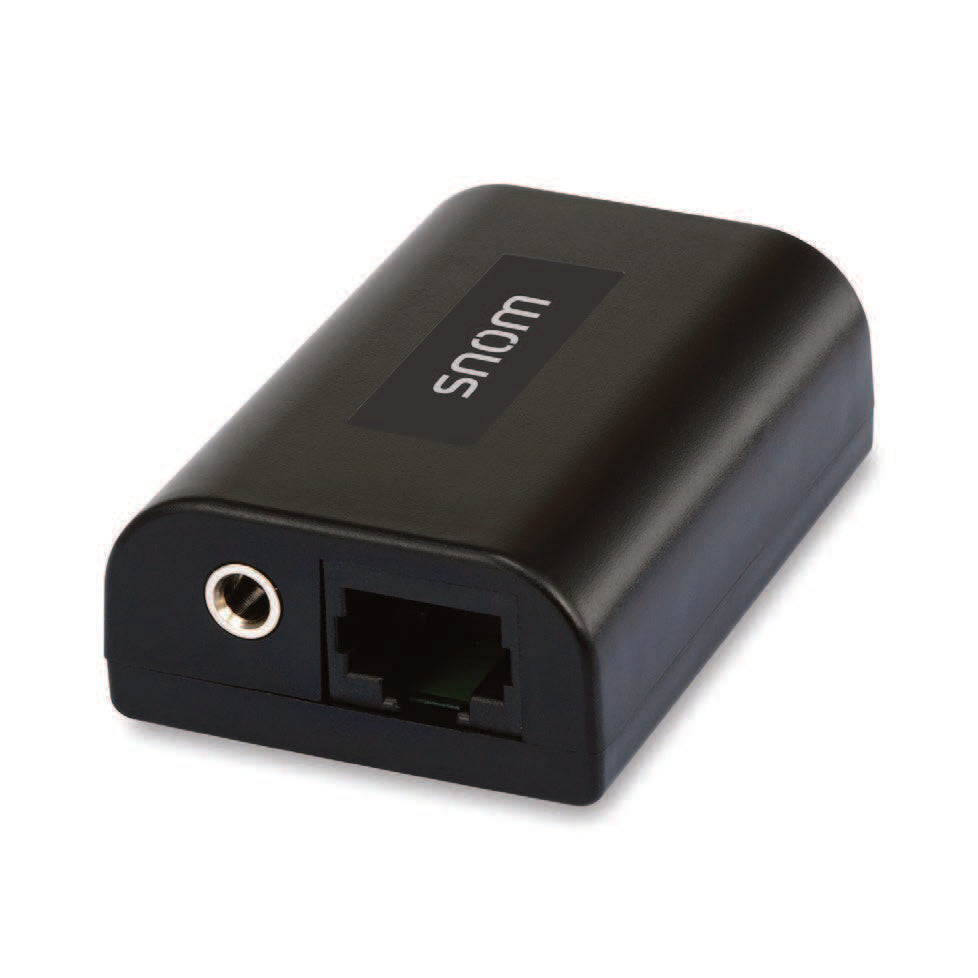
An amplifier is the second, for a phone with no headset port. It connects through the handset socket instead, which means the handset comes out and the amplifier takes its place, and it brings independent volume and mute controls that the phone would otherwise have supplied.
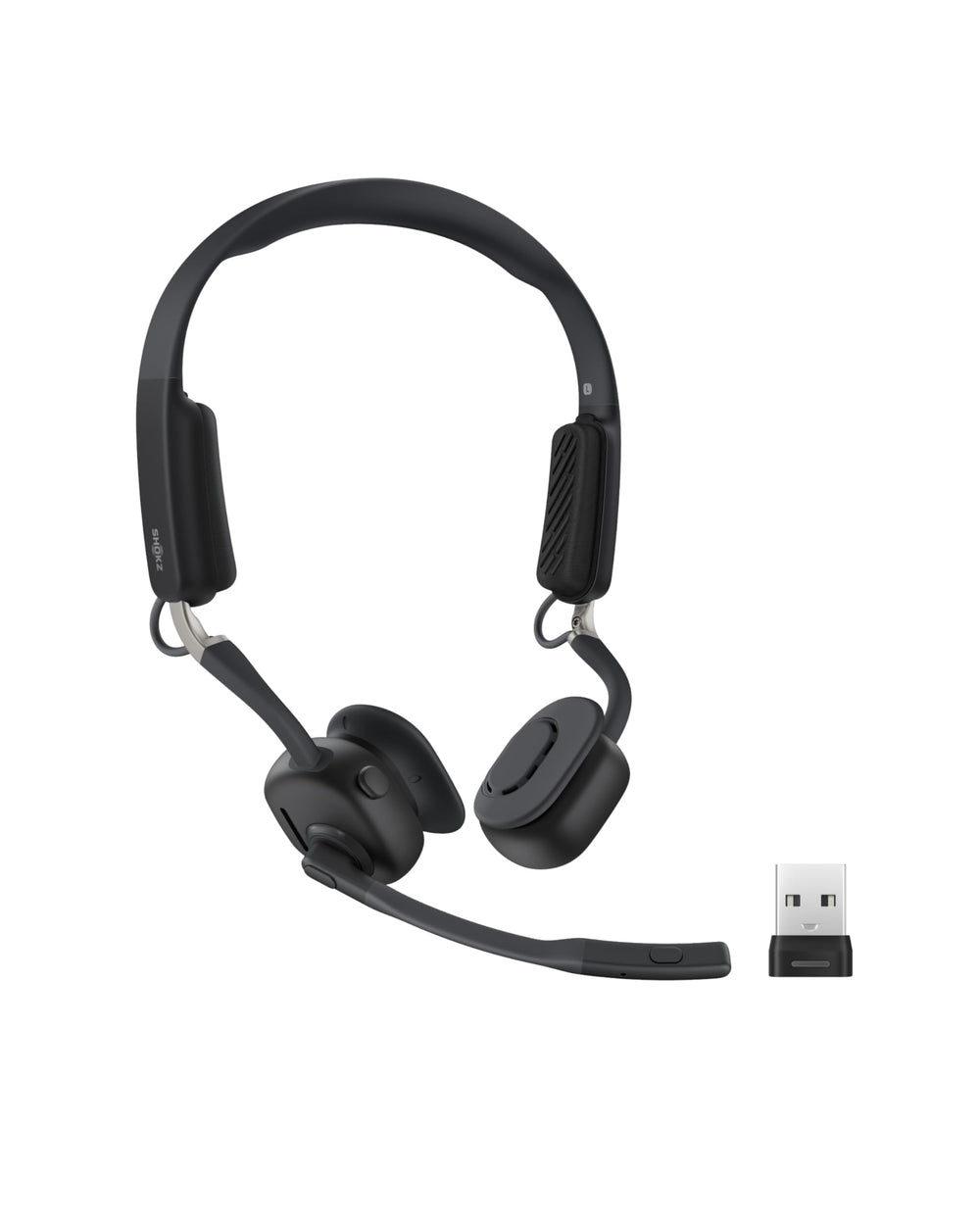
A USB adapter is the third, and it removes the phone from the arrangement entirely. The DA-series adapters plug straight onto the QD and present the headset to a computer as a USB audio device, which is what makes the same headset usable on a softphone without a second purchase for the desk.
Deciding between them is a matter of looking at the phone rather than the headset. A headset icon beside a small socket means a headset port and a bottom cable. No such socket means an amplifier. No desk phone in the picture at all means the USB adapter.
Older documentation is worth reading with a date in mind here. The amplifiers it names, the M22, MX10 and P10, along with the older M10, A20 and CA10, are all discontinued. The current part that does the same job is the Poly MDA524, which adds a computer connection for softphone calls on top of the analog path.
Once the generation is settled, the remaining question is which cable, and that is answered by the markings rather than the phone. Our guide to identifying a qd cord set covers the codes and plug colors that separate them. If the headset top is what you are replacing rather than the cable, the current range is on the qd headset page.
What does QD stand for on a Plantronics headset?
QD stands for quick disconnect, the proprietary connector joining a Plantronics H-series or P-series headset to its bottom cable. Separating the plantronics qd connector lets you walk away from the phone without removing the headset, and places the call on hold rather than ending it.
Are all Plantronics QD cables compatible with each other?
Not across every generation. Three physical versions of the connector exist: the original from before 2005, a redesign used from 2005 to 2008, and the current version from 2008 onward. The pre-2005 connector is not compatible with the newer ones. Headsets built from 2008 onward all take any current Plantronics or Poly QD cable.
Can I use a Jabra QD cable with a Plantronics headset?
No. Jabra uses its own quick disconnect system, which looks similar but is not interchangeable with the Plantronics one. A Plantronics headset needs a Plantronics cable and a Jabra headset needs a Jabra cord. Match the cable brand to the headset brand rather than going by the shape of the plug.
Does unplugging the QD end my call?
No, separating the quick disconnect places the call on hold. Reconnecting the two halves picks the call back up, which is what lets someone step away from the desk without taking the headset off or hanging up on the caller.


Comments (0)