






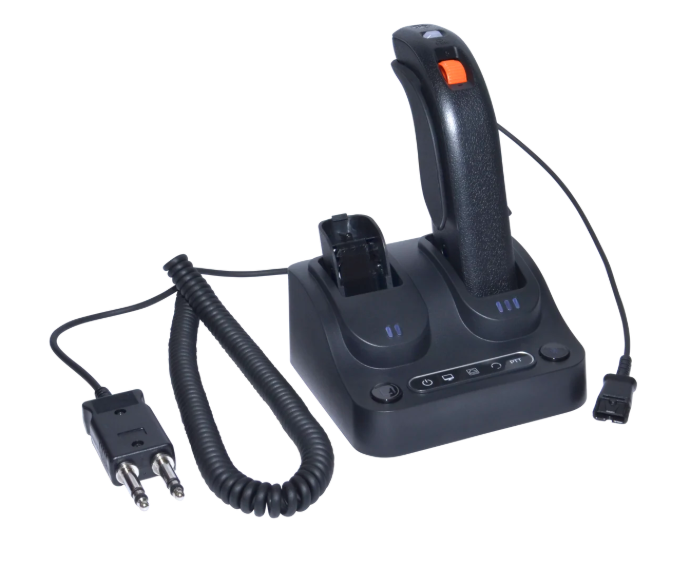

















If you're specifying PTT adapters for an emergency dispatch, public-safety, or air-traffic-control console, the difference between the Poly CA22CD-SC and CA22CD-DC isn't cosmetic — it determines whether the unit connects to your console at all, and whether your existing headsets will even fit. They look nearly identical. They are not interchangeable.
Here's the technical breakdown, plus the part that matters most before you place a non-returnable order: which one is still available.
Key takeaways
- SC = single channel; DC = dual channel. The difference is the console interface and headset compatibility.
- The CA22CD-SC uses a PJ-7 connector and works with standard Poly H-/HW- QD headsets — and is still available.
- The CA22CD-DC uses a Lemo/TA6FLX connector, works only with Poly dual-channel headsets, and is discontinued.
- Both upgraded the CA12CD-S with 256-bit AES encryption, ~10-hour talk time, and lower PTT latency.
- These are non-returnable special-order items — confirm availability and compatibility before ordering.
CA22CD-SC vs CA22CD-DC: the core difference
The two adapters differ on two linked points: how many receive channels they carry, and what connector they use to reach the console. That connector choice also dictates which headsets are compatible — which is the detail that catches buyers out.
| CA22CD-SC | CA22CD-DC | |
|---|---|---|
| Channels | Single receive channel | Dual receive channel |
| Console connector | PJ-7 double-prong (or 6-position modular) | Lemo / Switchcraft TA6FLX |
| Headset compatibility | Poly/Plantronics H- and HW-series (QD) | Poly dual-channel headsets only |
| Availability | Available (special order) | Discontinued, no replacement |
Myth
My existing Poly H-series headsets will work with either the SC or the DC.Reality
Only with the SC. The CA22CD-SC accepts standard Poly/Plantronics H- and HW-series QD headsets, but the dual-channel CA22CD-DC is compatible only with Poly's dedicated dual-channel headsets — your H-series QD headsets will not connect to it. Confirming headset compatibility before ordering is essential, since these adapters can't be returned.The CA22CD-SC (single channel)
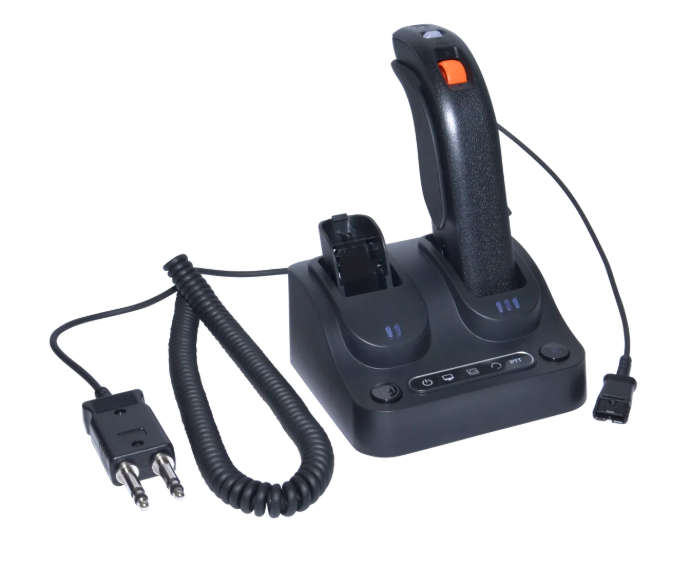
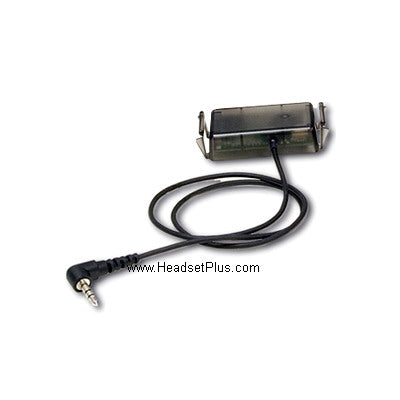
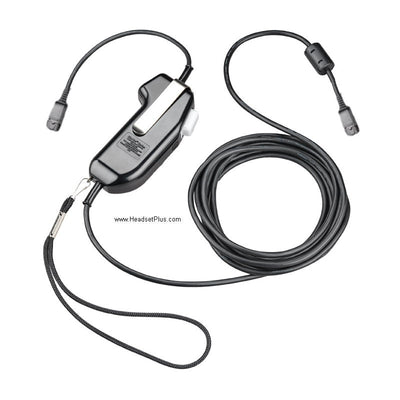
The CA22CD-SC is the single-channel adapter and the direct successor to the long-serving CA12CD-S. It connects to the console through a PJ-7 double-prong interface cable — the most common dispatch configuration — and clips to any Poly/Plantronics H-series QD headset. A second variant swaps the PJ-7 for a 6-position modular prong (similar in look to a network cable) that some newer consoles prefer and that needs no specialized plug.
Secure-voice PTT operation: A factory-programmed mode on the CA22CD that keeps the microphone muted by default and only transmits while the push-to-talk button is pressed — standard for dispatch and ATC positions where an open mic can't be risked.
The SC also adds a USB port with a factory-programmed "friendly name," so a supervisor running several CA22CD units on one host PC can tell them apart, and an eight-position modular jack for analog equipment (up from the CA12CD-S's six). It's compatible with the major voice-communication consoles — Frequentis, Indra, Sitti, Motorola and others.
The CA22CD-DC (dual channel) — discontinued
The CA22CD-DC carried two independent receive channels for consoles that monitor two audio sources at once. Its defining difference was the console connector: a Lemo push-pull connector paired with a Switchcraft TA6FLX, rather than the SC's PJ-7. That connector also meant it worked only with Poly's dual-channel headsets, never the standard H-/HW- QD line.
Poly has discontinued the CA22CD-DC with no direct replacement. If your console genuinely requires a dual-channel PTT adapter, that's now a specialist conversation — the right current path depends on your console and headset standard, and it's exactly the kind of configuration our team confirms before any order goes out. Browse the current dispatch options in the 911 dispatch headsets collection, and see the wider console-wiring picture in our guide to headsets for radio dispatch, 911 and air traffic control.
What the SC and DC share
Both adapters were built on the same CA22CD platform, which upgraded the 15-year-old CA12CD-S in several ways that matter for a command center.
Beyond encryption and battery, both share secure-voice operation (mic muted until PTT is pressed), volume-adjust controls and status indicators on the remote, base charging, audible low-battery and volume cues in the earpiece, and over-the-air subscription so the remote doesn't need to be docked to the base. One compatibility note that applies to both: spare parts from the older CA12CD-S — battery packs, remotes — are not backward-compatible with the CA22CD family.
Which one do you need, and how to order
Match the adapter to your console's channel requirement and connector. Most dispatch and ATC positions are single-channel and take the CA22CD-SC with a PJ-7 or 6-position modular connector — the available, in-stock option. A dual-channel console previously used the CA22CD-DC, which is now discontinued, so that requirement needs a specialist-confirmed solution.
Because every CA22CD adapter is a non-returnable, special-order item for mission-critical use — and the line is being wound down — the right move is always to confirm current availability, your console connector, and headset compatibility with a specialist before ordering. Start with the Poly CA22CD-SC if you're single-channel, and call our team at 877-999-3838 to verify the exact configuration your console needs.
What is the difference between the Poly CA22CD-SC and CA22CD-DC?
The CA22CD-SC is a single-channel PTT adapter with a PJ-7 connector, compatible with standard Poly/Plantronics H- and HW-series QD headsets. The CA22CD-DC is a dual-channel adapter with a Lemo/Switchcraft TA6FLX connector, compatible only with Poly's dual-channel headsets. The SC remains available while the DC has been discontinued.
Is the Poly CA22CD-DC still available?
No. The Poly CA22CD-DC dual-channel PTT adapter has been discontinued with no direct replacement. If your dispatch or air-traffic-control console requires a dual-channel adapter, the correct current solution depends on your specific console and headset standard, so it's best confirmed with a headset specialist before ordering.
Will my Poly H-series headset work with the CA22CD-DC?
No. Standard Poly/Plantronics H- and HW-series QD headsets work with the single-channel CA22CD-SC, but the dual-channel CA22CD-DC uses a different connector and is compatible only with Poly's dual-channel headsets. This headset-compatibility difference is a key reason to confirm your configuration before ordering a non-returnable adapter.
What upgrades did the CA22CD add over the CA12CD-S?
The CA22CD family upgraded the older CA12CD-S with 256-bit AES encryption (DECT Security Step C), up to 10 hours of talk time (from 8), up to 3× lower PTT latency, a USB port with factory-programmed identification, and an eight-position modular jack. Note that CA12CD-S spare parts such as batteries and remotes are not backward-compatible with the CA22CD.
Are Poly CA22CD PTT adapters returnable?
No. The Poly CA22CD-SC and CA22CD-DC are non-returnable special-order items, because they're configured for specific dispatch and air-traffic-control consoles. Defective units are replaced under manufacturer warranty, but wrong-configuration orders cannot be returned. This makes confirming your console connector and headset compatibility before ordering essential.
The whole comparison comes down to two questions: does your console need one receive channel or two, and which connector does it use? Single-channel positions take the available CA22CD-SC; dual-channel positions previously used the now-discontinued CA22CD-DC and need a specialist-confirmed path. On mission-critical, non-returnable gear, that confirmation is worth the phone call — reach our dispatch specialists at 877-999-3838 before you order.

Comments (0)