























Which qd to rj9 cable your phone needs
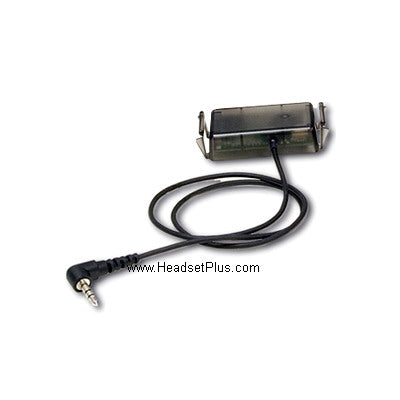
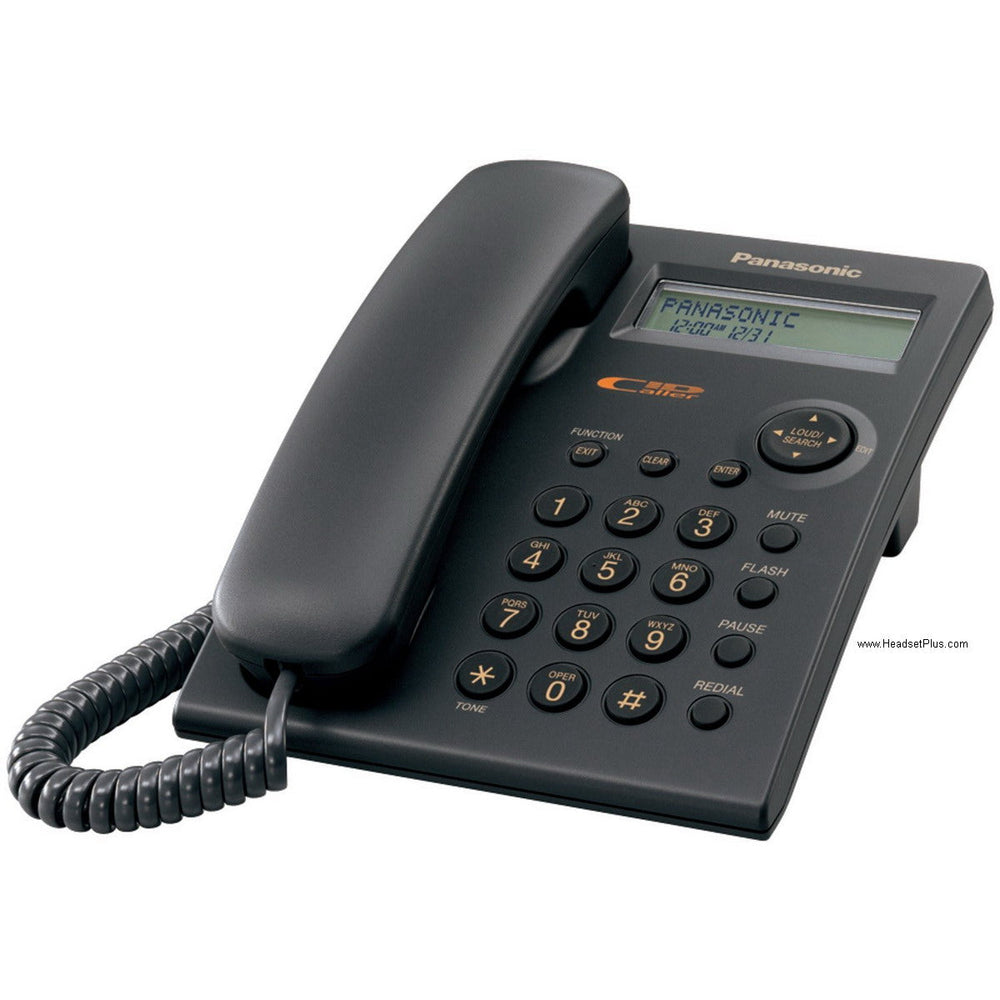
A qd to rj9 cable connects a quick disconnect headset to the modular headset port on a desk phone, and which one you need is decided by the phone's brand and often its exact model, never by the headset. Every Poly and Plantronics QD headset ends in the same flat quick disconnect plug, so the top half never changes. The bottom cable is what differs. An Avaya J100, 1600 or 9600 takes the HIS cable; an Avaya 9400 or 4600 takes the HIC-10; a Yealink, Snom or Grandstream takes the reversed U10P-S; and a Cisco SPA with a 2.5mm jack takes a 2.5mm QD cable rather than an RJ-9 one at all. There is no universal cable because RJ-9 was never a registered standard, so manufacturers wired the four pins to suit themselves. A cable that clicks into the port can still carry no audio in either direction.
What decides this before you order
- The phone brand picks the cable. The headset never does.
- RJ-9 is a shape, not a wiring standard, so fitting proves nothing.
- Cisco SPA and similar 2.5mm phones need a 2.5mm cable, not RJ-9.
- Keep the headset when the phone system changes and buy the cable instead.
The same morning gets described on the phone most weeks: the phone system was swapped over a weekend, and a drawer of perfectly good headsets now connects to nothing. The headsets are fine. What changed underneath them is the pinout of the port they plug into.
Why a cable can fit perfectly and still do nothing
The headset port on a desk phone follows no wiring standard, so two phones with identical-looking sockets can expect the microphone and the speaker on different pins. The connector is a 4P4C, four positions and four conductors, and it picked up the RJ-9 name by association rather than by registration.
RJ-9: The common name for the 4P4C modular connector on telephone handset and headset cords: widely used, but not an official Registered Jack designation, because it was never meant to connect directly to a telephone line.
That distinction sounds academic until it costs a morning. A registered jack carries a defined pin assignment that every manufacturer follows. The handset connector never had one, which left each phone maker free to decide where the microphone and the speaker sat. Plug a Yealink cable into an Avaya and the plastic seats perfectly, the clip holds, and the caller hears silence.
What the plug suggests
If the cable clicks into the headset port, the headset will work on that phone.What the pins decide
Fitting only proves the connector is 4P4C. Whether audio flows depends on how that phone maker wired the four pins, which varies by brand and sometimes by model.The headset outlives the phone system underneath it
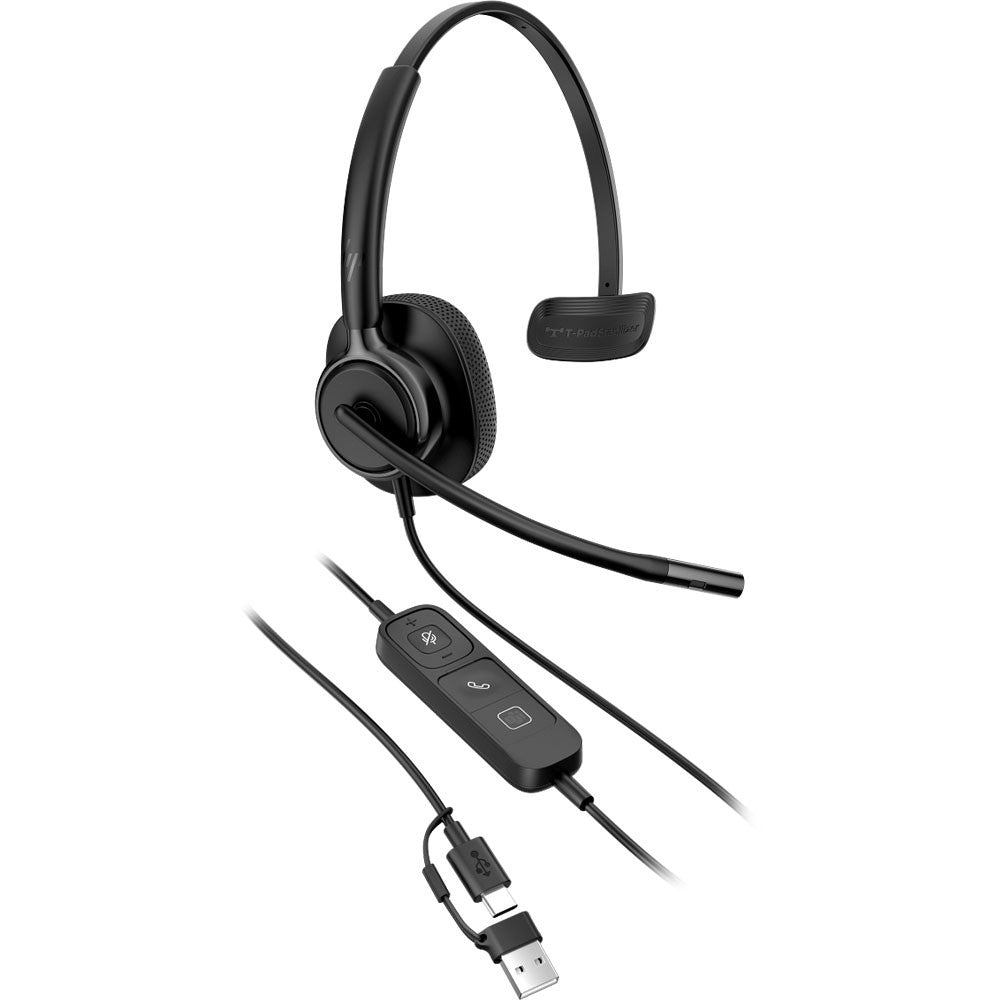
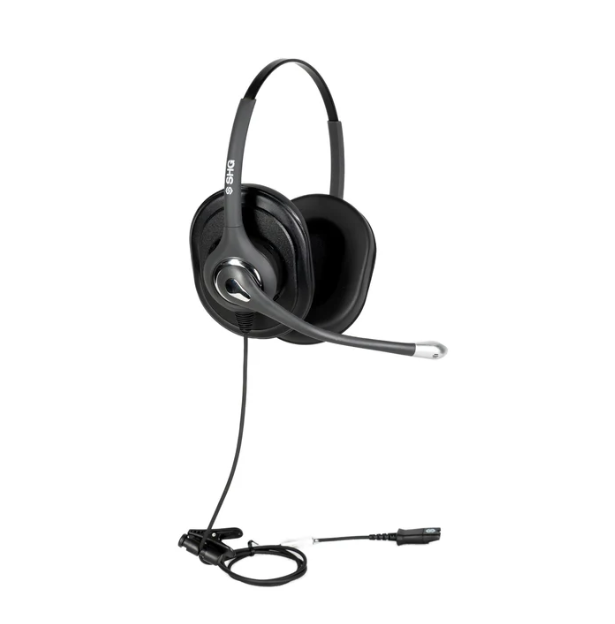
Poly builds every QD headset to the same connector on purpose, and states that its QD models work with any Poly QD adapter. That is what makes the quick disconnect worth having: the expensive half of the purchase, the part shaped to someone's head and tuned to their voice, is the half that never needs replacing when the phones change.
An EncorePro bought for an analog phone in 2019 will run on a Yealink today and a softphone next year. The only part that retires is a length of cable. When a fleet moves phone systems, the correct order is one cable per seat rather than one headset per seat, and across forty desks that difference is substantial.
It also makes the cable the sensible thing to keep spares of. The bottom cable is the half that gets stood on, rolled over by a chair and pulled when someone stands up mid-call, and replacing one costs a fraction of replacing the headset above it. A small box of spare cables in the right pinout covers a floor of identical phones for years.
Which cable goes with which phone family
Match the row to the phone on the desk, then order that cable. The names below are the Poly and Plantronics part designations, printed on the cable itself and on its packaging.
| Phone family | Cable you need | Why this one |
|---|---|---|
| Avaya J100, 1600, 9600 IP | HIS | Avaya's IP pinout, used across the current J and 96xx ranges |
| Avaya 2400, 4400, 4600, 5400, 6400, 9400 | HIC-10 | The older Avaya digital pinout, not interchangeable with HIS |
| Cisco IP, M12 and M22 era | U10 (26716-01) | Wired for Cisco's handset port rather than the generic layout |
| Yealink, Snom, Grandstream | U10P-S reversed | These three brands share a pinout mirrored against the standard one |
| Cisco SPA, Linksys SPA | 2.5mm QD cable | The port is a 2.5mm jack, so no RJ-9 cable of any kind will fit |
If your phone is not in that table
Work from the phone maker rather than from the socket. The table covers the families we are asked about most, and the same rule extends past it: find the cable that names your phone brand, and where a brand changed its pinout between generations, the cable listing will name the generation too. Avaya is the clearest case of that, which is why it takes two rows rather than one.
Two details on the phone are worth reading before you order. The headset icon beside the socket tells you the port is a headset port rather than a second handset port, and the model number on the underside of the phone is what a compatibility list is keyed to, not the name printed on the display. With those two, a cable can be matched without guesswork. Without them, the fastest route is to send us the model number.
Check which quick disconnect your headset has first
Every cable above assumes a Poly or Plantronics quick disconnect on the headset end, and four different connectors get sold under the quick disconnect name. Of the QD headsets we stock, fifteen carry the Poly connector, six carry Polaris, five carry Jabra's own, and five are the digital six-pin version. A cable cut for one of them does nothing on the others.
The Poly connector is the one the cables in that table are built for. Polaris is an older Plantronics plug, and the PW-series headsets ship with the A10 cable already attached for that reason. Jabra runs a parallel system that looks similar at arm's length and takes Jabra cords instead. The digital models, the ones whose part numbers end in D, use a six-pin quick disconnect that pairs with Poly's DA90 rather than any RJ-9 cable at all.
Reading the headset's own part number settles it faster than inspecting the plug. An HW510 is Poly QD, a PW510 is Polaris, an HW510D is digital six-pin, and anything branded Biz or GN is Jabra. If the number has worn off, the plug shape is the fallback, and the identification guide linked below covers what to look for.
The mistakes worth checking before you order
The first is ordering by connector shape. A cable listed as RJ-9 tells you what the end looks like and nothing about the wiring, so the phone brand needs to appear in the product name or the compatibility list before it is safe to buy.
The second is assuming a headset port exists at all. Some desk phones route the headset through the handset socket instead, which means unplugging the handset to take a call on the headset, and some entry-level models have neither. Look for a headset icon beside the socket before ordering anything.
The third only appears on larger orders. A floor that looks uniform often is not, because a migration that ran department by department leaves two phone generations sitting side by side. Avaya is where that bites hardest: the HIS and HIC-10 sockets are indistinguishable at a glance, so an order counted by desk rather than by phone model can arrive half unusable. Count the seats by what is printed on the underside of each phone.
If you have a cable in hand and cannot tell which one it is, the markings resolve it faster than the shape does, and our guide to identifying a qd cord set works through them. If the destination is a computer rather than a desk phone, the part you need is a DA-series adapter instead of a bottom cable, covered in how to connect plantronics headset to computer. The headsets themselves sit on the quick disconnect headset page.
Will any RJ-9 headset cable work with any desk phone?
No. An RJ-9 headset cable fits any 4P4C headset port, but the four pins are wired differently by different phone manufacturers, so a cable that seats correctly can still carry no audio. Match the cable to the phone brand, and for Avaya to the phone generation as well.
Do qd headsets work with any phone?
QD headsets work with any desk phone that has a headset port, provided the bottom cable matches that phone. The quick disconnect plug is common to the whole Poly and Plantronics QD range, so changing phone systems means changing the cable rather than the headset.
What is the difference between the HIS and HIC-10 Avaya cables?
The HIS cable serves Avaya's IP phones, including the J100, 1600 and 9600 series. The HIC-10 serves the older digital range such as the 2400, 4400, 5400, 6400 and 9400. The two are wired differently and cannot be substituted for one another.

Comments (0)