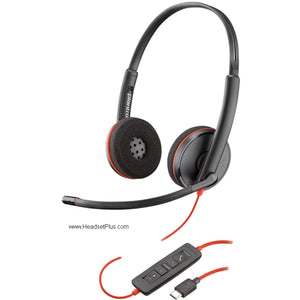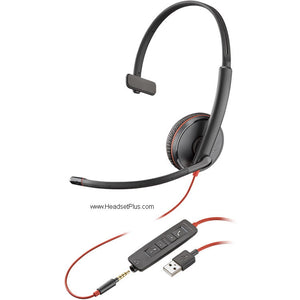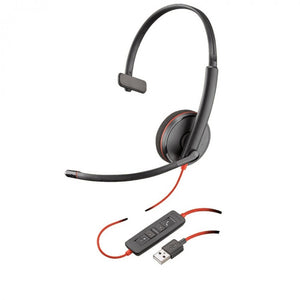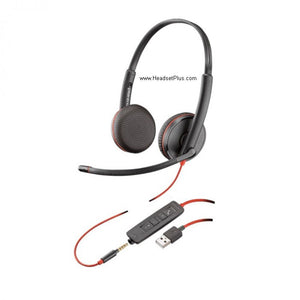










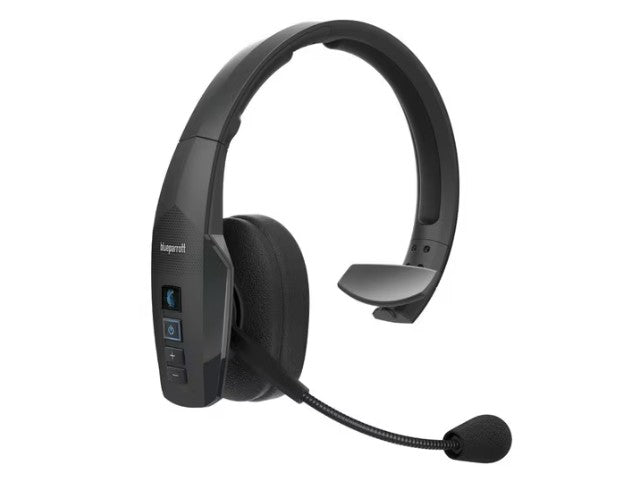










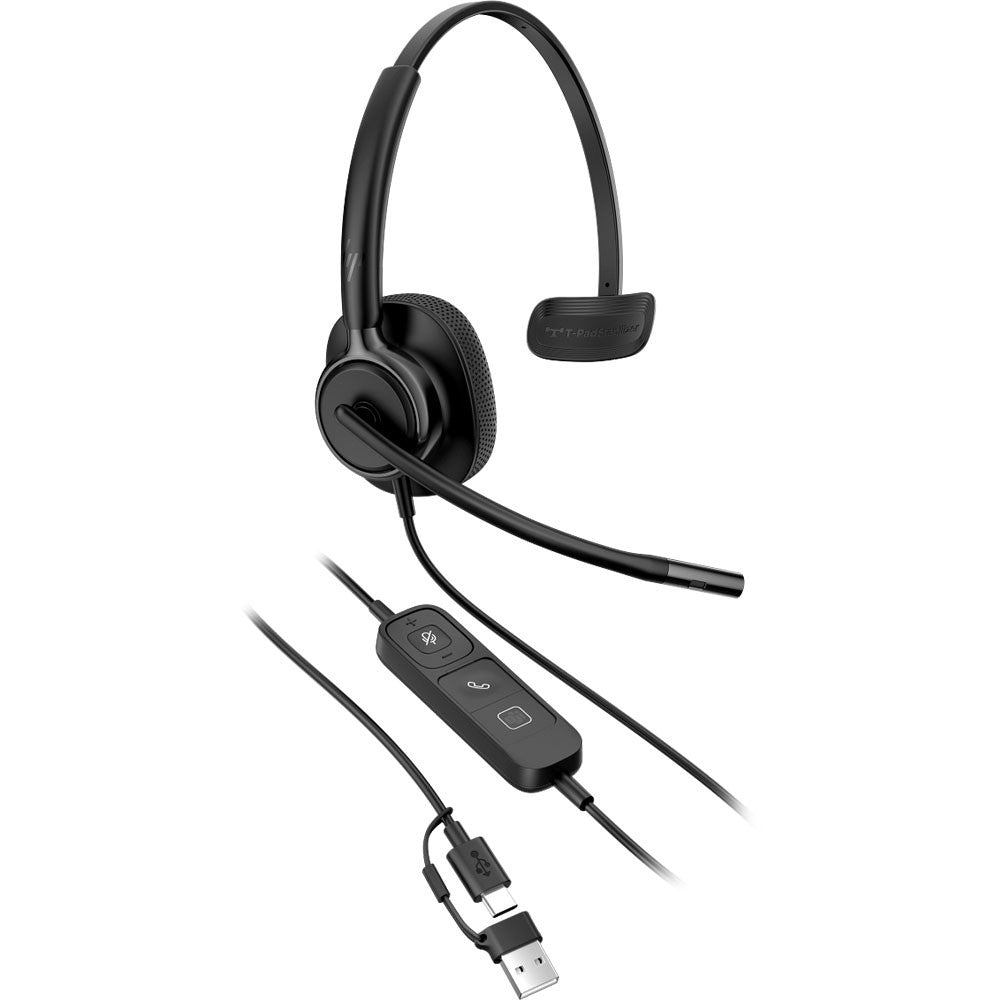


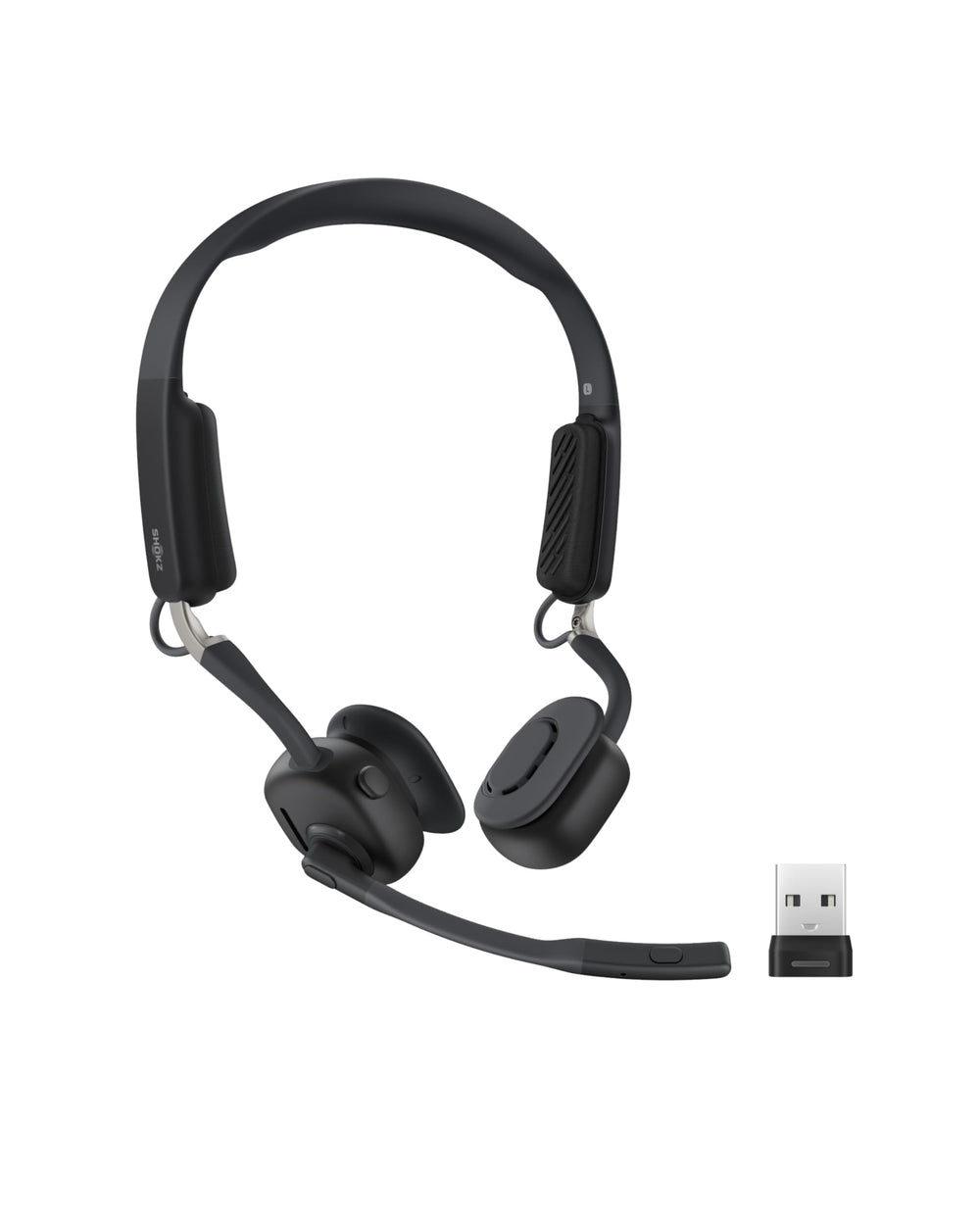

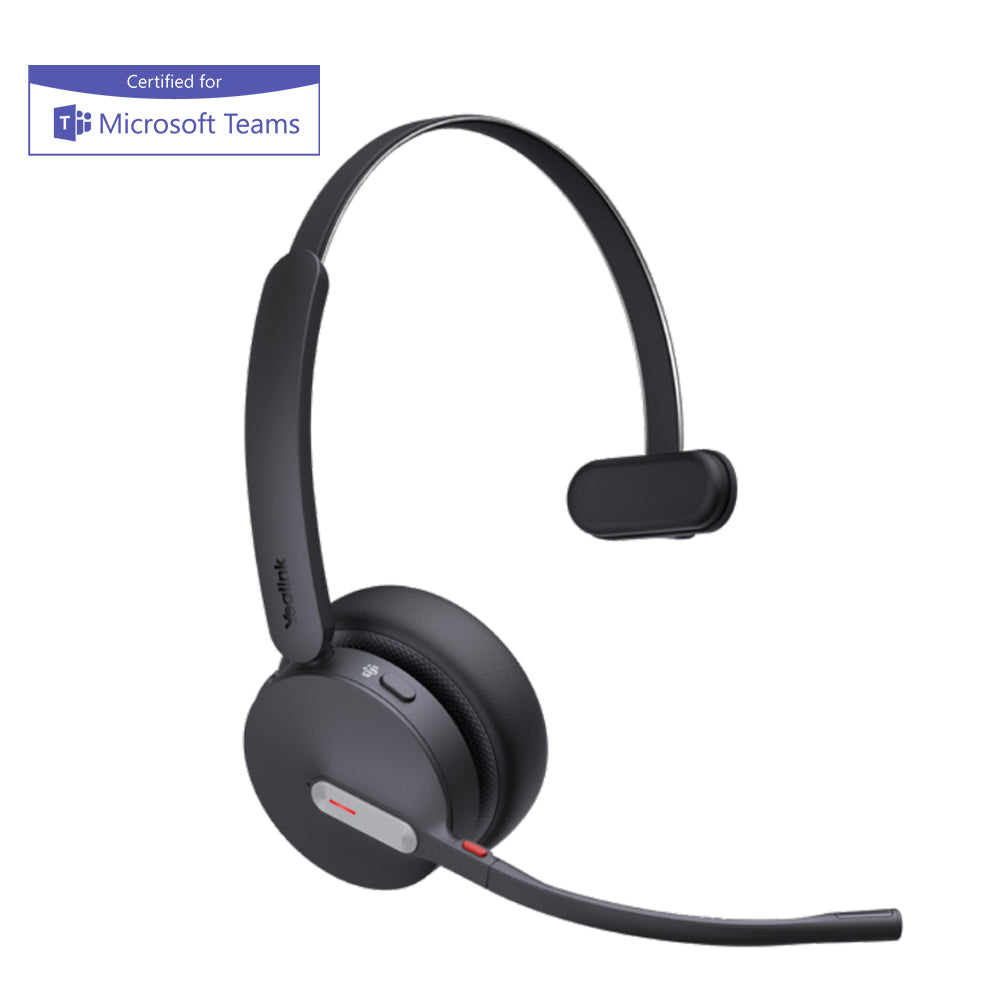



Plantronics Blackwire 3210 Mono USB-C Headset (Teams Certified)
The Plantronics Blackwire 3210 is built for Teams
Most of your day now happens on a call you didn't used to take — a quick Teams huddle, a screen-share, a back-to-back afternoon of video. The Plantronics Blackwire 3210 USB-C mono headset is the no-drama tool for exactly that: plug the USB-C into your laptop and you're on the call, with a clear mic and a stable connection, every time.
It's an entry-priced, single-ear corded USB headset from Poly's Blackwire line — the kind IT teams buy by the box because it deploys in seconds and rarely generates a support ticket. What sets this version apart from the dozens of look-alike USB headsets is two words on the box: Microsoft Teams certified, which is a meaningfully different thing from the "works with Teams" printed on cheaper models.
Make sure this is the right Blackwire 3210
The Blackwire 3210 comes a few ways. This one is USB-C, mono, and Teams-certified — confirm those three match your setup before you buy.
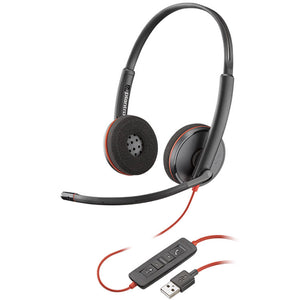
- One ear (this model) vs two ears. The 3210 is mono — one ear covered, one open to the room. If you want both ears sealed for focus, that's the Blackwire 3220, the stereo version.
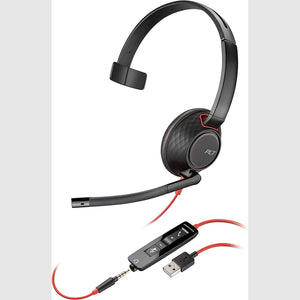
- USB-C (this model) vs USB-A. This version ends in USB-C for current laptops. If your machine has only USB-A ports, pick the USB-A version instead, or use a USB-C-to-A adapter.
- Teams-certified (this model) vs standard UC. This one is certified for Microsoft Teams. If your team runs Zoom or another platform as its main tool, the standard UC version covers the same apps without the Teams-specific tuning.
What "Microsoft Teams certified" actually gets you
Certification means Microsoft tested the Plantronics Blackwire 3210 against its own audio and call-control standards and approved it — not that the headset merely connects. In practice, that's the difference between a headset Teams recognizes natively, with mute and answer buttons that stay in sync with the app, and a generic USB headset that works fine until its mute button and the on-screen mute disagree halfway through a meeting.
Tested and approved by Microsoft. Native recognition, reliable mute and answer/end sync, audio tuned for Teams. Fewer "my mute isn't working" tickets across a rollout.
Connects as a generic USB audio device. Usually fine, but call-control sync and audio tuning aren't guaranteed — and the gaps tend to surface mid-meeting.
It works with the rest of your stack, too
Certification is Teams-specific, but the Blackwire 3210 isn't Teams-only. It registers as a standard USB headset, so it works across the platforms a mixed workplace actually runs:
- Microsoft Teams (certified)
- Zoom, Cisco Webex, and Avaya softphones
- Amazon Connect and Chime
- Any PC or Mac softphone that accepts a USB audio device
A mic that bends to your mouth
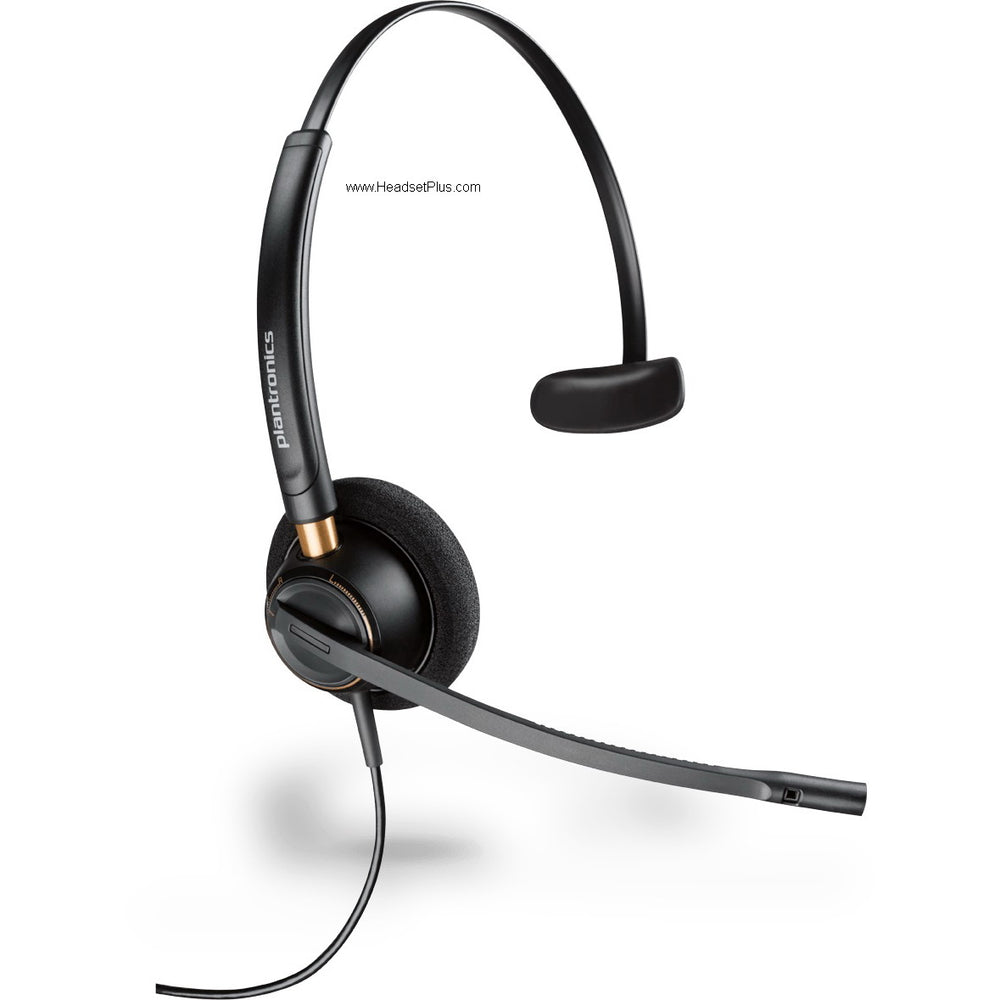
The noise-canceling boom is a flexible design — bend it once to sit about an inch from the corner of your mouth and it stays there, which is where it does its best work keeping the room out of your voice. Paired with wideband audio and onboard DSP, callers hear clear, natural speech instead of the thin, boxy sound of a built-in laptop mic.
Calls and music, tuned separately
Dynamic EQ is a small thing you notice all day: the Blackwire 3210 uses one sound profile tuned for voice on a call, then shifts automatically to a richer profile when you switch to music or a video. There's nothing to toggle — it reads what you're doing and adjusts.
A guard against the sudden loud
SoundGuard acoustic limiting caps sudden spikes — feedback, line screeches — and, per Poly's spec, holds sound above 118 dBA out of your ears. Across a full day of calls, it's the kind of protection you only think about the moment it saves you from a shriek down the line.
Easy to roll out, easy to manage
For the IT team buying forty of these, the Blackwire 3210 deploys without a desk visit — plug it in and it works, and Poly Lens handles firmware and settings, with optional fleet management to monitor every headset in use company-wide. The lightweight metal headband is the quiet reason these survive hot-desking and a year of being shoved in drawers; most headsets at this price use all-plastic bands that crack.
At its price, the Blackwire 3210 isn't trying to wow anyone — it's trying to disappear into a workday and keep doing its job for years. Certified call control that won't embarrass you mid-meeting, a mic that makes you sound like yourself, and a build that outlasts the laptop it's plugged into. For one person on Teams all day or four hundred, it's the safe, boring, right answer — and boring is exactly what you want from the thing on your head.
- Plantronics Blackwire 3210 USB-C mono headset (attached USB-C cable)
- Quick start guide
- Warranty and safety information
| Type | Monaural (single-ear), over-the-head, on-ear (supra-aural) |
|---|---|
| Connection | USB-C, attached cable; connects to PC or Mac |
| Microphone | Noise-canceling, flexible boom (bends to ~1 in from mouth) |
| Audio | PC wideband with DSP; Dynamic EQ (auto-adjusts between calls and multimedia) |
| Hearing protection | SoundGuard acoustic limiting — caps sound above 118 dBA |
| Controls | Inline: answer/end, volume, mute; LED indicators and audio prompts |
| Headband | Lightweight metal |
| Cushion | Soft on-ear cushion |
| Cable length | Approx. 7 ft |
| Management | Poly Lens (firmware, settings); Plantronics Manager Pro / fleet management optional |
| Certification | Certified for Microsoft Teams; works with Zoom, Cisco, Avaya, Amazon Connect and other UC softphones |
| Warranty | 2-year global manufacturer warranty |
Software. The Plantronics Blackwire 3210 is certified for Microsoft Teams and built for the major UC softphones — Zoom, Cisco Webex, Avaya, and Amazon Connect among them. It registers as a standard USB audio device, so any PC or Mac softphone that accepts one will use it, and Poly Lens keeps firmware and call-control settings current.
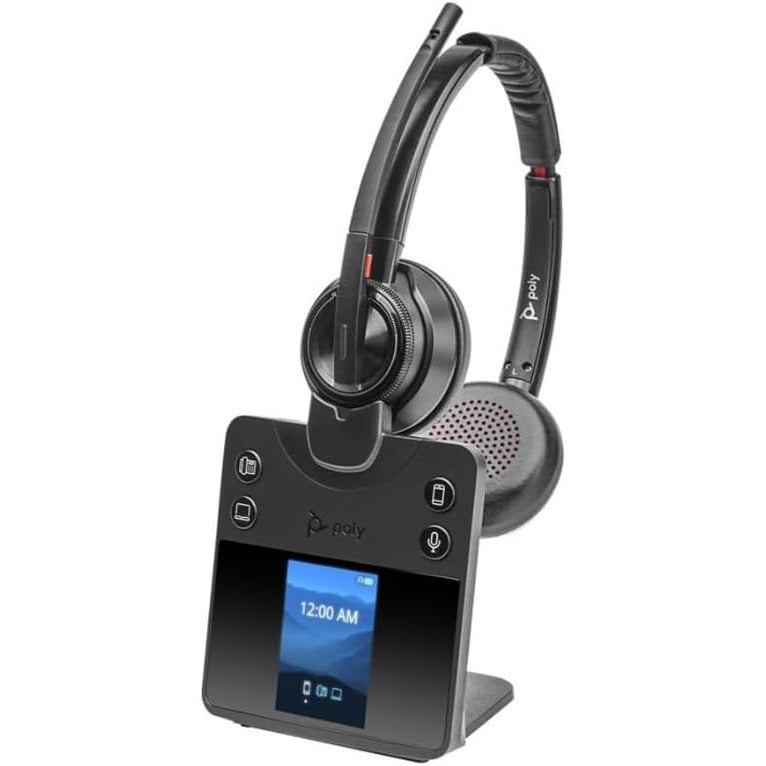
Hardware. The Blackwire 3210 connects to a computer over USB-C — confirm your PC or Mac has a USB-C port, or use a USB-C-to-A adapter for older machines. It's a USB headset only: it does not connect to a traditional desk phone, so it's the right tool for softphone and PC-based calling, not analog phone systems.
Platforms. Built for Windows and Mac in a Teams-first or mixed-UC workplace — remote and hybrid staff, contact centers, and any team standardizing on softphone calling that wants reliable, certified call control without a setup headache.
FAQ
Frequently Asked Questions
Yes. The Plantronics Blackwire 3210 (this USB-C version) is certified for Microsoft Teams, meaning Microsoft tested and approved it for native recognition and reliable call control — mute and answer buttons that stay in sync with the app. That's a step beyond a generic headset that's merely "compatible" with Teams.
The Blackwire 3210 USB-C connects to any PC or Mac with a USB-C port and works without drivers. If your computer only has USB-A ports, choose the USB-A version of the 3210 instead, or use a USB-C-to-A adapter. It's a USB headset, so it doesn't connect to a desk phone.
The Blackwire 3210 is monaural — one ear covered, one ear open to the room. The Blackwire 3220 is the stereo (both-ear) version of the same headset, which seals out more noise for focus. Pick the 3210 to stay aware of your surroundings, the 3220 to block them out.
Yes. Although the Blackwire 3210 is certified for Microsoft Teams, it registers as a standard USB headset and works with Zoom, Cisco Webex, Avaya, Amazon Connect, and other PC and Mac softphones. The Teams certification adds tuning and guaranteed call-control sync specifically for Teams.
No — the Blackwire 3210 is Teams-certified but controls Teams through its standard inline buttons, not a dedicated Teams button. If a one-touch button that opens Teams matters to you, the step-up Blackwire 3310 adds one.
Yes. The Blackwire 3210 is built for high-volume, mass-deployment use — a lightweight metal headband for durability, a noise-canceling boom mic for busy rooms, SoundGuard hearing protection, and Poly Lens for IT management. Its single-ear design suits agents who need to stay aware of the floor.
Goes With It
You May Also Like