























USB vs 3.5mm headset, decided by what sits on the other end of the cable
The USB vs 3.5mm headset question is settled by two things: where the audio conversion happens, and whether your calling software can see the buttons. A USB headset contains its own converter, so the microphone signal is digitized inside the headset and never crosses the analog section of a laptop motherboard. It also presents itself to the computer as a Human Interface Device, which is how Microsoft Teams knows a call was muted at the headset rather than merely turned down. A 3.5mm headset hands raw analog voltage to whatever converter the host happens to contain, and its inline controls are electrical events on the microphone line that most desktop operating systems never interpret as call control. For a computer running softphone calls all day, USB is the safer default. The 3.5mm plug still earns its place on desk phones, mixing desks, aircraft seatbacks and anything with no USB port to offer.
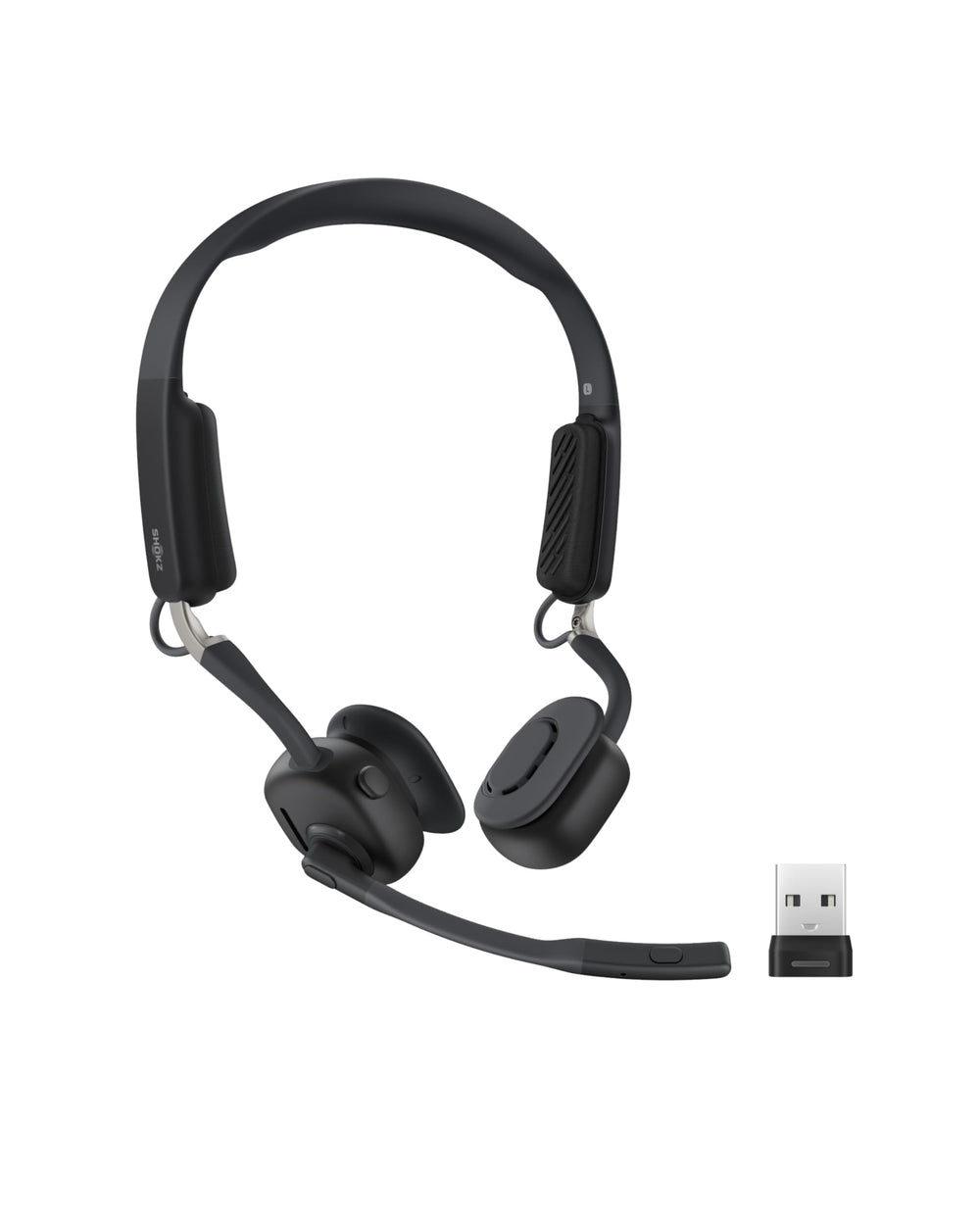
If you have settled on USB for that reason, our computer headset with microphone range is where those models live.
What changes when you change the plug
- A USB headset performs its own conversion; a 3.5mm headset borrows whatever the host computer has.
- Mute and answer buttons that your software can actually see exist only over USB HID.
- Two incompatible 3.5mm wiring standards, CTIA and OMTP, explain most cases of audio playing while the microphone stays silent.
- USB-C is not a smaller headphone jack, and analog-only USB-C adapters are not universally supported.
Most comparisons of these two connectors stop at "USB is digital, 3.5mm is analog" and leave the buyer no better off. The useful question is narrower: which parts of the audio chain does each plug move out of the computer, and which parts does it leave behind. Answer that and the buying decision answers itself, including the cases where the cheaper connector is the correct one.
What a 3.5mm headset actually sends to the computer
A 3.5mm headset sends unamplified analog voltage down four conductors and nothing else, which means the host has to supply every piece of intelligence in the chain. On a four-conductor TRRS plug, the tip carries left audio and the first ring carries right audio. The second ring and the sleeve carry ground and microphone, and which one carries which is where the trouble starts.
There are two wiring conventions. Under the CTIA arrangement, ground sits on the second ring and the microphone on the sleeve. Under the older OMTP arrangement, those two are swapped. Plug a headset built to one convention into a jack built to the other and the speakers usually still make noise, because left and right sit in the same place under both, but the microphone or the inline controls stop working. That single pin swap accounts for a large share of "my headset plays music but nobody can hear me" reports, and no amount of driver troubleshooting will fix it.
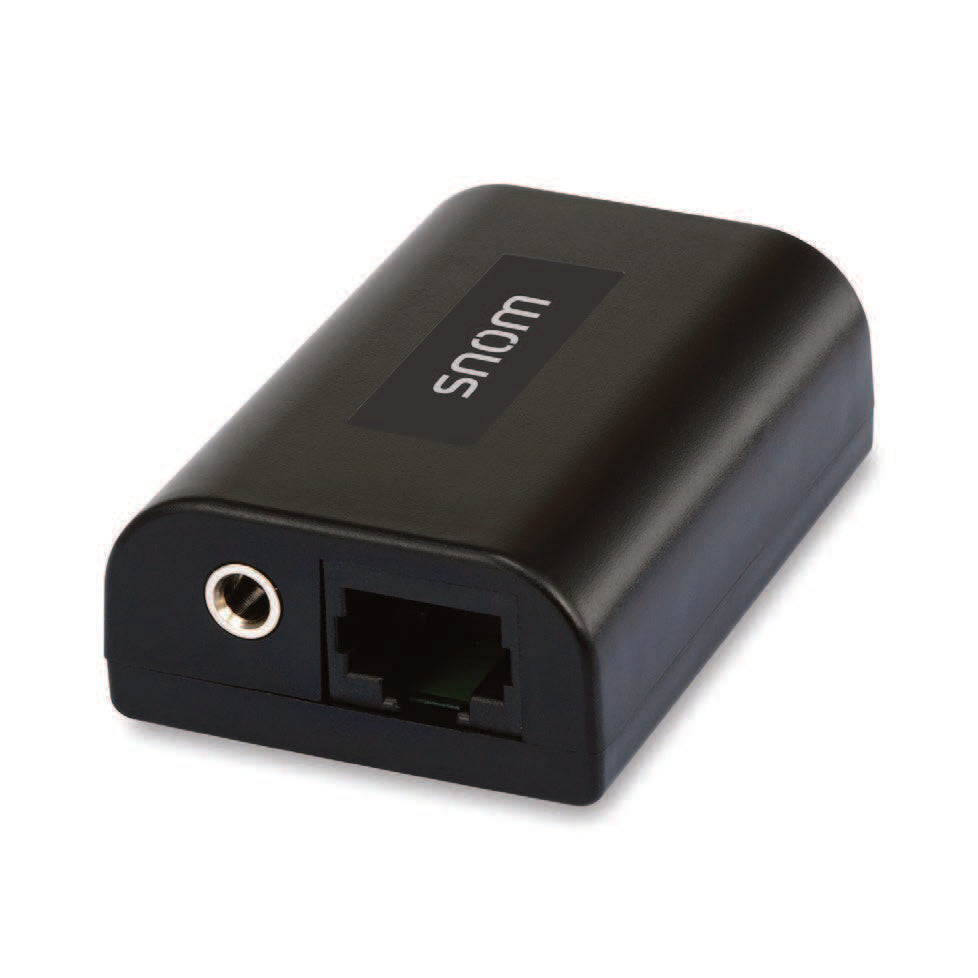
The second thing the host supplies is the converter itself. The microphone signal travels as analog voltage from the boom arm, along the cable, through the jack and into the computer's audio codec, sharing a board with power regulators and everything else a laptop does while you are talking. The quality of the call therefore depends on a component you did not choose and cannot see on any spec sheet. Our headset compatibility guide covers the equivalent problem on desk phones, where the same reasoning applies to modular plugs instead of jacks.
Why a USB headset carries its own sound card
A USB headset digitizes the microphone inside the headset and presents the computer with a finished digital audio stream, so the host's own audio hardware is removed from the equation entirely. The converter, the microphone preamplifier and the noise processing all live in a housing designed by the same company that designed the microphone, and they behave identically on every machine the headset is plugged into. A headset that sounds clean on one laptop sounds the same on the next one, which is the property IT departments are actually buying.
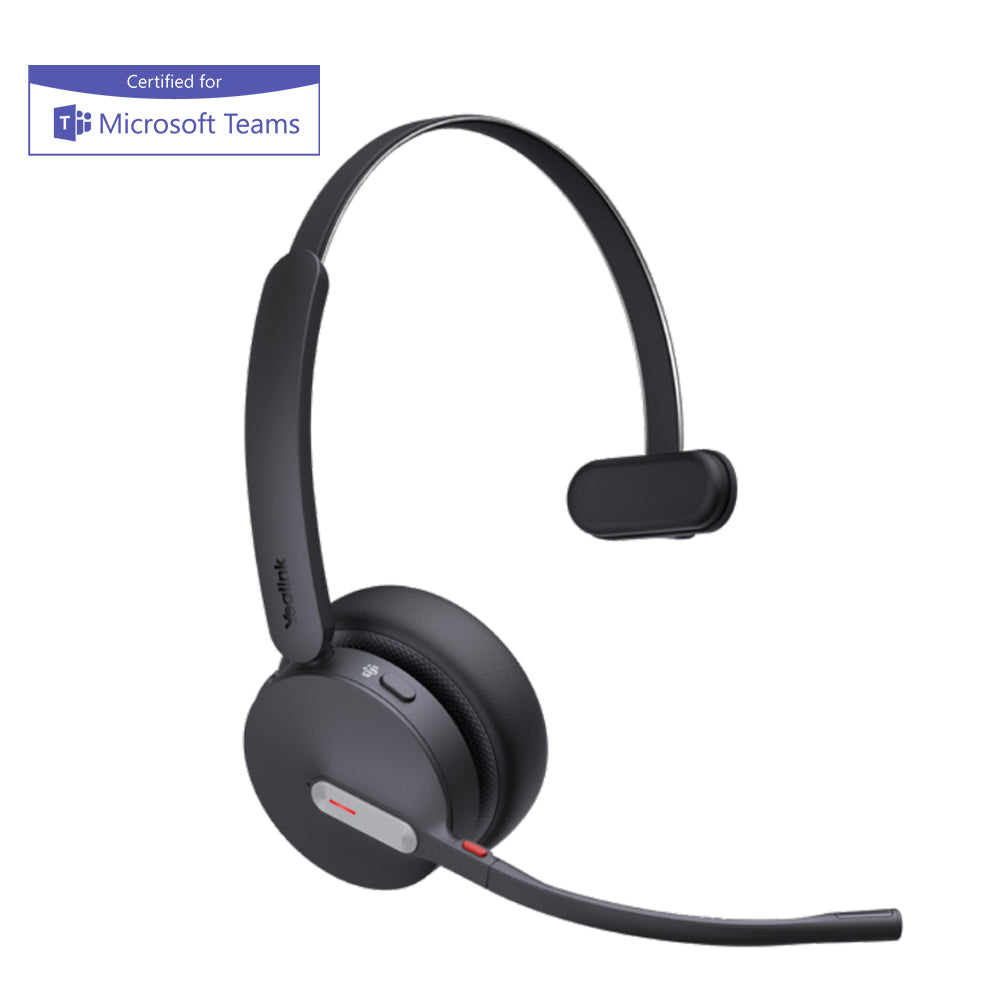
That fixed signal chain is also what makes certification programs possible. Microsoft's Teams certification tests audio devices for wide-band audio with no echo, distortion or excessive glitches, and requires basic call control covering answer and hang-up, mute and unmute, and volume. A vendor can commit to that on a USB device because the vendor owns the whole path; on an analog headset the same promise would depend on the buyer's motherboard.
Wideband is worth naming precisely because the marketing word is doing so much work. ITU-T Recommendation G.722 sets it at 7 kHz of audio coding within 64 kbit/s, and the difference on a call is heard mostly in consonants: the sounds that separate f from s, and one name from another when someone spells it out. A USB headset can guarantee it end to end. A 3.5mm headset can carry it, but only if everything the host does with the signal cooperates.
The mute button is where the two plugs stop being comparable
A mute button on a USB headset is a message to the operating system, while a mute button on a 3.5mm headset is a switch on a wire. USB headsets report call control through the Human Interface Device protocol, and the USB HID Usage Tables define a Telephony Device Page, numbered 0x0B, that includes a Phone Mute usage at ID 0x2F. That is the mechanism behind every headset whose mute light and whose Teams mute indicator agree with each other, and it is the reason a boom arm lifted to mute can also mute the meeting.
Nothing equivalent exists on the analog side. The clearest evidence is in Google's own hardware requirements: the Android Open Source Project states that USB-C to analog adapters must convert analog headset button events into HID events, precisely because the analog button press is not one until something makes it one. On a desktop operating system with no such translation layer, an inline 3.5mm mute switch opens the microphone circuit and the software never learns that anything happened. The call is silent, the meeting still shows you unmuted, and the person waiting for you to speak has no way to tell which.
USB-C is not a smaller headphone jack
A USB-C port and a 3.5mm jack are not interchangeable holes, and treating them as such is the most expensive assumption in this comparison. Analog audio over USB-C exists as an optional accessory mode in the connector specification, not as a guaranteed feature of every port, which is why two visually identical USB-C adapters can behave completely differently on the same laptop.
What buyers assume
A USB-C port is just a modern headphone jack, so any USB-C headset or adapter works in any USB-C port.What the specifications say
Analog audio over USB-C is an optional accessory mode. The Android Open Source Project does not support analog-only adapters at all and requires that adapters perform their own digital-to-analog conversion and report proper USB Audio Class terminal types.The practical consequence for a headset buyer is that a USB-C headset is a USB device, and its behavior comes from the digital audio and HID descriptors it presents, not from the shape of the plug. A cheap passive adapter that works on a colleague's machine is not evidence that it will work on yours.
USB and 3.5mm headsets compared
The differences that matter are structural rather than sonic, so the table below is organized by which part of the chain each connector owns.
| What you are comparing | USB headset | 3.5mm headset |
|---|---|---|
| Where audio conversion happens | Inside the headset | Inside the host device |
| Software-visible mute and answer | Yes, over USB HID | No, the button is an analog switch |
| Wiring standards to match | None, the device describes itself | CTIA or OMTP, and they are not compatible |
| Consistency across computers | Same chain on every machine | Depends on the host audio codec |
| Works on a desk phone or mixer | Only with a USB input | Yes, wherever a jack exists |
| Vendor certification for Teams or Zoom | Common | Not applicable to the analog path |
Read down the middle column and USB looks like a clean sweep, which it is for one specific job: full-day calls on a computer. Read across the last two rows and the case for keeping a 3.5mm option alive reappears immediately.
When a 3.5mm headset is still the right buy
The 3.5mm plug wins wherever the other end of the cable is not a computer, because it is the only connector that appears on nearly everything with an audio input.
Buy the 3.5mm when
- The headset has to reach a desk phone, a mixer, a two-way radio or a seatback entertainment system
- You need one headset to move between devices that share nothing but a jack
- The device is a phone or tablet with a working jack and its own tested call software
Skip the 3.5mm when
- Your day is softphone calls and the mute state has to be visible in the app
- Several people need the same audio behavior on machines you do not control
- The only ports available are USB-C, where analog support is optional rather than assured
There is also a middle answer, and for most desk-bound buyers it is the correct one. A headset with both connectors keeps the USB path for the softphone and the jack for everything else, so the comparison stops being a decision you have to get right in advance.
What to buy if you only get one
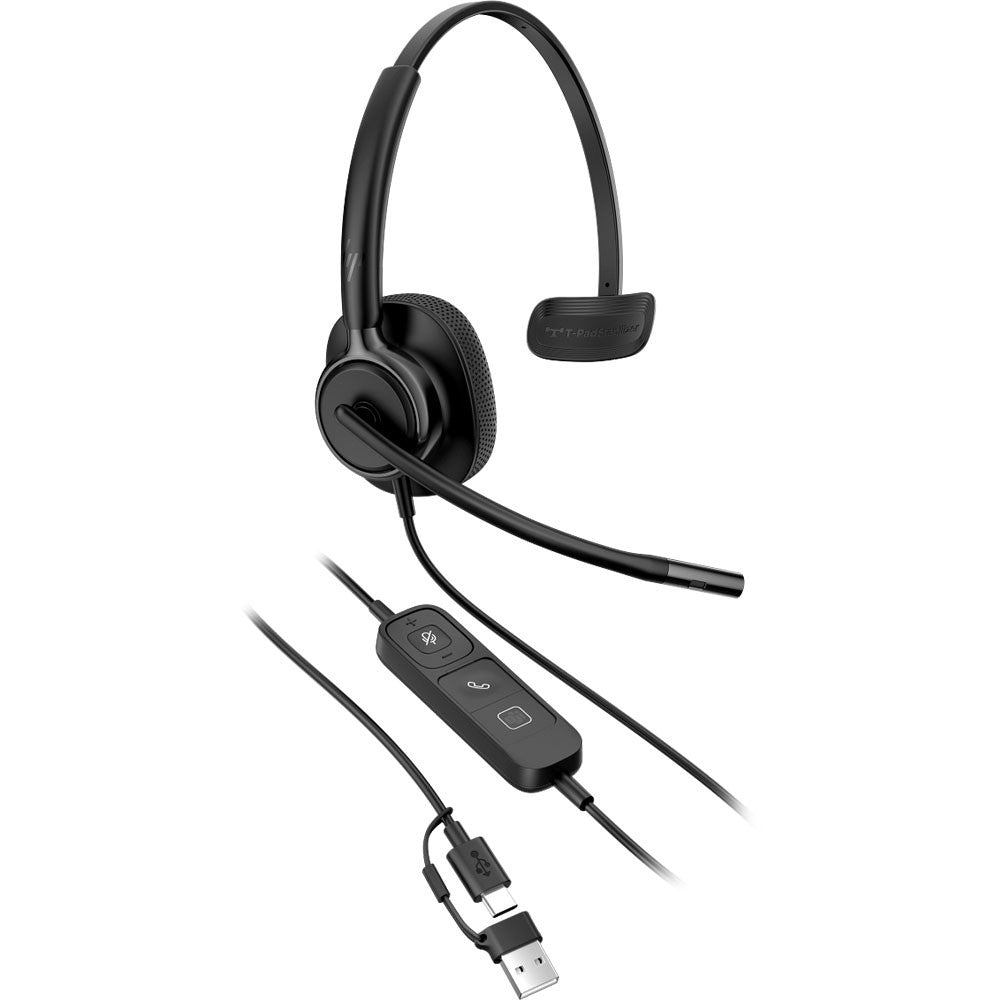
Buy the dual-connection headset, because it removes the failure mode that both single-connector options carry. If your calling happens in a browser or a softphone client and you want the mute button to mean something to that software, the USB side does the work; the 3.5mm tail is there for the desk phone, the tablet and the flight.
Poly Blackwire 3325
If a single connector is genuinely all you need, work backwards from the device rather than the headset. Our guide on how to choose a wired headset walks through that decision port by port, and the full range of wired headsets is filtered by connector so you can rule out the wrong plug before you compare anything else.
Does a USB headset sound better than a 3.5mm headset?
A USB headset sounds more consistent rather than automatically better. The USB headset performs its own conversion inside the housing, so the result is the same on every computer, while a 3.5mm headset is only as good as the audio hardware in the machine it is plugged into. On a computer with a well-designed audio codec a 3.5mm headset can sound excellent; the problem is that you cannot tell in advance which computers those are.
Why does my 3.5mm headset play audio but the microphone does not work?
The most common cause is a mismatch between the two four-conductor wiring conventions. CTIA puts ground on the second ring and the microphone on the sleeve, and OMTP swaps them. Left and right audio sit in the same position under both conventions, so the speakers keep working while the microphone and the inline controls do not. A CTIA-to-OMTP adapter resolves it; reinstalling drivers does not.
Can I use a USB headset with a phone or tablet?
A USB headset works on a phone or tablet only if the device supports USB audio devices and the connector matches or is adapted correctly. Because analog audio over USB-C is an optional accessory mode rather than a guarantee, a passive adapter is the least reliable route. A headset carrying both a USB connector and a 3.5mm plug avoids the question entirely.



Comments (0)