























Cisco phone headset compatibility, settled in one answer
Cisco phone headset compatibility is decided by the sockets on the back of the phone rather than by the brand of headset you buy. A Cisco desk phone with a headset port takes a corded headset through an RJ-style connector, and Cisco documents the 7811 as the only phone in the 7800 Series that does not support a headset at all. Wireless is the harder question. Answering and ending calls away from the desk needs electronic hookswitch signaling, and Cisco carries that on a second socket: the auxiliary port on the 8811, 8841 and 8845, and the auxiliary port, the USB port or Bluetooth on the 8851, 8861 and 8865. That is why a wireless headset for a Cisco phone arrives with a Y-cable, an RJ-9 end for the headset port and an AUX end for call control. Cisco supports third-party headsets and asks you to confirm the model with the headset manufacturer.
What actually settles the question
- Count the sockets first. A headset port makes a corded headset work. The auxiliary port beside it is what makes a wireless headset answer a call.
- Cisco lists the 7811 as the only 7800 Series phone with no headset support, and no cable changes that.
- USB headsets are documented on a short list of models: the 6871, 8851, 8861 and 8865.
- Over Bluetooth, Cisco's multiplatform phones expose only limited call features such as answering and ending a call.
Most of what gets published as a Cisco headset compatibility guide is a list of part numbers, and part numbers get discontinued faster than anyone updates the list. The sockets on the back of the phone do not change. Turn the phone around, count what is there, and the answer falls out in about ten seconds.
The three sockets that decide everything
A Cisco desk phone gives a headset at most three ways in: the headset port, the auxiliary port next to it, and on a few models a USB port.
The headset port is the one everybody finds. On the 7821, 7841 and 7861, Cisco documents an RJ-style connector that accepts either a corded headset or the base station of a wireless one. One phone in that family has nothing to plug into, which is worth knowing before a box arrives on someone's desk.
The auxiliary port is the one people miss, because it sits alongside the headset port and looks like the same socket. Cisco's own way of telling them apart is physical: the AUX connector is slightly larger than the headset port connector. That size difference is the whole tell, and it explains the odd-looking cable in the wireless headset box. A Y-cable has two RJ-style ends, one for the headset port and one for AUX, because on a Cisco phone the audio and the call control travel on separate paths.
What the auxiliary port is actually doing
The auxiliary port carries call control, which is the thing that lets a wireless headset answer a ringing Cisco phone from the other side of the room.
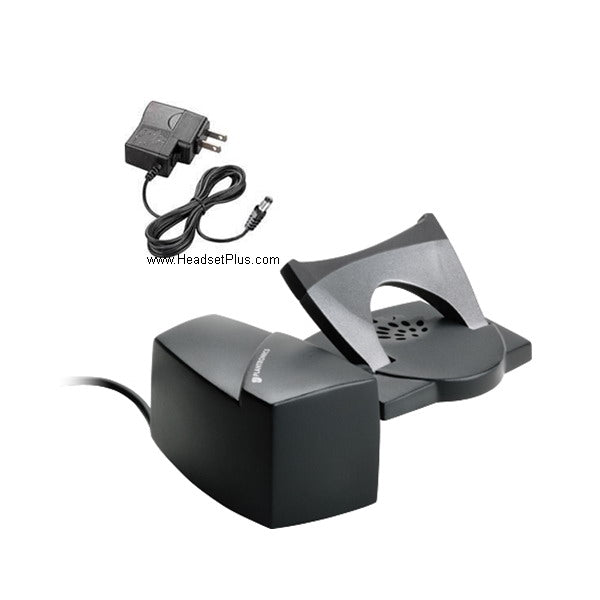
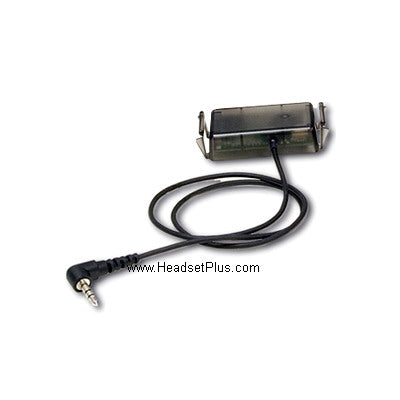
Electronic hookswitch (EHS): Electronic hookswitch: a signaling link between a wireless headset's base and the desk phone that lets the headset take the phone off hook and put it back, so a call is answered and ended without touching the handset.
Skip that cable and nothing looks broken. The headset pairs, the audio is fine, and every single call still begins with a walk back to the desk to press a button, which is the reason the wireless headset was bought in the first place. The headset makers publish the pairing themselves rather than leaving it to guesswork. Jabra states that the Jabra LINK 14201-43 enables remote electronic hookswitch control with Jabra wireless headsets and the Cisco Unified IP phone 6945, 78xx, 79xx and 88xx series. EPOS lists the CEHS-CI 01 as its Cisco adapter cable for electronic hookswitch, for the wireless IMPACT SDW 5000, DW, SD and D 10 headset series on Cisco EHS-compatible phones. Which end goes where, and in what order, is walked through in how to connect headset to cisco ip phone.
Which Cisco phones carry EHS over which port
Cisco splits the 8800 Series in two: the lower models signal electronic hookswitch through the auxiliary port only, and the upper models accept USB and Bluetooth as alternatives to it.
| Cisco phone | Headset connection | Remote answer |
|---|---|---|
| 7811 | None. Cisco documents no headset support | Not available |
| 7821, 7841, 7861 | RJ-style headset port, corded headset or wireless base | EHS cable listed by the headset maker for the 78xx series |
| 8811, 8841, 8845 | Headset port, with a Y-cable for a wireless base | Auxiliary port |
| 8851, 8861, 8865 | Headset port or USB | Auxiliary port, USB port, or Bluetooth |
Read that table as a question about the phone rather than about the headset. The reason the same wireless headset works on one Cisco desk and half works on the next one is almost never the headset. It is that the second phone needed the connection made on a different socket, and the cable in the box only reached one of them.
A thin-sounding corded headset is usually a setting
A corded headset that sounds narrow and quiet on a Cisco phone is more often a configuration default than a faulty headset. Cisco's documentation is blunt about the cause: the phone cannot detect when an analog headset is plugged in, and it cannot tell whether that headset supports the wideband codec either, so it does not assume one way or the other.
The workaround is built into the interface. The analog headset is shown in the phone's Accessories list by default precisely so that somebody can go in and switch wideband on for it, and the same setting is available centrally through Cisco Unified Communications Manager rather than desk by desk. On a floor of forty seats that is one administrator action, not forty support calls about muffled audio. It is also the single most common reason a perfectly good headset gets returned as a compatibility failure when it was never incompatible.
USB and Bluetooth on a Cisco desk phone
USB headsets are not a universal option on Cisco desk phones: Cisco documents USB headset support on the 6871, 8851, 8861 and 8865, and lists it as unsupported on the lower models in those families.
Bluetooth needs the same caution, for a different reason. On Cisco's multiplatform phones, a Bluetooth connection gives you limited call features, answering and ending a call, and not the full set a wired connection carries. That is fine for a headset that spends its day on one desk and needs to take calls. It is a poor fit if the plan was to run one Bluetooth headset across a desk phone, a laptop and a mobile and have every control behave identically on all three. Worth settling before the order rather than after the rollout.
What to confirm before you order
Three things settle a Cisco headset compatibility question, and all three take less than a minute. Read the model number off the phone. Look for an auxiliary port beside the headset port. Then check that the wireless headset you want lists your phone family on its EHS cable, which the headset manufacturers publish for exactly this purpose.
Cisco's own position on the brand question is short and helpful: you can use third-party headsets, and you should check with the headset manufacturer to confirm the model works with your Cisco phone. Older estates have their own habits, and the 7900, 8900 and 9900 families are covered separately in cisco unified ip phone 7900 series support. Once the sockets are settled and it is time to choose hardware, the current range of cisco phone headsets is where to start, and a call to the team with your model number gets the cable matched to it.
Which headsets are compatible with a Cisco IP phone?
Cisco supports third-party headsets on its desk phones and asks buyers to confirm the specific model with the headset manufacturer. Physically, a Cisco phone with a headset port takes a corded headset or a wireless base through an RJ-style connector, and the 8851, 8861 and 8865 additionally accept USB headsets. Compatibility is decided by which sockets your Cisco phone has rather than by brand.
Does every Cisco IP phone have a headset port?
No. Cisco documents the 7811 as the only phone in the 7800 Series that does not support a headset, so no cable or adapter makes a headset work on it. The 7821, 7841 and 7861 all use an RJ-style connector for a corded headset or a wireless base. Check the model number on the phone before ordering anything.
Do I need an EHS cable for a wireless headset on a Cisco phone?
Yes, if you want to answer and end calls away from the desk. Electronic hookswitch signaling is what lets a wireless headset take a Cisco phone off hook remotely, and Cisco carries it on the auxiliary port for the 8811, 8841 and 8845, and on the auxiliary port, USB or Bluetooth for the 8851, 8861 and 8865. Without that connection the headset still passes audio, but every call has to be answered at the phone.
Why does a corded headset sound thin on a Cisco phone?
A Cisco phone cannot detect when an analog headset is plugged in and cannot tell whether it supports the wideband codec, so wideband is not switched on automatically. The analog headset appears in the phone's Accessories menu by default so wideband can be enabled for it, and the same setting can be applied centrally in Cisco Unified Communications Manager. Turning it on usually resolves audio that sounded narrow or quiet.

Comments (0)