























What a corded headset for computer and desk phone actually needs
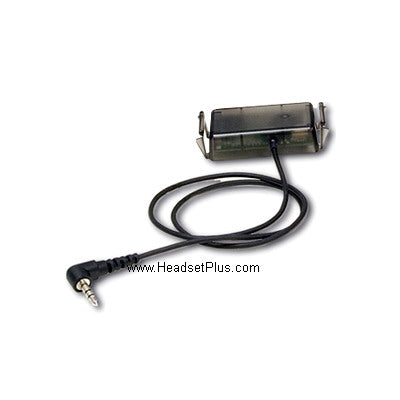
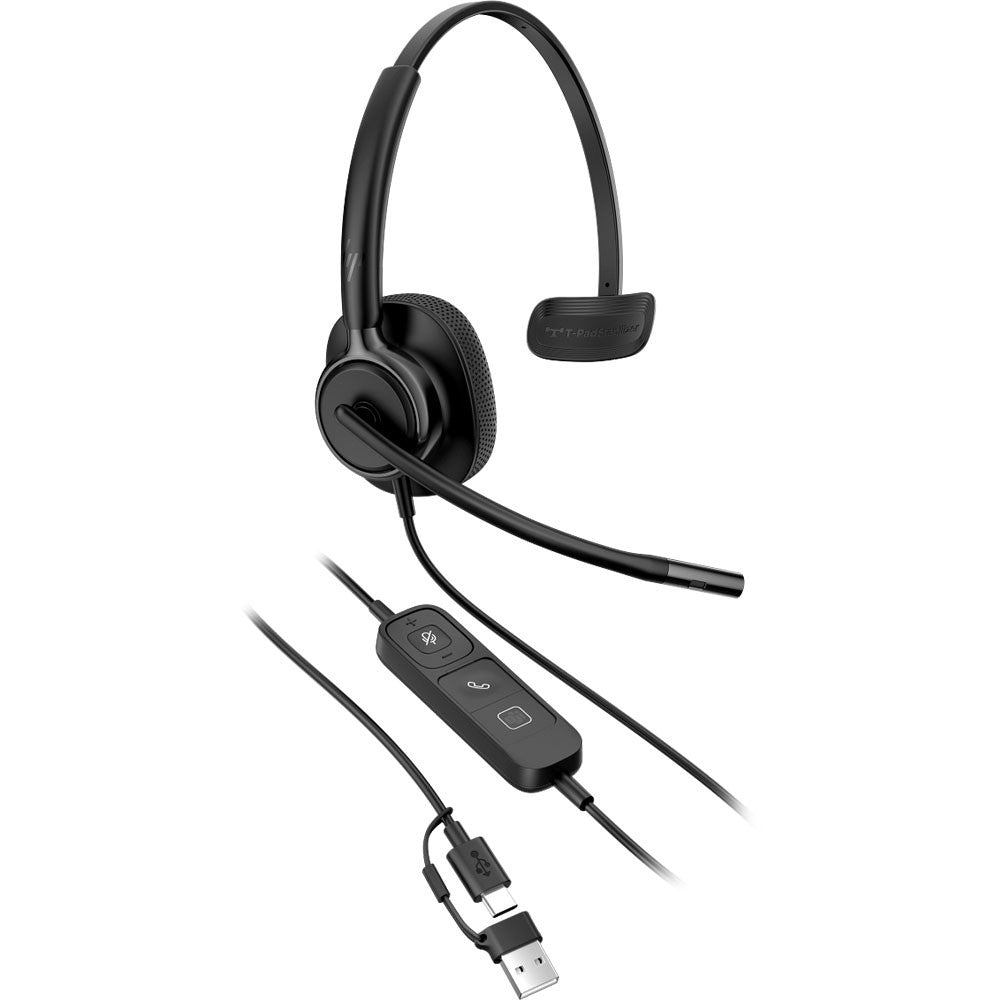
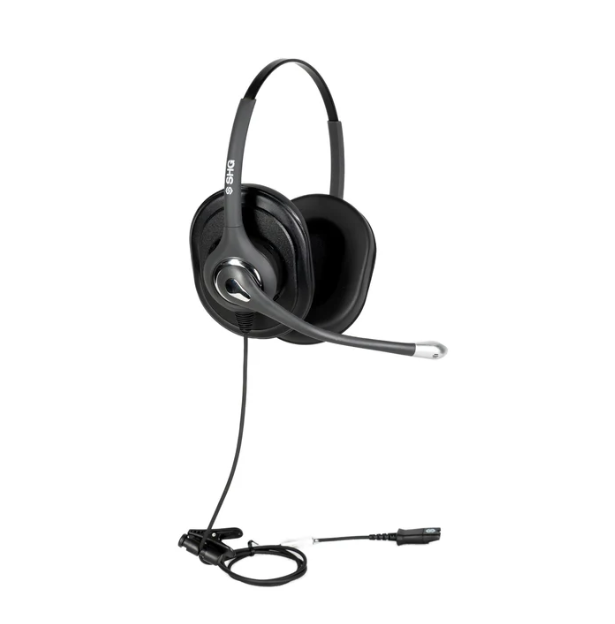
A corded headset for computer and desk phone works through a switcher box that sits between the two, and the plug on the end of your headset cord decides which switcher you buy. A headset ending in a quick disconnect plug needs an analog switcher, which on the Jabra side is the Link 180 or the Link 860 and on the Poly side the MDA524 QD. A headset ending in USB needs a USB switcher instead: the Jabra Link 950 or the Poly MDA220. All of them connect to the computer over USB and to the desk phone with an RJ-9 cable, going into either the phone's headset port or the port the handset came out of. Answering a desk phone call by tapping the headset is the part that costs extra, because that needs an EHS cable or a mechanical lifter, and neither one comes in the box.
What decides which switcher you need
- Quick disconnect headset, analog switcher. USB headset, USB switcher. The plug settles it faster than the phone model does.
- No dial tone in the headset is almost always a configuration switch in the wrong position, not a dead box.
- Poly ships its switchers on position A and names D as the position for Cisco phones.
- The EHS cable that lets you answer the desk phone from the headset is a separate purchase on both brands.
Most people reach this problem holding a headset that already works on one of the two devices. A quick disconnect plug was made for an analog phone line. A USB plug was made for a computer. Neither reaches across to the other on its own, so a small box does the crossing and gives the headset one place to live. If you have not bought the headset yet, choose the wired headset first and let it pick the box, since adding a switcher later is easy and wearing a headset you dislike for eight hours is not.
The connector on your headset cord picks the box
There are two families of switcher, and which family you need is settled by the plug at the end of the headset cord rather than by the phone on your desk. Quick disconnect headsets keep their audio analog the whole way, so the switcher has to match itself to whatever levels your particular desk phone puts on the line. USB headsets hand the computer a finished digital signal, so the switcher becomes a sound device on the computer and does the conversion for the phone side instead.
That analog side is where the fiddly part lives, and it is why every analog switcher has a small lettered switch hidden on its base or side panel. Desk phones do not present the same audio to a headset port, so the box steps through preset positions until one of them produces a dial tone you can hear.
Poly's own troubleshooting table is blunt about the rest of it. Distorted audio or echo in the headset is answered by lowering the speaking and listening dials on the switcher, and for most telephones the correct setting on those dials is position 2. Jabra's analog boxes are sold for Jabra quick disconnect headsets and Poly's for Poly quick disconnect headsets, so the brand of the headset you already own narrows the list before anything else does.
Five switchers that put one corded headset on both phones
These five cover the two headset connectors and both brands, ordered from the simplest analog box to the two units that can merge a desk phone call and a computer call into one conversation.
Jabra Link 180
Jabra's own accessories listing describes the Link 180 as a manual switch for desk phones and softphones, and manual is the entire design. You press to move the headset between the computer and the phone, and there is nothing on the box for setting levels, so volume stays where it already was: on the desk phone's own controls and in the computer's sound settings. That suits one person with one quick disconnect headset and a phone that already sounds fine.
Jabra Link 180
Jabra Link 860
The Link 860 is the Jabra box to look at when the desk phone line itself is the problem rather than the switching. It is an audio processor for Jabra quick disconnect headsets, so it sits on the analog side and shapes what the phone hands the headset instead of passing it through untouched. Buy it for a line that sounds thin, harsh or quiet through a headset port, not because it switches any better than the Link 180 does.
Jabra Link 860
Jabra Link 950
The Link 950 is the one to buy if the headset you already own ends in USB, and it is the best documented box on this page. Around the back Jabra puts a micro USB port for the computer, an RJ-9 for desk phone audio, a second RJ-9 for the handset and an RJ-45 marked AUX, with power arriving over a separate micro USB port. Calls are handled from the headset because the Link 950 connects the headset to whichever phone is receiving the call, and Jabra Direct sets which softphone client counts as your default. If your softphone is not on Jabra's supported list, you answer in the client and the headset just carries the audio.
Jabra Link 950
What comes in the box is worth knowing before you order: the desk phone RJ-9 cable, both a USB-A and a USB-C computer cable, and a quick start guide. The RJ-45 cable, the 3.5 mm cable and the Jabra EHS cable are not supplied, and the AC power supply is sold as an accessory rather than included.
Worth it if
- Your headset is already USB, corded or through a Jabra Bluetooth adapter
- You want the box to follow whichever phone rings rather than being switched by hand
- You are managing more than a few desks and want central updates through Jabra Xpress
Buy something else if
- Your headset is a Jabra Evolve 40, Evolve 80, GN 1000, a Jabra Bluetooth headset in wired USB audio mode, or anything using the Jabra Link 360 adapter, since Jabra lists the AC power supply as required for those and it is a separate purchase
- Your headset cord ends in a quick disconnect plug rather than USB
Poly MDA524 QD
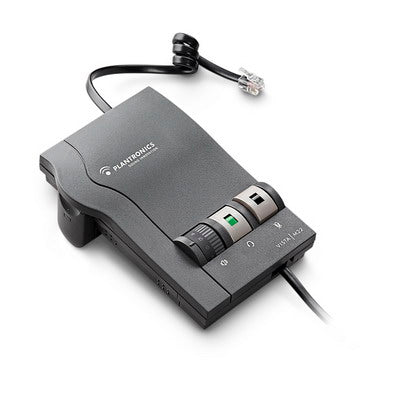
The MDA524 QD is the Poly box for quick disconnect headsets, and it does more once the call is live than any of the Jabra analog units. Holding the PC and desk phone buttons together for two seconds merges an active computer call and an active desk phone call. Holding the call button for two seconds puts a call on hold. A mute button silences the microphone on either channel, and the two volume wheels are independent, so the desk phone caller and the softphone caller do not have to share one level. Poly publishes one user guide covering both this and the MDA526 QD.
Poly MDA524 QD
Poly Lens Desktop App, or the Plantronics Hub app, is where the rest of it lives: firmware updates, turning features on and off, and computer audio mixing, which needs the desktop software to work at all. Three of those mixing features are genuinely unusual. The switcher can play a recorded greeting when you answer, which additionally requires an EHS cable sold separately. It can let you record voice notes to the computer while the desk phone caller is muted, and it can play computer audio into your headset that the desk phone caller cannot hear. One setup note that catches people out: if dialing from the softphone does nothing, Poly's first check is that the MDA500 is set as the default sound device on the computer.
Poly MDA220 USB
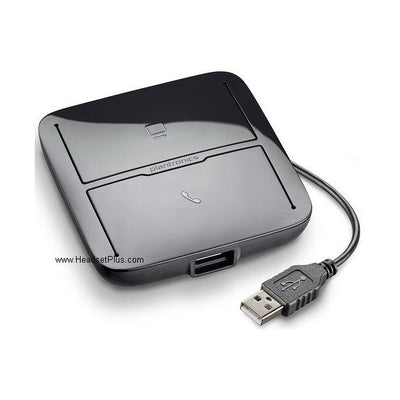
The MDA220 is Poly's USB switcher, the box for a Poly USB headset or a Poly Bluetooth adapter that needs to reach the desk phone as well as the computer. It sits opposite the MDA524 QD in the same way the Jabra Link 950 sits opposite the Link 860: the headset side is USB rather than quick disconnect, and everything about the desk phone side stays the same, including the lettered configuration switch and the separate EHS cable for answering.
Poly MDA220 USB
Jabra Link 950 and Poly MDA524 QD, side by side
These two are the capable end of both brands, one for USB headsets and one for quick disconnect, and everything in this table comes from the maker's own documentation rather than from a spec aggregator.
| Detail | Jabra Link 950 | Poly MDA524 QD |
|---|---|---|
| Headset side | USB-A or USB-C, depending on the version | Poly quick disconnect |
| Phone ports | RJ-9 for desk phone audio, RJ-9 for handset, RJ-45 for AUX | Headset port, or the handset port when the phone has none |
| Fixing a missing dial tone | Rotate the dial tone switch on the bottom | Side panel switch, A to G, A by default and D for Cisco |
| Answering the desk phone from the headset | EHS adapter, available as an accessory | EHS cable or HL10 lifter, sold separately |
| Desktop software | Jabra Direct, with Jabra Xpress for central management | Poly Lens Desktop App or Plantronics Hub |
| Stated in the box | Desk phone RJ-9 cable, USB-A and USB-C computer cables, quick start guide | Not listed in the user guide |
The parts that are not in the box
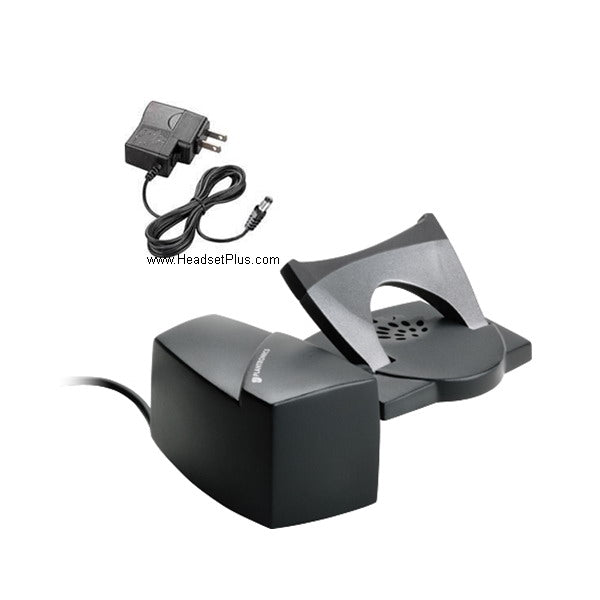
Three things people expect to find in the carton are sold separately, and all three change what the setup can do. The first is the EHS cable. Jabra states that an EHS adapter can be required to give the headset call control of desk phone calls, and lists it as an accessory rather than an inclusion; without it the call has to be answered by pressing the answer button on the phone. Poly says the same thing in its instructions, which tell desk phone users to press the phone's headset button or lift the handset manually if they do not have an HL10 lifter or an EHS cable.
The second is the power supply. On the Jabra Link 950 the AC power supply is an accessory, and Jabra lists it as required for the Jabra Evolve 40, the Evolve 80, the GN 1000, Jabra Bluetooth headsets in wired USB audio mode, and Jabra devices used with the Link 360 Bluetooth adapter. If your headset is on that list, the box on its own will not carry it.
The third only applies if you go the mechanical route. When a Poly HL10 lifter is installed but will not lift the handset, Poly's first instruction is to check that the optional AC power adapter is firmly pushed into the handset power jack on the switcher, and its second is to move that adapter off a power strip and into the wall directly if callers hear a buzz.
No dial tone usually means the wrong switch position
A headset that stays silent on the desk phone side while working perfectly on the computer is nearly always a configuration switch problem, and both makers document it as the first thing to try. On a Poly switcher you open the side panel and move the middle switch through its positions until the dial tone appears, starting from A and trying D if you are on a Cisco phone. On the Jabra Link 950 there is a rotary dial tone switch on the bottom of the unit, and Jabra's instruction is simply to rotate it until you hear a dial tone in the connected headset.
If the dial tone is there but the audio is rough, the fix moves to the level dials rather than the position switch. Poly's guidance for distortion and for echo is the same in both cases: bring the speaking and listening dials down, with position 2 being correct for most telephones, and lower the desk phone's own volume control if it has one.
Desk phones with no headset port
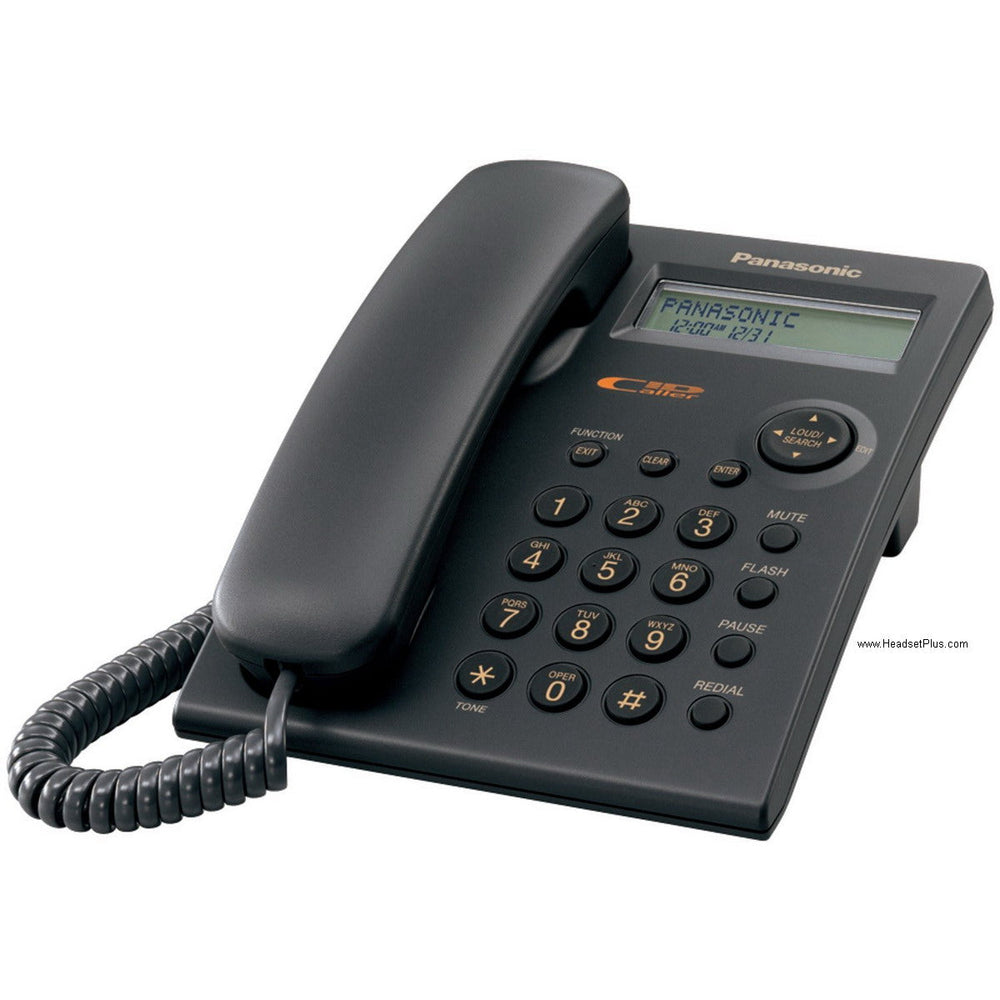
A phone with no headset port still works, because the switcher can take over the handset port instead. Poly's connection diagram gives both routes, one for a phone with a headset port and one without, and the Jabra Link 950 has a dedicated RJ-9 handset port on the back for exactly this. The handset comes out of the phone and plugs into the switcher, and the supplied cable runs from the switcher into the port the handset used to occupy.
The tradeoff arrives at answering time. With no headset port, there is no headset button for an EHS cable to operate, so the call is opened by lifting the handset off the cradle and the audio then travels through the switcher to your headset. The handset stays off the hook for the length of the call. That is the setup most people describe as clumsy after a week, and it is the argument for a mechanical lifter if your phone allows one.
Do I need two headsets for a computer and a desk phone?
No. One corded headset covers both when a switcher sits between them, and the switcher is chosen by the headset's plug: an analog box such as the Jabra Link 180, the Jabra Link 860 or the Poly MDA524 QD for a quick disconnect headset, or a USB box such as the Jabra Link 950 or the Poly MDA220 for a USB headset.
Can I answer desk phone calls from the headset itself?
Only with an extra part. Jabra states that an EHS adapter can be required for call control of desk phone calls and sells it as an accessory, and Poly tells MDA524 QD users to press the phone's headset button or lift the handset manually if they do not have an HL10 lifter or an EHS cable. The EHS cable also has to match your specific phone model.
Why is there no dial tone through the headset?
The configuration switch is on the wrong position. A Poly switcher has a switch behind the side panel running from A to G, where A works for the majority of desk phones and D is the position Poly names for Cisco phones. The Jabra Link 950 has a rotary dial tone switch on the bottom of the unit that you turn until the dial tone appears.
Does a USB switcher work with a Bluetooth headset?
Yes, through the adapter. The Jabra Link 950 takes a Jabra Bluetooth adapter in its headset port, and the Poly MDA220 takes a Poly Bluetooth adapter the same way. Jabra lists the AC power supply, an accessory rather than an inclusion, as required when a Jabra Bluetooth headset runs in wired USB audio mode or when the Link 360 adapter is used.

Comments (0)