


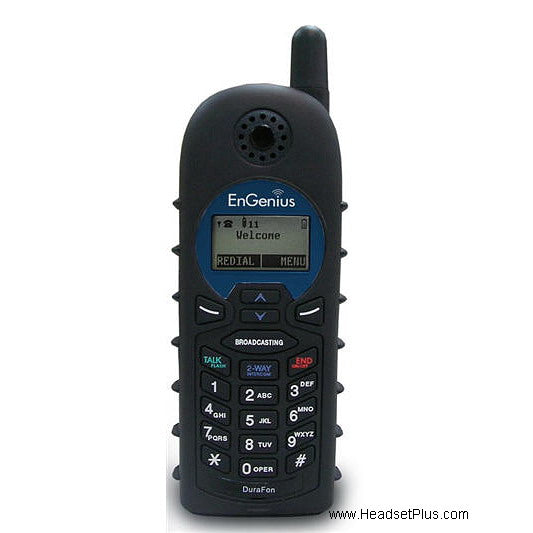






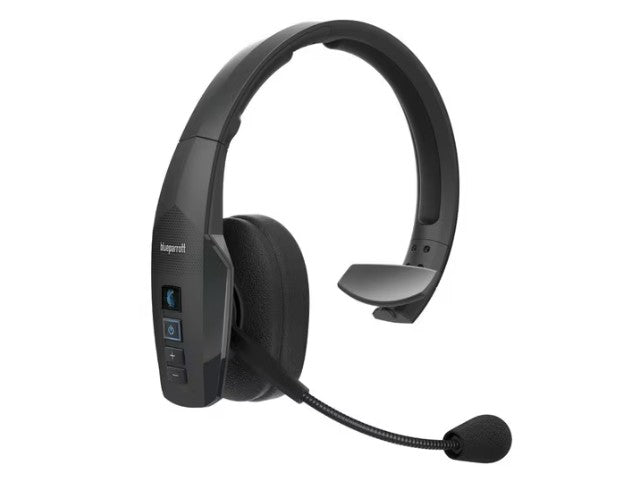



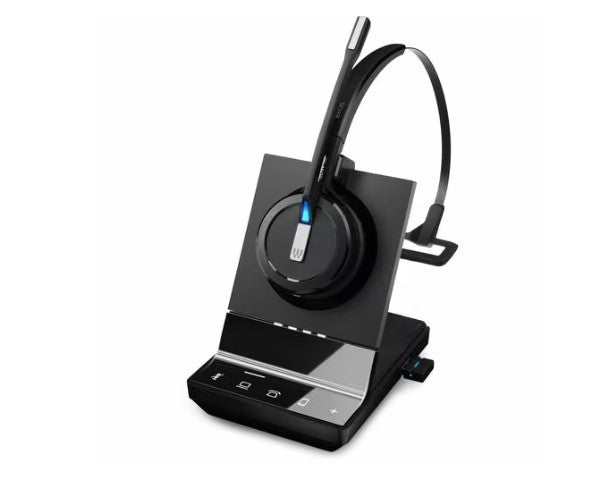












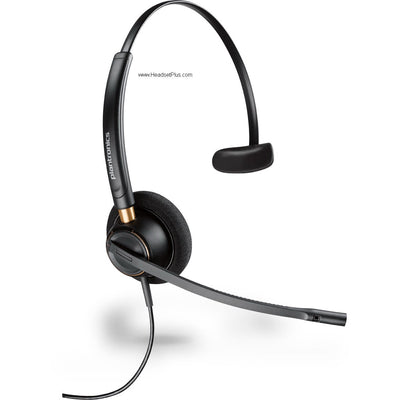
The Plantronics CS540 is one of the best-selling office headsets ever made, so it's no surprise buyers get confused by its two look-alike siblings: the CS540-XD and the CS545-XD. They're physically identical — same headset, same base, same convertible wearing styles — so the differences are entirely invisible, and entirely about two things: the wireless frequency and the battery.
Here's what actually separates them, what "XD" means, and — since the XD models have been retired — which current headset does the same job today.
Quick answer
Last updated July 2026
What does "XD" mean on a Plantronics CS540?
"XD" stands for "Extra Density." It refers to the wireless frequency the headset uses, not a performance or quality upgrade — an XD headset is the exact same CS540 running on a different radio band so that many more of them can operate in one place without interfering with each other.
Extra Density (XD) — A version of the CS540 that runs on 900 MHz instead of standard DECT (1.9 GHz), so a single office can pack in far more wireless headsets before they start to interfere. It solves a density problem, not an audio or range one.
Myth
The CS540-XD is a better or newer version of the CS540.Reality
It isn't an upgrade — it's the same headset on a different frequency. The XD models exist purely so that offices already saturated with standard-frequency CS540s can add more wireless headsets without interference. If you're not running dozens of headsets in one location, the standard CS540 is the right choice, not the XD.CS540 vs CS540-XD vs CS545-XD: the differences
Two variables separate the three models — frequency and battery. Everything else is identical.
| CS540 | CS540-XD | CS545-XD | |
|---|---|---|---|
| Frequency | DECT 6.0 (1.9 GHz) | 900 MHz (Extra Density) | 900 MHz (Extra Density) |
| Battery | Internal (open earpiece to replace) | Snap-on | Snap-on + spare battery |
| Talk time | Up to 7 hours | Up to 7 hours | Unlimited (hot-swap) |
| Best for | Standard offices | High-density offices | 24/7 and multi-shift desks |
| Status | Current | Retired | Retired |
The frequency difference: solving wireless density
The frequency split exists to solve a real problem: DECT wireless has a density ceiling. Pack too many headsets on the same frequency into one location and they start to fail — dropped connections, shortened range, poor audio. The XD models sidestepped that by running on a separate 900 MHz band.
That density limit hasn't gone away — it's simply handled better by modern hardware. Today's DECT headsets are engineered for much higher density natively, which is one of the reasons the separate XD line was retired. Whether wireless even suits a dense floor over a wired setup is worth weighing first, which we cover in wired vs wireless headsets for call centers. For a genuinely high-density deployment — a large call center running dozens of headsets in one area — the frequency planning is a specialist conversation, the kind our team maps out before you order.
The battery difference: unlimited talk time
The battery is the other divide. The standard CS540 has an internal battery — to replace it, you open the earpiece, so it's not a mid-call swap. The XD models used a snap-on battery instead, and the CS545-XD shipped with a spare battery and charger, so when one ran low during a long call you'd hot-swap the fresh one in without hanging up.
That "unlimited talk time" setup was built for two situations: agents on marathon calls, and single desks shared across multiple shifts where the headset never gets a chance to charge. If your CS540's internal battery has simply worn out over the years, though, that's a different fix — a replacement CS540 battery restores full runtime for a fraction of a new headset, as covered in our CS540 troubleshooting and setup guide.
The XD models are retired — what to buy now
Both XD variants have been discontinued, but the jobs they did are covered by current headsets. Match the replacement to the reason you were looking at an XD in the first place:
- Standard office use: the Poly CS540 is still current and still the best-selling option.
- Unlimited talk time / 24-7 desks: the Poly Savi 8445 ships with two batteries for hot-swap unlimited talk, the direct successor to the CS545-XD's headline feature.
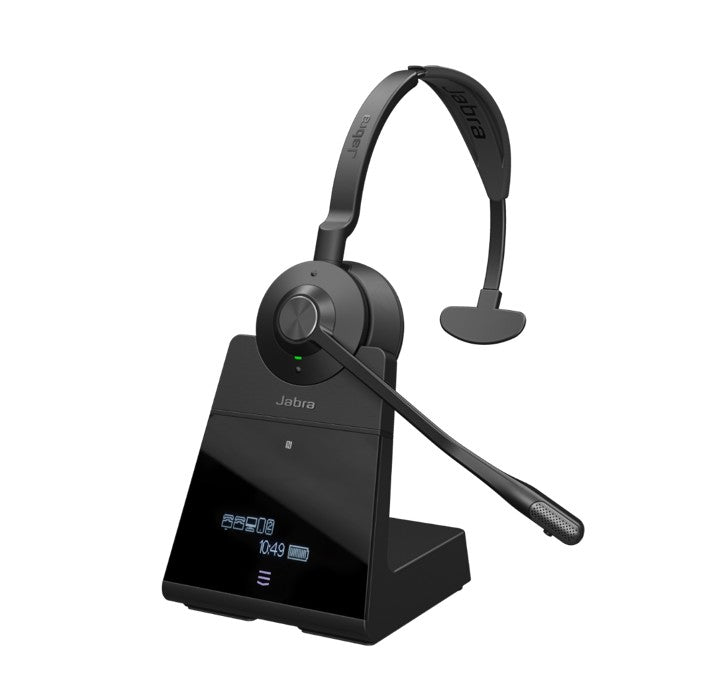
- High-density deployments, including large call centers: modern Savi and Jabra Engage DECT systems handle far more headsets per location than the original CS540 platform ever could — the right model depends on your exact headset count and floor plan, so it's worth confirming with a specialist rather than guessing.
You can compare the current wireless line on the wireless headsets collection.
What does XD mean on a Plantronics CS540?
XD stands for "Extra Density." It refers to the wireless frequency, not a performance upgrade — the CS540-XD is the same headset as the standard CS540 but runs on 900 MHz instead of DECT 1.9 GHz. This lets many more wireless headsets operate in one location without interfering, which matters only in high-density offices like large call centers.
What's the difference between the CS540 and CS540-XD?
The Plantronics CS540 runs on DECT 6.0 (1.9 GHz) with an internal battery, while the CS540-XD runs on 900 MHz with a snap-on battery for high-density environments. The headsets are otherwise physically identical. Unless you're running dozens of wireless headsets in one location, the standard CS540 is the correct choice.
What is the CS545-XD and how is it different from the CS540-XD?
The CS545-XD is a CS540-XD that also includes a spare snap-on battery and charger, giving it unlimited talk time — you hot-swap a fresh battery mid-call without hanging up. Both use the same 900 MHz Extra Density frequency. The CS545-XD suited 24/7 and multi-shift desks where the headset never has time to fully charge.
Are the CS540-XD and CS545-XD still available?
No, both the Plantronics CS540-XD and CS545-XD have been retired. The standard CS540 remains current. For the CS545-XD's unlimited-talk-time capability, the Poly Savi 8445 is the modern equivalent, shipping with two batteries for hot-swap use. High-density needs, including large call center deployments, are met by current Savi and Jabra Engage DECT systems.
How many wireless headsets can run in one large call center before they interfere?
Standard DECT frequency has a density ceiling — historically around 40 headsets in one location before interference becomes an issue. Modern DECT chipsets handle significantly more density natively than the older CS540 platform did, which is why the separate 900 MHz "Extra Density" line was eventually retired. For a large deployment, it's worth confirming exact capacity with a specialist for your specific headset count and floor plan.
The whole comparison comes down to two questions: do you need a different frequency for a headset-saturated office, and do you need to swap batteries mid-call? For most people the answer to both is no, and the standard CS540 is the right buy. If you need genuine 24/7 runtime, the Poly Savi 8445 carries that torch today — and if you're outfitting a high-density floor or large call center, call our specialists at 877-999-3838 and we'll plan the frequencies with you.

Comments (0)