


























Wired vs wireless headset for a call center: what actually settles it
Choosing a wired vs wireless headset for a call center is settled by how many agents share one room, because a cordless DECT headset has to find a free radio channel and a corded one never does. In the United States, DECT sits in 1920 to 1930 MHz, ten megahertz holding five carriers at 1.728 MHz spacing. A European office works with 1880 to 1900 MHz and ten carriers, so identical headsets have twice the room to breathe in Frankfurt as they do in Phoenix. Each carrier divides a 10 millisecond frame into 24 time slots that pair into 12 duplex speech channels, and North American equipment runs at 4 mW average power where Europe allows 10 mW. Wired headsets sit outside that arithmetic completely. That is why floors of seated agents usually stay corded, and why the cordless budget goes to supervisors and to anyone who takes calls away from an assigned desk.
What the room decides before the spec sheet does
- US DECT gets five carriers in 1920 to 1930 MHz. A European office gets ten, so the same wireless headsets stretch roughly twice as far across a room there as they do here.
- Wired seats have no radio ceiling, so 200 corded agents in one hall is a furniture question rather than a frequency one.
- Wireless vendors compete on how efficiently they use the US allowance, not on getting more of it: Jabra claims 3 times more users in the same office space, Poly up to 2x better density on the Savi 7300 Office.
- A corded Jabra Engage 50 II reaches 5.2 or 7.8 ft depending on the cable, which is the honest measure of the walk a seated agent takes on a call.
Two headsets can sound identical on a test call and behave nothing alike once 120 of them switch on in the same hall at 9 a.m. The corded one carries on regardless of its neighbors, while the cordless one is hunting for a slot in a band the FCC re-channelized for this use back in 2005 and has not widened since.
A wireless floor runs out of channels before it runs out of desks
Every DECT headset in a US office shares the same ten megahertz, 1920 to 1930 MHz, and no purchase order buys more of it. That band divides into five carriers spaced 1.728 MHz apart. Each carrier runs a 10 millisecond frame cut into 24 time slots, which pair off into 12 duplex speech channels. A European call center running the same headsets works inside 1880 to 1900 MHz with ten carriers, twice the allocation, which is why deployment advice written for a London floor does not transfer to a Dallas one.
Nothing on a wireless headset's spec sheet changes that allocation. What a manufacturer can change is how much traffic it fits inside the allowance, which is exactly what the density claims on the box are describing.
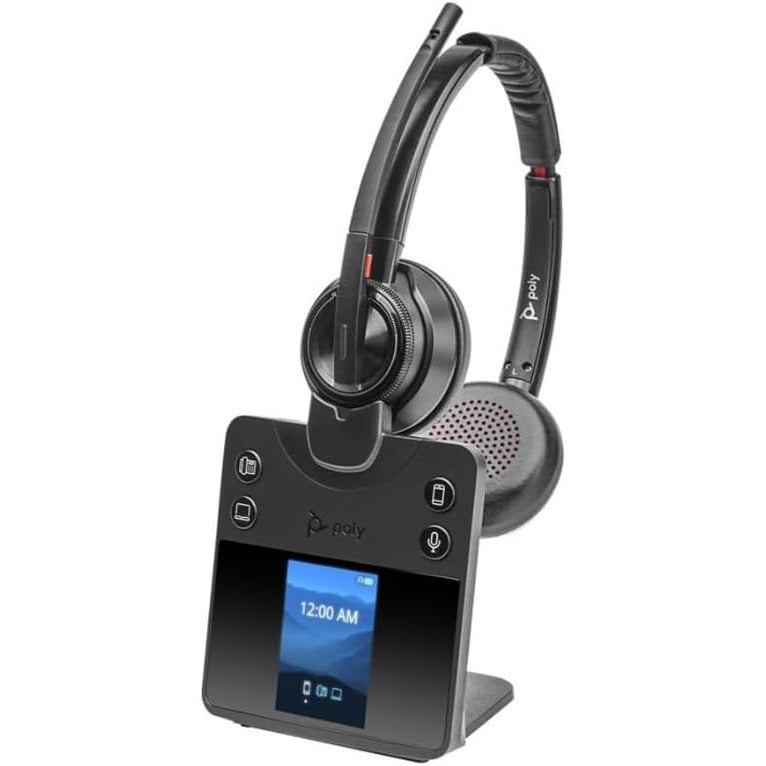
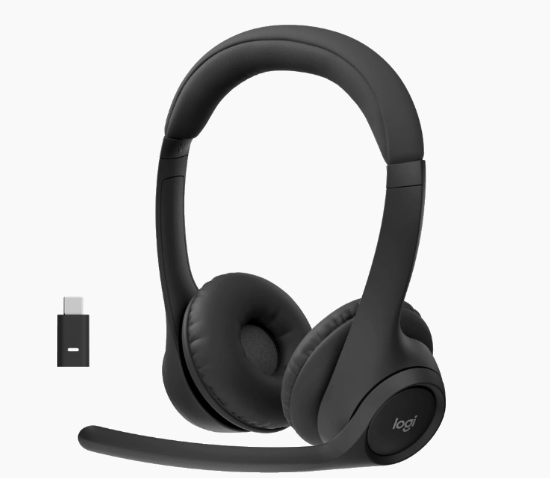
Poly makes the same kind of claim for the Savi 7300 Office, up to 2x better density compared with other DECT headsets. Read both as efficiency figures rather than capacity figures. They tell you one headset is a tidier neighbor than another; they do not tell you the room has grown. For a floor manager the practical version of this is that a wireless rollout has a planning stage and a wired one does not, and the planning stage is where a 40-seat pilot that went perfectly stops predicting what 160 seats will do.
The US floor gives up transmit power as well as carriers
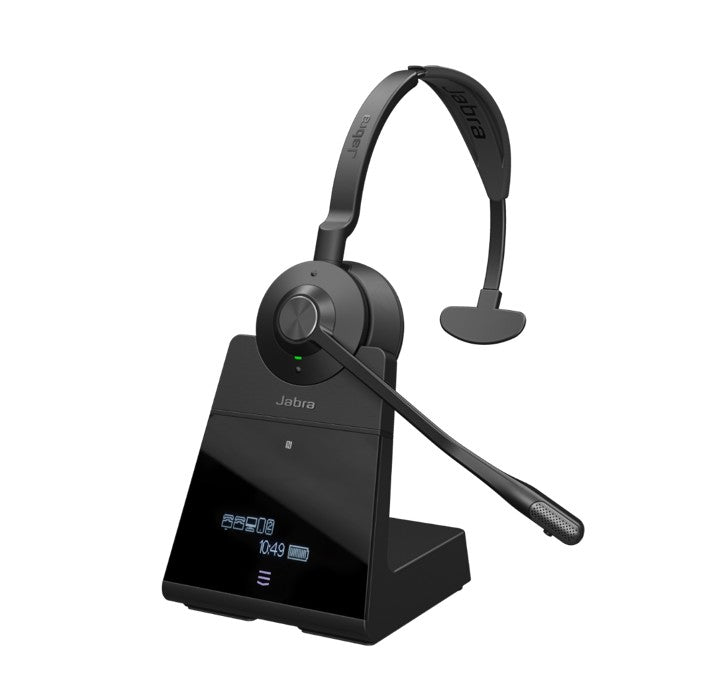
North American DECT is held to 4 mW average and 100 mW peak transmit power, against 10 mW average and 250 mW peak in Europe. Range ratings are still generous on paper: Jabra rates the Engage 75 SE at up to 490 feet and HP rates the Savi 7300 Office at up to 580 feet, both line of sight. Line of sight is the qualifier doing the work in those numbers, since it describes a headset and a base with clear air between them, which is not a floor of people, monitors, storage and stud walls.
Wired and DECT wireless across a hundred seats
At a hundred seats the two separate on four things: how many fit in one room, how far an agent can walk while talking, what has to be charged, and how much of the rollout is planning rather than plugging. Audio quality is not on the list, and neither is hearing protection.
| What scales | Wired | Wireless DECT |
|---|---|---|
| Headsets in one room | No radio ceiling | Shares five US carriers, 1920 to 1930 MHz |
| Reach on a live call | 5.2 ft or 7.8 ft of cable on the Engage 50 II | Up to 580 ft line of sight on the Savi 7300 Office |
| Power | Nothing to charge | Up to 13 hr talk time, 100% charge in 90 min |
| Wear part | The cable | The lithium ion battery |
| Call security | No radio link to secure | DECT Security Step C, 256-bit AES encryption |
| Rollout work | Plug in USB-A or USB-C | Pair to a base, then plan the room |
What 580 feet of range is worth at an assigned desk
An agent who takes every call sitting at the same desk uses a few feet of a rating that runs to hundreds. The Savi 7300 Office reaches up to 580 ft line of sight and the Engage 75 SE up to 490 ft, and both figures are bought in full by every seat that has one, including the seats that never stand up. That is the part of a wireless quote worth arguing about before the order goes in, because it is priced per agent and used by a handful of them.
What IT braces for
A floor of wireless headsets will slow down the office Wi-Fi.What the band plan says
DECT headsets in a US office transmit in 1920 to 1930 MHz, a slice the FCC re-channelized for this in 2005. The traffic they actually compete with is other DECT headsets in the same room, splitting five carriers, and that competition gets worse with every seat you add.The roles where the range is real money are short and specific: supervisors coaching while they walk the floor, agents who step to a printer or a colleague's screen without dropping the call, and anyone covering more than one room in a shift. Count those people. That number, not the headcount, is the wireless order.
Where the cord still wins
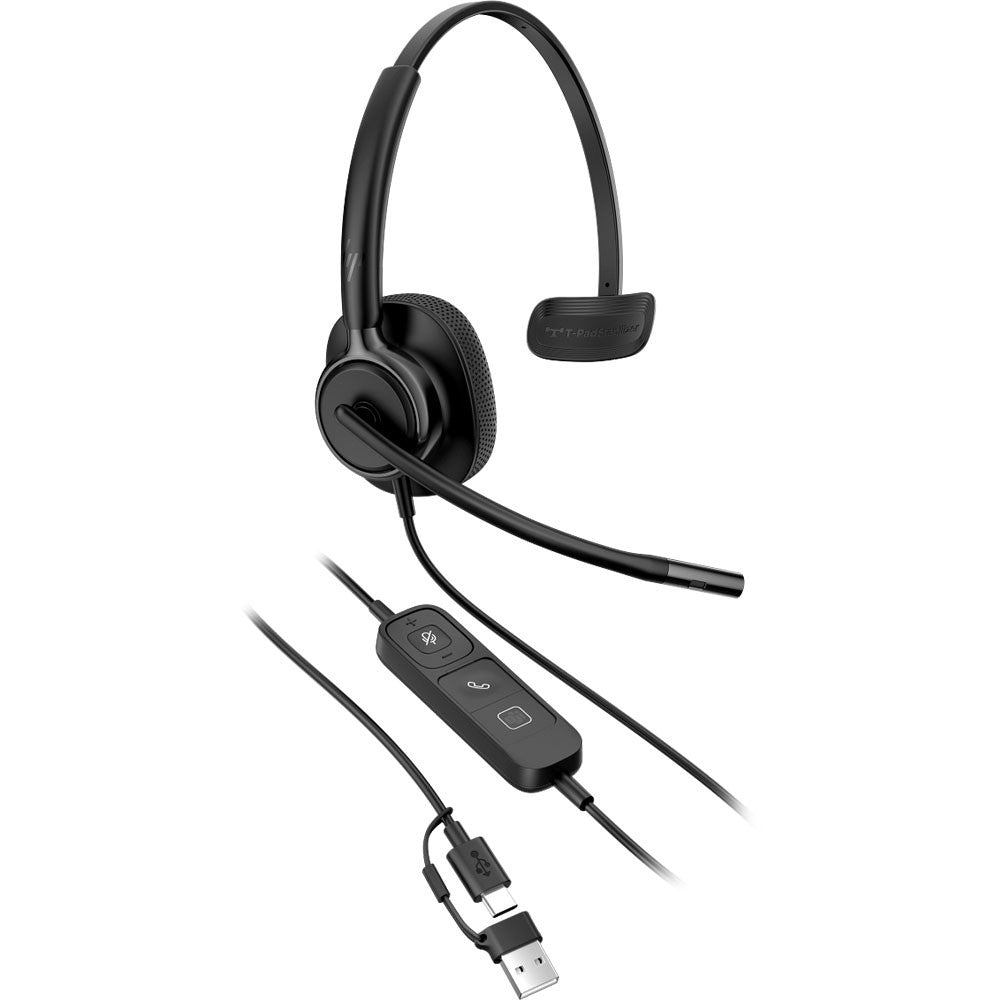
A corded headset gives up the walk and keeps everything else, including the hearing protection that gets sold as a wireless feature. Jabra's wired Engage 50 II carries SafeTone 2.0 with PeakStop 105 and is documented against EU noise-at-work rules, G616 and OSHA, which is the same regulatory ground a contact center buys wireless models to stand on. It weighs 45 g in mono and 65 g in stereo, plugs in over USB-A or USB-C, and carries a three-year warranty. Jabra also ships Engage+ alongside it, which puts live on-screen prompts in front of an agent about background noise, microphone position, silence and interruptions, so the analytics layer is not a cordless privilege either.
Right call when
- Agents take calls seated at an assigned desk
- One open area already holds more DECT headsets than the five US carriers comfortably serve
- The rollout has to be repeatable across hundreds of seats without a site survey
- Nobody wants a shift starting on a headset that was left off its base
Wrong call when
- Supervisors coach and walk at the same time
- Agents step away from the desk mid-call as a normal part of the job
- Desks are hot-desked and one person covers several rooms in a shift
The cable is the honest cost, and it is shorter than most people picture. An Engage 50 II reaches 5.2 ft or 7.8 ft depending on which cable the SKU ships with, which covers a desk and a chair rolled back from it, and nothing beyond that.
Split the floor by who leaves the desk
Most call centers land on a mix, corded at the fixed agent desks and DECT wireless for the people who move, and the spectrum arithmetic is what pushes them there rather than the price tag. Wired seats cost the room nothing in radio, so the density problem shrinks to the group that genuinely needs to roam, and that group is usually small enough to plan properly. Start by counting the agents who talk while walking, buy wireless for exactly those, then build the seated majority from a wired headset range that suits the phone system already on the desks.
Is a wired or wireless headset better for a call center?
For seated agents at assigned desks, a wired headset is the better default in a call center, because a corded headset uses no radio spectrum and a room can therefore hold as many as it has desks. Wireless DECT is the better choice for supervisors and roaming staff who take calls away from a desk. Hearing protection does not break the tie: Jabra's corded Engage 50 II carries SafeTone 2.0 with PeakStop 105 and is documented against EU noise-at-work rules, G616 and OSHA.
How many wireless headsets can one US call center floor support?
There is a hard ceiling on wireless headsets per room, and it is set by spectrum rather than by budget. DECT in the United States occupies 1920 to 1930 MHz, which holds five carriers at 1.728 MHz spacing, each running a 10 millisecond frame of 24 time slots that pair into 12 duplex speech channels. A European office has ten carriers in 1880 to 1900 MHz. Manufacturers publish density multipliers, such as Jabra's 3 times more users in the same office space, but those describe more efficient use of the same band, not more band.
Does a wireless call center headset last a full shift?
A wireless call center headset generally covers a shift with docking between them. Jabra rates the Engage 75 SE at up to 13 hours of talk time, reaching 40% charge in 30 minutes and 100% in 90 minutes, and HP rates the Savi 7300 Office at up to 13 hours as well. The battery is the wear part on the wireless side, in the way the cable is on the wired side, so a large cordless fleet eventually needs a battery service plan.
Do wireless headsets interfere with office Wi-Fi?
DECT headsets in a US office transmit in 1920 to 1930 MHz, a band the FCC re-channelized for this use in 2005, and they are held to 4 mW average transmit power against Europe's 10 mW. The contention that costs a call center call quality comes from other DECT headsets in the same area sharing five carriers, which is a reason to count wireless seats per room before ordering them.