






















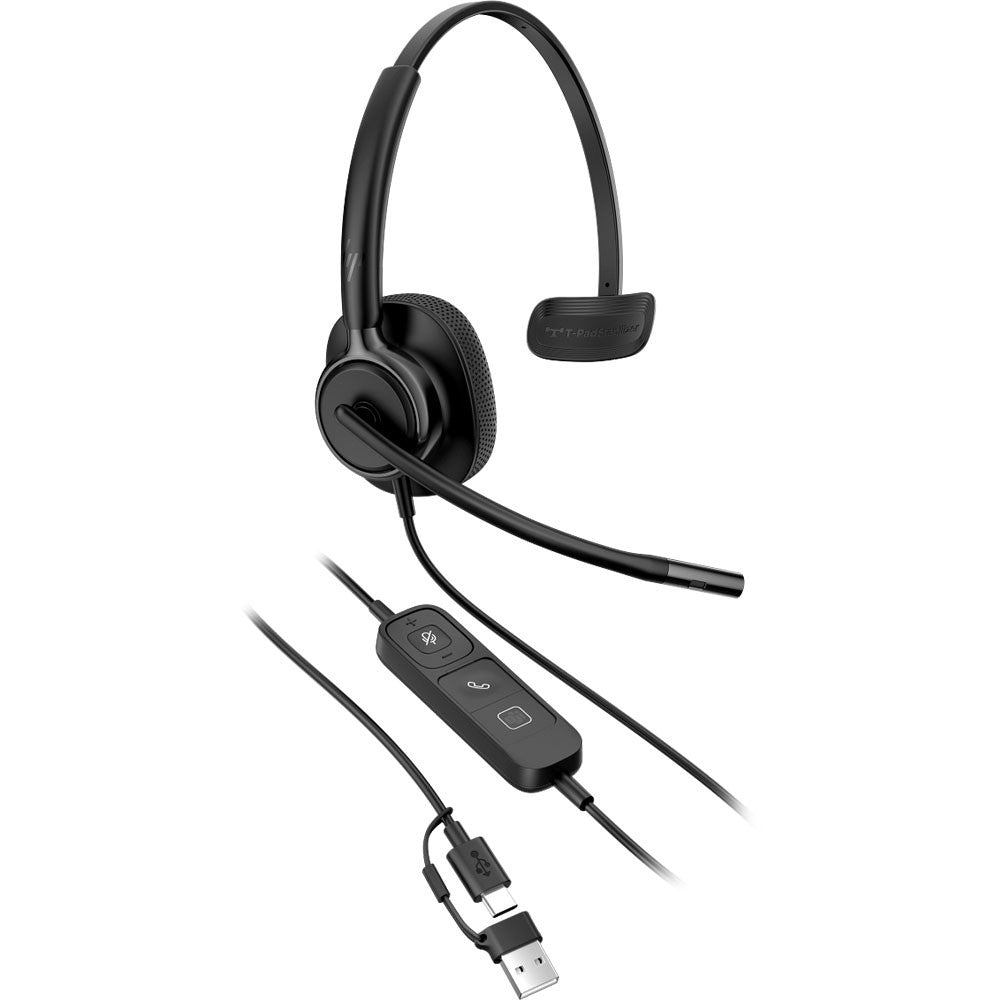

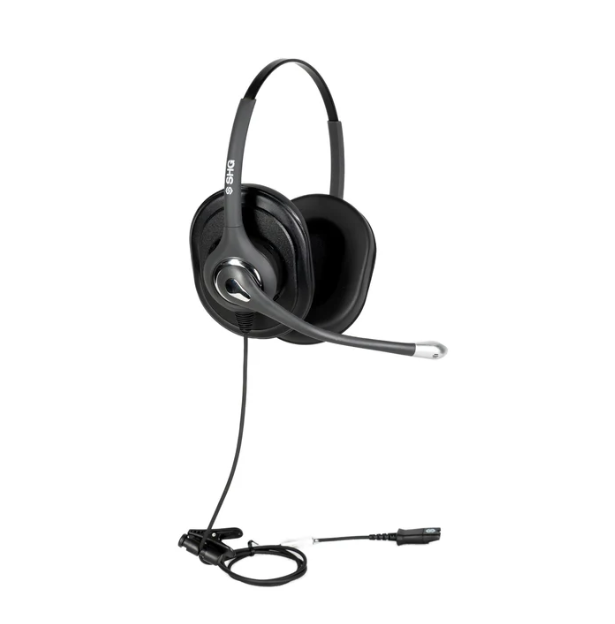

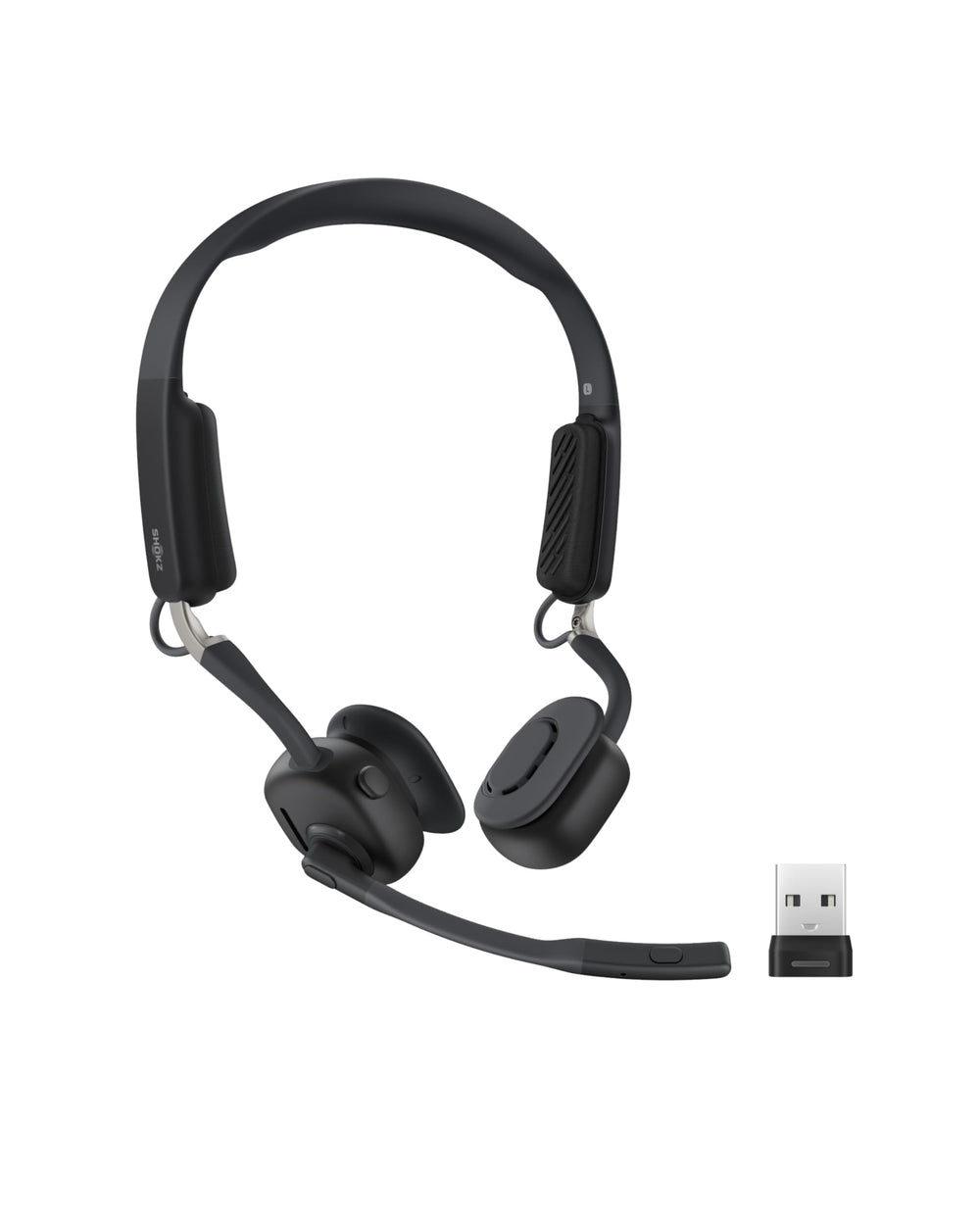

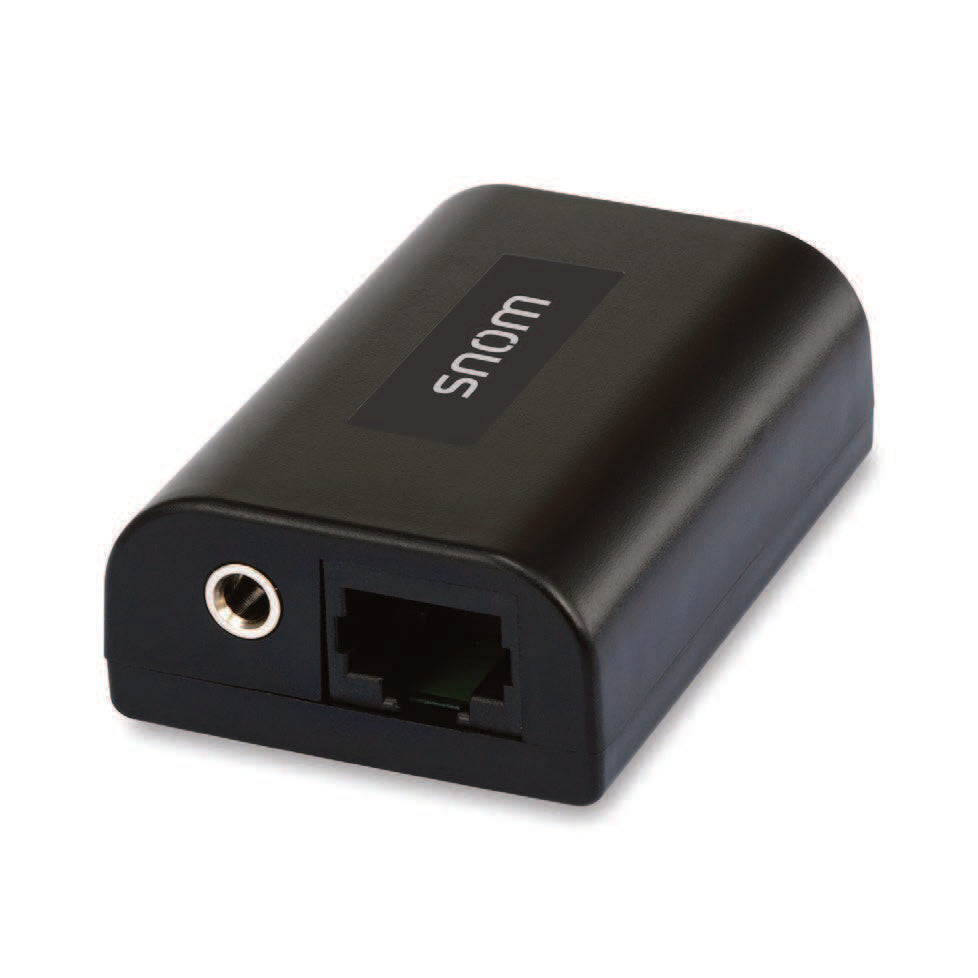
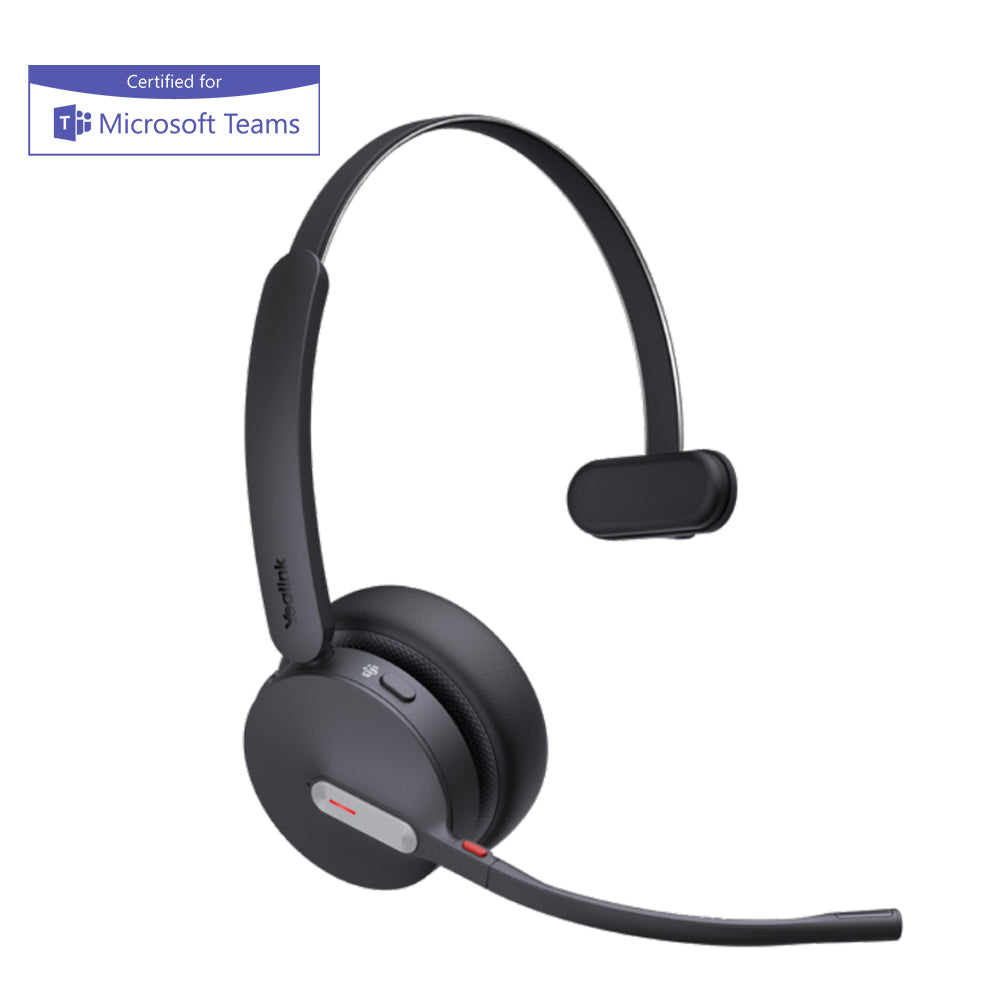
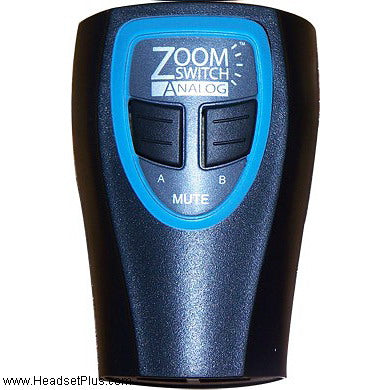


Poly (formerly Plantronics) makes a lot of headsets, and the model names don't tell you much. What actually separates them is a handful of specific technologies — adjustable noise cancelling, Class 1 Bluetooth range, Acoustic Fence microphones, and multi-device switching. Here's what each one does and which headsets have it. Once you know which features matter, browse every Poly model we stock.
Key takeaways
- Digital Hybrid ANC offers adjustable cancellation levels, not just on/off, with up to 24 hours of talk time.
- Class 1 Bluetooth with the included BT700 dongle reaches up to 164 feet, versus roughly 70 feet on older generations.
- Acoustic Fence uses multiple microphones (at least two facing you, one facing outward) to suppress background noise for your caller.
- Multi-device setups let one headset cover a desk phone, computer, and mobile — corded via an MDA524 switcher, or wireless via a Voyager Office Base.
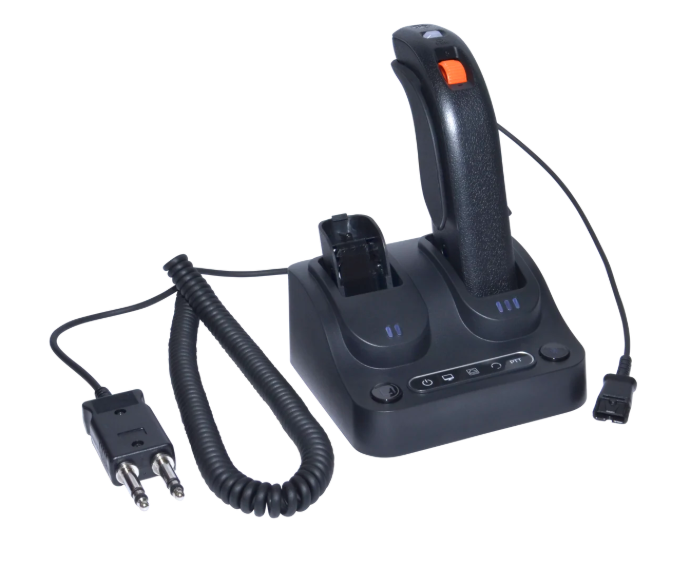
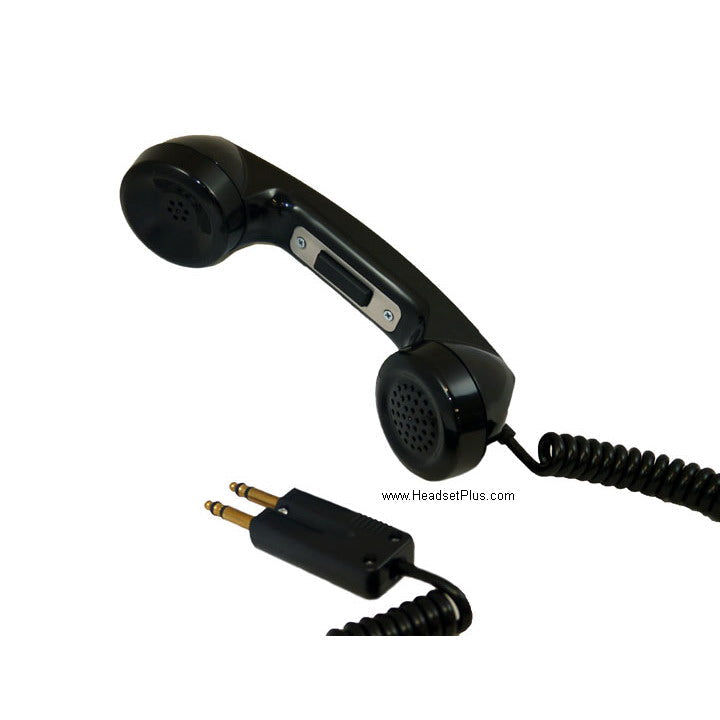
- Poly's PTT (push-to-talk) options serve dispatch and air traffic control, in both corded and wireless DECT versions.
Multi-device connectivity: one headset, several devices
The most practical distinction in Poly's lineup isn't audio quality — it's how many devices a single headset can serve. There are two routes:
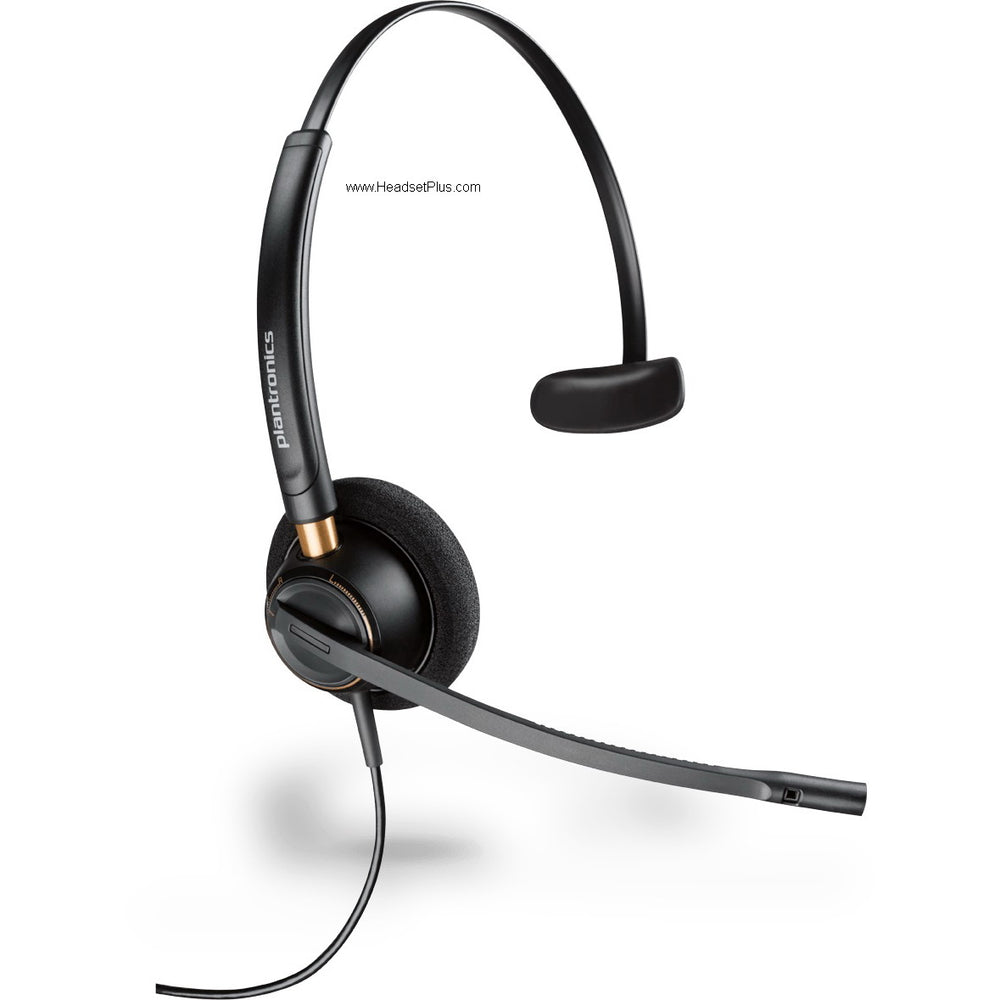
Corded: a Poly MDA524 corded switcher paired with an EncorePro QD headset (the HW540 is the convertible option) connects one headset to both a desk phone and a computer, with independent volume for each side.
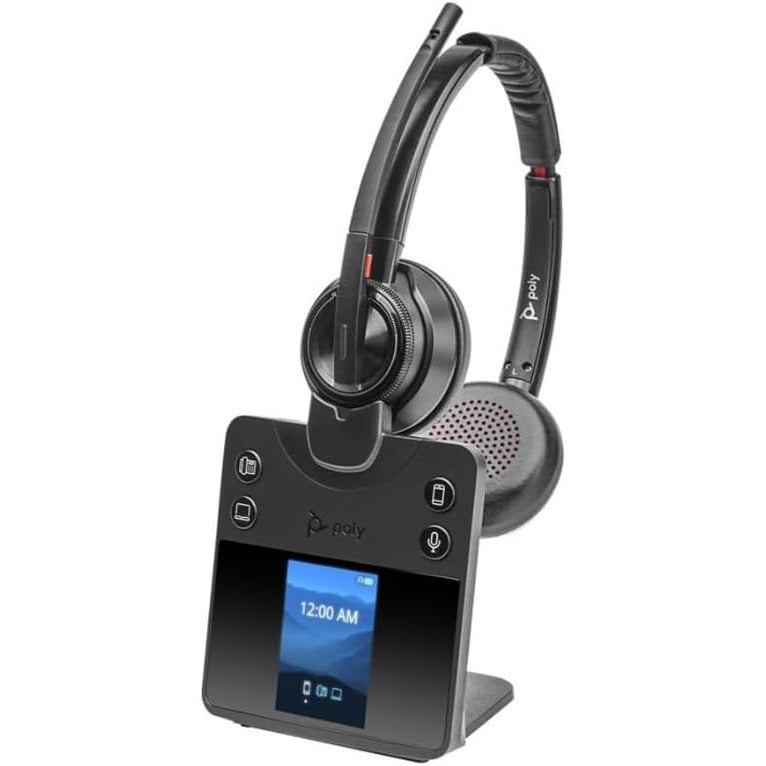
Wireless: a Voyager-series headset paired with a Poly Voyager Office Base adds a third connection — your mobile device — and lets you take the headset out of the office and keep using it with your phone. That's the genuine advantage over a DECT-only system like the CS540, which excels at desk-phone range but stays tethered to its base.
Digital Hybrid Active Noise Cancelling
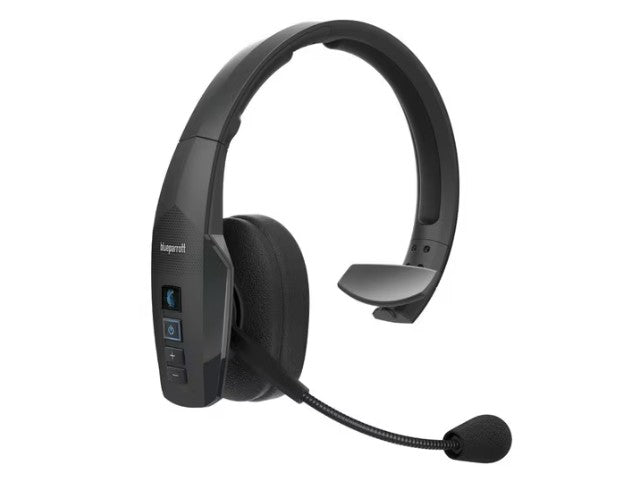
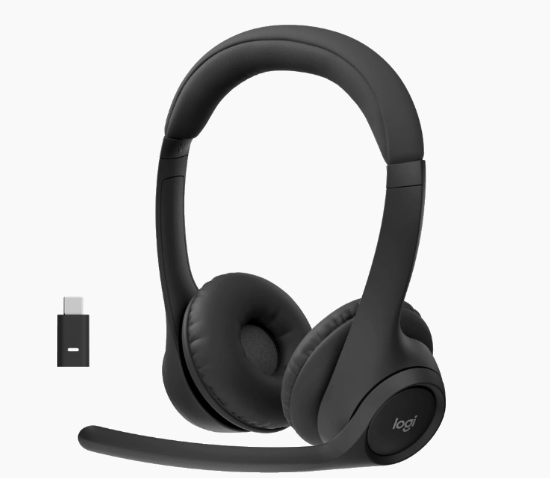
Poly's Bluetooth headsets use Digital Hybrid ANC, which improves on older on/off noise cancelling by offering graduated levels — you can dial in how much of the room you want blocked rather than choosing between all or nothing. Battery life improved substantially alongside it: up to 24 hours of talk time with ANC active, compared with roughly 10 hours on the previous generation. The Poly Voyager Focus 2 is the current headset built around this feature.
Myth
Active noise cancelling and a noise-cancelling microphone do the same job.Reality
They solve opposite problems. Active noise cancelling (ANC) reduces what you hear from the room around you. A noise-cancelling microphone — and Poly's Acoustic Fence technology — reduces what your caller hears of your background. A headset can have one, both, or neither, so check which you actually need: ANC for focus in a loud room, Acoustic Fence for callers who keep asking you to repeat yourself.Class 1 Bluetooth range with the BT700 dongle
Poly's newer Bluetooth headsets ship with a BT700 USB dongle (available in USB-A and USB-C) that delivers Class 1 range — up to 164 feet line-of-sight, a substantial jump from the roughly 70 feet older Bluetooth generations managed. In practice, that's the difference between being tethered to your desk area and being able to walk to a printer or a colleague's desk without dropping the call.
Acoustic Fence microphones
Acoustic Fence is the technology Poly adapted from its Polycom conference-phone line and applied to headsets. The boom arm carries at least two microphones facing you and at least one facing outward — the outward-facing mic captures the ambient noise so the system can suppress it, keeping fans, barking dogs, or lawnmowers out of your caller's ear. It's designed to track your voice specifically while you're speaking, rather than passing along everything the mic picks up.
Push-to-talk options for dispatch and ATC
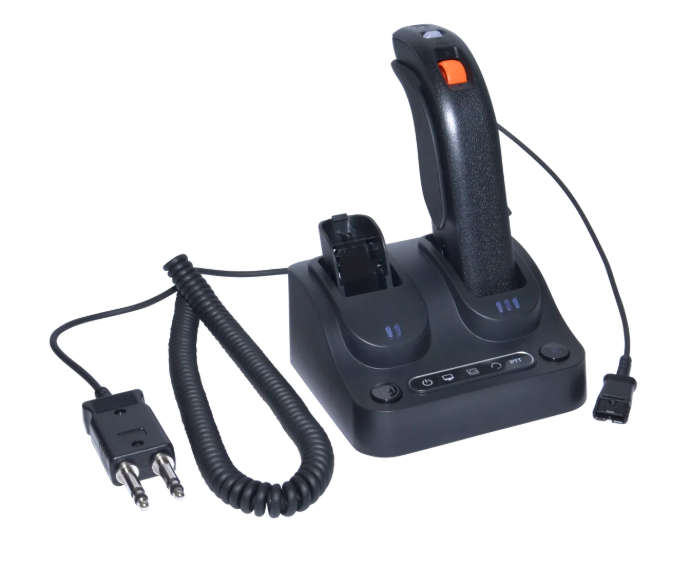
Poly makes both corded and wireless push-to-talk (PTT) adapters, primarily for radio dispatchers and air traffic controllers who need their microphone muted by default and live only while a button is pressed. The wireless side now uses a higher-encryption DECT chipset meeting the highest DECT security tier. Our full PTT adapter guide covers which configuration matches which console.
Earbuds: the compact option
Poly's current earbuds use Bluetooth 5.3 with hybrid adaptive ANC in a much smaller form factor than an over-ear headset, adding gesture controls for volume, mute, and toggling ANC. They work with any major UC platform and virtually any mobile device — the right pick if you're moving between locations rather than sitting at a fixed desk.
How to actually evaluate a headset
Specs only get you so far — comfort and fit decide whether a headset gets worn all day or abandoned in a drawer. When testing one, work through these:
- Is it still comfortable after several hours, not just the first ten minutes?
- Can you adjust it easily without it looking or feeling awkward?
- Is there enough cord (or wireless range) for the movement your job actually requires?
- Is the quick-disconnect easy to separate and reconnect one-handed?
- Can you tell at a glance whether you're in headset or handset mode?
- Is volume control simple to reach, with enough range at both ends?
- Is the audio quality good in both directions — what you hear and what your caller hears?
What is Poly's Digital Hybrid ANC?
It's active noise cancelling with adjustable levels rather than a simple on/off switch, letting you choose how much ambient noise to block. It also delivers up to 24 hours of talk time with ANC active, compared with roughly 10 hours on older generations.
What is Acoustic Fence technology?
Acoustic Fence uses multiple microphones on the boom arm — at least two facing you and one facing outward — to suppress background noise before it reaches your caller. Poly adapted it from its Polycom conference-phone line.
How far does a Poly Bluetooth headset reach?
With the included BT700 dongle, current Class 1 Bluetooth headsets reach up to 164 feet line-of-sight, a significant improvement over the roughly 70 feet older Bluetooth generations managed.
Can one Poly headset work with my desk phone, computer, and mobile?
Yes. For a corded setup, an MDA524 switcher connects a QD headset to both a desk phone and computer. For wireless, a Voyager-series headset with a Voyager Office Base adds mobile connectivity and lets you take the headset out of the office.
What's the difference between ANC and a noise-cancelling microphone?
ANC reduces what you hear of the room around you. A noise-cancelling microphone (and Acoustic Fence) reduces what your caller hears of your background. They solve opposite problems, and a headset may have one, both, or neither.
The right Poly headset comes down to which of these technologies you actually need — range, adjustable ANC, background-noise suppression for callers, or multi-device switching. Browse the current range on our headsets collection, or call our team at 877-999-3838 and we'll match one to how you actually work.



Comments (0)