




















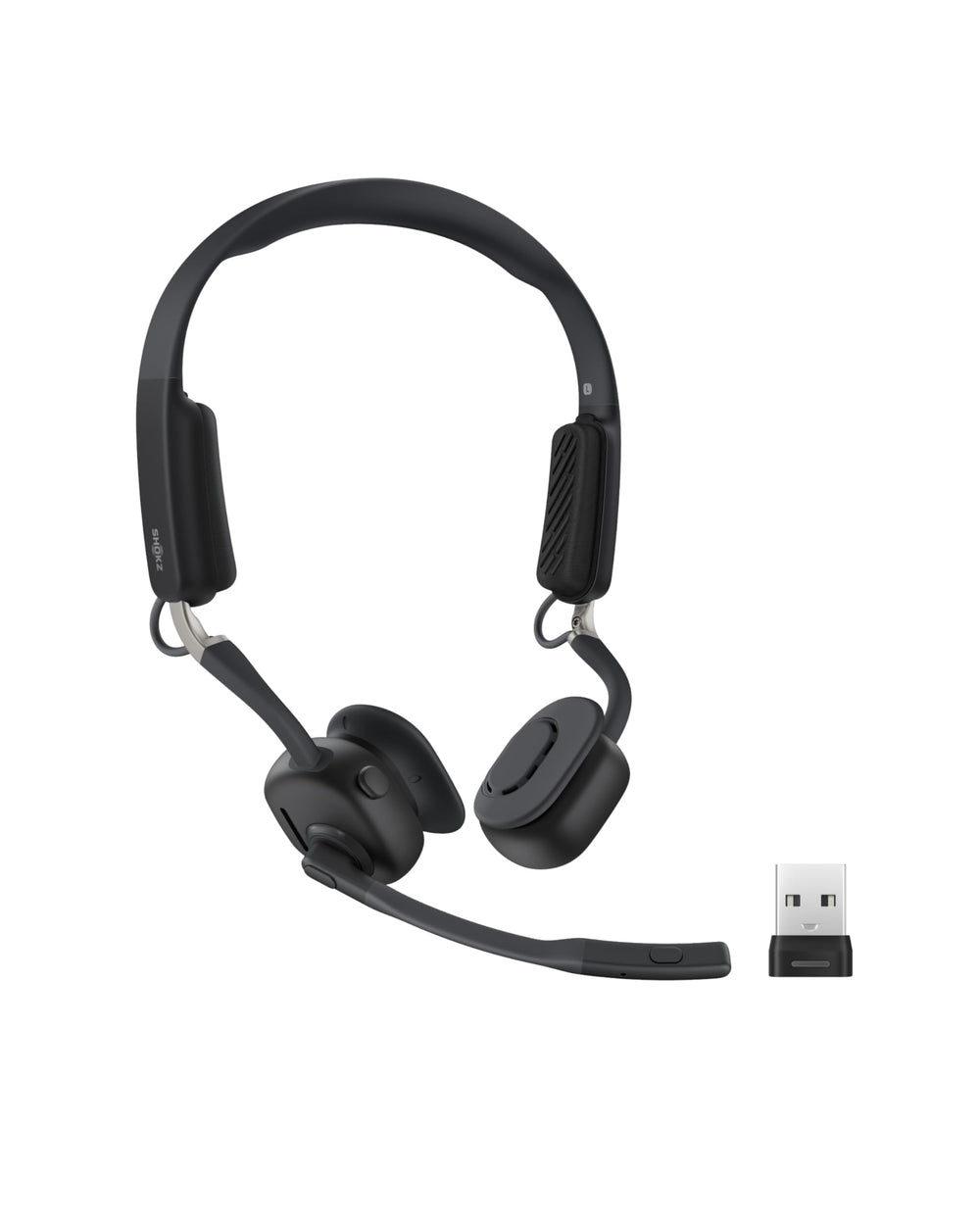

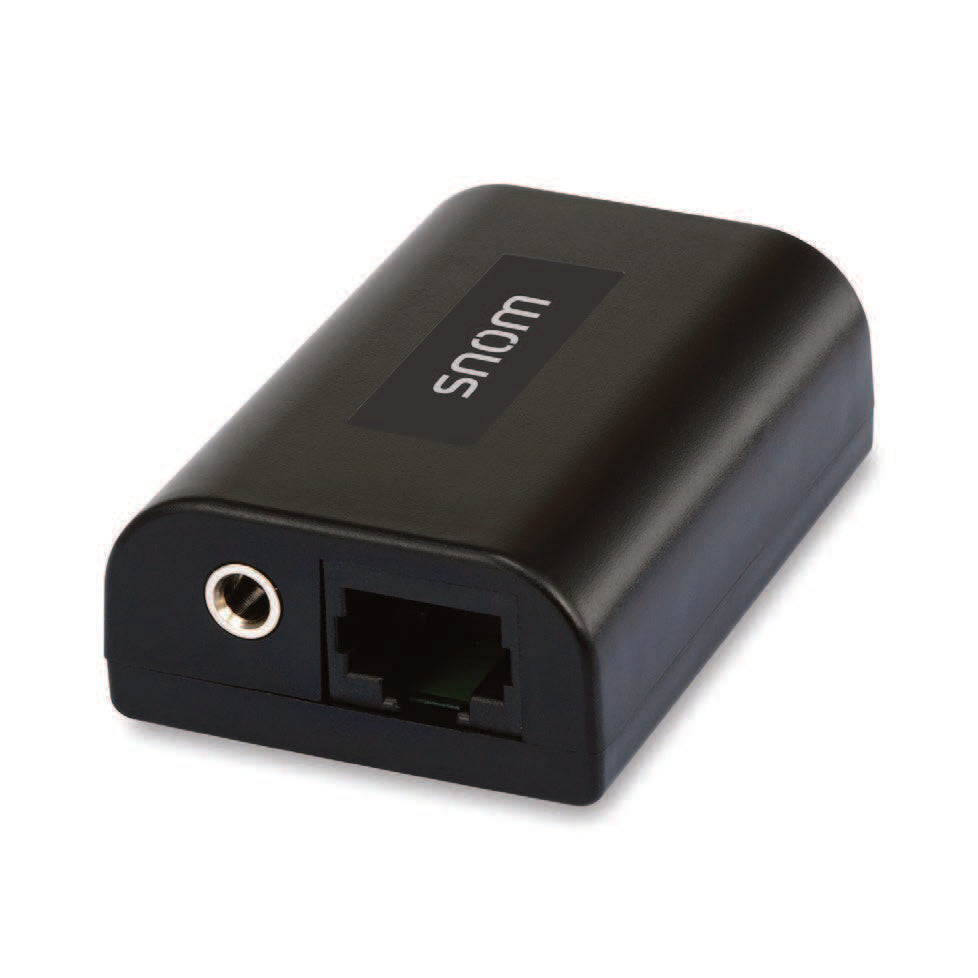
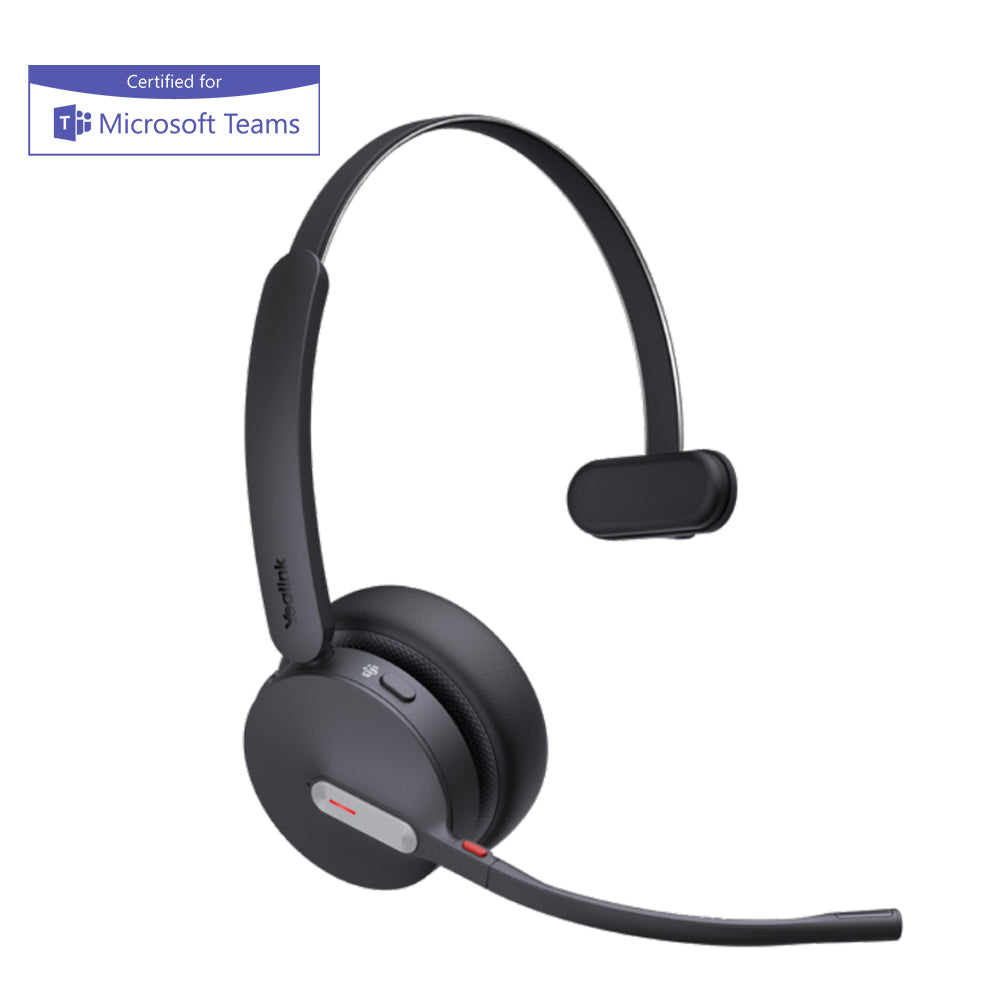
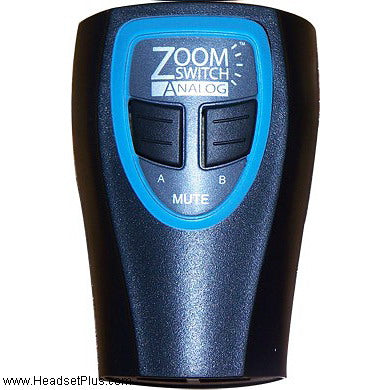


One wireless headset that answers your desk phone, your computer softphone, and your cell phone — no more juggling three earpieces or missing a call because you had the wrong one on. It's a genuinely good upgrade. But the "cell phone" part hides a catch that decides which headset you should actually buy, and almost no product page explains it clearly.
The catch is where the Bluetooth lives. Get that right and you'll buy the headset that fits how you move; get it wrong and you'll own a "mobile" headset that can't leave your desk.
Quick answer
Last updated July 2026
The one decision that matters: DECT base vs Bluetooth headset
Before comparing models, settle this: do you need your cell phone connected only while you're at your desk, or do you need to take the headset with you? That single question splits every multi-device headset into two camps, and it's the difference between the right purchase and an expensive mismatch.
Myth
Any "multi-device" wireless headset lets me use it everywhere, including on my phone on the go.Reality
Not necessarily. On most DECT office headsets — the Poly Savi and Jabra Engage families — the Bluetooth radio lives in the charging base, not the headset. That's brilliant for taking a mobile call while you're at your desk, but the headset can't leave the base's range, so you can't walk to your car and keep talking. Only a Class 1 Bluetooth headset, where the radio is in the earpiece itself, travels with you. Same "connects to your cell phone" claim, completely different capability.Triple connectivity — A headset that links to three devices at once — a desk phone, a computer, and a smartphone — switching between them from a button on the base or headset. On DECT models the phone connection runs through the base; on Bluetooth models it runs through the headset.
Both types also share the features you'd expect from a professional wireless headset: a noise-cancelling microphone that keeps your background off the call, and long DECT or Bluetooth range. If you're still deciding whether wireless is even worth it over a simpler corded setup, our comparison of wired vs wireless headsets for call centers weighs that first. Below, the choice by how you work.
Best for the desk: triple-connectivity DECT (Poly Savi 8445)
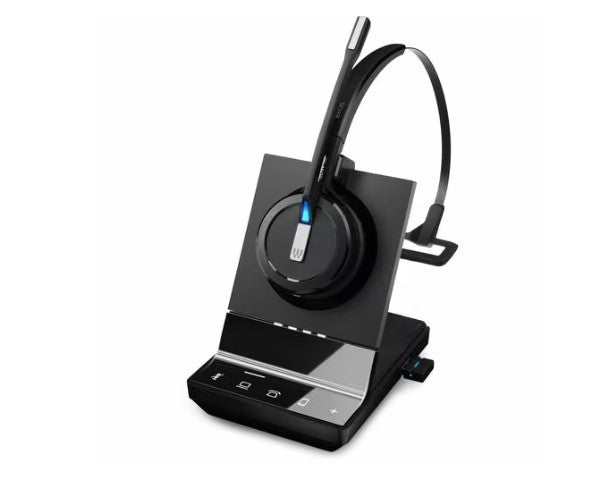
If your cell phone lives on your desk during the workday, a DECT headset gives you the most range, the longest battery, and a full triple-device setup. The Poly Savi 8445 is the current flagship here, and it consolidated the older Savi 8220 and 8240 into one model — so if you've read older guides recommending those, this is what replaced them.
It connects to a desk phone, a computer (USB), and a smartphone (Bluetooth from the base), switching with a button press. It's convertible across three wearing styles, and it ships with a second battery for effectively unlimited talk time — hot-swap the spare mid-call and you never hang up to charge.
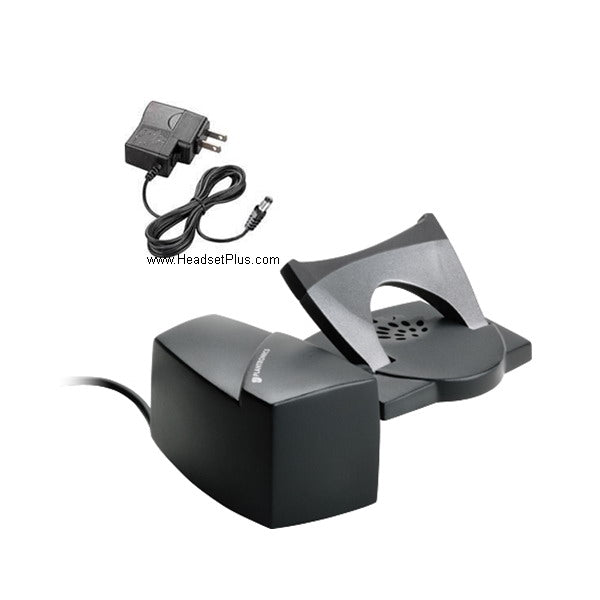
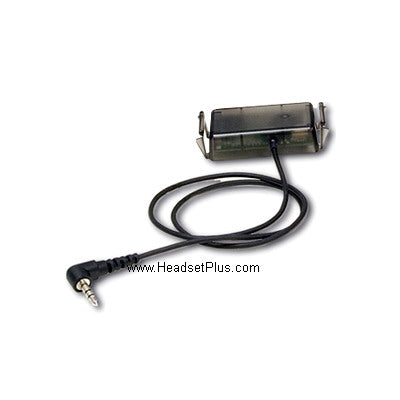
That 200-ft real-office figure is the honest one — walls, cubicles, and machinery cut the line-of-sight number down, so treat 590 ft as a ceiling, not a promise. For a Microsoft Teams environment, the Savi 8445-M adds a dedicated Teams button. Remote answering on a desk phone needs an HL10 lifter or EHS cable, sold separately — our EHS cable guide covers which one your phone takes.
Best to take with you: Class 1 Bluetooth (Poly Voyager Focus 2)
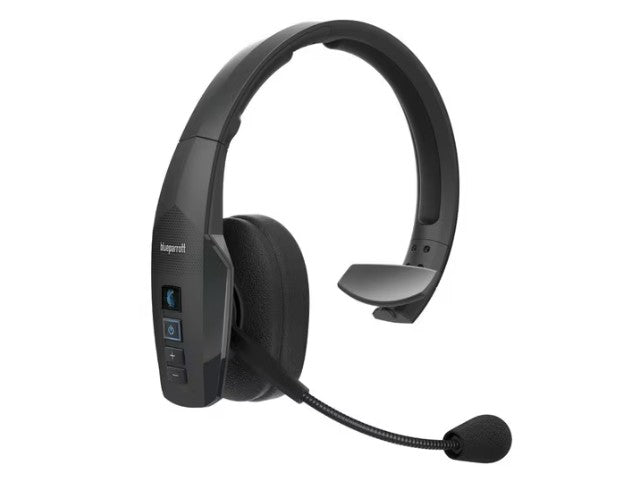
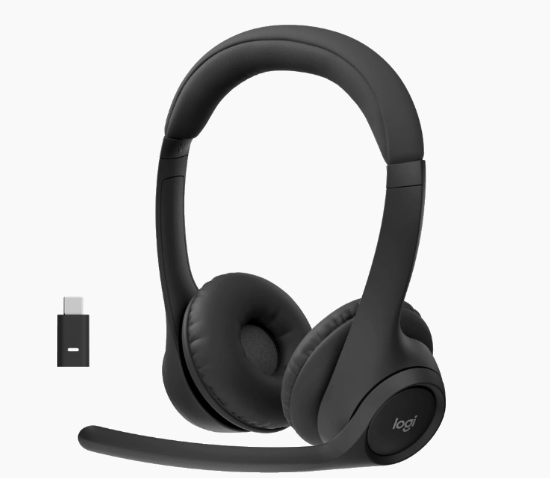
If you need the headset to leave the office — a call on the walk to your car, or genuine hybrid work between desk and home — you want the Bluetooth radio in the headset, not the base. The Poly Voyager Focus 2 is the multi-device Bluetooth pick: it connects to a desk phone, a computer, and your phone, and because it's a Class 1 Bluetooth headset, it goes wherever you do.
It's a stereo (dual-ear) headset with adjustable active noise cancellation you can dial up or down depending on how loud the room is, smart sensors that answer a call when you put it on, and busylights on both sides so colleagues can see you're on a call. The trade against DECT is range and battery — Bluetooth gives you roughly 300 ft line-of-sight rather than DECT's longer reach — but mobility is the whole point.
Best for desk phone + computer only (Jabra Engage 65 SE)
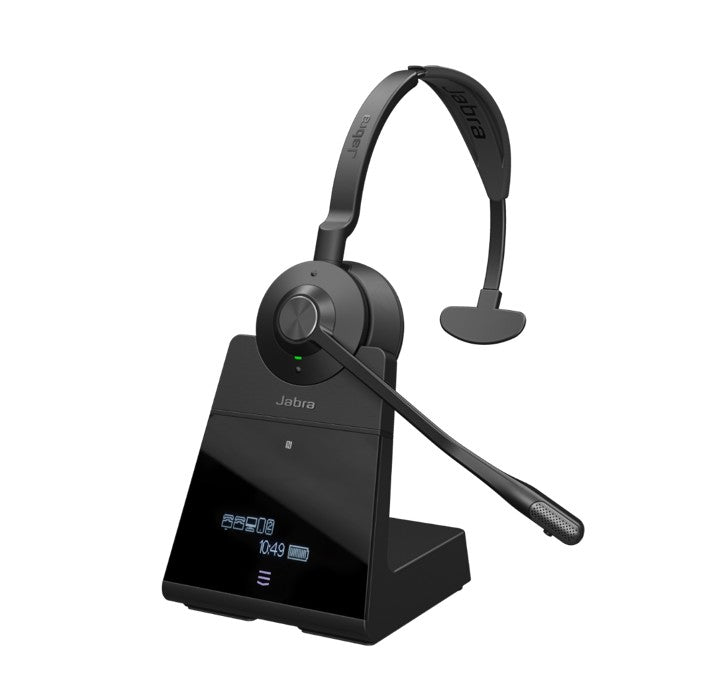
Not everyone needs the cell-phone leg. If you only switch between a desk phone and a computer, a dual-connectivity DECT headset does the job for less money, and the Jabra Engage 65 SE is the standard here. It's the current version of the long-running Engage 65 (and the successor to the old Jabra Pro 9450), connecting to a desk phone and a PC over USB with a button to switch and answer from either.
It delivers up to 13 hours of talk time, long DECT range, a busylight, and comes in mono, stereo, or convertible wearing styles. Whether you want one ear or two comes down to how much of the room you need to hear — a choice we break down in monaural vs binaural headsets.
The corded option: one headset, desk phone and computer
You don't need wireless to use one headset across a desk phone and a computer — a corded switcher does it for far less, if you don't need to leave the desk at all. Two live options:
- Poly MDA524 — plug any QD headset into both a computer and a desk phone, with independent volume per device; it also supports call recording and audio mixing through a third-party app
- Poly MDA100 QD — the simpler switch between a desk phone and a PC softphone, compatible with any Poly QD headset
Both take a quick-disconnect (QD) headset and add a USB connection for the computer side — the same QD-and-bottom-cable logic we map out in headset connector types explained. Pair either with an EncorePro headset and you've got a full desk-phone-plus-computer setup for a fraction of a wireless system's cost.
How to choose in one line
Match the headset to where your cell phone needs to reach you. Cell at the desk, maximum range and battery: the Poly Savi 8445. Cell on the go, take it with you: the Poly Voyager Focus 2. No cell leg at all, just desk phone and computer: the Jabra Engage 65 SE. Desk-bound and budget-conscious: a corded MDA524 switch. The full range, with current models and prices, sits on the wireless headsets collection.
Can one wireless headset connect to a desk phone, computer, and cell phone?
Yes. Triple-connectivity headsets like the Poly Savi 8445 connect to a desk phone, a computer over USB, and a smartphone over Bluetooth, switching between them from the base or headset. On DECT models the Bluetooth comes from the base, so the cell phone connection works while you're at your desk. Only a Class 1 Bluetooth headset lets you take the headset away and keep using it with your phone.
What's the difference between a DECT and Bluetooth multi-device headset?
A DECT headset keeps its Bluetooth radio in the charging base, offering longer range and battery life but tying the headset to the desk area. A Class 1 Bluetooth headset keeps the radio in the earpiece, so it travels with you but has shorter range. Choose DECT for range and all-day battery at a fixed desk, and Bluetooth for mobility between locations.
Can I use a Poly Savi or Jabra Engage headset with my cell phone on the go?
Only while you're near the base. On the Poly Savi and Jabra Engage DECT headsets, the Bluetooth link to your phone runs through the base, so your phone must stay within the base's range and you can't take the headset out of the office. To use one headset with your phone away from the desk, choose a Class 1 Bluetooth model like the Poly Voyager Focus 2.
Do I need a wireless headset if I only use a desk phone and computer?
No — a corded switcher like the Poly MDA524 or MDA100 lets one QD headset serve both a desk phone and a computer for far less than a wireless system, if you don't need to leave the desk. Wireless earns its price when you need to move during calls. For desk phone plus computer with occasional roaming, a dual-connectivity Jabra Engage 65 SE is the middle ground.
Which multi-device wireless headset has the best range and battery?
Among multi-device headsets, DECT models lead on range and battery — the Poly Savi 8445 reaches up to 590 ft line-of-sight (around 200 ft in a real office) and includes a second battery for unlimited talk time. Bluetooth headsets like the Voyager Focus 2 trade range for the ability to travel with you. If maximum range and all-day battery matter most, DECT is the answer.
The headsets have gotten better since most guides on this were written, but the decision hasn't changed: it's about where your cell phone needs to reach you, not which model is newest. Cell at the desk means the Poly Savi 8445; cell on the move means the Voyager Focus 2; no cell leg means the Engage 65 SE. Compare all three on the wireless headsets collection, or call our specialists at 877-999-3838 and we'll match one to your exact phone and platform.
Comments (0)