



















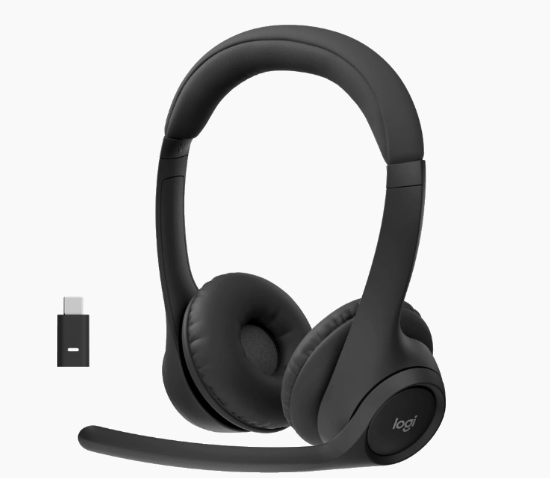






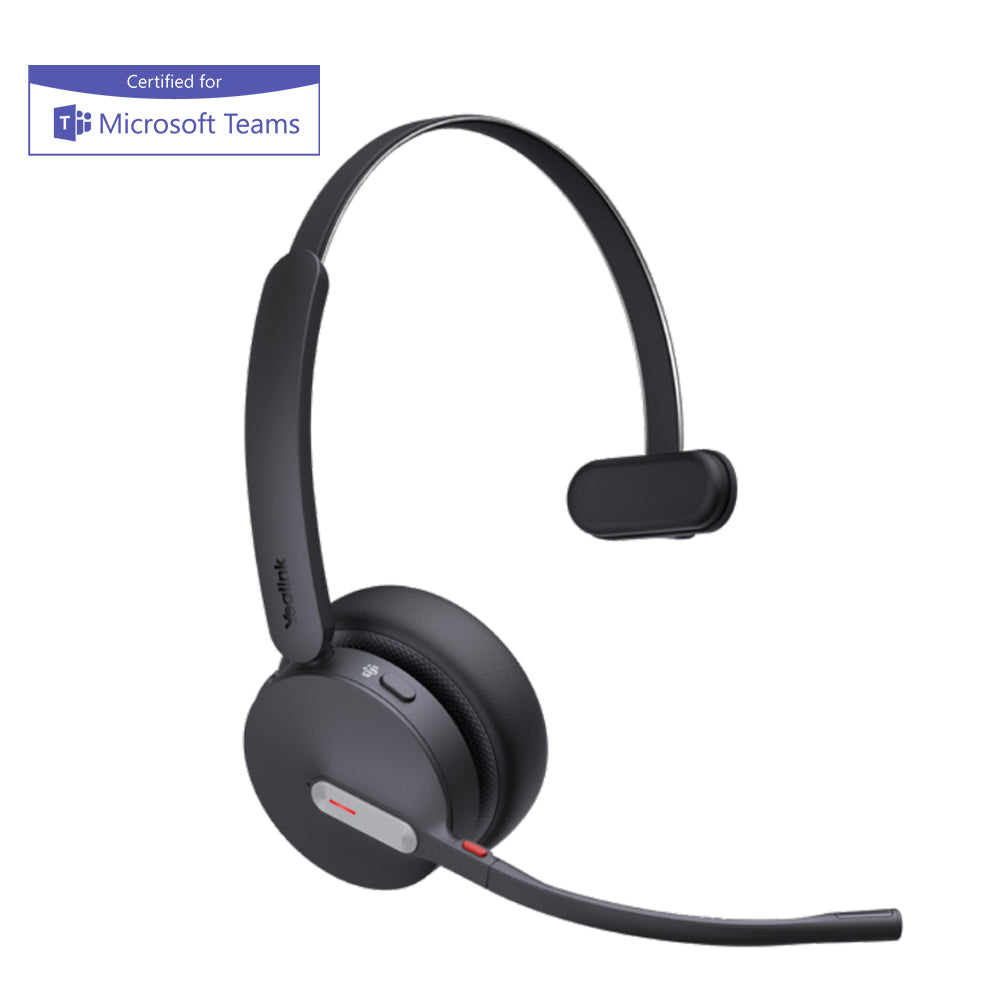


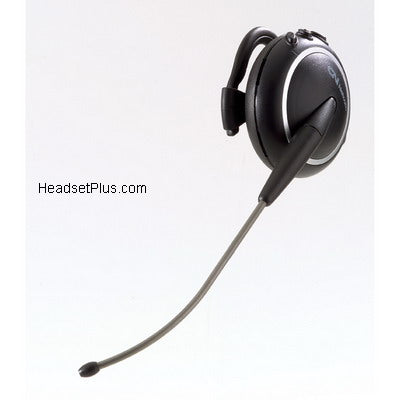
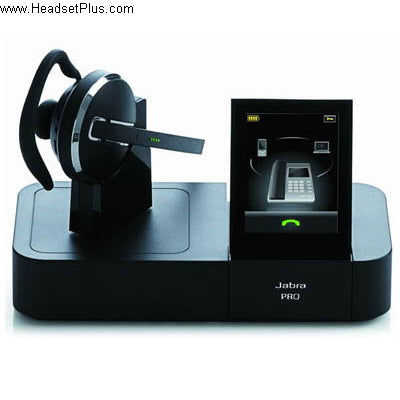
The GN 9330e, GN 9330e USB, and GN Netcom 9350e were GN Netcom's flagship wireless office headsets, and this is their original, detailed manufacturer FAQ — covering everything from the 9300e's improvements over the earlier 9300 series to DECT security, safety certifications, and softphone compatibility. Both models are discontinued now, but the technical detail below remains accurate for anyone still running one.
Key takeaways
- The 9350e is the flagship: USB softphone interface, wideband audio, DSP refinement, and 3 wearing styles. The 9330e is the simpler traditional-office-phone-only version.
- All operate on DECT (1880-1930 MHz), a different band than WiFi's 2.4/5 GHz, so the two don't interfere.
- GN Netcom's own documentation cites specific safety features (PeakStop sound-spike protection, IntelliTone noise-exposure monitoring) and compliance testing (EU directives, EN standards).
- DECT calls are digitally encrypted as part of the DECT standard, limiting the risk of unauthorized listening.
- These headsets are discontinued; the current equivalent is the Jabra Engage 65 SE.
What changed from the 9300 to the 9300e series
The 9300e series improved on the original 9300 line in three areas: a new headset antenna delivering a 20-65% range improvement, a new microphone concept with significantly better wind-noise immunity, and softer wearing-style materials for more comfortable all-day use. The physical design, colors, and overall look stayed the same — the one visible change is a mesh-covered circular hole on the front of the boom arm from the updated microphone. Setup and daily use are unchanged, and bases and headsets from the 9300 and 9300e series are fully interchangeable in either direction.
GN 9350e vs GN 9330e USB vs GN 9330e
All three share a noise-cancelling microphone and around-the-clock talk time when using a second, swappable battery, but differ in connectivity and features:
| GN 9350e | GN 9330e USB | GN 9330e | |
|---|---|---|---|
| Connectivity | USB (softphone) + traditional telephony, auto-switching | USB (softphone) only | Traditional office phone only |
| Range (typical office) | Up to 350 ft | Up to 325 ft | Up to 325 ft |
| Talk time | Varies by mode | 6 hours | 9 hours |
| Audio | True wideband (USB mode), DSP refinement | Wideband USB audio | Standard telephony audio |
| Wearing styles | Over-the-head, on-the-ear, behind-the-neck | Over-the-head, on-the-ear | Over-the-head, on-the-ear |
| Conference calling | Yes, multi-unit | — | — |
The GN9350e shares the wide desk-phone connectivity, sound performance, and conference calling of the earlier GN 9120, adding a USB interface, DSP audio refinement, wideband audio, three wearing styles, and around-the-clock talk time via an optional second battery.
Wideband audio and DSP explained
Wideband audio: The GN9350e operates at a 6.8 kHz bandwidth optimized for IP telephony — noticeably better audio quality than standard "narrowband" telephony, particularly for consonants like "s" and "f" that narrowband connections can blur.
The 9350e's DSP (digital signal processing) software enhances incoming audio and removes impurities from noisy environments or mobile-phone calls, plus applies an auto-volume setting that monitors and adjusts incoming call volume automatically, so every call plays at a consistent level.
Note the talk-time trade-off: USB mode automatically enables wideband 6.8 kHz audio, which draws more power and results in shorter talk time per charge than telephony mode.
Range settings: normal, low, and very low
Most users keep the 9350e on "normal" for maximum range. If your telephone is poorly shielded and vulnerable to interference from the headset's radio transmission — and moving the base further from the phone doesn't help — switching to "low" or "very low" power can resolve it. Smart Power Management ensures the headset never outputs more power than the voice transmission actually requires.
WiFi coexistence
The 9300e series and WiFi can coexist without interference, because they operate on different frequency bands entirely. In North America, the 9300e series uses the DECT band at 1920-1930 MHz (other countries use 1880-1900 MHz) — neither of which is used by WiFi equipment, which typically operates in the 2.4 GHz or 5 GHz bands.
Safety and compliance (per GN Netcom's documentation)
The following reflects GN Netcom's own published specifications and compliance claims for this product line:
- Sound level limiting: GN Netcom specifies a maximum sound pressure below 118 dB SPL, in line with international standards and telecom administration requirements, with protection circuits built into every headset.
- PeakStop™: an electronic peak-control gateway on headsets connected directly to a phone or through an analog amplifier, which intercepts and removes potentially harmful sound peaks in the cord before they reach the speaker — keeping both the absolute sound level and the peak's energy within a safe zone.
- IntelliTone™ (9350e only): automatic monitoring to keep daily noise exposure within the limits described in EU Directive 2003/10/EC or the TT4 threshold used in Australia, set via the 9350e's display. Users of the 9330e or other models would need to monitor noise exposure by other means.
- Materials: the stainless-steel headband has no nickel coating and tested below the EN 1811:1998 nickel-release limit; the leatherette ear cushions contain no vinyl or latex, and the units contain no PVC.
- Call encryption: calls are digitally encrypted as part of the DECT standard, limiting the risk of unauthorized listening — the same protection used across GN Netcom's wireless headset line.
- RF exposure: radio wave exposure from these units is specified between 0.01 and 63 milliwatts, within applicable national standards.
This is historical manufacturer documentation for a discontinued product line, provided as GN Netcom's own claims at the time rather than independently verified by us — if RF exposure or hearing-safety standards matter to your decision today, our general guide to wireless headset RF safety covers the current regulatory framework.
Softphone and USB compatibility
A version of the 9350e and 9330e USB was labeled "MS OC," certified specifically for the now-discontinued Microsoft Office Communicator, which used its own distinct USB command set. Using an "MS OC" unit with a different softphone platform (or a standard unit with Office Communicator) would still work for basic audio, but you'd lose Remote Call Control (RCC) — answering or ending calls directly from the headset — since the command sets didn't match across platforms. If a softphone isn't listed in a compatibility matrix, it simply means RCC won't be available; calls would need to be handled from the computer instead. This whole certification landscape is dated — current headsets are certified for Microsoft Teams rather than Office Communicator or Skype for Business, both long retired.
Power and standby behavior
If you forget to return the headset to its base, it automatically powers down and can remain in standby for up to 43 hours. If you turn off main power at the end of the day, the headset switches to sleep mode for up to 120 hours and remains ready to use the next day.
Warranty and general info
The 9350e, 9330e USB, and 9330e carried a 2-year warranty (1 year in the US and Canada), covering quality issues within that period provided the product was used as intended. Wearing styles could be changed between over-the-ear, over-the-head, and behind-the-neck.
DECT: Digital Enhanced Cordless Telecommunication — a common radio standard for cordless telephony, messaging, and data transmission, designed for voice, data, and networking in residential, corporate, and public environments, with range up to a few hundred meters.
These headsets are discontinued — what to use now
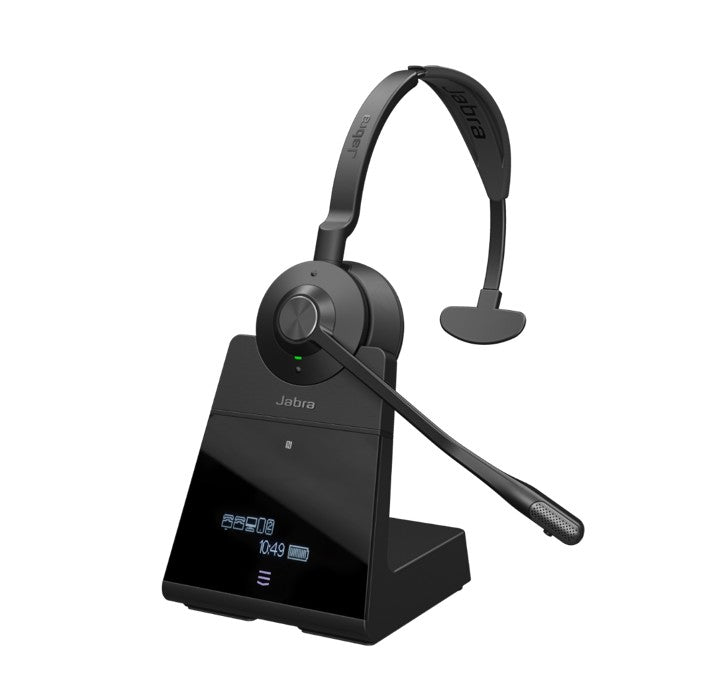
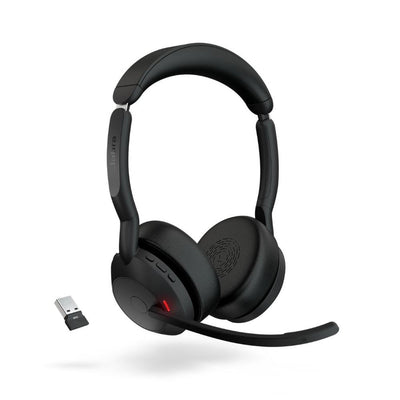
The GN 9330e, GN 9330e USB, and GN Netcom 9350e are all discontinued. The current equivalent is the Jabra Engage 65 SE, offering improved range, battery life, and headset density, with connectivity to both a desk phone and computer.
What is the difference between the GN 9350e and GN 9330e?
The GN 9350e is the flagship, adding a USB interface for softphones, wideband audio, DSP audio refinement, three wearing styles, and multi-unit conference calling. The GN 9330e is the simpler version designed exclusively for traditional office phones, without USB or the extra features.
Will these headsets interfere with my WiFi network?
No. The 9300e series operates on DECT frequencies (1880-1930 MHz), a different band than WiFi's 2.4 GHz or 5 GHz, so the two coexist without interference.
Are GN Netcom wireless headset calls secure from eavesdropping?
According to GN Netcom's documentation, calls are digitally encrypted as part of the DECT standard, which significantly limits the risk of unauthorized access to a call.
What is PeakStop and IntelliTone?
PeakStop is an electronic safeguard that intercepts and removes potentially harmful sound spikes before they reach the headset speaker. IntelliTone, available on the 9350e, monitors and limits daily noise exposure to stay within EU or Australian regulatory thresholds, per GN Netcom's own documentation for this product line.
Are the GN 9330e and GN Netcom 9350e still available?
No, both are discontinued. The current equivalent is the Jabra Engage 65 SE, which offers improved range, battery life, and headset density while connecting to both a desk phone and computer.
If you're still running a GN 9330e, 9330e USB, or 9350e, this reference should answer nearly any question that comes up. When it's time to replace it, the Jabra Engage 65 SE picks up where it left off with meaningfully better range, battery, and density for modern offices. Call our team at 877-999-3838 with any questions.
Comments (0)