


























Why do truck drivers wear headsets?
Truck drivers wear headsets because federal law will not let them hold a phone and because the cab they spend a shift in is loud. Under 49 CFR 392.82, no driver may use a hand-held mobile telephone while driving a commercial motor vehicle, and no motor carrier may allow or require it. The rule counts the truck as being driven while it sits in traffic or at a light. Federal definitions in 49 CFR 390.5 draw the line at three specific acts: using at least one hand to hold a phone for a voice call, dialing or answering by pressing more than a single button, and reaching for a phone in a way that takes the driver out of the belted seat. A headset answered with one press commits none of them. Noise is the second reason. A cab may legally measure 90 dB(A) at the driver's seating position, which is more than a phone speaker on the dash can carry a voice through.
The short version, before you look at a single model
- 49 CFR 392.82 bans hand-held phone use in a commercial vehicle, and it still applies while the truck sits at a red light.
- Federal law defines hand-held use as three specific acts, and a headset answered with a single press commits none of them.
- A legal cab may measure 90 dB(A) at the driver's seating position, the same figure OSHA treats as a full eight-hour exposure in general industry.
- In a study of 65,533 truck and bus drivers, 26.8% had measurable hearing loss, and the left ear came off worse than the right.
Two unrelated pressures push the same piece of hardware onto a driver. One is a federal regulation about where the driver's hands are. The other is a sound level that federal law permits to reach 90 dB(A) at the driver's seating position. A headset is the cheapest thing that answers both, which is most of why you see one on drivers who take calls for a living.
The federal rule is about the driver's hands, not the conversation
49 CFR 392.82 bans holding a phone in a commercial motor vehicle and says nothing against having the conversation. The text is short: no driver shall use a hand-held mobile telephone while driving a CMV, and no motor carrier shall allow or require its drivers to use one. That second half is the part fleets feel, because it puts the carrier on the hook for a dispatcher who calls a driver mid-run and expects an answer.
The rule's definition of driving is wider than most drivers assume. It covers operating a commercial motor vehicle on a highway, including while temporarily stationary because of traffic, a traffic control device, or other momentary delays. Sitting at a red light with the phone in your hand is still driving. The exception is narrow, since the driver has to have moved the vehicle to the side of or off the highway and halted somewhere it can safely remain stationary. There is one other carve-out, for use necessary to communicate with law enforcement officials or other emergency services.
Use a hand-held mobile telephone: Use a hand-held mobile telephone: under 49 CFR 390.5, using at least one hand to hold a mobile telephone to conduct a voice communication, dialing or answering a mobile telephone by pressing more than a single button, or reaching for a mobile telephone in a manner that requires the driver to maneuver so that he or she is no longer in a seated driving position restrained by a seat belt.
That definition is what quietly settles the hardware question, because it names three acts rather than one. A driver can fail it by holding the phone, by pressing a second button, or by leaning out of the belt to reach the thing. Any setup where the answer control lives on the phone itself is one awkward reach away from the third prong the moment the phone is not already in a cradle within arm's length. A control on the earpiece is clear of all three every time, which is why compliance ends up being a headset feature rather than a habit a driver has to maintain for eleven hours.
| Task | Compliant way to do it | What draws the violation |
|---|---|---|
| Answering dispatch | One press on an earpiece, or one button near the wheel, with both hands staying where they are | Using a hand to hold the phone for the call |
| Placing a call | A single button press from the belted seat | Pressing more than a single button to dial |
| Taking a call at a light | Exactly as if moving, because a momentary traffic delay still counts as driving | Holding the phone on the grounds that the truck is stopped |
| Retrieving a phone out of reach | Move the vehicle off the highway and halt where it can safely stay stationary | Maneuvering out of the seated, belted position to reach it |
| Calling for emergency help | Hand-held use is permitted when necessary to reach law enforcement or emergency services | Nothing, since the rule carves this out |
The money attached to getting it wrong runs to $2,750 for the driver and up to $11,000 for an employer that allows or requires the practice, both figures adjusted for inflation. Convictions stack against the license as well as the wallet: a second offense disqualifies the CDL for 60 days and a third for 120. That is the arithmetic behind fleets buying headsets by the case instead of leaving the choice to each driver, because the carrier is exposed by the same rule that exposes the driver.
How loud a legal truck cab is allowed to be
Federal law lets the inside of a truck reach 90 dB(A) at the driver's seating position, and that figure is a ceiling rather than a typical reading. 49 CFR 393.94 applies to all trucks, truck-tractors and buses, and it sets out in detail how the number has to be taken.
The test conditions are worth reading, because they describe what the number does not cover. Doors, windows and vents are closed and powered accessories are switched off. The truck stands at least fifty feet from any large reflecting surface with only the driver and the test conductor aboard, and the engine is accelerated to maximum governed speed. Two maximum readings within 2 dB of each other are averaged, and a 2 dB tolerance for test variation is allowed on top. The microphone sits six inches to the right of, in the same plane as, and directly in line with the driver's right ear.
Nothing in that procedure involves the truck moving. Wind across the mirrors at highway speed, tire roar on grooved concrete, a window cracked open for air, a reefer unit running behind the sleeper and a radio turned up to compete with all of it are outside the scope of the measurement. The legal figure describes a stationary truck with the glass up, which makes it a floor for what a driver actually sits in rather than a description of it.
Eleven hours of driving against an eight-hour noise number
The 90 dB(A) that 49 CFR 393.94 permits inside a cab is the same figure OSHA's general industry noise table treats as a full eight-hour exposure, and 49 CFR 395.3 lets a property-carrying driver drive for eleven. Nobody in the headset aisle puts those two numbers next to each other, and they are more interesting together than apart.
OSHA's table permits 90 dBA for eight hours a day, 92 for six, 95 for four and 100 for two, halving the allowed time for every five decibels added. Below that, 85 dBA averaged over eight hours is the action level at which an employer has to run a hearing conservation program: noise monitoring, audiometric testing, hearing protection and training. Those are the thresholds a factory floor is managed against.
That table does not govern a truck cab, and this is not a claim that it does. A driver at the wheel is regulated by FMCSA rather than by 29 CFR 1910.95, and the two regimes were written for different rooms. What the table gives is a scale for reading the transport number. Set against it, the hours rules let a driver drive 11 hours inside a 14-hour window after 10 consecutive hours off duty, with a 30-minute break required once 8 hours of driving time have passed. The ceiling federal law allows the cab to reach is, in general industry terms, an eight-hour figure, and the driving day is legally allowed to run three hours past that.
What a career in that cab does to a driver's hearing
One study of 65,533 truck and bus drivers, screened over a decade in Isfahan province, Iran, found measurable hearing loss in 26.8% of them. Pourabdian and colleagues published the cohort in Environmental Health and Preventive Medicine in 2019, covering audiometric screening from February 2006 to March 2016.
The breakdown is the part worth carrying away. Both ears were affected in 14.6% of drivers, but where only one ear had gone it was more often the left: 7.8% against 4.4% for the right. Mean thresholds across the whole group were 23.02 dB on the left and 22.48 dB on the right, and among the drivers who did have loss, 36.84 dB on the left against 35.78 dB on the right. The authors put the asymmetry down to drivers rolling the window down for fresh air and a cooler cab instead of running the air conditioner, which lets road noise in on the driver's side.
There is an odd symmetry between that finding and the regulation above it. 393.94 takes its measurement six inches from the driver's right ear, which is the ear further from the window and, on this evidence, the ear that fares better over a career. Read the study carefully before applying it to a US fleet, though. It is one cohort, in one province, over one decade, with whatever mix of equipment that implies, and the authors themselves note they could not pin down vehicle models. What it does establish is that the ear nearest the open window takes the worse of it, which is a useful thing to know before deciding which side a speaker is going to sit on.
What the two pressures ask of the headset itself
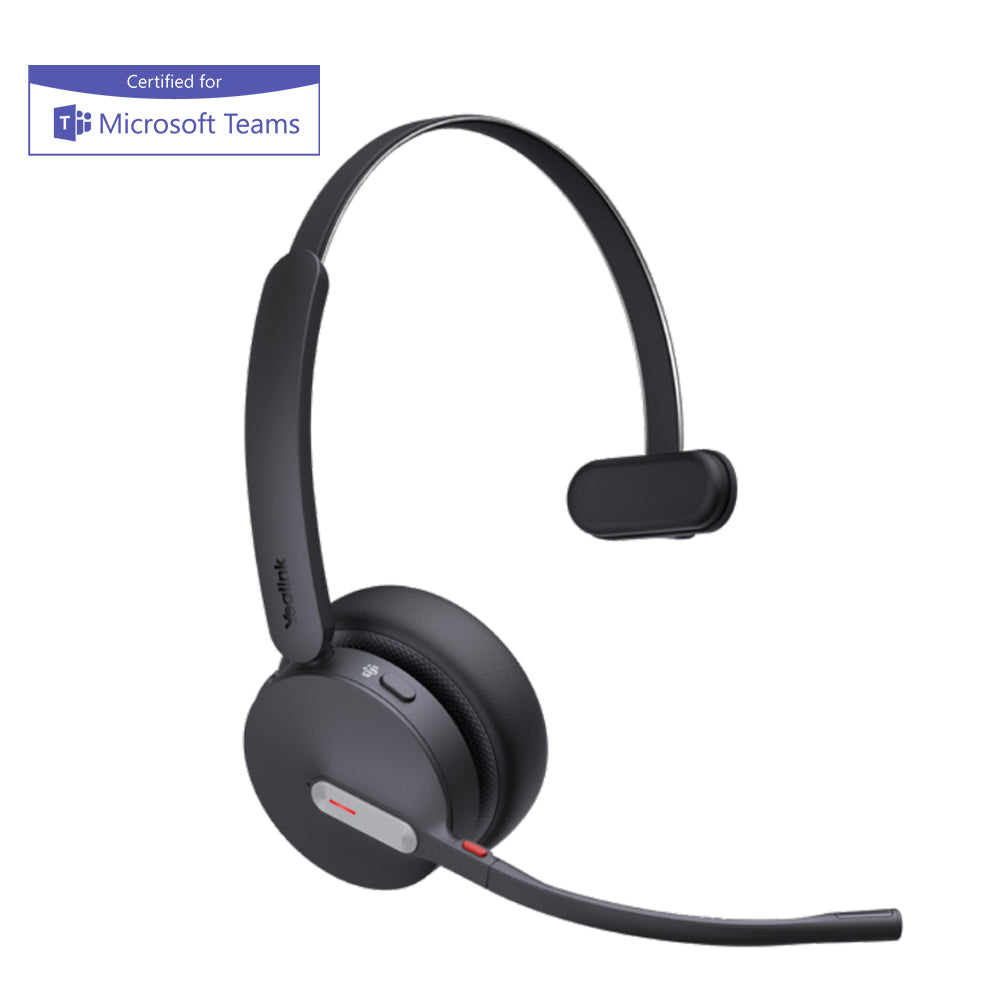
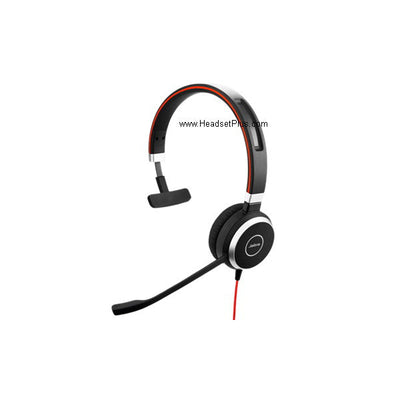
Between them, the regulation and the cab noise settle two specifications before anyone opens a catalog: how the headset answers a call, and where the microphone sits. Everything else is preference, and these two are not.
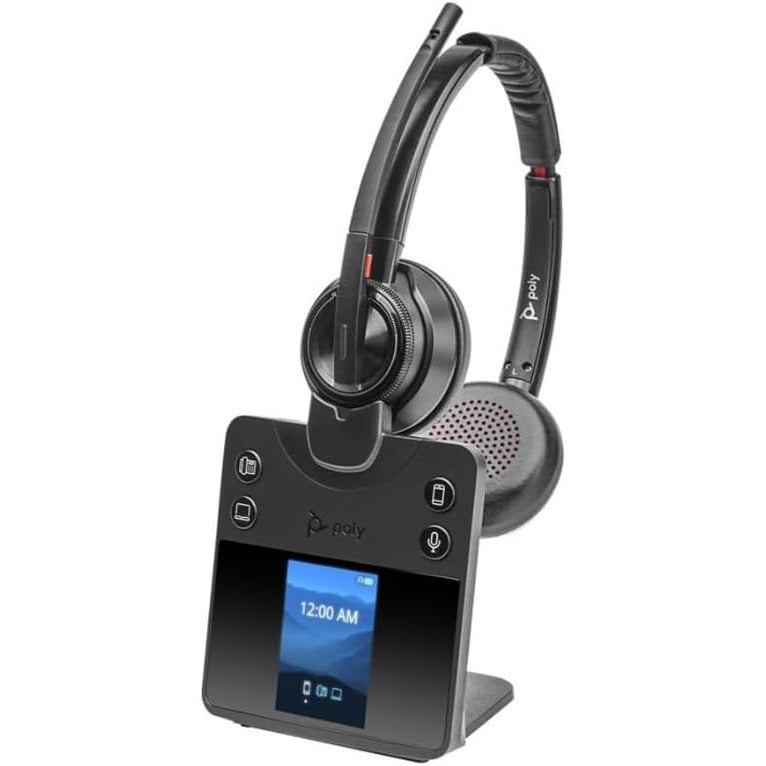
Answering has to be one press, reachable without leaving a belted seat. That is a legal requirement wearing the costume of a convenience feature, and it is the first thing to check on any model, ahead of battery, ahead of comfort, ahead of anything printed on the box.
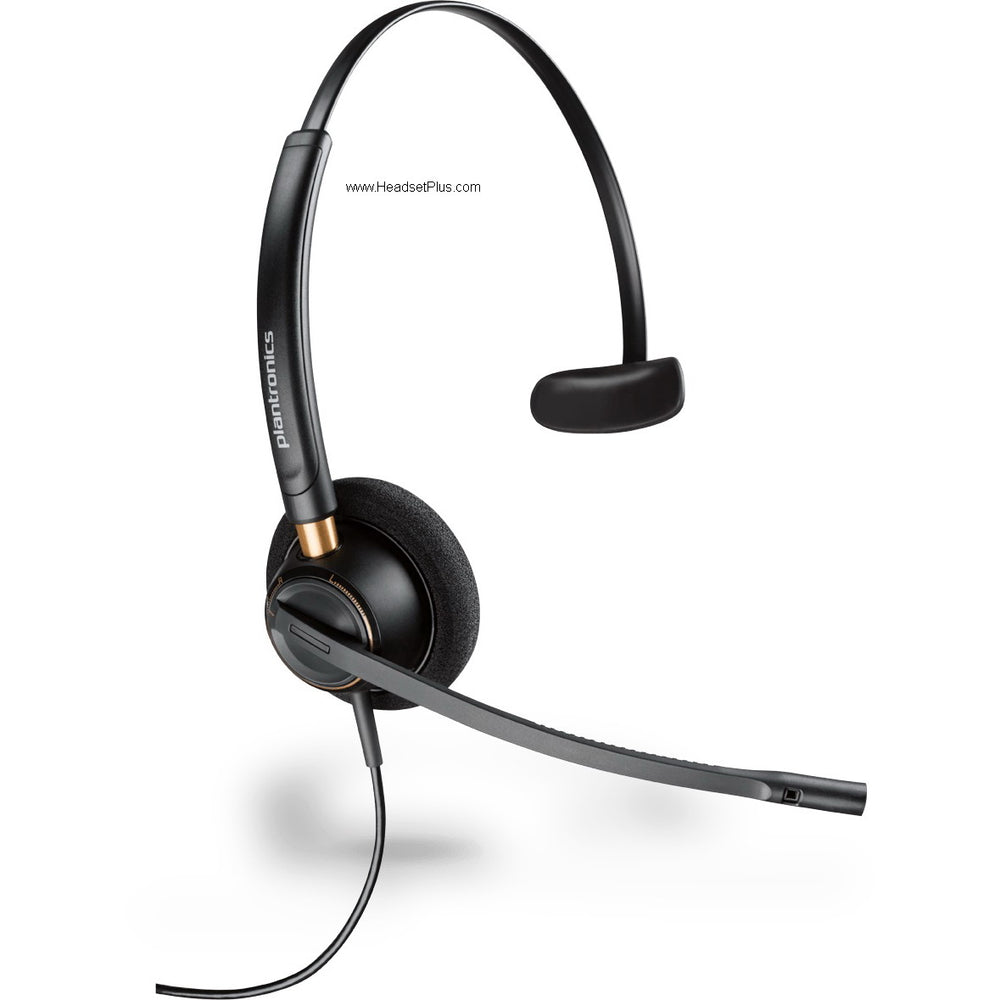
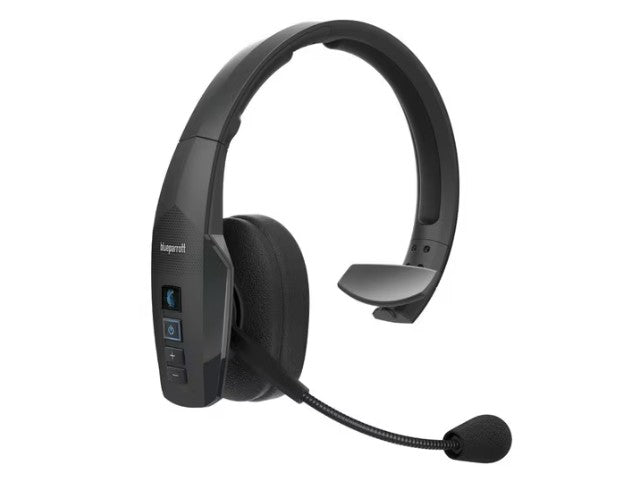
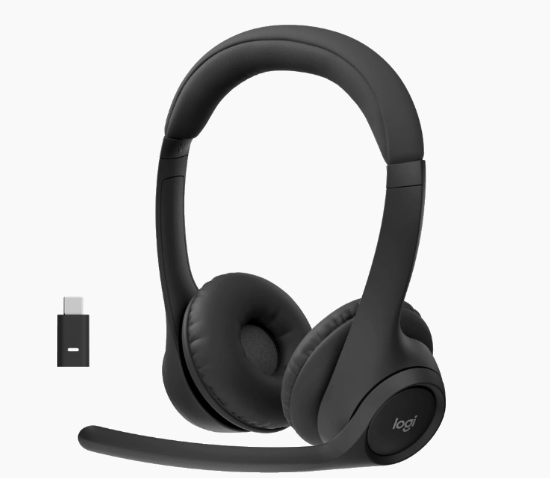
The microphone follows from the sound level. In a cab the law permits to run at 90 dB(A) with the windows shut, a microphone on the dash is working against the whole room at once, from roughly the distance 393.94 uses to measure the room. A boom that puts the capsule an inch or two from the mouth starts from a closer position against the same noise, which is why a boom rather than a capsule buried in the earpiece is the thing to compare first when you are weighing one trucker headset against another.
There is a real cost to sealing the cab out, and it deserves saying plainly. Some of that 90 dB(A) is information: an engine note changing on a grade, a tire beginning to slap, a horn from the lane alongside. A design that seals one ear properly and leaves the other open is doing what the rule asks while keeping the road audible, which is a different goal from a pair of headphones built to shut the world out. Anyone shopping from a consumer audio mindset tends to get this exactly backwards.
Common questions about truck drivers and headsets
The four questions below are the ones the regulations themselves raise, and every answer traces back to the text of 49 CFR 392.82, 390.5 or 393.94.
Why do truckers wear headsets?
Truckers wear headsets for two reasons that have nothing to do with each other. 49 CFR 392.82 forbids a commercial driver from holding a phone while the truck is being driven, and the cab is loud enough that a speakerphone struggles to carry a voice. A headset satisfies the rule and puts the microphone close enough to the mouth to be heard over the engine.
Is a Bluetooth headset legal for a truck driver?
A Bluetooth headset is legal for a truck driver as long as using it involves none of the three acts federal law defines as hand-held use: holding a phone in one hand for the call, pressing more than a single button to dial or answer, or reaching for the phone in a way that takes the driver out of a seated position restrained by a seat belt. A headset with a one-press answer control on the earpiece clears all three.
Can a truck driver hold a phone while stopped at a red light?
No. 49 CFR 392.82 treats a commercial vehicle as being driven while it is temporarily stationary because of traffic, a traffic control device, or other momentary delays, so a red light changes nothing. The prohibition lifts only once the driver has moved the vehicle to the side of or off the highway and halted where it can safely remain stationary, or when the call is necessary to reach law enforcement or emergency services.
What does a hand-held phone violation cost a truck driver?
A hand-held phone violation can cost a truck driver up to $2,750, and an employer that allows or requires the practice up to $11,000, both adjusted for inflation. Convictions also reach the license: a second offense disqualifies the CDL for 60 days and a third for 120.
Comments (0)