



























There's no single "best" conference phone — there's the best one for your room and the way you connect. A phone built for a six-person huddle room is the wrong buy for a 20-seat boardroom, and a SIP desk phone is useless if your team works off laptops. Get those two questions right — how big is the room, and how do you connect — and the choice narrows itself to one or two obvious options.
This guide walks both, and clears up the confusion that trips up most buyers: a conference phone, a speakerphone, and a video bar are three different things.
Key takeaways
- The two decisions are room size and connection type — everything else follows from those.
- A conference phone (audio), a speakerphone (portable/personal), and a video bar (camera + audio) are three different products.
- Most modern conference phones connect over SIP/VoIP, USB, or Bluetooth — an analog line is now rarely required.
- Large rooms need expansion microphones; a single phone can't cover a long boardroom table.
- Full-duplex audio — everyone can talk at once without cutting out — is what separates a real conference phone from a cheap speaker.
Conference phone, speakerphone, or video bar?
The first thing to sort out is which of three products you actually need, because they're easy to confuse and serve different rooms.
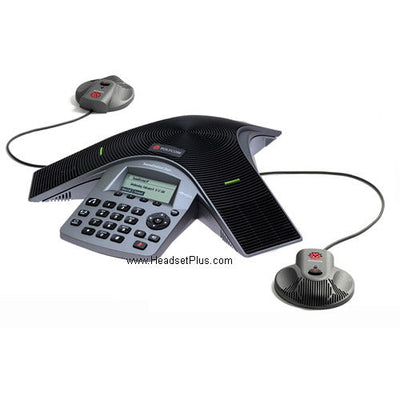
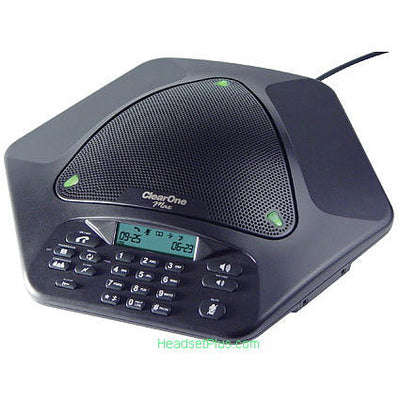
- Conference phone — a fixed, table-top audio device for a meeting room, usually with 360-degree microphone pickup and often SIP/VoIP calling built in. Best for dedicated conference rooms.
- Speakerphone — a portable, usually USB/Bluetooth audio puck for personal use, huddle spaces, or travel. Smaller coverage, plugs into a laptop.
- Video bar — a camera and audio system for video meetings on Zoom or Teams. This is video conferencing, a different category entirely.
Full-duplex audio: The ability for both ends of a call to speak and be heard at the same time without the audio cutting in and out. It's the core feature of a true conference phone, and the main thing that separates one from a cheap speaker that only lets one person talk at a time.
If your meetings are video-first, you want a video bar from the video conferencing range, not a conference phone. If you need something portable for a laptop or a small huddle, a speakerphone is the better fit. For a dedicated meeting room with a table, read on — that's what a conference phone is built for.
Choose by connection type
How the phone connects to your calls is the decision that rules out whole categories, so settle it early.
Myth
A conference phone needs an analog telephone line.Reality
Not anymore. That was true a decade ago, but most modern conference phones connect over SIP/VoIP (through your network), USB (into a laptop), or Bluetooth (to a phone) — many do all three. Analog conference phones still exist for offices that run analog lines, but they're now the exception, not the default. Don't assume you need an analog line until you've checked how your office actually makes calls.- SIP / VoIP: connects to your phone system over the network, like a desk phone. Best for a dedicated room on a business phone platform.
- USB: plugs into a laptop for Zoom, Teams, Webex, or any softphone. Simple and platform-agnostic.
- Bluetooth: pairs wirelessly with a phone or tablet. Good for flexible or temporary setups.
- Hybrid: combines SIP, USB, and Bluetooth in one unit — the most versatile, and the direction most new models have gone.
- Analog: the legacy option for offices still running analog lines; requires the line or a digital-to-analog converter.
Choose by room size
Room size determines microphone coverage — and it's where a single phone stops being enough. Match your table to the right tier:
| Room / table size | What you need | Examples |
|---|---|---|
| Personal / huddle (up to ~10 ft) | USB or Bluetooth speakerphone | Poly Sync 20/40, Jabra Speak series |
| Medium room (up to ~15–20 ft) | SIP or hybrid conference phone | Poly Trio 8500, Konftel 55, Yealink CP925 |
| Large boardroom (up to ~40 ft) | Top-tier phone + expansion mics | Poly Trio 8800, Konftel 800 + smart mics |
The jump that matters is from medium to large: past roughly 15 feet, a single microphone array can't pick up everyone at the table without people leaning in and "shouting" to be heard. That's what expansion microphones solve — they extend pickup down a long table so a person at the far end is as clear as one beside the phone. If your boardroom seats more than about eight, plan for expansion mics from the start.
Recommended conference phones by scenario
Putting room and connection together, here's where most buyers land:
- Small huddle room or personal desk: a portable USB/Bluetooth speakerphone like the Poly Sync 20 or 40 — battery-powered, pocketable, and doubles for travel. Browse the speakerphones range.
- Medium meeting room on a laptop or SIP system: a hybrid conference phone such as the Poly Trio 8500 or Konftel 55, which handle SIP, USB, and Bluetooth so they work however your team calls.
- Large boardroom: a Poly Trio 8800 or Konftel 800 paired with expansion or smart microphones for full-table coverage — the Konftel 800 chains multiple units and covers up to around 20 people in one room.
- Video-first meeting room: not a conference phone at all — a video bar from the video conferencing range, which combines a 4K camera with room audio.
Because conference-phone needs vary so much by room and platform, and larger setups involve expansion mics and cabling, this is a category where a quick call saves a costly mismatch. The full current range is on the conference phones collection, or call our team and we'll spec the room with you.
How do I choose the right conference phone?
Choose a conference phone by room size and connection type. Match the microphone coverage to your table — a speakerphone for a huddle room, a hybrid conference phone for a medium room, and a top-tier phone with expansion microphones for a large boardroom. Then confirm the connection your office uses: SIP/VoIP, USB, Bluetooth, or a hybrid that supports all three.
Do conference phones still need an analog phone line?
Most no longer do. Modern conference phones connect over SIP/VoIP through your network, USB into a laptop, or Bluetooth to a phone, and many support all three. Analog conference phones still exist for offices running analog lines, but they're now the exception. Check how your office makes calls before assuming you need an analog line or a digital-to-analog converter.
What's the difference between a conference phone and a speakerphone?
A conference phone is a fixed, table-top device for a dedicated meeting room, with 360-degree microphone pickup and often built-in SIP calling. A speakerphone is a smaller, portable USB or Bluetooth device for personal use, huddle spaces, or travel that plugs into a laptop. Conference phones cover larger rooms; speakerphones prioritize portability.
What conference phone do I need for a large boardroom?
For a large boardroom up to around 40 feet, you need a top-tier conference phone such as the Poly Trio 8800 or Konftel 800, paired with expansion microphones to cover the full table. A single microphone array can't pick up everyone past about 15 feet, so expansion mics are essential in large rooms. The Konftel 800 can also chain multiple units for very large spaces.
Can a conference phone connect to Zoom or Microsoft Teams?
Yes. Conference phones with USB or Bluetooth connect directly to a laptop running Zoom, Microsoft Teams, or Webex, and many models are certified for Teams specifically. Hybrid conference phones support USB and Bluetooth alongside SIP, so the same phone works for both softphone meetings and traditional calls. For video meetings, you'd add a video bar rather than rely on the phone alone.
Skip the "best of" lists and start with your own room: measure the table, confirm how your office connects, and the right conference phone becomes obvious. A huddle space wants a portable speakerphone; a boardroom wants a top-tier phone and expansion mics; a video room wants a video bar. Match the product to the space on the conference phones collection, or call our specialists at 877-999-3838 and we'll spec it with you.
Comments (0)