


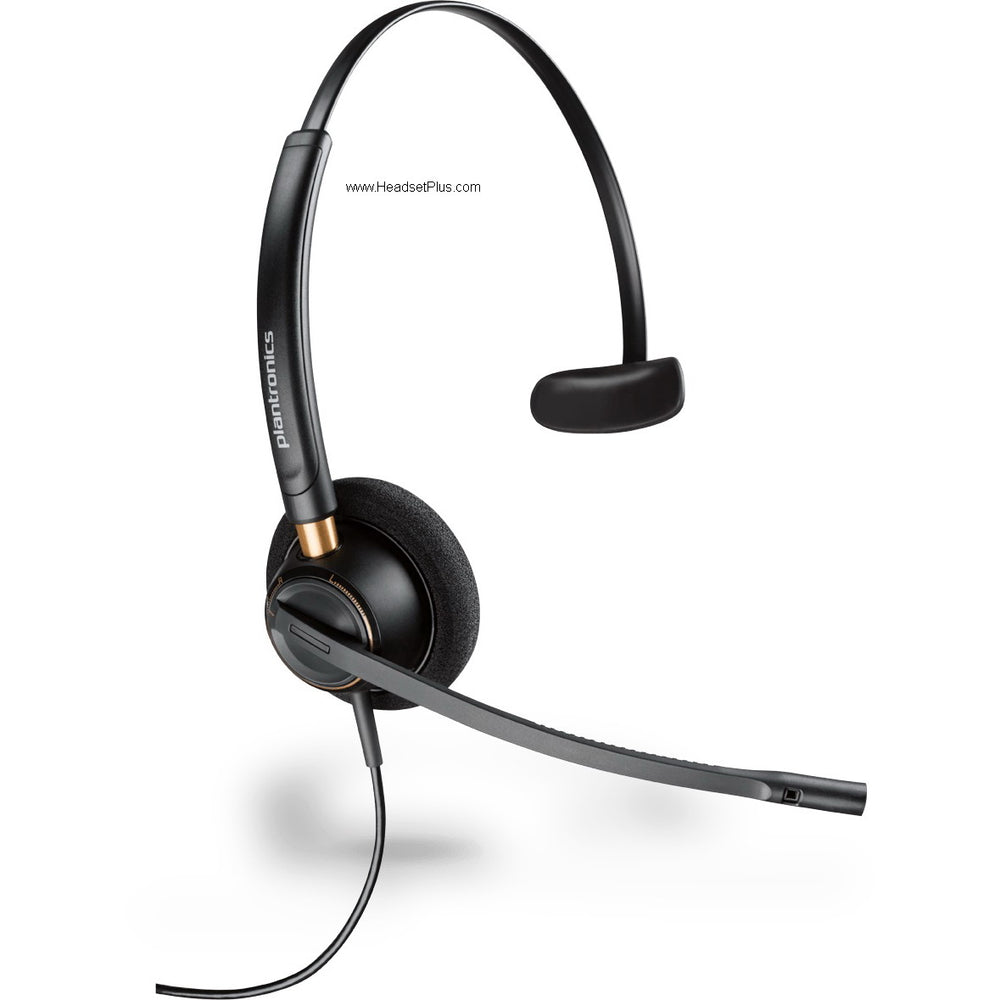
















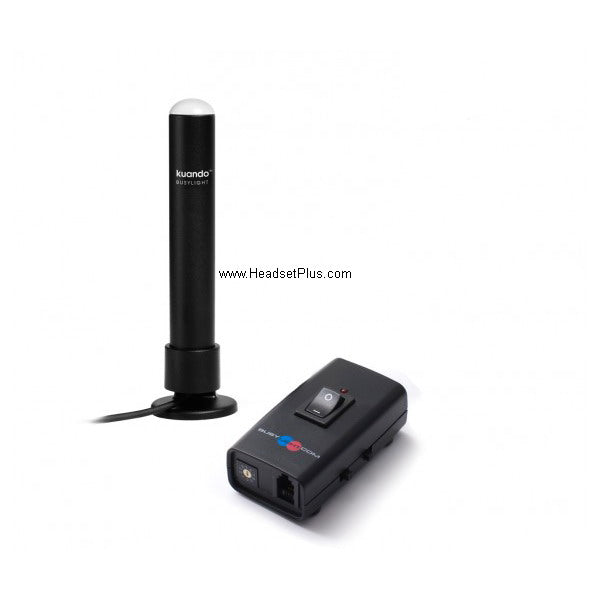

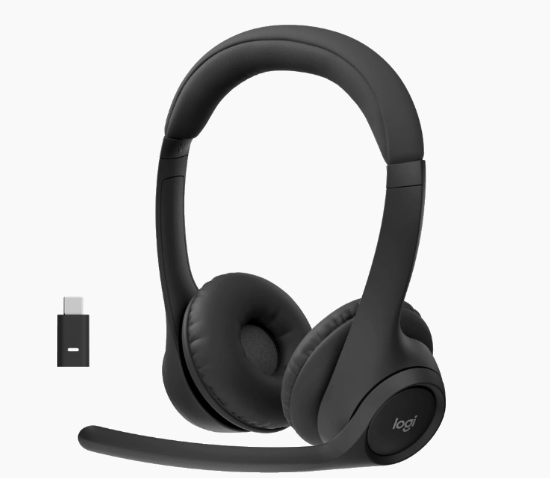

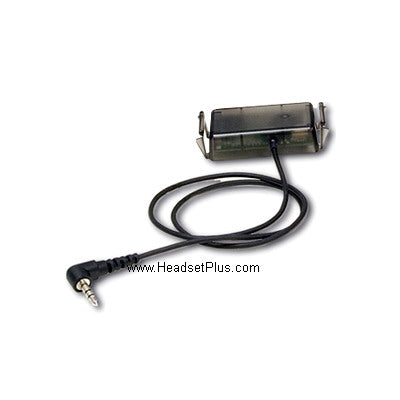

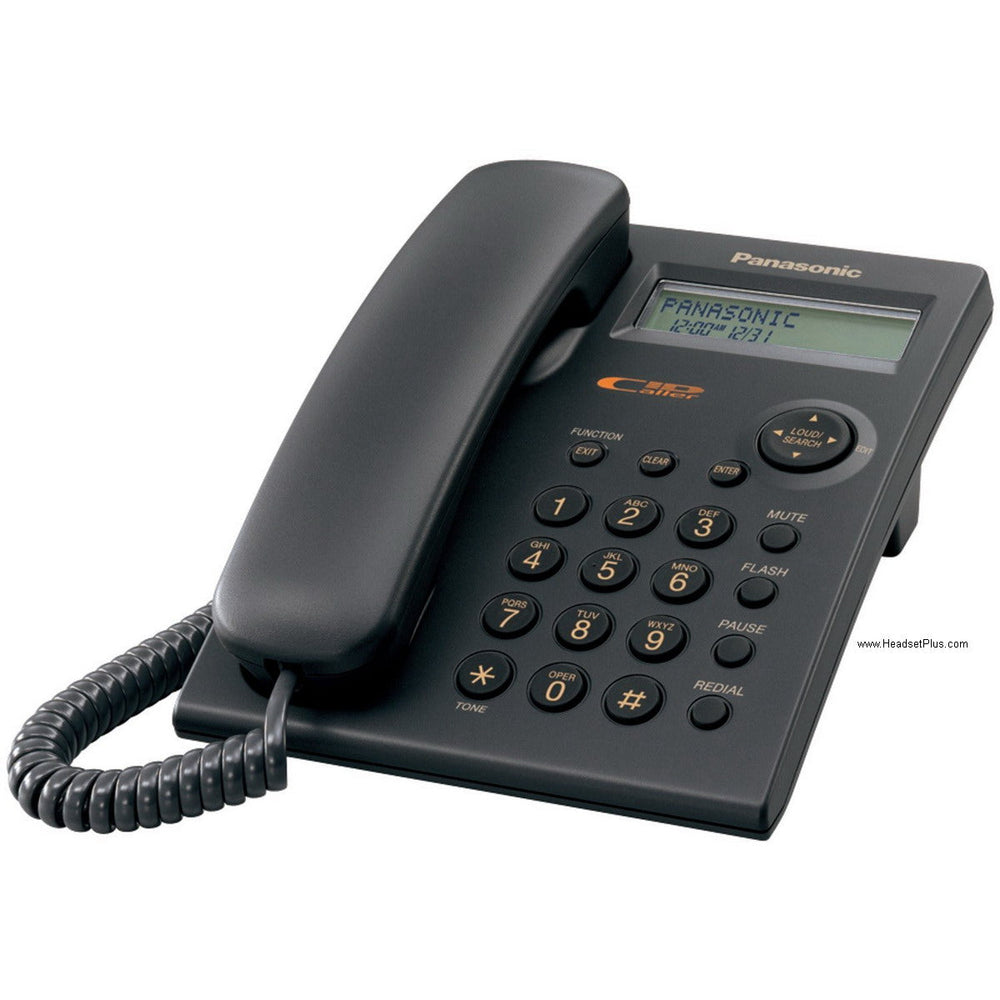

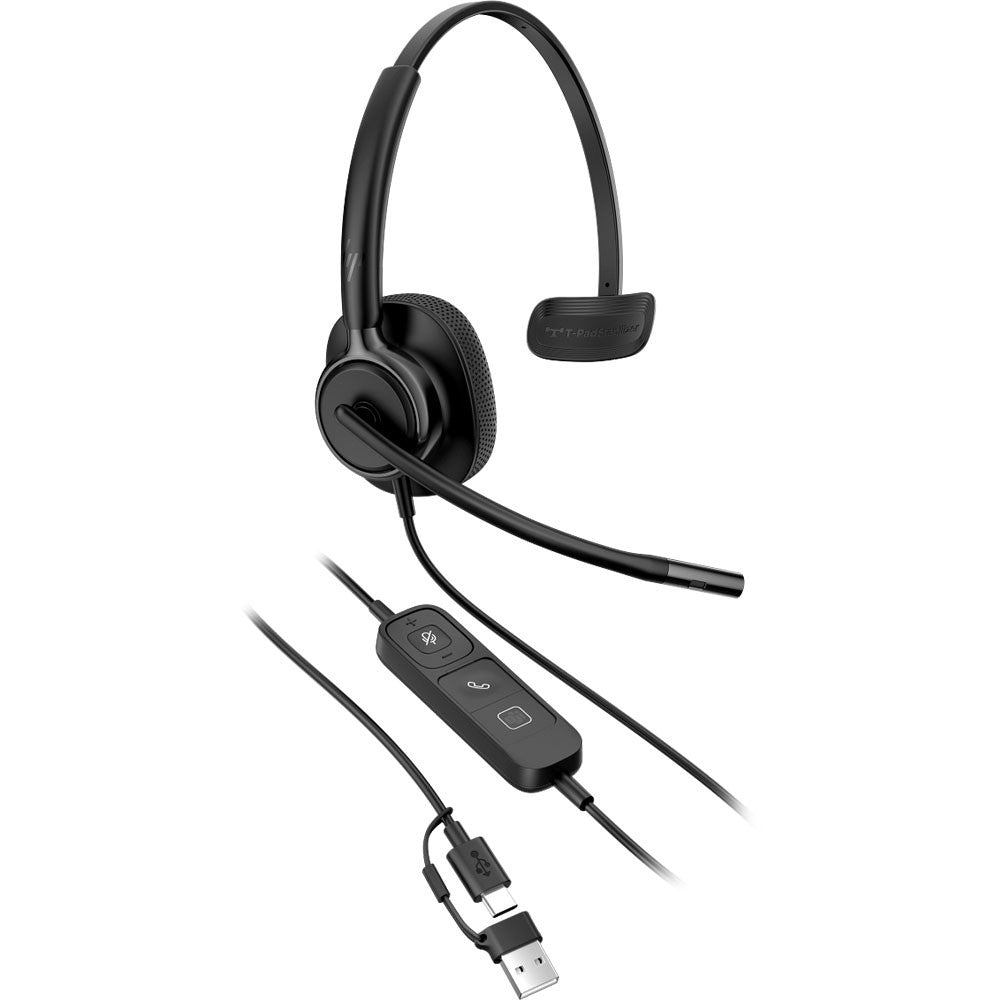

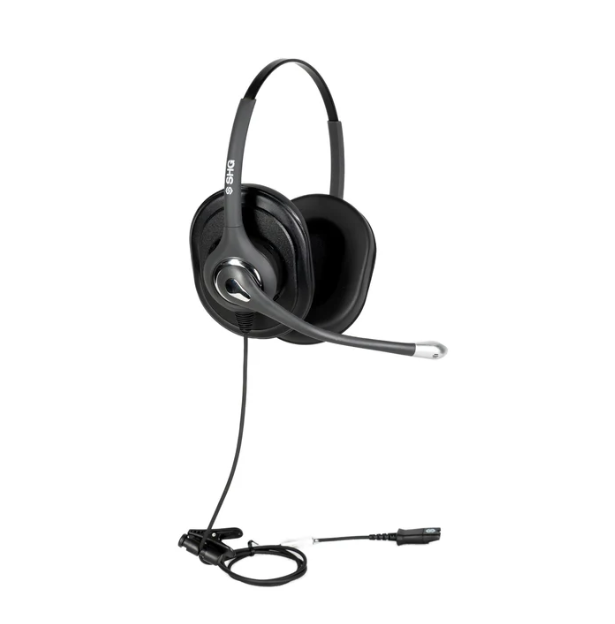

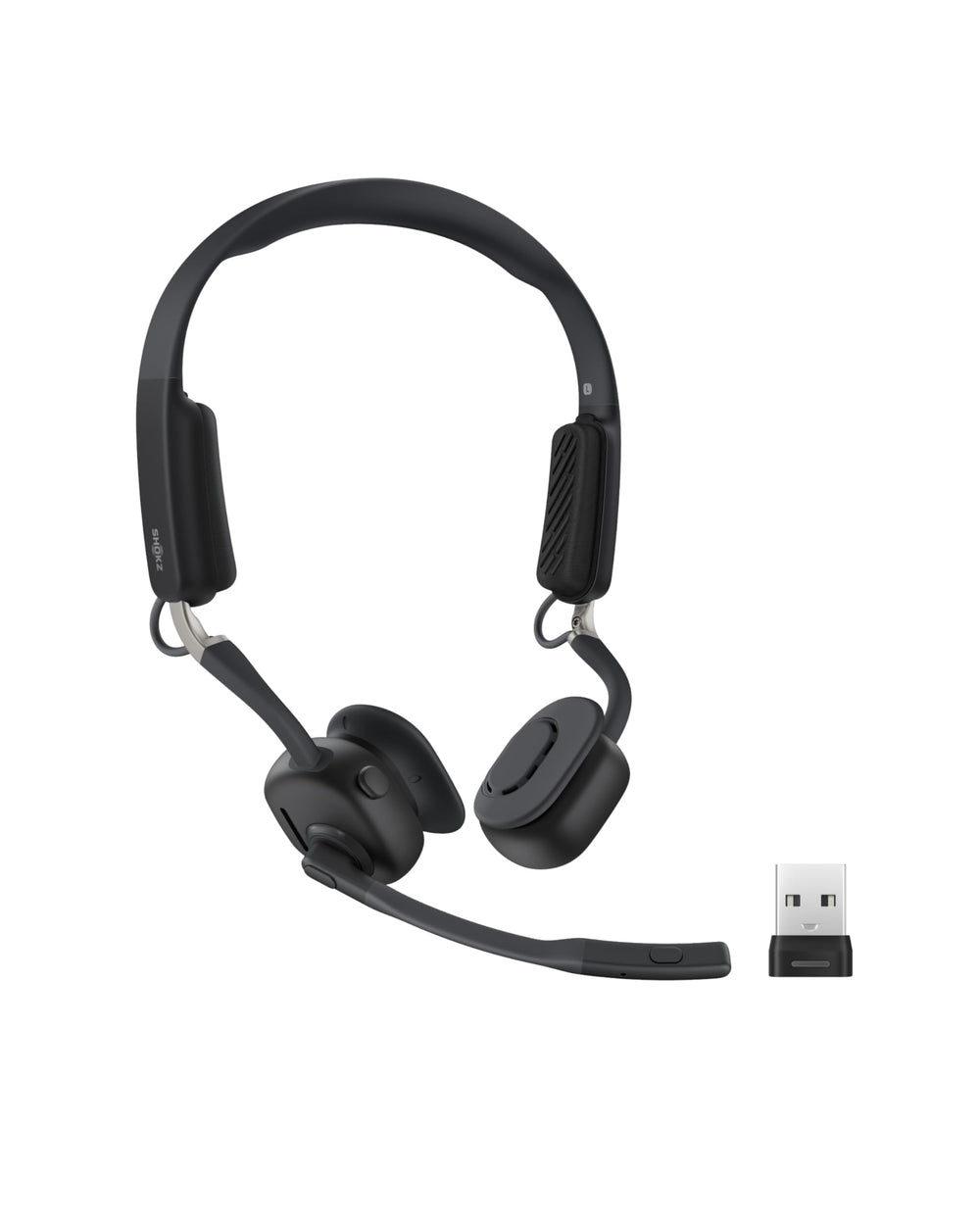

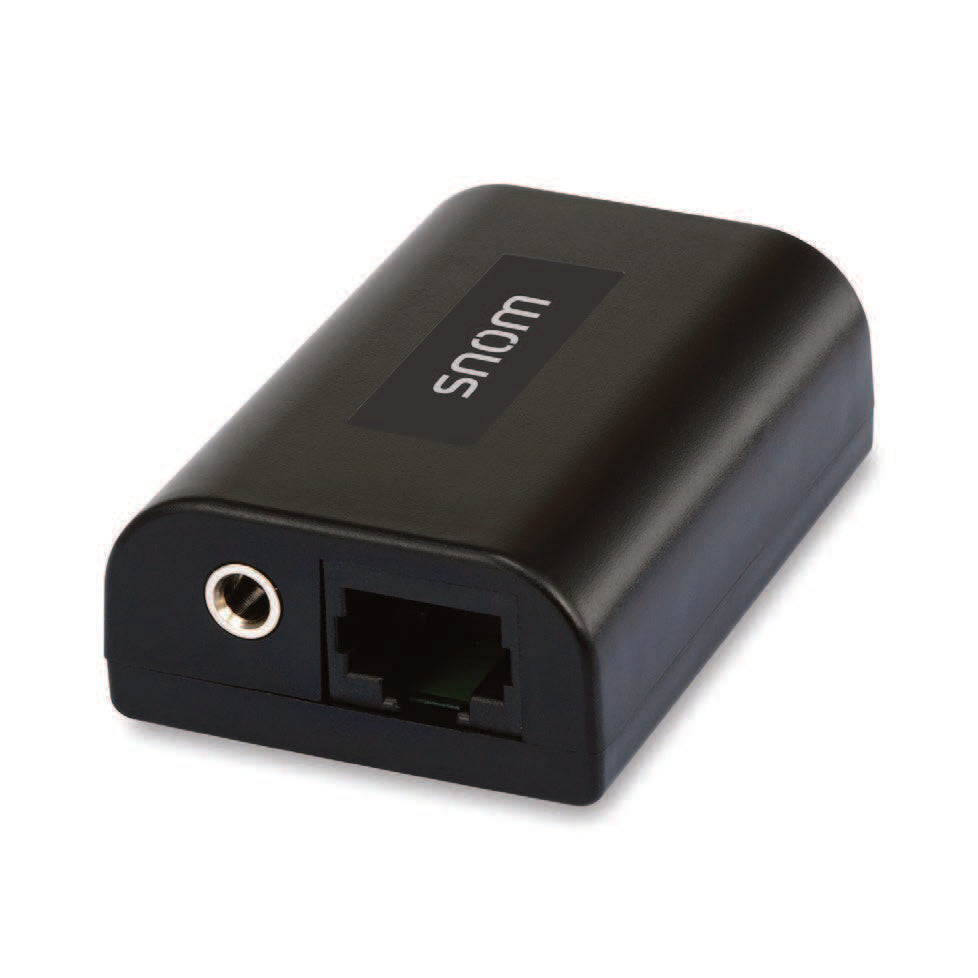
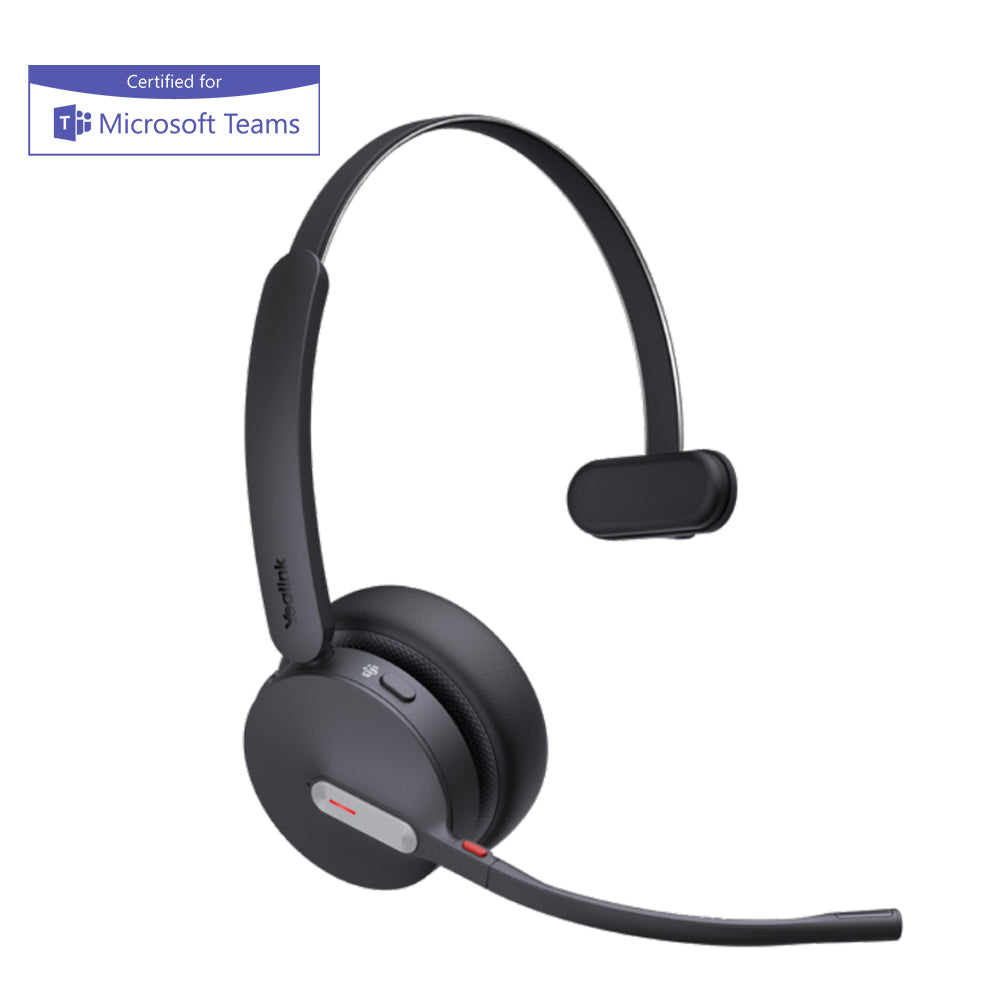
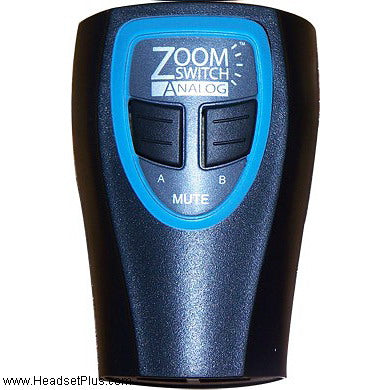


Picture a 911 dispatch floor at 2 a.m. — six operators, three conversations at once, radios crackling in the background. A push-to-talk headset adapter is what keeps that entire room out of the caller's ear: it holds your microphone muted by default and transmits only when you press the button. It's the same class of gear behind our 911 dispatch headsets and PTT amplifiers, and it earns its keep anywhere the wrong words reaching the wrong ear is a real risk.
Most people meet push-to-talk adapters through government, military, and emergency dispatch. But the logic fits plenty of ordinary desks too — anyone handling sensitive account details, a trading-floor bullpen, or a caller you'd rather not put on hold just to ask a colleague a question. A push-to-talk adapter gives you one thing a mute button can't: a mic that stays off until you decide otherwise.
Key takeaways
- A push-to-talk headset adapter transmits only while you press the button — the mic sits muted by default, so a forgotten button means silence, not exposure.
- It does not hide you from call recording. Its real value is controlling exactly when your voice goes out, which is why dispatch, government, and financial floors rely on it.
- Match the adapter to your device: deskphone (SSP1051-03), Cisco phone (WS-2800 handset), USB or softphone (SHS2355), or a dispatch console (wireless CA22CD-SC).
- All are special-order, final-sale items — confirm the exact connector for your phone before ordering.
How push-to-talk adapters work
A push-to-talk adapter runs half-duplex, so audio flows into your ear continuously but your microphone only transmits while you hold the button down. Let go and you're back to listening, mic closed. Where it gets interesting is that "push to talk" means two different things depending on what the adapter plugs into.
Half-duplex: A mode where audio travels one direction at a time — you either listen or transmit, never both at once, exactly like a walkie-talkie. It's the opposite of a normal phone call (full-duplex), where both sides talk and hear simultaneously.
Myth
A push-to-talk adapter protects your call from being recorded or overheard by the "quality assurance" person on the line.Reality
It does nothing once your voice is on the line — that's not its job. What it changes is the default: a normal headset mic is live all the time and you press mute to silence it, so forgetting leaks everything. A PTT adapter inverts that. The mic sits muted until you press it, so the failure mode is safe. In a trading bullpen or a dispatch center, an open mic broadcasts the whole room; a PTT mic sends only the sentence you meant to say.On a deskphone or USB amplifier, pressing the button sends your voice to the caller. On a wireless dispatch adapter, it works the other way around. Per Poly's own product documentation, the dispatch adapter keeps your mic hot to the phone caller the entire time and mutes it only while you key the button — because on a dispatch console, PTT isn't for talking to the caller at all. It's for stepping away to your two-way radio mid-call, talking to field personnel, and coming back without the caller ever hearing that side of it.
The four push-to-talk adapters, compared
Every option connects to a different device, so the right one is decided by what's on your desk — not by price. All pair with a Plantronics Quick Disconnect (QD) H-series headset unless noted. Plantronics is Poly now, part of HP, but the H-series QD these adapters use never changed — your existing H-series top still fits.
Quick Disconnect (QD): The twist-lock connector on Plantronics and Poly business headsets that lets you unplug the headset top from the cable without unplugging from the phone. It's what makes one headset compatible across amplifiers, bottom cables, and PTT adapters.
| Feature | SSP1051-03 | Walker WS-2800 | CA22CD-SC | SHS2355 |
|---|---|---|---|---|
| Plugs into | Deskphone | Cisco 6900/8900/9900 | Dispatch radio console | USB port (PC/softphone) |
| Connection | Corded, QD-to-QD | Replaces the handset | Wireless (DECT) | Corded USB |
| Headset needed | H-series | None — it's a handset | H-series | H-series |
| Best for | Government & military desks | Cisco desks, no headset | 911 / EMS dispatch | Softphone & UC setups |
Plantronics SSP1051-03 — for deskphones
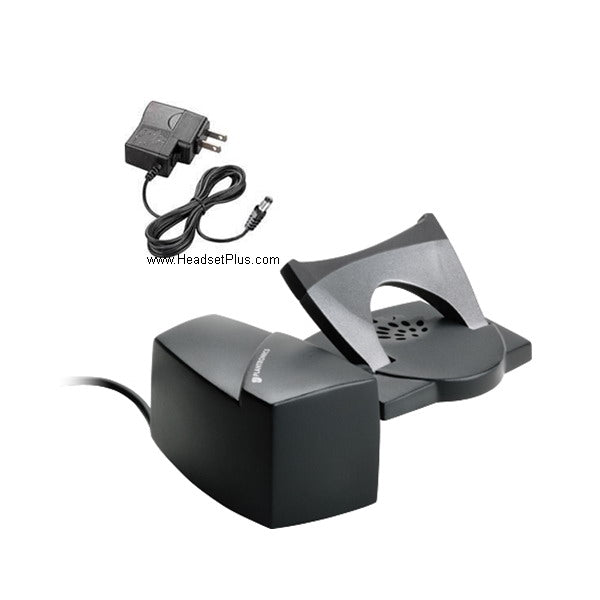
A 4-wire, QD-to-QD adapter that sits inline between your H-series headset and your deskphone, and the setup most government and military desks reach for first. Plug it in and your mic stays muted until you press to talk. The SSP1051-03 is the "momentary" version — you press and hold to transmit, release to mute. It comes in a few cord variants, which you'll find with our push-to-talk accessories. The catch: the connector you need depends on your exact phone, so the SSP1051 on its own may not be the whole solution. Confirm your phone model before ordering.
Clarity Walker WS-2800 — for Cisco phones, no headset required
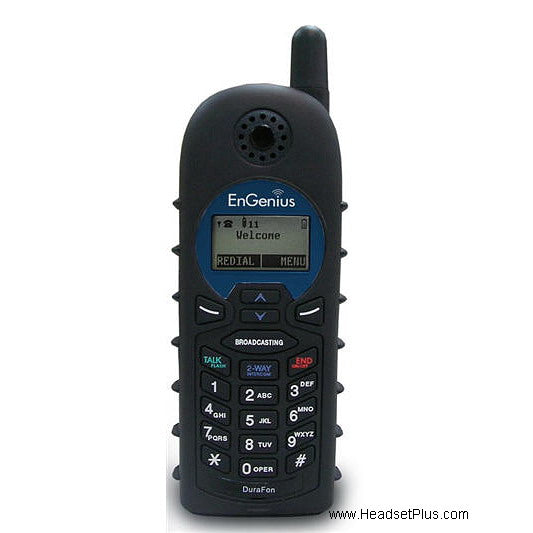
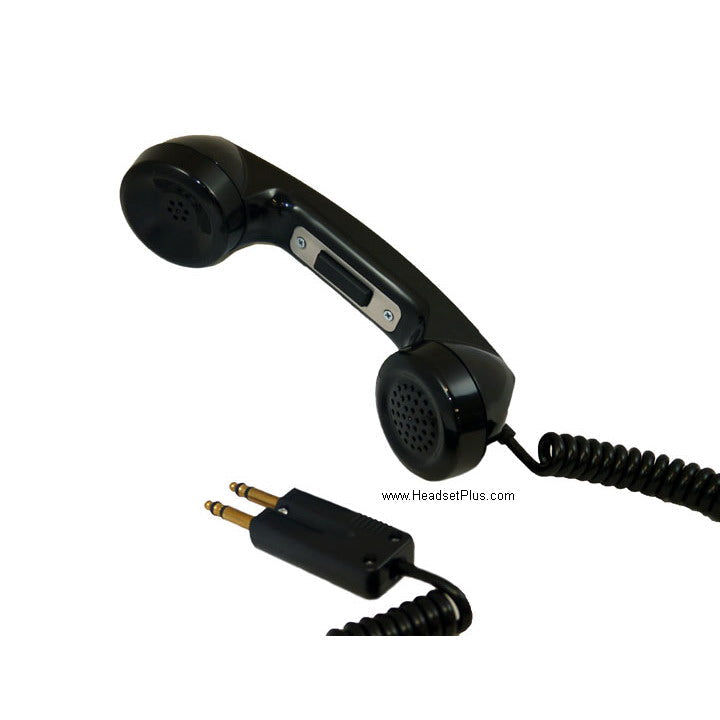
Not everyone wants to wear a headset. The WS-2800 is a push-to-talk handset that replaces the standard handset on Cisco 6900, 8900, and 9900 series phones. Same principle — the caller hears only what you press to send — in a form factor you pick up like an ordinary phone. It's phone-specific, so check your model before buying; there's a companion WS-2835 for the Cisco 7800, 8800, and DX600 series.
Poly CA22CD-SC — wireless, for dispatch
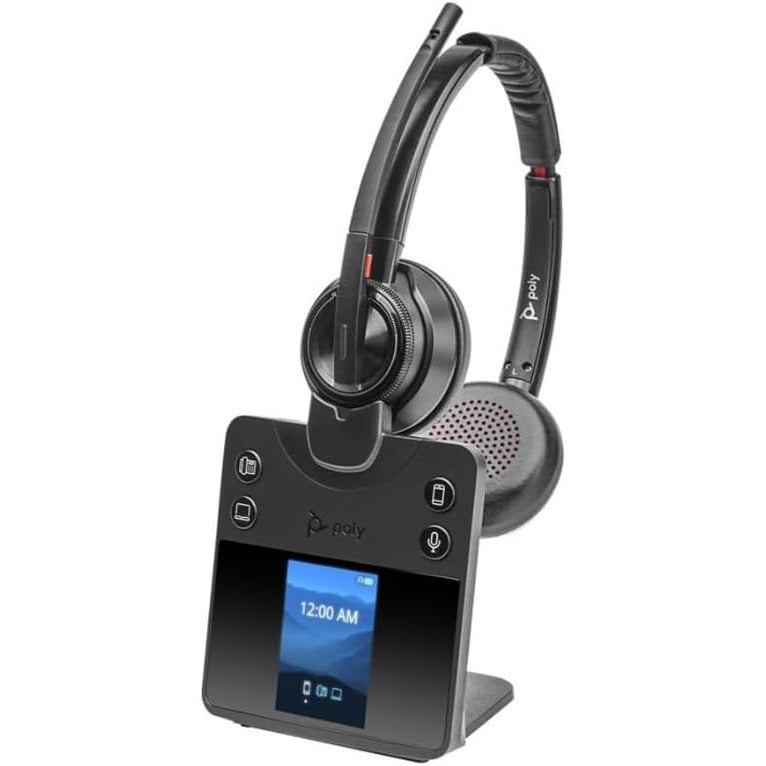
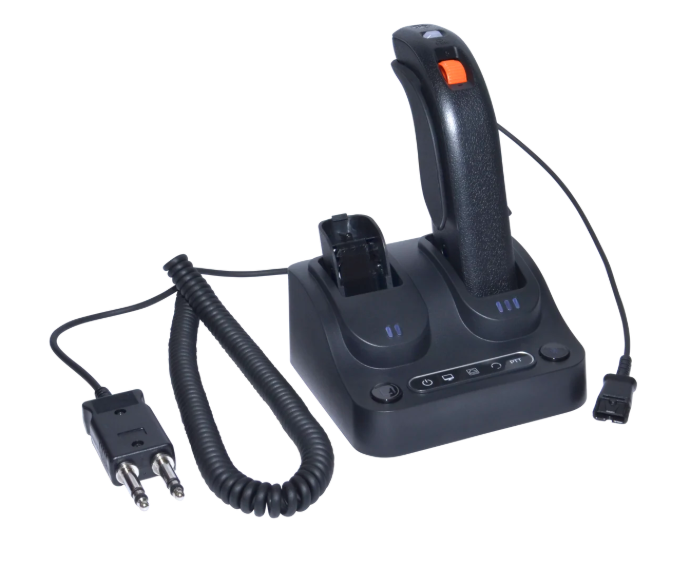
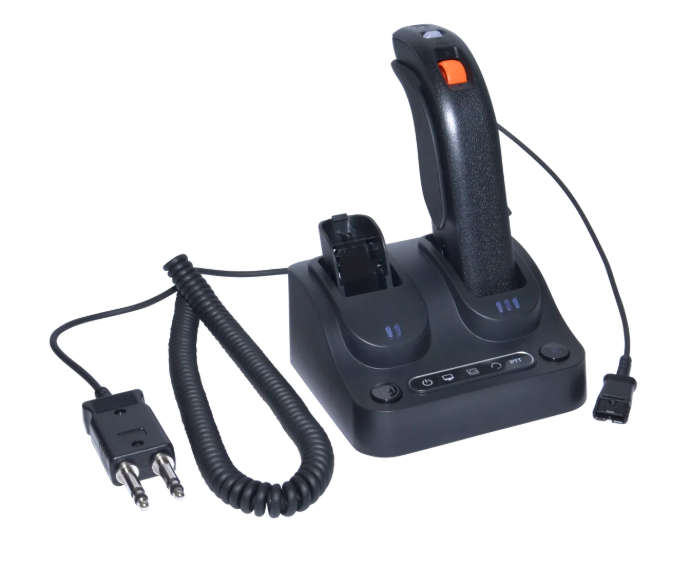
This is the dispatcher's tool: a Poly CA22CD-SC wireless push-to-talk adapter that plugs into a dispatch radio console and ships with a remote you key to talk, common in police and EMS rooms. It carries 256-bit AES encryption and ships with a spare battery for 24/7 operation. It's the current single-channel dispatch adapter, having replaced the older Plantronics CA12CD-S — note the two aren't cross-compatible on battery packs or remotes. Because Poly's dispatch line is winding down, confirm current availability and your console's connector with a specialist before ordering.
Plantronics SHS2355 — for USB and softphones
Same corded push-to-talk control as the SSP1051, but it plugs into a USB port instead of a deskphone — making it the pick for softphone and PC-based UC setups. One honest note on the "secure" label: the adapter controls your microphone at the source, and that part is airtight. What happens to the audio after it hits a VoIP or UC call depends on that platform's encryption, not the adapter. Don't confuse mic control with end-to-end security.
One caveat that matters more here than on a standard headset: these push-to-talk adapters are special-order items — final sale, non-returnable, non-refundable, and replaced only under the manufacturer warranty if they arrive defective. That's exactly why getting compatibility right up front is worth a phone call.
How to order the right one
- Identify what it plugs into. Deskphone, Cisco phone, USB or softphone, or a dispatch radio console — this single fact decides everything else.
- Match the adapter to the device. SSP1051-03 for a deskphone, Clarity Walker WS-2800 for Cisco phones, SHS2355 for USB and softphones, or a wireless CA22CD-SC for dispatch.
- Confirm the exact connector. A push-to-talk adapter is one link in a chain — headset, adapter, and a phone- or console-specific cable. The wrong connector is the most common ordering mistake.
- Order — and double-check first. Because these are special-order, final-sale items, send us your phone or console model and we'll verify the full setup before you buy.
A push-to-talk headset adapter is a small part with an outsized job: it decides what leaves your desk, and when. For the operators and agents who need it, that control is the difference between a clean call and a costly overshare. Tell us the phone, console, or softphone you're running at 877-999-3838 and we'll match you to the right adapter — and the exact cable to make it work — before you spend a dollar.
How does a push-to-talk headset adapter work?
A push-to-talk headset adapter runs half-duplex, like a walkie-talkie: you hear the caller continuously, but your microphone only transmits while you press and hold the button. The default state is muted, so nothing leaves your headset until you deliberately key it.
Do push-to-talk adapters stop a call center from recording you?
No — that's the biggest misconception. A push-to-talk adapter controls when your own microphone transmits; it doesn't hide anything once your voice is on the line. Its real value is the muted-by-default behavior, which keeps side conversations and room noise off the call unless you choose to send them.
What headset works with a push-to-talk headset adapter?
The Plantronics SSP1051-03, Poly CA22CD-SC, and Plantronics SHS2355 push-to-talk adapters all use a Plantronics (now Poly) H-series headset with a Quick Disconnect connector. The Clarity Walker WS-2800 is the exception — it's a PTT handset that needs no headset at all.
Is there a push-to-talk adapter for Cisco phones?
Yes. The Clarity Walker WS-2800 is a push-to-talk handset built for Cisco 6900, 8900, and 9900 series phones, with a WS-2835 for the 7800, 8800, and DX600 series. It replaces the phone's standard handset, so the caller hears only what you press to send — no headset required.
What's the right push-to-talk adapter for a 911 dispatch console?
Dispatch positions use a wireless push-to-talk adapter like the Poly CA22CD-SC, which keys a two-way radio while keeping the phone caller live in your ear. It replaced the older CA12CD-S. Because Poly's dispatch line is winding down, contact us with your console before ordering so we confirm availability and match you to the current equivalent.
Can I return a push-to-talk adapter?
No. These push-to-talk adapters are special-order items — final sale, non-returnable, and non-refundable under the manufacturer's policy. A defective unit is replaced under warranty, which is exactly why confirming compatibility before purchase matters so much.

Comments (0)