



























If your calls touch anything sensitive — patient records, financial details, government business — "is my wireless headset secure?" is a fair question to ask before you buy. The short answer: professional DECT wireless headsets are built with real encryption standards, and modern chipsets go well beyond the baseline. Here's what actually protects a wireless call, and where the meaningful differences are.
Key takeaways
- DECT wireless headsets encrypt audio digitally under a dedicated standard (EN 300 175-7) — an eavesdropper hears noise, not your call.
- Frequency hopping adds a security layer: the headset and base shift channels unpredictably rather than staying on one fixed frequency.
- DECT Security Step C is the current high-security tier — 256-bit AES encryption, versus the older 128-bit DECT standard.
- Bluetooth headsets are encrypted too, but Bluetooth as a protocol has had more documented vulnerabilities than DECT.
- For genuinely sensitive calls (healthcare, legal, government, finance), a DECT Security Step C headset is the stronger choice.
How DECT wireless headsets stay secure
DECT (Digital Enhanced Cordless Telecommunications) headsets encrypt audio under EN 300 175-7, the standard that governs DECT security. In practice, this means someone intercepting the radio signal with a scanner hears digital noise, not your conversation — the audio simply isn't recoverable without breaking the encryption and authentication together.
Frequency hopping: A security technique where the headset and base shift between wireless channels unpredictably rather than transmitting on one fixed frequency. This makes it much harder for anyone else to lock onto and follow the signal, and it also helps the headset find a clean channel automatically if interference or a nearby device shows up on the current one.
Two devices operating near each other on the same channel and time slot at once is rare by design — headsets automatically select the clearest available channel, and if interference is detected, they shift. In a busy, high-density office where many headsets compete for limited channels, you might occasionally notice a brief mute or audio glitch as devices renegotiate channels — that's a capacity issue, not a sign that anyone is listening in.
DECT Security Step C: the current high-security tier
Beyond the DECT baseline, current professional headsets add DECT Security Step C — a higher encryption tier using 256-bit AES, compared to the 128-bit encryption in the older DECT standard. This is the tier worth looking for if your calls involve genuinely sensitive information.
Myth
All DECT wireless headsets offer the same level of security.Reality
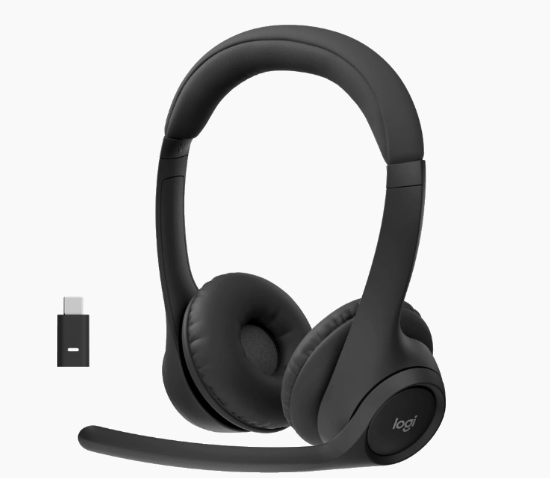
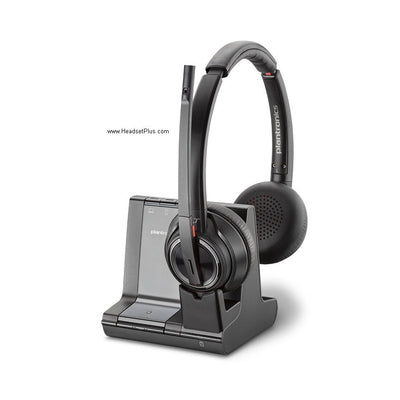
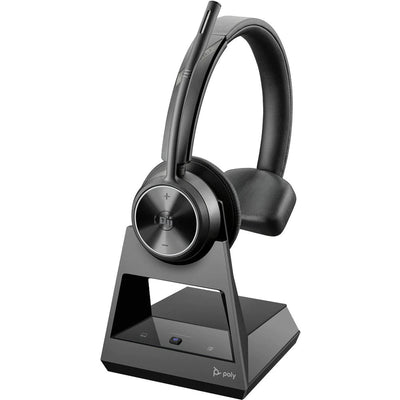
They don't. Standard DECT provides real encryption and authentication under EN 300 175-7, but current-generation headsets with DECT Security Step C add a meaningfully higher tier — 256-bit AES versus the older 128-bit standard — plus improved microphone processing and higher headset density per location. If your calls involve patient records, legal matters, financial data, or government business, it's worth specifically choosing a Security Step C model rather than assuming any DECT headset covers you.Current DECT Security Step C headsets
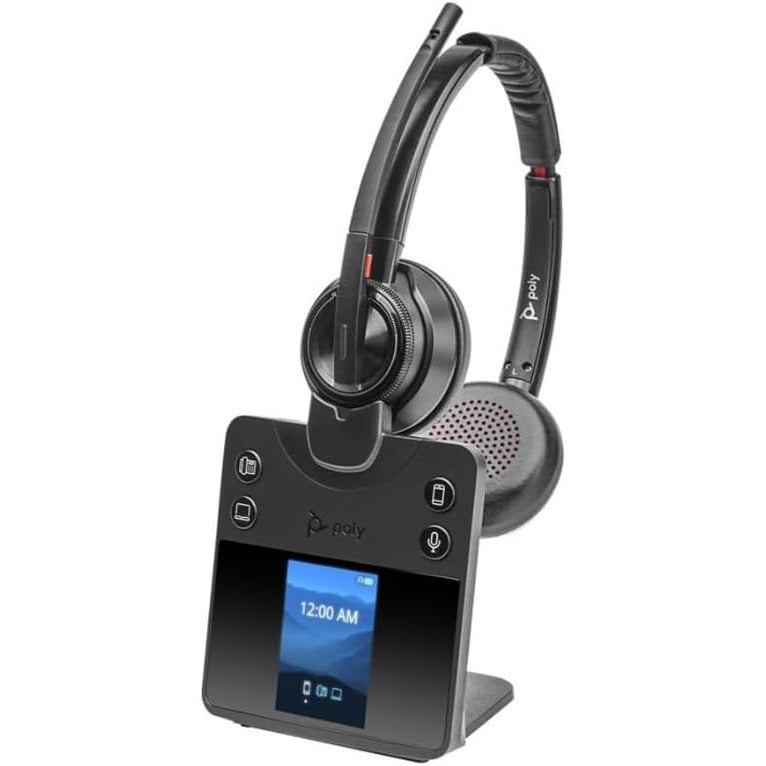
Poly Savi 7310
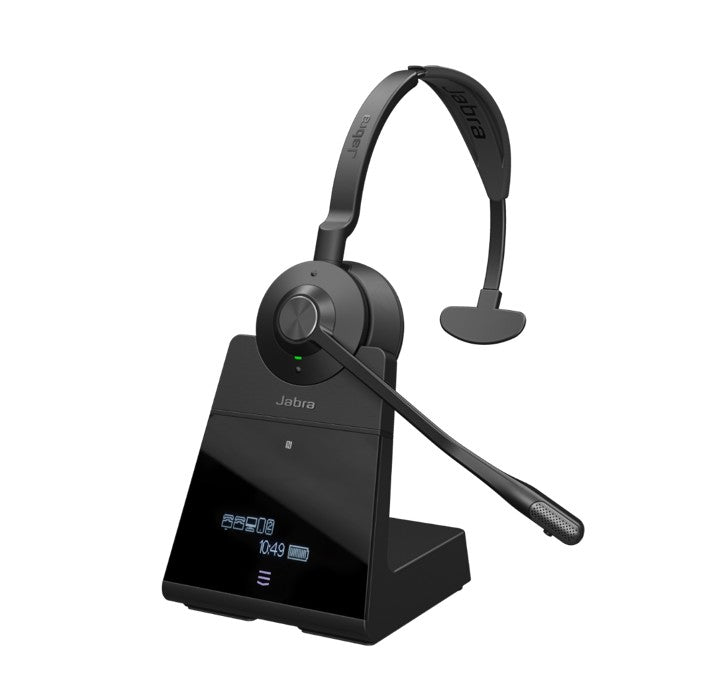
Jabra Engage 55
Bluetooth headset security
Bluetooth headsets also encrypt audio — devices authenticate to each other and negotiate an encryption key before a call begins, over the standard 2.4GHz band. For everyday office and personal calls, this level of security is adequate for the vast majority of users.
That said, Bluetooth as a protocol has had a number of publicly documented security vulnerabilities over the years, some of which have allowed unauthorized access to paired devices under specific conditions. This doesn't mean Bluetooth headsets are unsafe for typical use — but if your calls carry genuinely sensitive information, DECT with Security Step C is the more conservative, security-focused choice, precisely because it's a dedicated protocol built around this kind of encrypted point-to-point communication rather than a general-purpose wireless standard used across a huge range of consumer devices.
Should you worry about wireless headset security?
For the overwhelming majority of office calls, standard DECT or Bluetooth encryption is more than sufficient — nobody is driving around with a radio scanner trying to intercept ordinary business calls. Where it's worth paying specific attention is regulated or highly sensitive environments: healthcare (HIPAA), legal, financial services, and government or defense contracting, where a DECT Security Step C headset is a reasonable, low-cost step to take.
Are wireless headset conversations secure from eavesdropping?
Yes, for professional DECT and Bluetooth headsets. Audio is encrypted digitally, so someone intercepting the radio signal hears noise, not your conversation. Current DECT headsets with Security Step C add 256-bit AES encryption for an even higher security tier, recommended for calls involving sensitive information.
What is DECT Security Step C?
DECT Security Step C is a higher-tier encryption standard used in current professional wireless headsets, offering 256-bit AES encryption compared to the 128-bit encryption in the older DECT standard. It's the security level to look for if your calls involve patient records, legal matters, financial data, or government business.
Are Bluetooth headsets secure enough for business calls?
For typical office calls, yes — Bluetooth headsets authenticate and encrypt the connection before a call begins. However, Bluetooth as a protocol has had documented security vulnerabilities over the years. For genuinely sensitive conversations, a DECT headset with Security Step C encryption is the more security-focused choice.
What is frequency hopping and how does it improve security?
Frequency hopping is when a wireless headset and base shift between channels unpredictably rather than staying on one fixed frequency, making the signal much harder to intercept or follow consistently. It also helps headsets automatically find a clear channel if interference appears. It's a standard part of how DECT wireless headsets maintain both reliability and security.
Which wireless headset is best for secure calls in healthcare or government?
Headsets with DECT Security Step C encryption, such as the Poly Savi 7310/7320 or Jabra Engage 65 SE, are the current recommendation for regulated environments handling sensitive information. Both offer 256-bit AES encryption, well above standard DECT, and connect to a desk phone and computer simultaneously.
For nearly all office calls, the security built into any professional DECT or Bluetooth headset is more than enough. If your work involves genuinely sensitive information — healthcare, legal, financial, or government — stepping up to a DECT Security Step C headset like the Savi 7310/7320 or Engage 65 SE is a small cost for meaningfully stronger protection. Browse the current range on the wireless headset systems collection, or call our team at 877-999-3838 to discuss your compliance requirements.

Comments (0)