














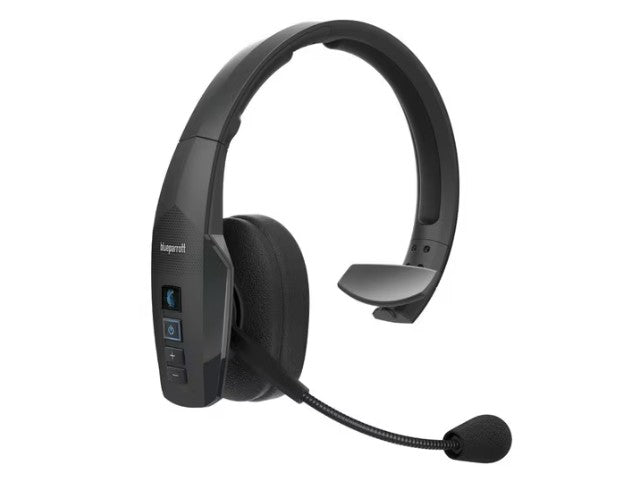



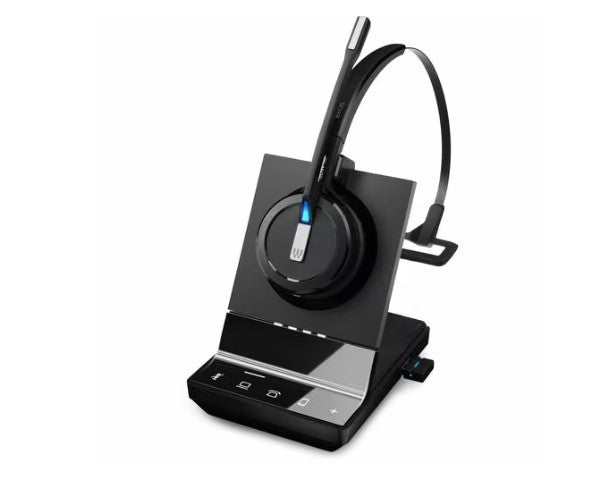

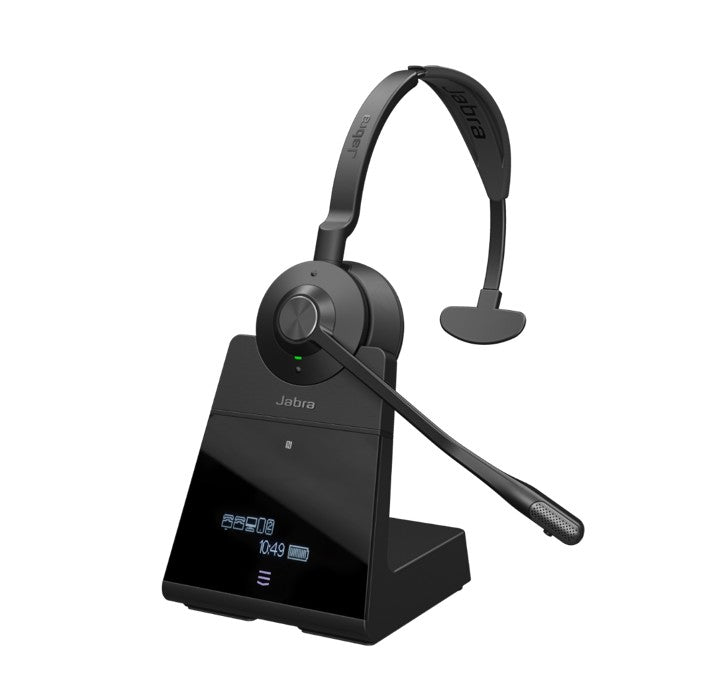

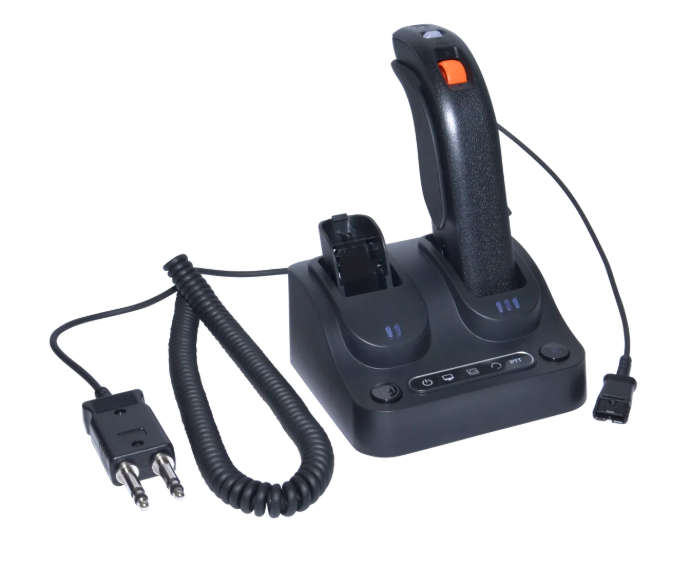


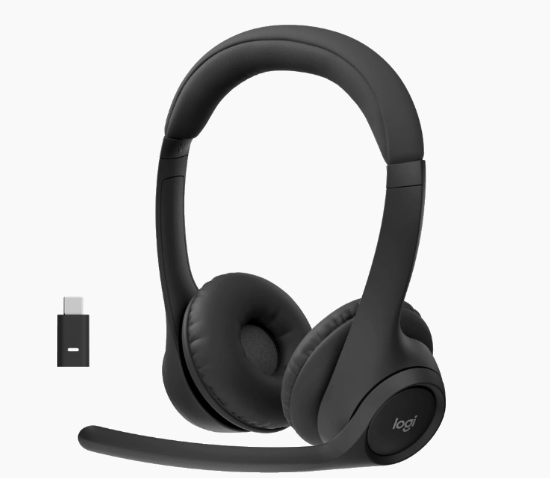










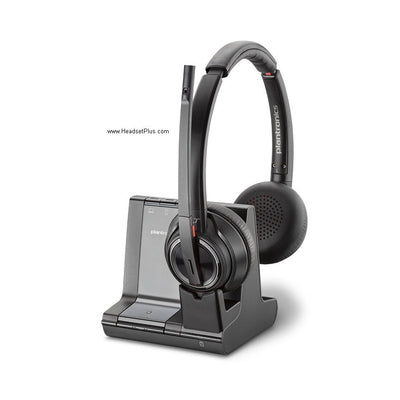
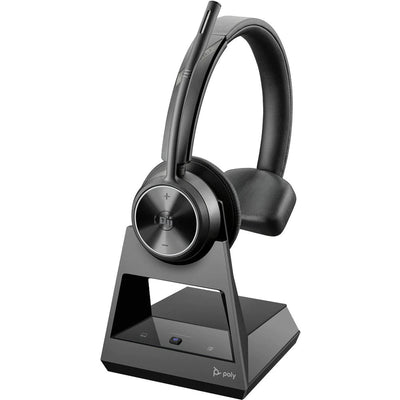
If you spend all day in a headset, it's a fair question to ask whether the wireless signal is something to worry about. The short answer, based on current regulatory standards and the scientific consensus to date: professional wireless headsets operate at power levels regulators consider safe, and headsets in particular are lower-power devices than the cell phone you'd otherwise hold against your head.
Key takeaways
- RF exposure from wireless devices is regulated in the US via SAR (Specific Absorption Rate), capped at 1.6 W/kg by the FCC.
- All wireless devices sold in the US, including headsets, must be tested and certified to meet this limit.
- Current scientific consensus, per the FCC and major health bodies, finds no consistent evidence of harm from RF exposure at these levels.
- Wireless headsets operate at meaningfully lower power than a cell phone held to your ear, since the headset is smaller and the transmission distance to the base or phone is short.
- Research and monitoring continue, as they do for most consumer RF-emitting technology — this isn't a settled question people have stopped studying.
How RF exposure is regulated
The relevant standard is Specific Absorption Rate (SAR) — a measure of how much radio frequency energy a body absorbs from a nearby wireless device. In the United States, the FCC sets the public exposure limit at 1.6 watts per kilogram (W/kg), averaged over one gram of tissue, and every wireless device sold in the US — cell phones, wireless headsets, Bluetooth accessories — must be tested and certified to stay under that limit before it can be sold.
Specific Absorption Rate (SAR): A standardized measurement of how much radio frequency energy is absorbed by human tissue from a nearby wireless device, expressed in watts per kilogram. It's the metric regulators use to set safety limits, and manufacturers must test and certify their products against it before selling them in the US.
What the current research says
According to the FCC, to date there is no consistent or credible scientific evidence linking RF energy exposure from wireless devices — at the levels permitted under current guidelines — to adverse health effects. This has been the position through many rounds of research over an extended period, and it's echoed by major national and international health bodies that have reviewed the same body of evidence.
Myth
Wireless headsets have been proven safe with total scientific certainty, end of discussion.Reality
That overstates it in the other direction. The accurate position is that current scientific evidence, reviewed repeatedly by regulators and major health organizations, has not found a consistent link between RF exposure at permitted levels and health problems — which is different from a permanent, closed-book guarantee. Some researchers and professional bodies have called for continued study and updated real-world exposure measurement methods, and that ongoing research is a normal, healthy part of how safety standards evolve, not a sign that current guidance is wrong.Why headsets specifically are lower-power than phones
One useful distinction the SAR conversation often misses: a headset and a cell phone aren't emitting at the same intensity. A cell phone transmits at higher power because it needs to reach a cell tower, sometimes miles away, and it's typically held directly against the head. A wireless headset only needs to reach a nearby base station or phone a few feet away, so it transmits at a fraction of that power — DECT and Bluetooth radios in particular are built for short-range, low-power communication by design. This is a meaningful, physical reason headsets are a lower-exposure category of device generally, distinct from any specific manufacturer's marketing claim.
Where to read more
If you want to dig into the primary sources rather than take any retailer's word for it, the FCC publishes detailed guidance on RF safety and SAR testing, and the FDA covers cell phone radiation research and reduction tips. Both are updated as new research is reviewed, and both are a better source for the current state of the science than any single manufacturer's page — including ours.
Are wireless headsets safe to wear all day?
Wireless headsets sold in the US must be tested and certified under the FCC's SAR limit of 1.6 W/kg, and current scientific evidence has not shown a consistent link between RF exposure at these levels and health problems. Wireless headsets also transmit at lower power than a cell phone held to your ear, since they only need to reach a nearby base or phone rather than a distant cell tower.
What is SAR and why does it matter for wireless headsets?
SAR (Specific Absorption Rate) measures how much radio frequency energy a body absorbs from a nearby wireless device. The FCC requires all wireless devices sold in the US, including headsets, to be tested and stay under 1.6 W/kg. It's the standard regulators use to set and enforce RF exposure safety limits.
Do wireless headsets emit as much radiation as a cell phone?
No, generally less. A cell phone transmits at higher power to reach a distant cell tower and is typically held against the head, while a wireless headset only needs to reach a nearby base station or phone a few feet away, so it operates at meaningfully lower power. This is a structural difference in how the two devices are designed to communicate.
Has research found wireless headsets to cause health problems?
According to the FCC and major health organizations that have reviewed the available research, there is currently no consistent or credible scientific evidence linking RF exposure from wireless devices at permitted levels to adverse health effects. Research continues, as it does for most consumer wireless technology, and standards are updated as new evidence is reviewed.
If RF exposure is a concern for you, the two most useful facts are these: every wireless headset sold in the US must meet the same FCC safety standard as a cell phone, and headsets specifically operate at lower power than a phone held to your head. For anyone who wants to look deeper, the FCC and FDA both publish current, detailed guidance directly. If you have other questions about a specific headset's specifications, our team is happy to help at 877-999-3838.

Comments (0)