












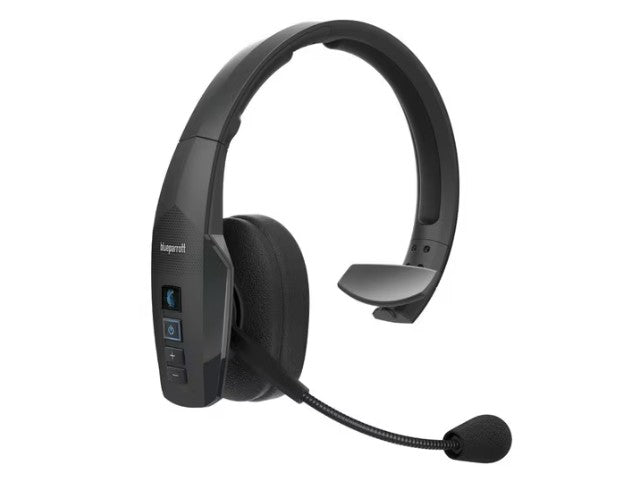







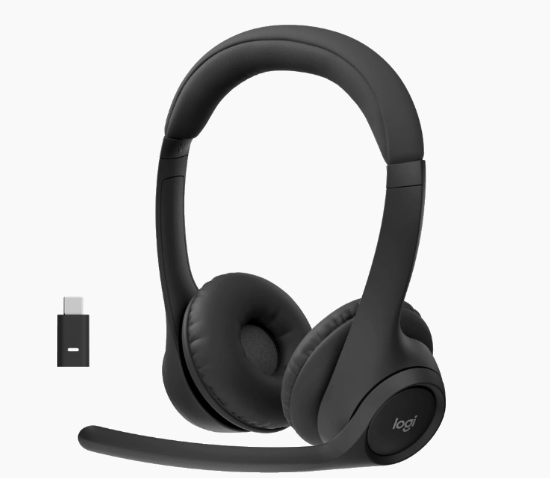








Remote answering is the single feature that decides whether a wireless headset actually changes your day or just removes a cord. Without it, your phone rings while you're across the office and you still have to run back. With it, you answer from wherever you are. Here's how it works, and which of the two methods fits your phone.
Key takeaways
- Remote answering means answering and ending desk phone calls from the headset, away from your desk.
- Two methods: a mechanical handset lifter, or an electronic EHS cable.
- Lifters work with nearly any phone and cost less, but have moving parts that eventually wear out.
- EHS cables answer instantly with no moving parts, but only work on phones with EHS support built in.
- If your phone supports EHS, it's usually the better choice despite the higher cost.
What remote answering actually does
Without remote answering, a wireless headset still ties you to your desk in one specific way: to take a call, you have to be at the phone to pick up the handset and put it down again. You get the cordless freedom, but only after the call has started.
With remote answering, your phone rings while you're in the break room, at a filing cabinet, or talking to a colleague — and you answer it from the headset without going back. For anyone who spends real time away from their desk during the day, this is the difference between a wireless headset being a convenience and being genuinely useful.
Myth
Any wireless headset can answer calls remotely — that's the whole point of being wireless.Reality
Not on its own. A wireless headset handles the audio, but nothing in the headset can physically lift your desk phone's handset or tell the phone to go off-hook. That takes a separate device: either a mechanical lifter or an EHS cable. Which one you need depends on your specific phone, so it's worth confirming before you buy rather than discovering the gap afterwards.Option 1: the handset lifter
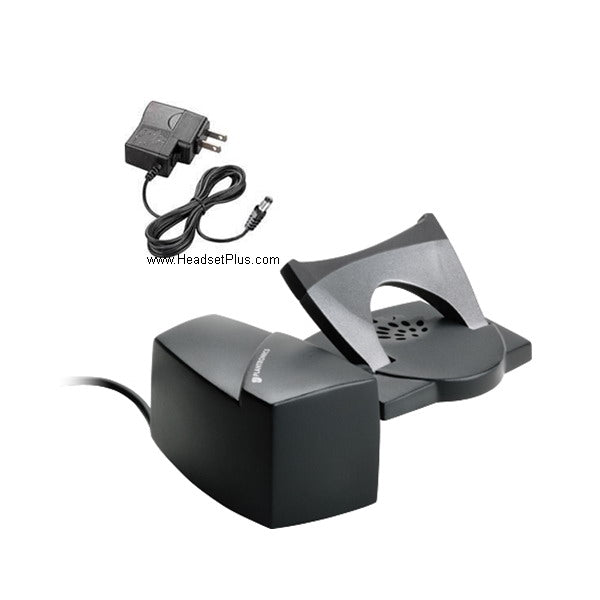
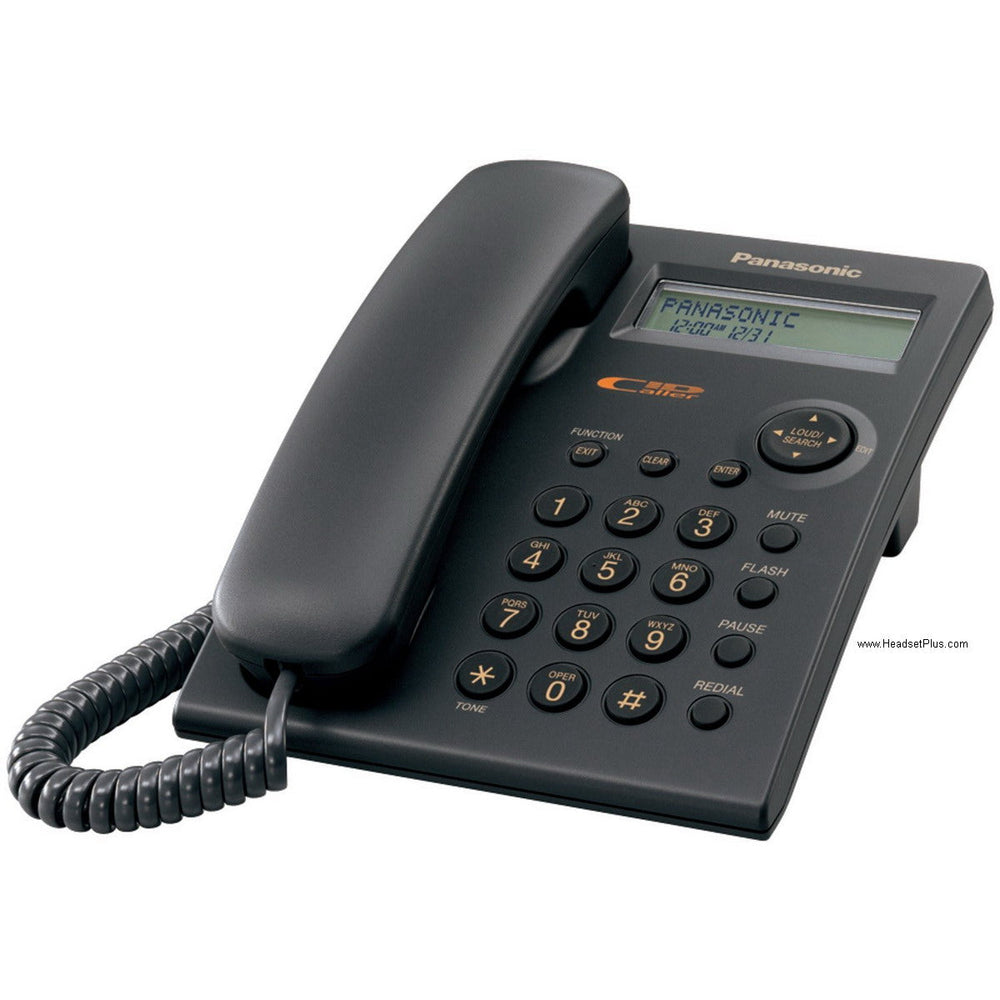
A handset lifter is a small motorized arm that mounts to the side of your desk phone with double-sided tape. When you press the answer button on your headset, the arm physically raises the handset off its cradle — mechanically doing what your hand would do.
Pros:
- Works with almost any desk phone. As long as there's space between the handset and the cradle for the arm to fit, a lifter works.
- Less expensive than an EHS cable.
- Straightforward to install.
Cons:
- Moving parts, which eventually wear out or break.
- Difficult to move between phones once mounted, because of the adhesive.
- A slight delay in answering that grows the further you are from the base.
Option 2: the EHS cable
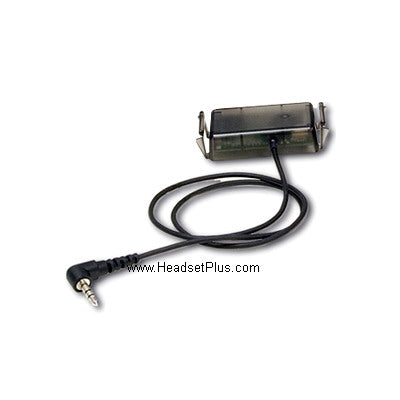
An EHS (Electronic Hook Switch) cable does the same job electronically. Instead of lifting anything, it sends a signal from your headset base telling the phone to go off-hook — no arm, no motor, nothing to wear out.
Pros:
- No moving parts, so it lasts considerably longer than a lifter.
- Easy to move from one desk phone to another.
- Answers instantly regardless of how far you are from the base.
Cons:
- More expensive than a lifter.
- Only works on phones with EHS support built in.
- Each cable is specific — it has to match your exact phone model, your headset brand, and in some cases your headset's generation.
Which should you choose?
If your phone supports EHS, take it. No moving parts, instant answering, and the ability to move it to a new phone when you upgrade generally outweigh the extra cost — a lifter's mechanical arm is the part most likely to fail on the whole setup.
If your phone doesn't support EHS, a lifter is a perfectly good solution and works with the large majority of desk phones.
The complication is matching the exact cable. Cisco alone uses different EHS cables depending on which phone model you have, which headset you're pairing, and which brand made it — and the same pattern holds for Avaya, Polycom, NEC, and Yealink. Our complete EHS cable compatibility guide maps every cable to every supported phone across Plantronics, Jabra, EPOS, and Yealink.
Getting it right the first time
The single most common ordering mistake here is buying a cable that fits the connector but not the setup. Three things have to line up: your exact phone model, your headset's brand, and sometimes your headset's generation, since older and newer headsets often need different cable versions for the same phone.
If you're unsure, have your phone's model number to hand and call before ordering — this is a five-minute conversation that avoids a return.
What is remote answering on a wireless headset?
It's the ability to answer and end desk phone calls directly from your headset while away from your desk. Without it, you have to return to the phone and lift the handset before the headset can take the call.
Do I need a lifter or an EHS cable?
It depends on your phone. If it has EHS support built in, an EHS cable is generally the better option — instant answering, no moving parts, and easy to move between phones. If it doesn't, a handset lifter works with almost any desk phone at a lower cost.
Why is an EHS cable better than a handset lifter?
No moving parts to wear out, instantaneous answering regardless of distance from the base, and it can be moved to a different phone easily. A lifter's motorized arm is the component most likely to eventually fail, and its adhesive mounting makes it awkward to relocate.
Will a handset lifter work with my desk phone?
Almost certainly, provided there's enough space between the handset and the cradle for the lifting arm to fit. Lifters work with the large majority of desk phones, which is why they remain the fallback when a phone doesn't support EHS.
Why are there so many different EHS cables?
Because each has to match three things: your exact phone model, your headset brand, and sometimes your headset's generation. Cisco alone uses several different cables across its phone range, and the same applies across Avaya, Polycom, NEC, and Yealink.
Remote answering is the feature that makes a wireless headset worth the money rather than just worth the tidiness. Work out whether your phone supports EHS first, then match the exact cable — or call our team at 877-999-3838 with your phone model and we'll confirm which route fits.

Comments (0)