



























Headset spec sheets are full of terms that sound interchangeable but aren't — noise cancelling and ANC, UC and Teams, pairing and subscribing. Here's what each actually means, grouped by the decision it affects.
Key takeaways
- ANC and noise-cancelling microphones solve opposite problems — one is what you hear, the other is what your caller hears.
- QD (Quick Disconnect) lets you unplug from the phone mid-call without taking the headset off.
- EHS answers desk-phone calls electronically; a handset lifter does the same job mechanically.
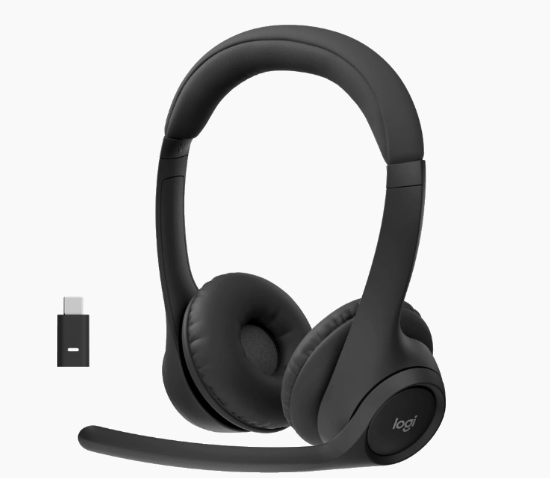
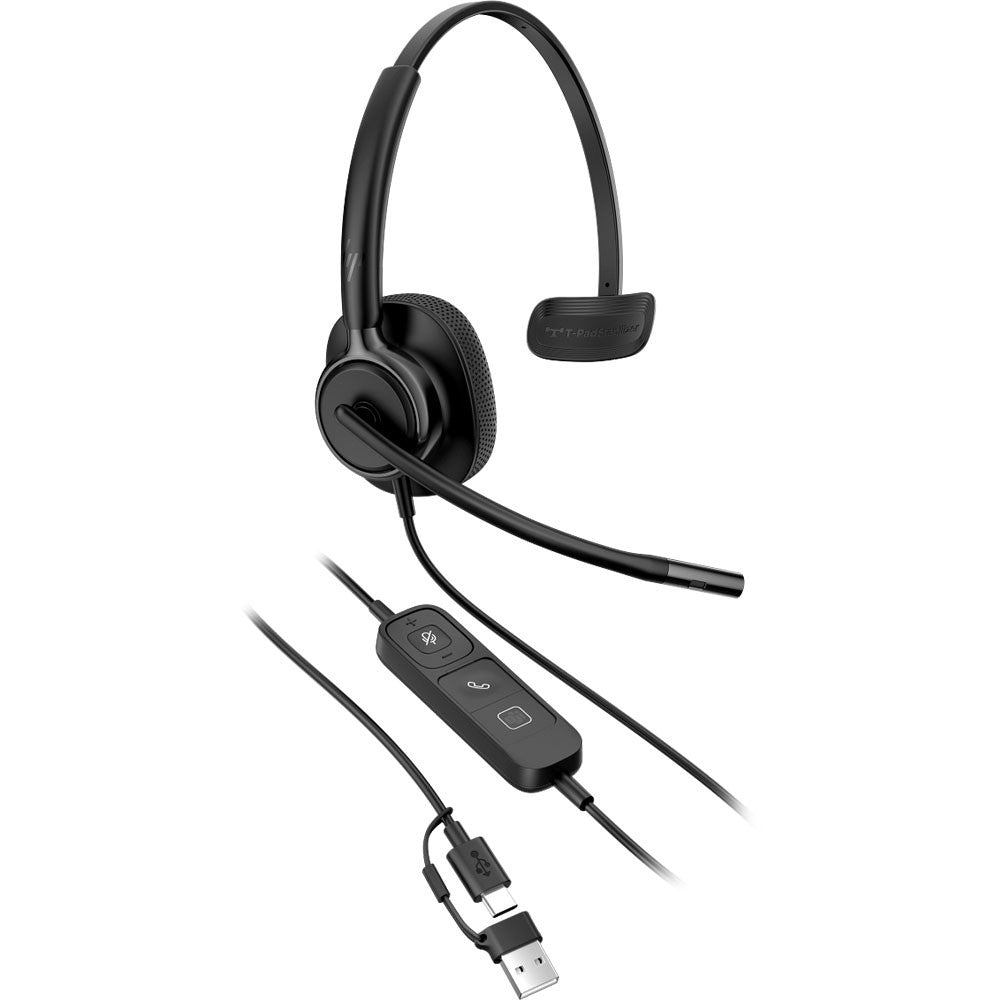
- Monaural covers one ear (room awareness), binaural covers both (noise isolation).
- A "UC" model suffix means general platform certification; "MS" or "Teams" means Microsoft Teams-specific.
Connectors and plugs
2.5 mm — A small round plug found on many cordless phones and some older mobile phones.
3.5 mm — The standard round headphone plug, larger than 2.5 mm, found on computers, tablets, and phones that still have a headphone jack. Older computer headsets used two 3.5 mm plugs (pink for microphone, green for audio out); most modern ones use a single combined plug or USB instead.
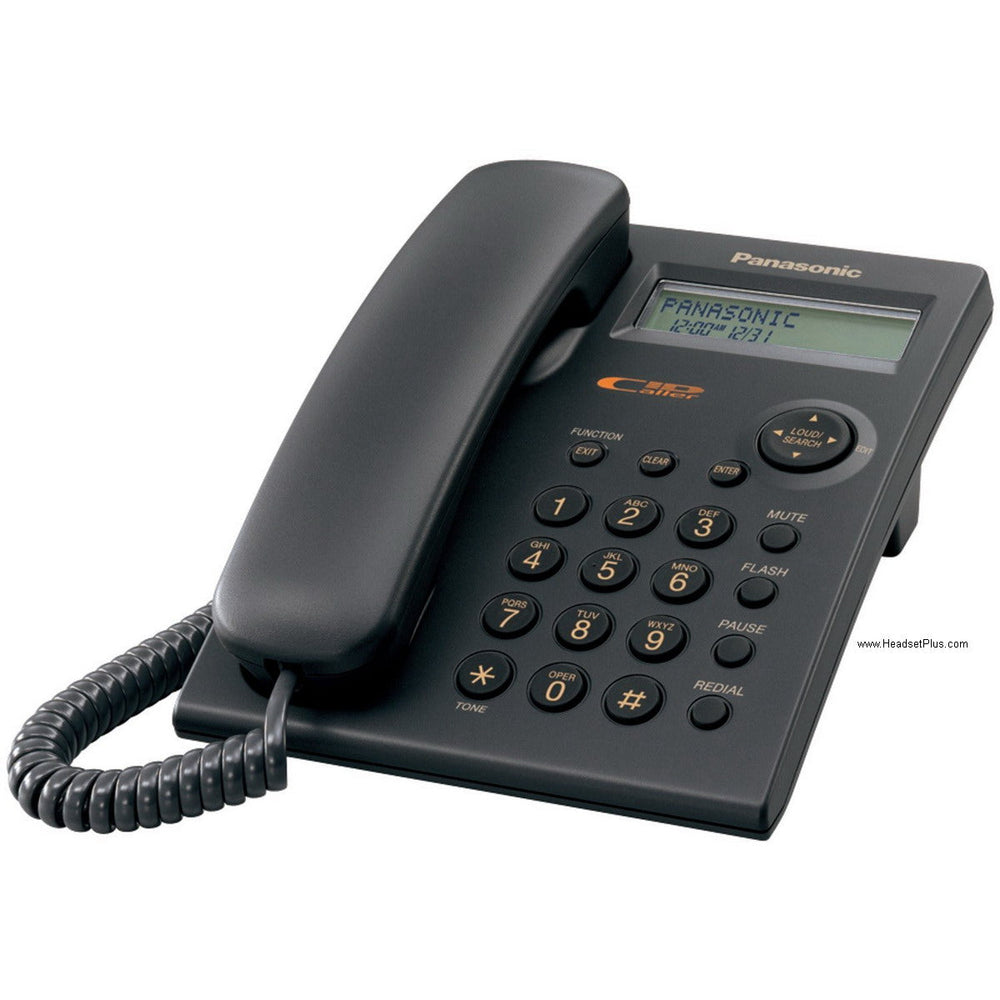
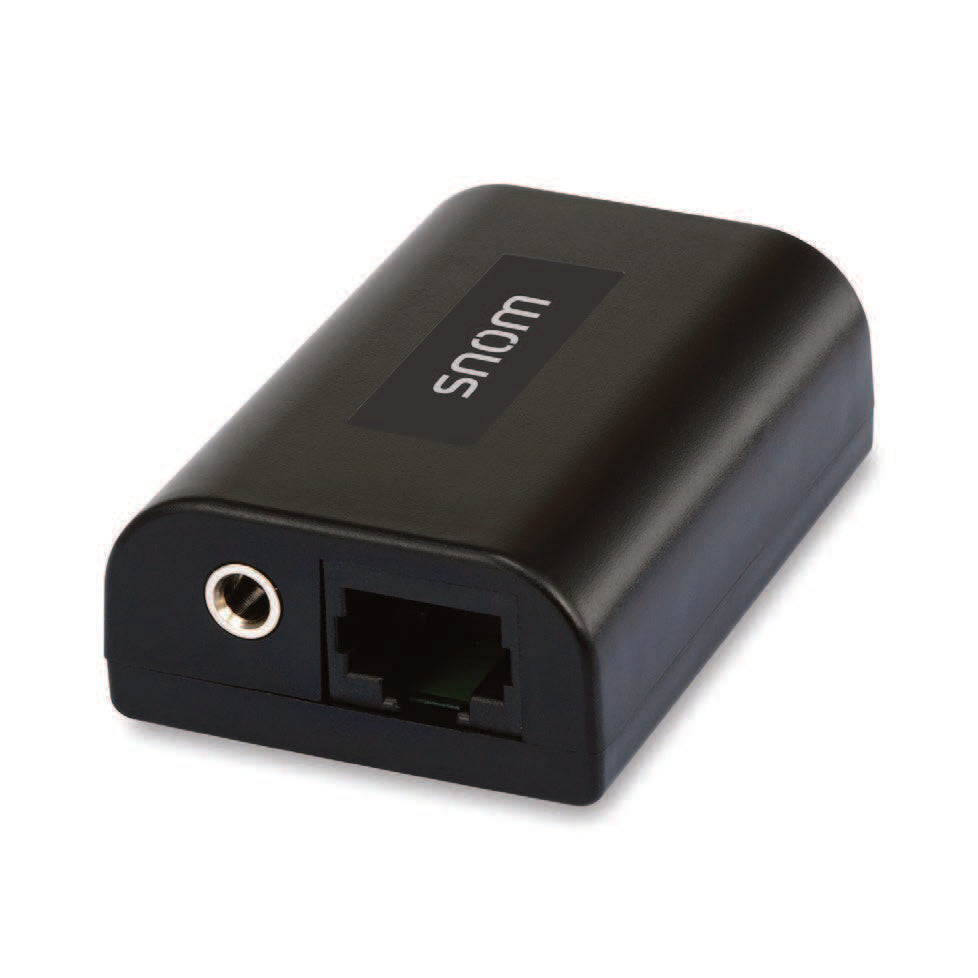
RJ9 (modular jack) — The square, telephone-style plug used on most corded desk phones and headset amplifiers.
USB-A / USB-C — The two current computer connector types. Many headsets now ship with both, or with an adapter, since laptops have largely moved to USB-C while desktops often still use USB-A.
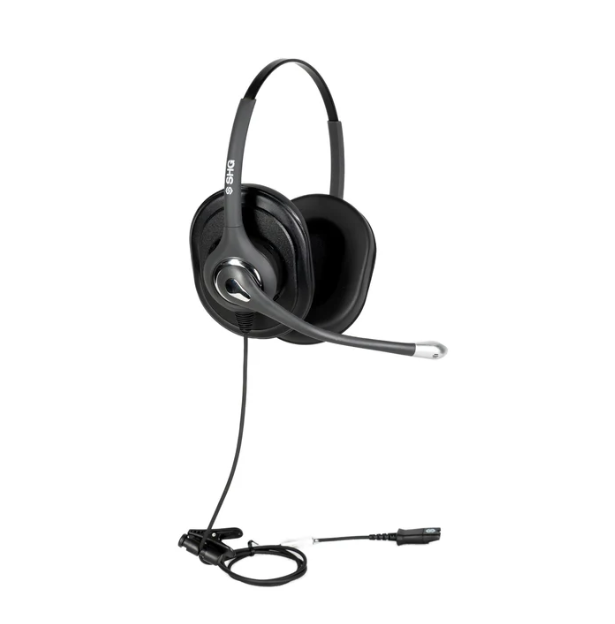
QD (Quick Disconnect): The flat connector that separates a professional headset from its bottom cable. It lets you unplug and walk away from your desk mid-call without removing the headset, and it's what allows one headset to work across different phones by changing only the cable. On H-series headsets, the QD sits at the end of the headset cable; on P-series headsets, it sits in the middle.
Handset (receiver) port — The port your phone's handset plugs into. Most headset amplifiers connect here rather than to a dedicated headset port.
Headset port — A dedicated port some (not all) desk phones have for a headset, either RJ9 or 2.5 mm. If your phone has one, you often don't need an amplifier at all.
Wireless technology
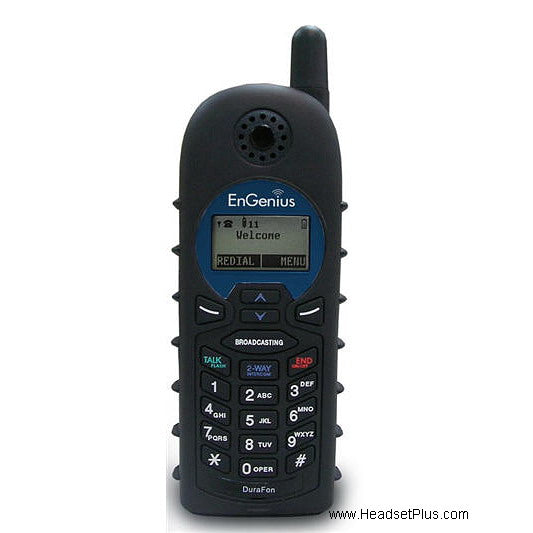
DECT — Digital Enhanced Cordless Telecommunications, a wireless standard using a voice-dedicated 1.9 GHz band. Because it doesn't share bandwidth with Wi-Fi, it avoids the interference Wi-Fi-band devices can cause, and delivers far more range than Bluetooth — the Poly CS540 is a long-standing example.
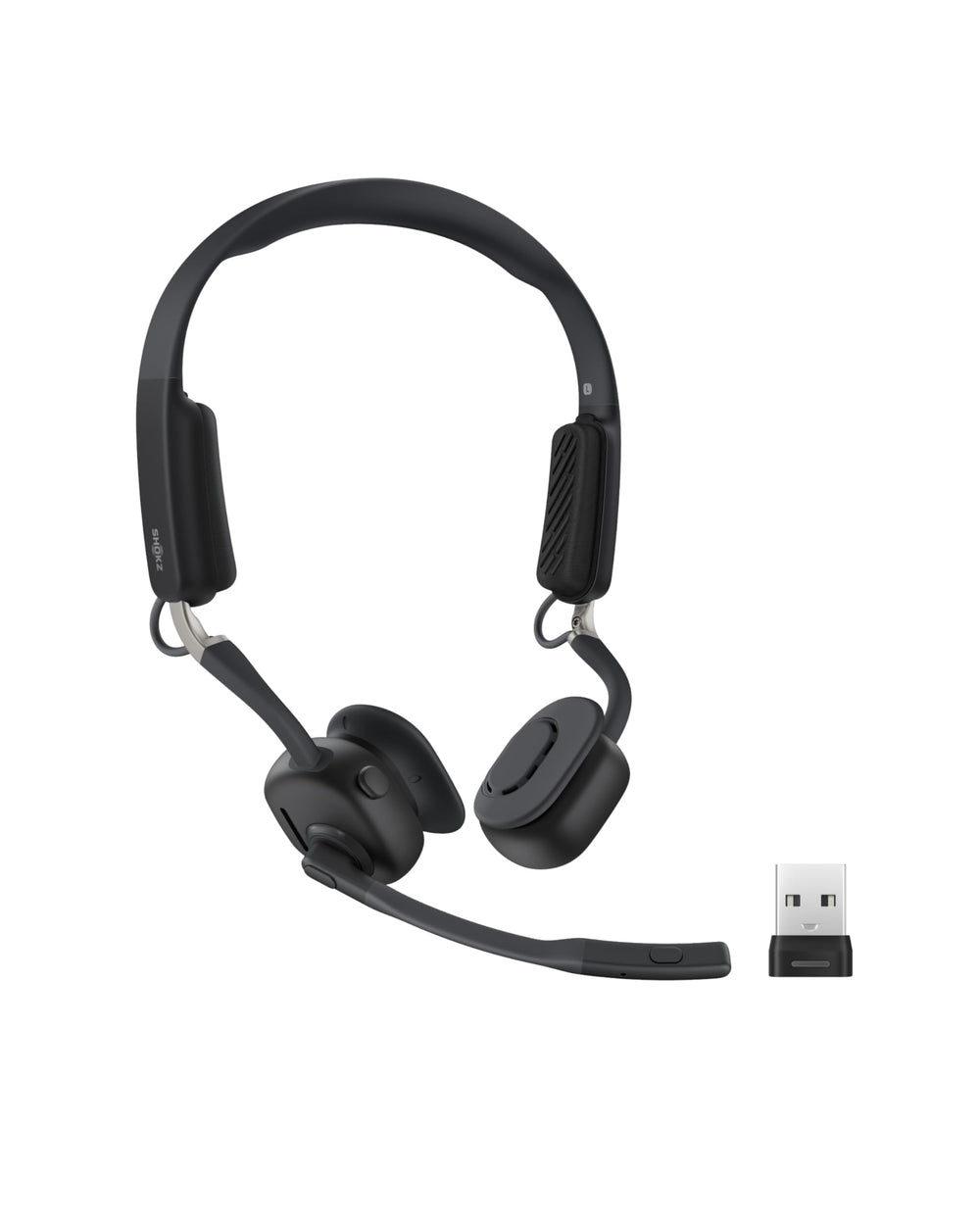
Bluetooth — Short-range wireless, typically used to connect a headset to a mobile device or computer. Current Class 1 implementations with a USB dongle reach considerably further than the older ~33-foot assumption.
Pairing — Establishing the initial wireless connection between a Bluetooth headset and a device. A headset in pairing mode usually flashes two alternating colors.
Subscribing / resubscribing — The DECT equivalent of pairing: re-establishing the link between a wireless headset and its base. If you replace a headset or lose the connection, you resubscribe it to the base.
Multipoint — Lets a Bluetooth headset hold active connections to two paired devices at once (say, a computer and a phone) and switch between them. Headsets without multipoint can pair with several devices but stay actively connected to only one.
Audio technology
Myth
Active noise cancelling and a noise-cancelling microphone are the same feature.Reality
They solve opposite problems. ANC (Active Noise Cancelling) reduces the ambient noise you hear — useful for focus in a loud room. A noise-cancelling microphone reduces the background noise your caller hears — useful when people keep asking you to repeat yourself. A headset can have one, both, or neither, so check which problem you're actually solving before you pay for it.Passive noise isolation — Physical blocking of sound by the earcups themselves, with no electronics involved. A binaural headset with sealed leatherette cushions isolates passively; that's different from ANC, which actively cancels sound electronically.
Wideband / HD voice — Audio extending to roughly 6,800 Hz, versus traditional telephony's narrowband range of about 300–3,400 Hz. Wideband makes speech noticeably clearer, particularly consonants like "s" and "f" that narrowband tends to blur.
DSP (Digital Signal Processing) — Processing applied to the audio signal to improve it: reducing noise, managing echo, evening out volume levels. It's a technique, not a connector — a headset can use DSP whether it connects by USB or another method.
Sidetone — Hearing your own voice in the headset while you speak. It sounds like a flaw but is deliberate: with your ears covered, you naturally speak louder than necessary, and sidetone stops you from shouting without realizing it.
Acoustic Fence — Poly's technology using multiple microphones (some facing you, at least one facing outward) to identify and suppress background noise before it reaches your caller.
Amplifier — A unit that boosts headset audio for phones that can't drive a headset on their own, usually adding independent volume and mute controls. Modern amplifiers also switch a single headset between a desk phone and computer — see the audio switches range.
Wearing styles
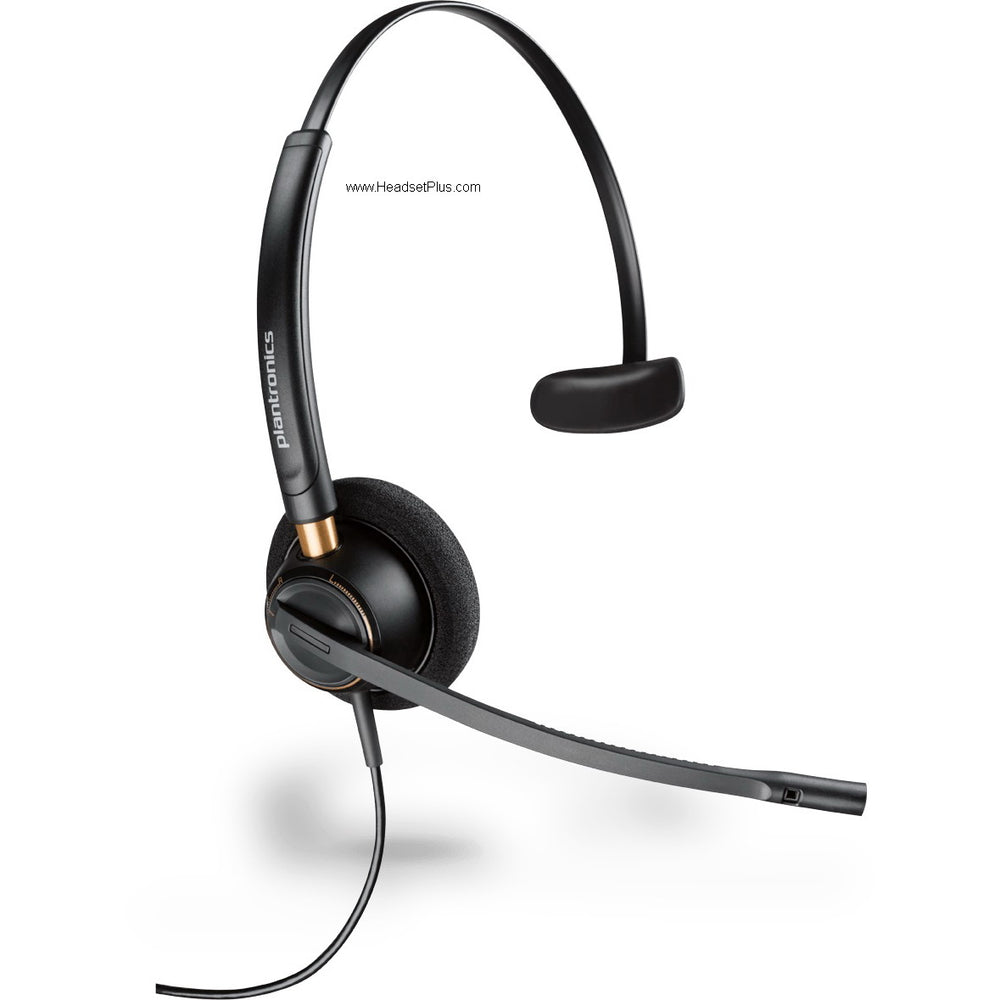
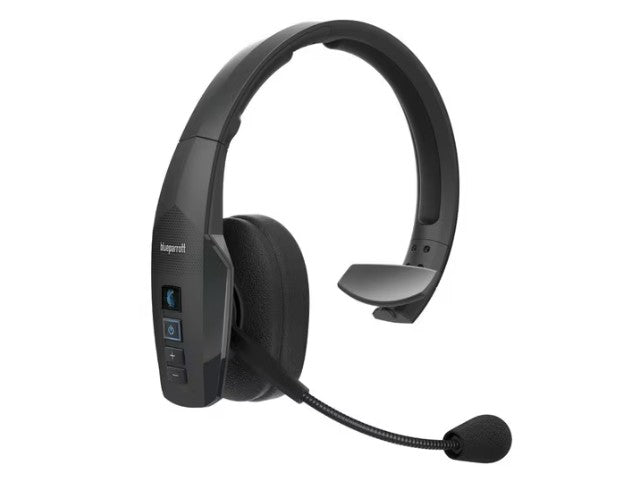
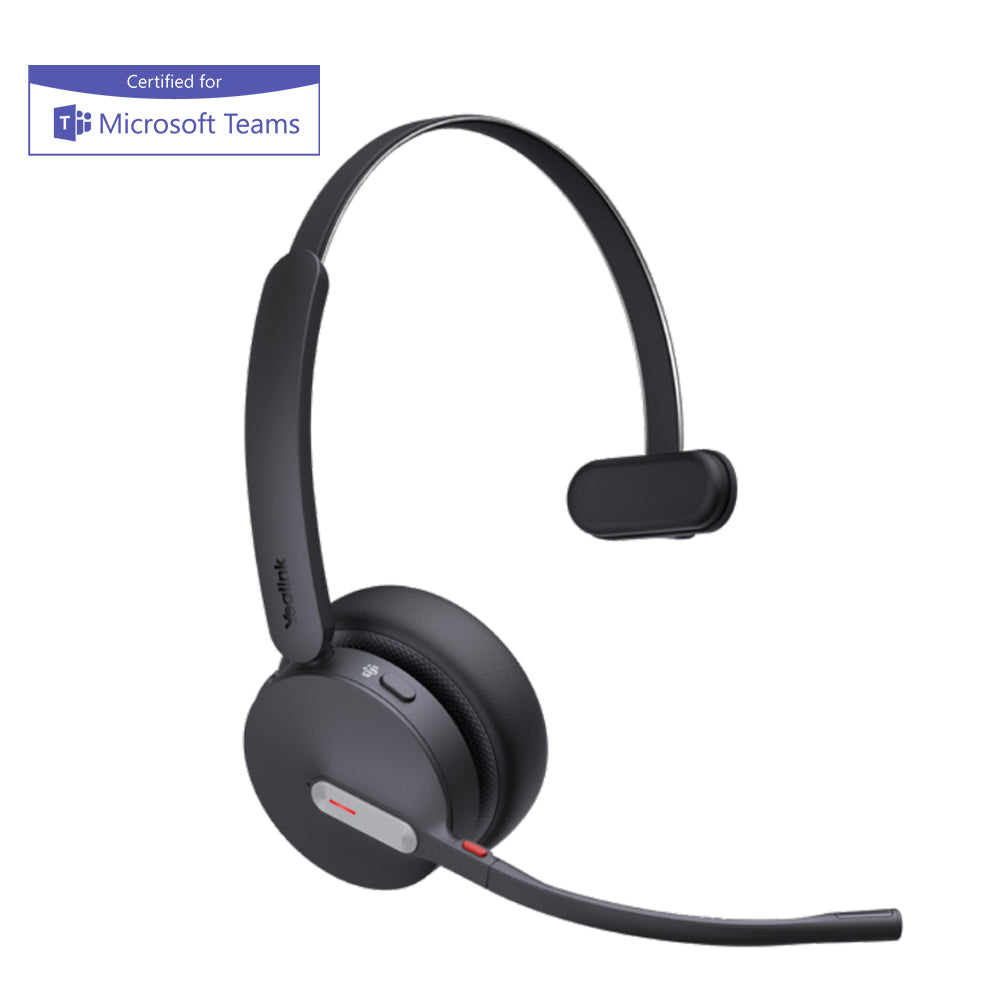
Monaural (mono) — Covers one ear, leaving the other open. Suits anyone who needs to stay aware of the room or be approachable at their desk.
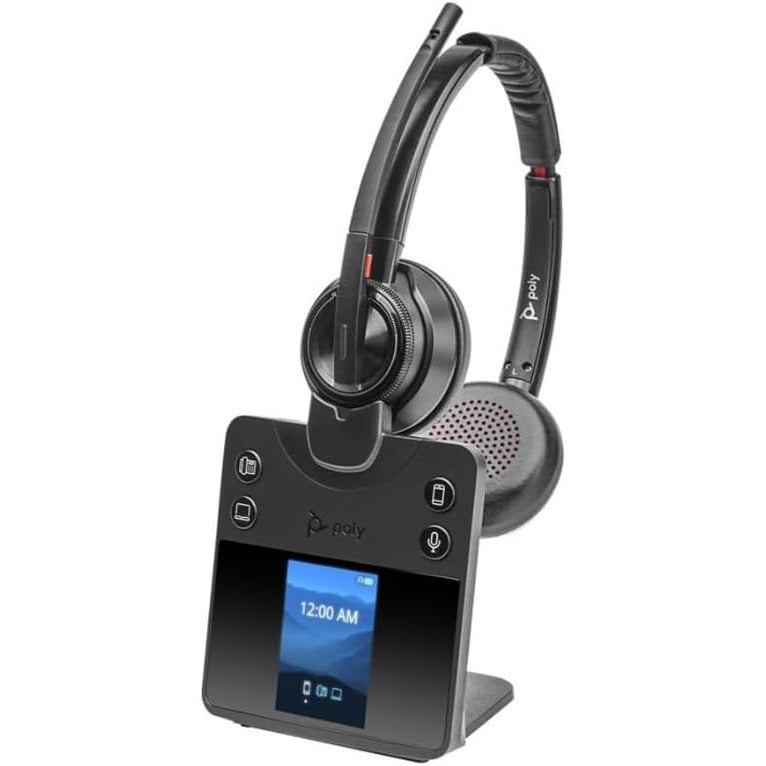
Binaural (duo/stereo) — Covers both ears for better noise isolation and focus. Suits loud floors and concentration-heavy work.
Over-the-head — A traditional headband, the most stable option for all-day wear.
Over-the-ear — An ear loop or hook instead of a headband, for people who don't want a band across their hair.
Behind-the-neck — A neckband that sits behind the head, a third alternative on convertible models.
Convertible — A headset that switches between two or three wearing styles using the same core unit, useful for shared desks or mixed preferences.
Earbuds — Compact in-ear headsets, now available with ANC and full UC certification in true-wireless form.
Desk phone and platform terms
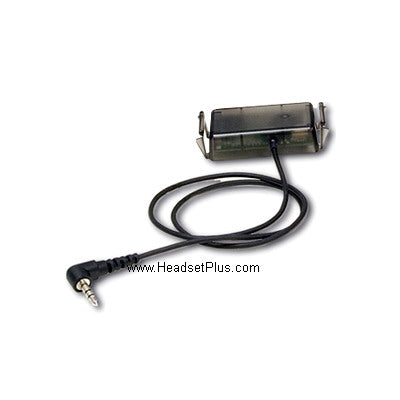
EHS (Electronic Hook Switch) — A cable letting a wireless headset answer and end desk-phone calls electronically, with no moving parts. Only works on phones with EHS support built in.
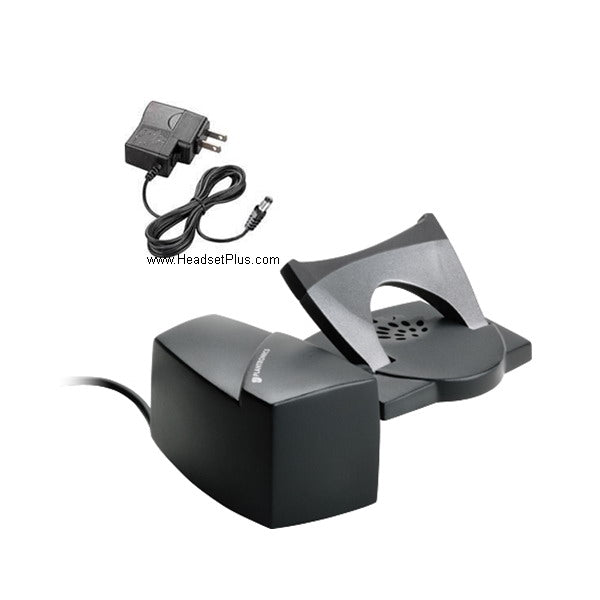
Handset lifter — The mechanical alternative to EHS: a small motorized arm that physically raises the phone's handset when you answer from the headset. Works on phones that lack EHS support.
UC (Unified Communications) — Platforms combining voice, video, messaging, and presence: Microsoft Teams, Zoom, Webex, Google Meet. On a headset model name, a "UC" suffix means general UC certification.
MS / Teams certified — Certified specifically for Microsoft Teams, usually adding a dedicated Teams button. These headsets still work with other platforms; the certification adds integration rather than exclusivity.
VoIP — Voice over Internet Protocol: carrying calls over the internet rather than a traditional phone line.
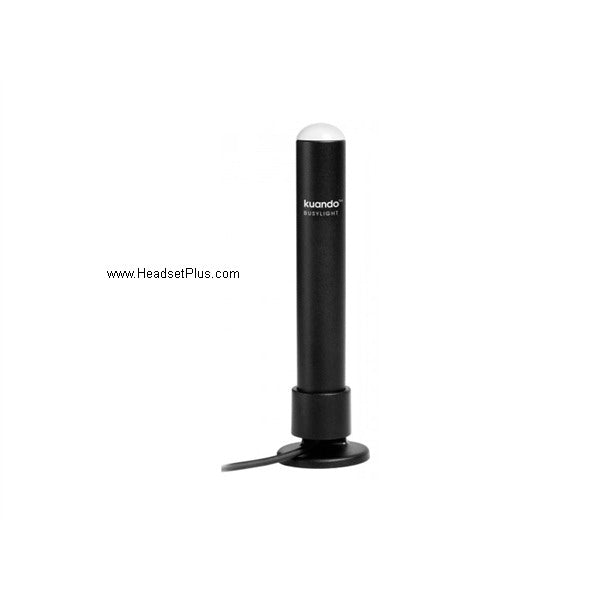
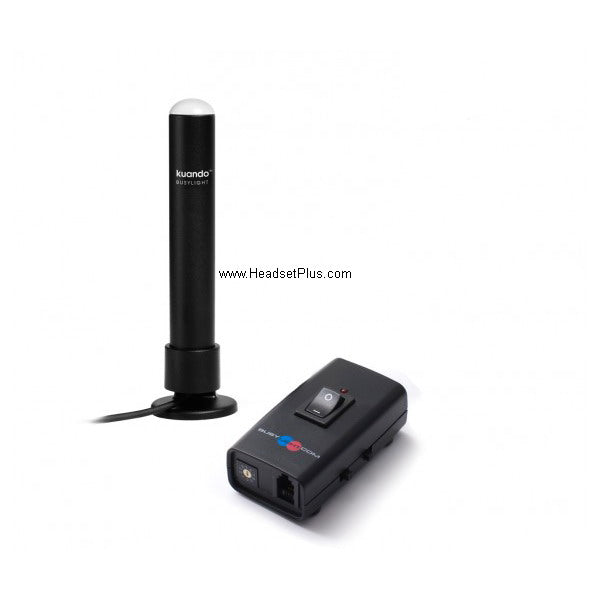
Busylight — An indicator light that turns on when you're on a call, so colleagues can see not to interrupt. Built into many current headsets and available as a separate accessory.
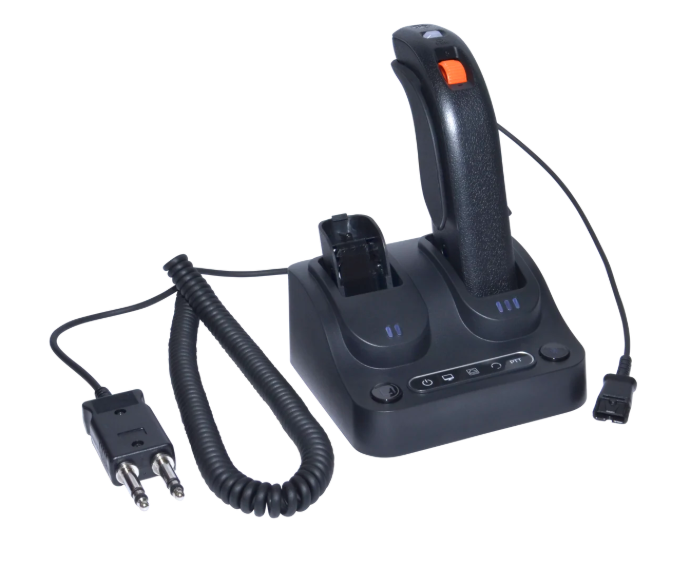
PTT (Push-to-Talk) — A configuration where the microphone stays muted by default and goes live only while a button is held, used in radio dispatch and air traffic control.
Voice tube — A translucent plastic tube used in place of a microphone on some older headset designs. Removable and replaceable, though largely superseded by noise-cancelling microphones.
What's the difference between ANC and a noise-cancelling microphone?
ANC (Active Noise Cancelling) reduces the ambient noise you hear through the earcups. A noise-cancelling microphone reduces the background noise your caller hears. They address opposite sides of the call, and a headset may have one, both, or neither.
What does QD mean on a headset?
QD stands for Quick Disconnect — the flat connector that separates the headset from its bottom cable, letting you unplug from the phone and walk away mid-call without removing the headset. It also lets one headset work across different phones by changing only the cable.
What's the difference between monaural and binaural?
Monaural headsets cover one ear, keeping you aware of your surroundings. Binaural headsets cover both ears for better noise isolation and focus. Neither is objectively better — it depends on whether you need room awareness or concentration.
What's the difference between EHS and a handset lifter?
Both let a wireless headset answer desk-phone calls remotely. EHS does it electronically through a cable, with no moving parts, but requires a phone with EHS support. A handset lifter does it mechanically, physically raising the handset, and works on phones without EHS support.
What does a "UC" suffix mean on a headset model?
It means the headset is certified for general Unified Communications platform use — Zoom, Webex, Google Meet, Teams, and softphones broadly. An "MS" or "Teams" suffix instead means Microsoft Teams-specific certification, usually with a dedicated Teams button.
Most headset confusion comes down to a handful of terms that sound similar but describe different things. If you're weighing a specific purchase and still aren't sure which feature you actually need, call our team at 877-999-3838 — or browse the current range on our headsets collection.



Comments (0)