



























Two numbers on a Bluetooth headset's spec sheet trip up nearly everyone: the Class and the Version. They sound related, but they measure completely different things — one tells you how far the headset reaches, the other tells you how modern its wireless chip is. For a work headset, you care about both, for different reasons. Here's what each actually means.
Key takeaways
- Bluetooth Class sets the range: Class 1 ≈ 330 ft, Class 2 ≈ 33 ft, Class 3 ≈ 3 ft.
- For a professional office headset, you want Class 1 for the freedom to move around.
- Bluetooth Version is the chip generation — higher means better battery, multipoint, and less interference.
- Class and Version are independent, and neither is upgradable — both are fixed in the hardware.
- Don't confuse the version with firmware (software, updatable) or with Bluetooth Low Energy (a separate branch).
Bluetooth Class: how far it reaches
The Class is the one that decides whether you can walk to the printer without dropping your call. It's a tier based on the radio's power output, and there are three official classes.
Bluetooth Class: The power tier of a Bluetooth radio, which sets its maximum range. Class 1 is the most powerful and longest-range, Class 3 the weakest and shortest. It's set by the hardware and is completely separate from the Bluetooth version.
| Class | Power output | Typical range | Found in |
|---|---|---|---|
| Class 1 | 100 mW (20 dBm) | Up to ~330 ft (100 m) | Professional headsets, USB adapters |
| Class 2 | 2.5 mW (4 dBm) | Up to ~33 ft (10 m) | Most phones, earbuds, consumer devices |
| Class 3 | 1 mW (0 dBm) | Up to ~3 ft (1 m) | Rare — very short-range gadgets |
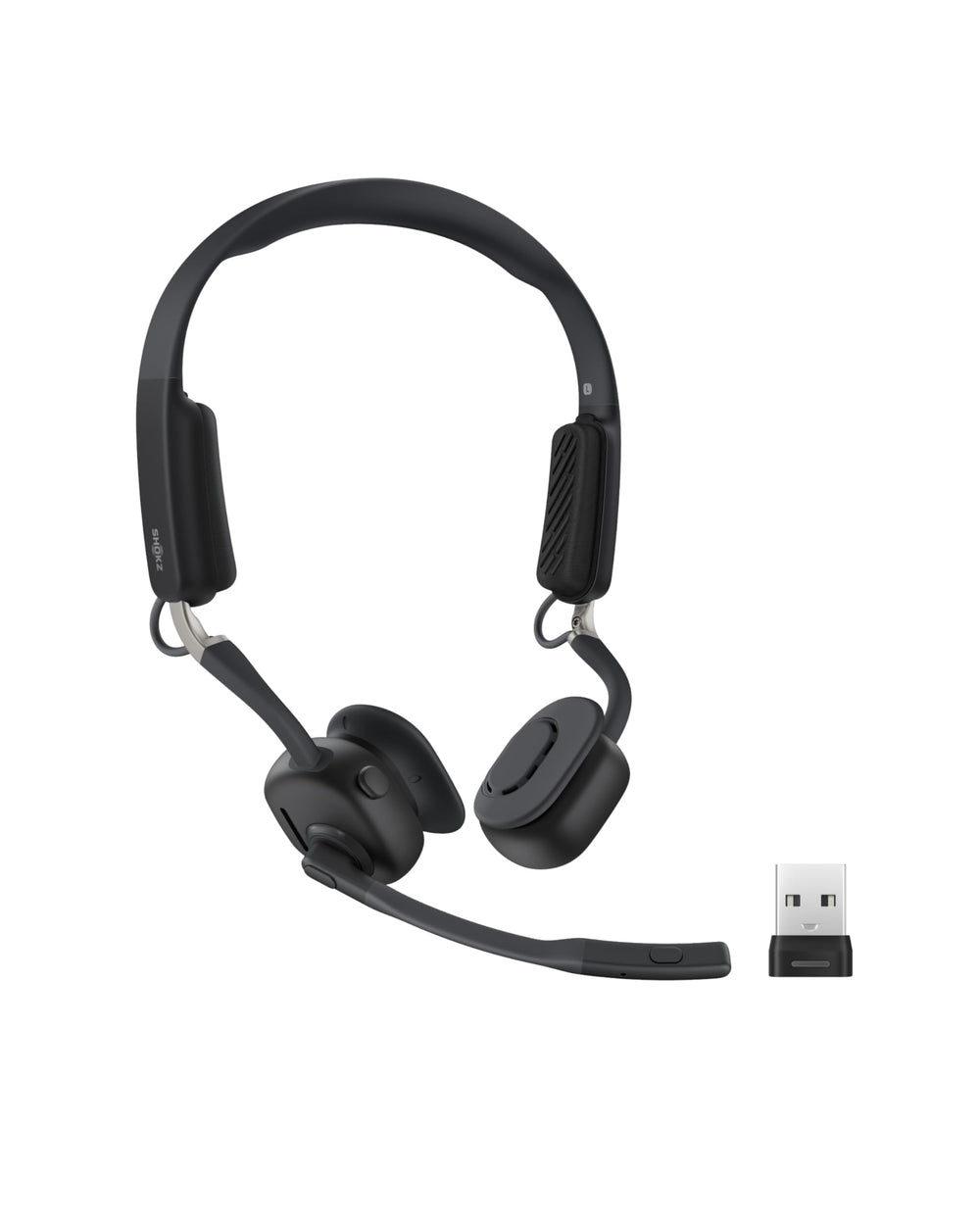
Most consumer Bluetooth devices — phones, cheap earbuds, car adapters — are Class 2, which is why they lose the connection when you leave the room. A Class 1 headset is what you want for work: it holds the call as you move around the office. The catch is that both ends matter — a Class 1 headset paired to a Class 2 phone is limited by the weaker of the two, which is why professional headsets often include a Class 1 USB adapter for the computer to get the full range.
Bluetooth Classic vs Low Energy: the "low energy" confusion
One point that causes real confusion: "low energy" is not a class. Since Bluetooth 4.0 in 2010, the standard has had two branches, and they do different jobs.
Myth
"Low energy" is a Bluetooth class, like Class 1 or Class 2.Reality
It isn't. Bluetooth splits into two branches: Bluetooth Classic, used for continuous audio streaming like headset calls and music, and Bluetooth Low Energy (BLE), used for tiny bursts of data in low-power devices like fitness trackers, smartwatches, and sensors. BLE was introduced in Bluetooth 4.0 and is about power efficiency, not range — it's a feature of the version, not a power class. Your headset uses Bluetooth Classic for calls; the newer LE Audio standard (from version 5.2) is starting to bring audio to the low-energy side too.Bluetooth Version: which chip generation
The Version is the generation of the Bluetooth chip. A higher number means a newer chip with more features and better efficiency — but, importantly, not automatically more range. Here's what each recent version added:
| Version | Year | What it added |
|---|---|---|
| 4.0 | 2010 | Introduced Bluetooth Low Energy (BLE) |
| 4.2 | 2014 | Faster data, better privacy |
| 5.0 | 2016 | 2× speed, longer range ceiling, better broadcast |
| 5.2 | 2020 | LE Audio and the LC3 codec (better sound at lower power) |
| 5.3 / 5.4 | 2021 / 2023 | Efficiency and reliability refinements — most common in headsets today |
| 6.x | 2024–2026 | Channel Sounding (precise distance), the current generation |
The newest specification is the 6.x series (6.3 as of 2026), but device makers lag the spec by a year or two, so most headsets you'll buy today ship with Bluetooth 5.3 or 5.4 — which is perfectly current for calling. The version genuinely matters for three things: battery life (newer chips sip less power), multipoint (staying connected to your laptop and phone at once and auto-reconnecting), and interference (newer versions coexist better with Wi-Fi and cellular signals).
What matters for a work headset
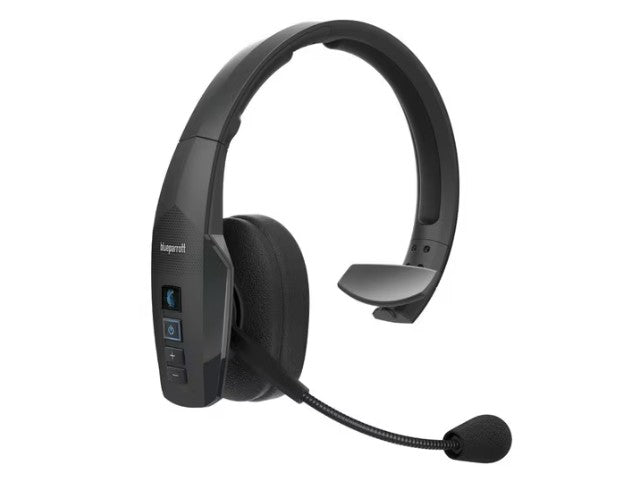
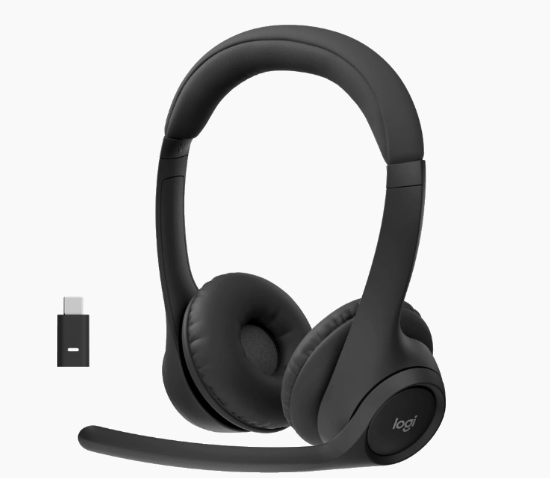
Putting it together, a good professional Bluetooth headset is Class 1 (for range) with a recent version (for battery and multipoint). That combination is what lets you take a call, walk down the hall, and have the headset still connected with a full day of battery. Current examples:
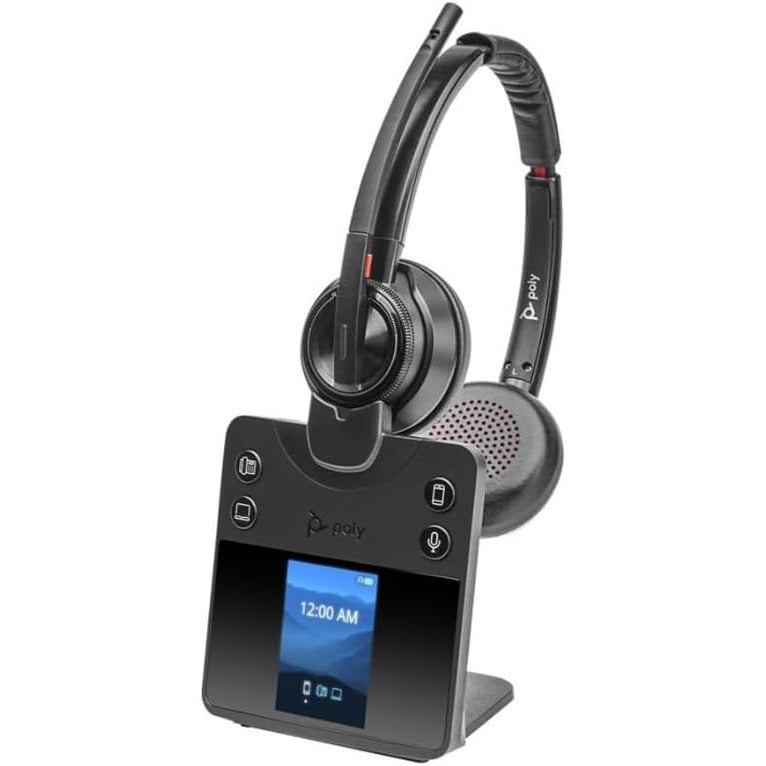
- Poly Voyager Focus 2 — Class 1 with adjustable ANC, a Class 1 USB adapter for the computer, and long range.
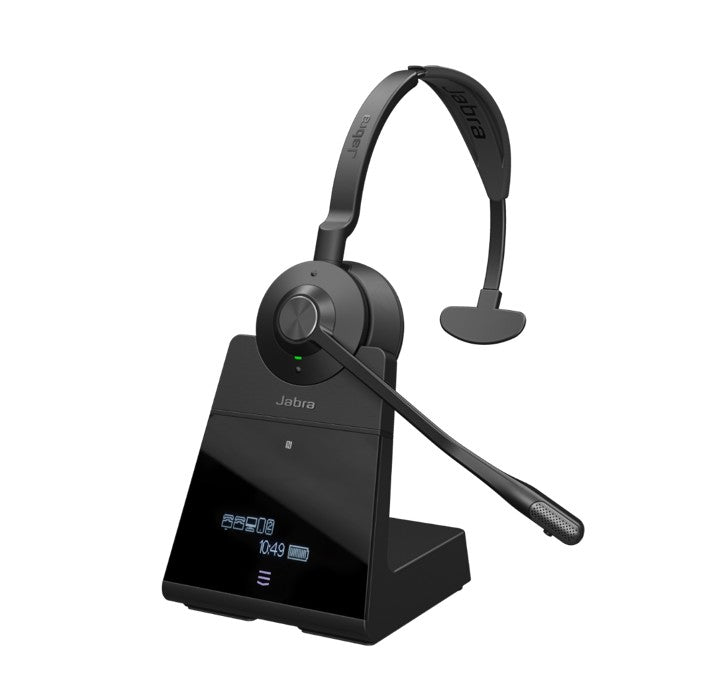
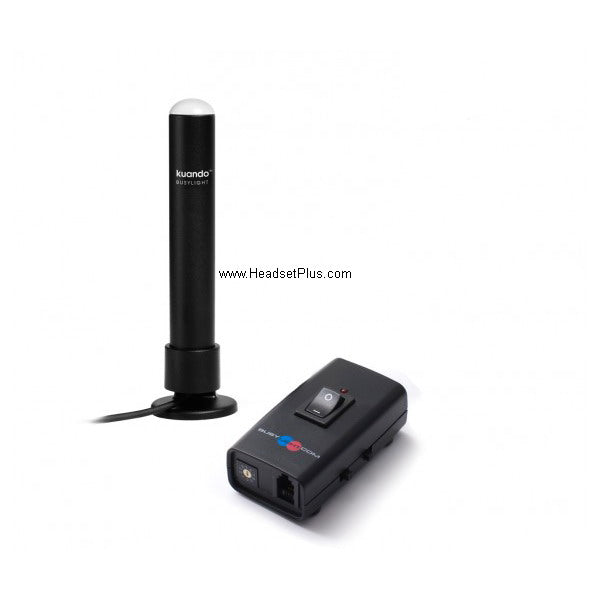
- Jabra Evolve2 65 — Class 1, up to 37 hours of battery, multipoint via its USB adapter, and a busylight.
- Poly Voyager 4310 — a single-ear Class 1 option with up to 24 hours of talk time.
If you also want to understand DECT wireless — the other office wireless standard, which reaches even further than Bluetooth — our guide to multi-device wireless headsets compares the two.
Class and Version are independent — and neither is upgradable
The two specs don't move together. You can find a Class 1 headset running Bluetooth 4.2, or a Class 2 earbud running Bluetooth 5.3. Range comes from the Class; features and efficiency come from the Version. When you're comparing headsets, read both.
And crucially, neither can be upgraded after purchase — both are determined by the physical chip installed when the headset was manufactured. This is where people get caught out: they confuse the Bluetooth version (hardware, fixed) with firmware (software, updatable). A firmware update can fix bugs and add small features, but it can't turn a Bluetooth 4.2 headset into a 5.3 one, or a Class 2 into a Class 1. If range or a specific version feature matters, it has to be built in from the start.
What's the difference between Bluetooth Class and Version?
Bluetooth Class is the power tier that sets range — Class 1 reaches about 330 feet, Class 2 about 33 feet, and Class 3 about 3 feet. Bluetooth Version is the chip generation (4.2, 5.0, 5.3, up to 6.x), which affects battery efficiency, multi-device pairing, and interference. Class governs how far the headset reaches; Version governs its features. They're independent of each other.
Which Bluetooth Class is best for an office headset?
Class 1 is best for an office headset, since it offers up to about 330 feet of range, letting you move around during a call without dropping it. Class 2, found in most phones and consumer earbuds, only reaches about 33 feet. For full Class 1 range on a computer, the headset's Class 1 USB adapter is used rather than relying on the computer's built-in Bluetooth.
Does a higher Bluetooth version mean longer range?
Not directly. Range is set by the Bluetooth Class, not the version — a Class 2 headset on Bluetooth 5.3 still only reaches about 33 feet, while a Class 1 headset even on older 4.2 reaches about 330 feet. Newer versions mainly improve battery efficiency, multipoint pairing, audio, and interference resistance. If range matters most, choose by the Class.
What is the newest Bluetooth version?
The newest Bluetooth specification is the 6.x series, with version 6.3 released in 2026. However, headsets and other devices typically lag the specification by a year or two, so most current headsets ship with Bluetooth 5.3 or 5.4, which is perfectly capable for professional calling. Bluetooth 6.0's headline feature is precise distance measurement, aimed more at location tracking than audio.
Can I upgrade the Bluetooth version in my headset?
No. The Bluetooth version and Class are both determined by the physical chip built into the headset, so they can't be changed after purchase. People often confuse this with firmware updates, which are software and can add small features or fix bugs, but firmware can't change the underlying Bluetooth version or Class. If you need a specific version feature, buy a headset that has it built in.
The short version: read both numbers. The Class tells you how far you can roam, and Class 1 is what a professional headset should be. The Version tells you how modern the chip is, where 5.3 or 5.4 is the current sweet spot for headsets. Get a Class 1 headset with a recent version and you've got range and battery covered. Browse Class 1 professional options on the bluetooth headset collection, or call our team at 877-999-3838 for help matching one to your devices.

Comments (0)