

















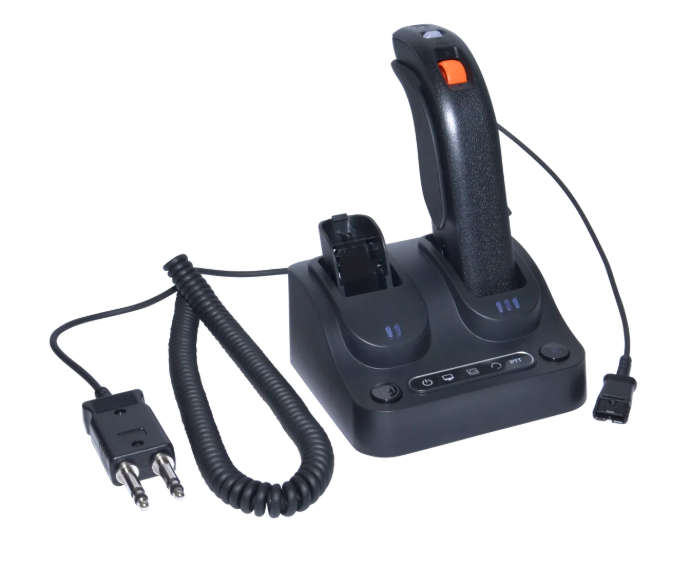

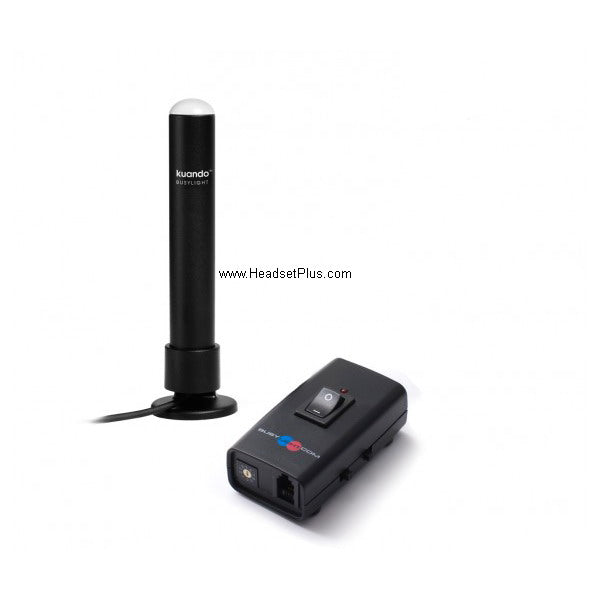

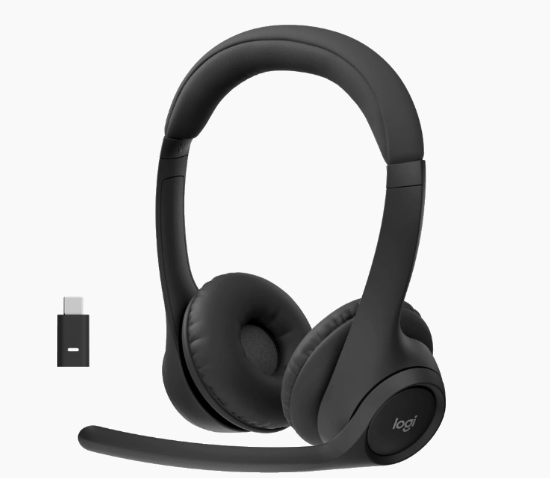


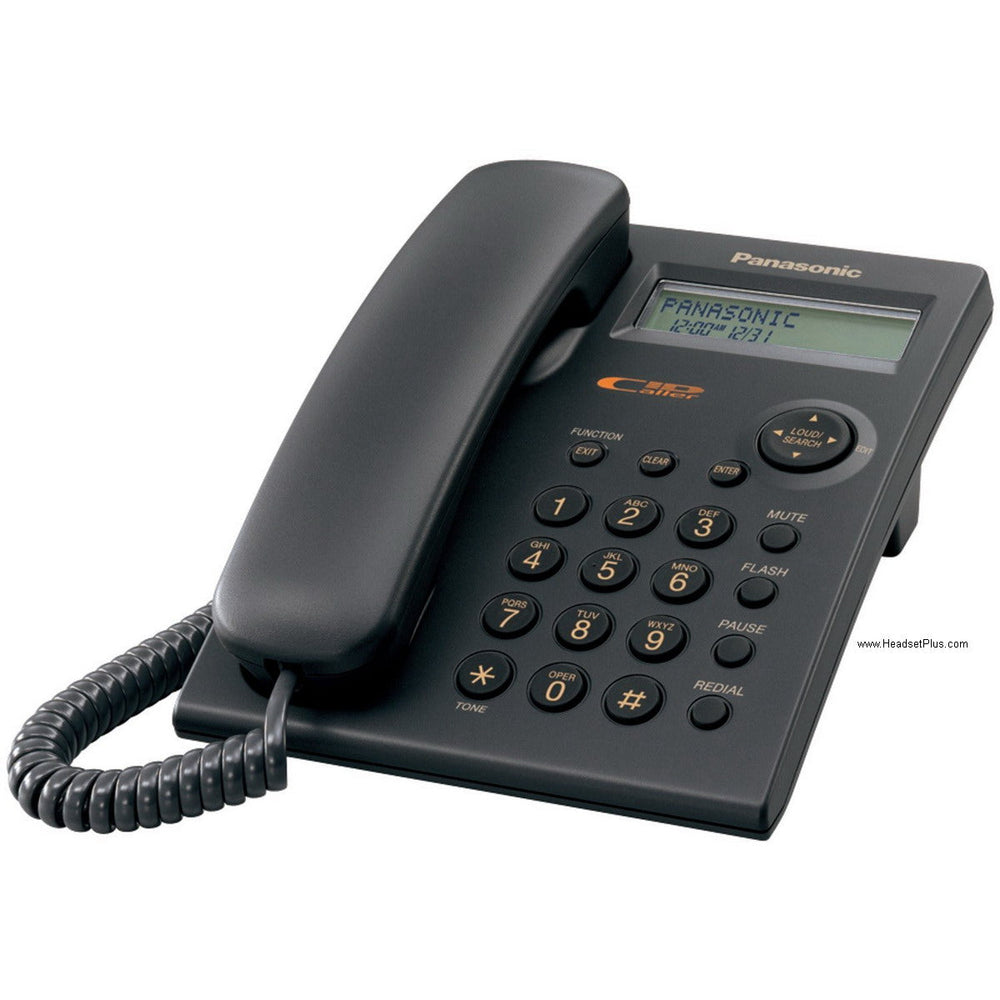






A handset lifter solves a simple but frustrating problem: you can hear your desk phone ringing from across the room, but you have to walk back to pick up the handset before your wireless headset connects. A lifter fixes that by physically raising the handset the moment you press the talk button on your headset — answering the call without touching the phone. Here's how the Poly HL10, Jabra GN1000, and Sennheiser HSL10II work, how to install them, and how to fix the common problems.
Key takeaways
- A lifter physically raises the handset so a wireless headset can answer calls remotely on phones without EHS.
- The Poly HL10 plugs into the headset base's accessory port and lifts straight up; the Jabra GN1000 and Sennheiser HSL10II lift in reverse (uppercut) to keep the handset on its cradle.
- Height adjustment and ring sensor sensitivity are the two controls to set on installation.
- The HL10 is not compatible with certain Mitel phones (5330, 5340, 5360) — the Sennheiser HSL10II is a working alternative.
- EHS cables are a cleaner alternative for compatible phones — no mechanical arm, no moving parts.
Do you need a handset lifter?
A handset lifter is an optional accessory — a wireless headset works without one. What a lifter adds is the ability to answer and end calls without returning to the desk. The alternative, available on most modern VoIP phones, is an EHS (electronic hook switch) cable, which does the same job electronically — no arm, no moving parts, more reliable. Our EHS cable guide explains how to tell if your phone supports one.
If your phone doesn't have EHS support, a lifter is the right solution. The two most common are the Poly HL10 for Poly/Plantronics wireless headsets and the Jabra GN1000 RHL ($89.96) for Jabra headsets. Browse both on the handset lifters collection.
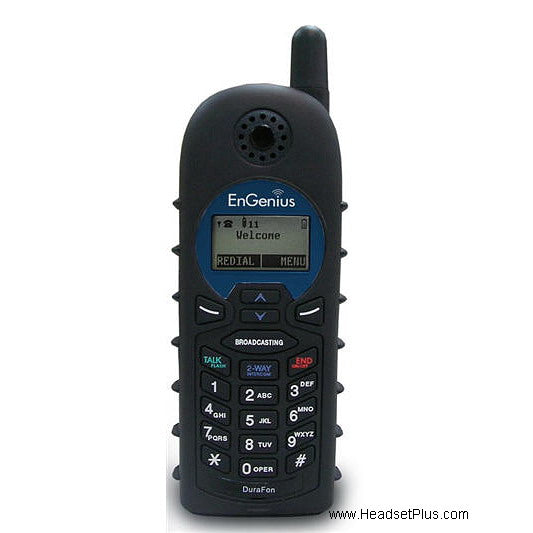
Cordless desk phones are a different situation. Handset lifters are designed for corded desk phone handsets — they aren't compatible with cordless phones. For a cordless desk phone, the options are a one-ear corded headset that plugs directly into the phone's 2.5mm jack (carrying the phone with you), or the Plantronics TR-11 adapter paired with a line splitter, which lets a Plantronics wireless headset like the CS540 answer remotely while you still carry the cordless phone for outgoing calls and Caller ID. See our home office headset guide for the full TR-11 setup.
Myth
I need a handset lifter because my wireless headset doesn't work without one.Reality
A wireless headset works independently of a lifter — it handles calls, audio, and mute without one. What a lifter adds is remote answering: the ability to pick up an incoming call from across the room without walking back to press anything. If you're happy returning to your desk to answer, you don't need a lifter. If your phone supports EHS, the cable route is cleaner than a mechanical arm.Lifter and EHS setup video
This walks through installing either accessory if you'd rather watch than follow the written steps below.
How to install the Poly HL10
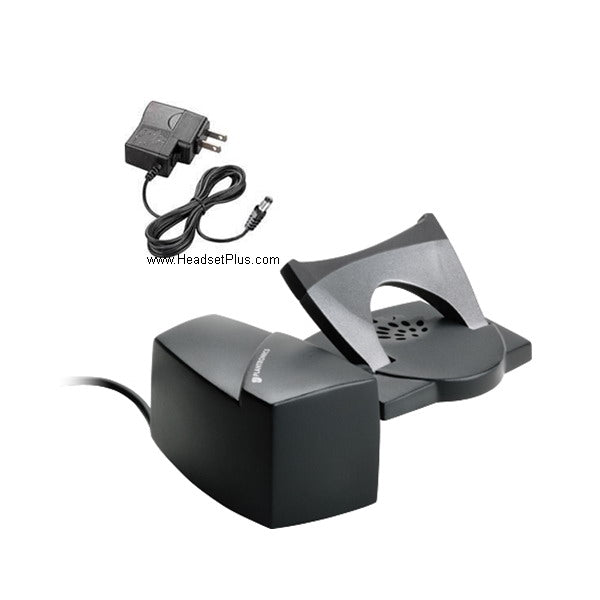
The HL10 plugs into the accessory port on the bottom of the Poly/Plantronics wireless headset base — it may be covered by a rubber cap, which you remove first. The lifter arm rests beneath the handset against the side of the phone.
- Plug the HL10 cable into the base's accessory port.
- Position the lifter so the arm sits beneath the handset. Before attaching, press the talk button on the headset to test: the arm should raise the handset completely clear of the hang-up switch. Adjust position until it does.
- Once aligned, use the included double-sided adhesive strips to mount the lifter permanently to the phone.
- Set the height adjustment switch on the back of the lifter to clear the handset fully without over-extending.
Required accessory: if you already own a Plantronics wireless headset and are adding the HL10 lifter separately, confirm you also have the Telephone interface cable — it's required to connect your Plantronics headset base to the desk phone, and the HL10 won't function without it.
Mitel phones: the HL10 is not compatible with certain Mitel desk phones, including the 5330, 5340, and 5360, due to the angle of those handsets. For Mitel users, the Sennheiser HSL10II (below) is a working alternative.
The IntelliStand feature: if the lifter moves when you remove the headset from its base, the IntelliStand switch on the right side of the base may be active. IntelliStand senses headset removal and can trigger the lifter automatically — useful if you want it to, a problem if you don't. Switch it to the correct position for your preference.
How to install the Jabra GN1000
The GN1000 plugs into the accessory port on the Jabra wireless headset base. Unlike the HL10's straight lift, the GN1000 arm moves in a reverse arc — an "uppercut" motion — which pushes the handset up from beneath while keeping it from falling off the cradle. This design suits phones where a straight lift would topple the handset.
- Plug the GN1000 cable into the base's accessory port.
- Position the arm so it sits beneath the handset on the cradle. The arm should clear the handset completely when activated.
- Set the height control to the "+" direction until the handset lifts cleanly off the hang-up switch.
- Adjust the ring sensor sensitivity knob (on the back of the unit): turn clockwise to increase sensitivity; counterclockwise to reduce it. Start in the middle — too high and the lifter may trigger on nearby sounds like a sneeze; too low and it may miss the ring.
- The ring-tone disable button on the front of the GN1000 turns the ring sensor off entirely (red LED flashes when off). Press it to re-enable.
- An additional ring sensor with tape is included in the box — use it if your phone's speaker is not under the handset, by placing the sensor near the speaker and plugging it into the lifter.
A third option: the Sennheiser HSL10II
The Sennheiser HSL10II is compatible with all Sennheiser (now EPOS) wireless headset systems, including the IMPACT, Office Runner, and SDW series. Like the Jabra GN1000, it uses a reverse "uppercut" lifting motion rather than the Poly HL10's straight lift, which keeps the handset in place during the lift. It's a working alternative for Mitel phone users whose desk phones aren't compatible with the Poly HL10.
Troubleshooting: headset not beeping when the phone rings
If the lifter doesn't signal an incoming call in your headset, work through these in order:
- Check position: the lifter's ring sensor must sit directly over the phone's speaker. Move it until it does.
- Raise ringer volume: if the phone's ringer is set too quiet, the sensor won't detect it. Turn the phone's ringer volume up.
- Change ring tone: short beeps or musical ring tones can confuse the sensor. Switch to a traditional long ring or single tone.
- Check ring type consistency: if your phone rings differently for internal vs external vs transferred calls, set all call types to the same ring tone.
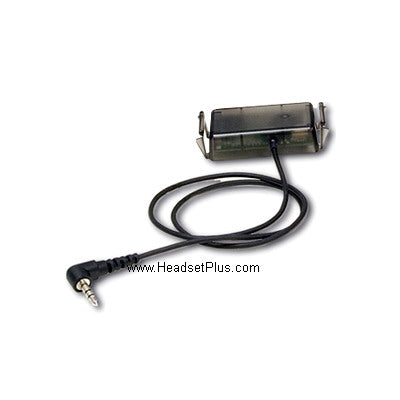
- Use the external sensor clip: the small black microphone included in the box can be mounted near the phone's speaker and plugged into the lifter — useful when the speaker is not under the handset.
- Check the ring sensor switch: on the GN1000, if the red LED is flashing, the ring sensor is disabled. Press the front button to re-enable.
Troubleshooting: lifter not lifting, or lifting slowly
- Lifter not lifting: check the cable connection between lifter and base, and confirm the base has power.
- Can't hear a dial tone after lifting: raise the height control toward "+" so the handset clears the hang-up switch completely. On a key-system phone where you press a line button to connect, the phone's auto line selector may need reprogramming — see the phone's manual.
- Lifter triggering on non-calls: lower the ring sensor sensitivity (counterclockwise). Move the phone away from monitors, fluorescent lamps, or other electronics that generate electronic noise.
- Slow to lift: wait for the beep in the headset before pressing the talk button — pressing too early causes a delay. If this persists, reset the wireless headset.
- False triggers via speakerphone: turn the ring sensor off on the GN1000 (the LED will flash) before using speakerphone, and re-enable it afterward.
Do I need a handset lifter for my wireless headset?
No — a wireless headset works without a lifter. A lifter adds remote answering: the ability to pick up an incoming call without returning to your desk. If your phone supports EHS, an EHS cable does the same job more reliably with no moving parts. A lifter is the right choice for phones without EHS support.
What's the difference between the Poly HL10, Jabra GN1000, and Sennheiser HSL10II?
All three are handset lifters that plug into a wireless headset base's accessory port, but they lift differently. The HL10 uses a straight upward motion and suits most standard phones; the GN1000 and HSL10II both use a reverse arc (uppercut) motion that keeps the handset from falling off the cradle, suiting phones where a straight lift would topple the handset. Use the HL10 with Poly/Plantronics headsets, the GN1000 with Jabra headsets, and the HSL10II with Sennheiser/EPOS headsets.
Why isn't my lifter detecting the phone ringing?
The most common cause is position — the ring sensor must sit directly over the phone's speaker. Also check that the phone's ringer volume is high enough for the sensor to detect, that the ring tone is a traditional long ring rather than short beeps or music, and that the ring sensor on the GN1000 is enabled (the LED should not be flashing). If the speaker isn't under the handset, use the included external sensor clip.
Can I use a handset lifter with any desk phone?
The Jabra GN1000 has been tested to work with over 90% of business telephones. The Poly HL10 is similarly broad in compatibility, but is not compatible with certain Mitel phones (5330, 5340, 5360) due to their handset angle — the Sennheiser HSL10II is a working alternative for those models. Check the compatibility guide for your specific phone if unsure.
Is a lifter better than an EHS cable?
For phones that support EHS, a cable is generally better — no moving parts, no mechanical wear, and no sensitivity adjustments needed. For phones without EHS support, a lifter is the correct solution. If you're not sure whether your phone has EHS support, our EHS cable guide explains how to check, and our team can confirm for your specific model.
Can I use a handset lifter with a cordless desk phone?
No, handset lifters are designed for corded desk phone handsets only. For a cordless desk phone, use a one-ear corded headset plugged directly into the phone's 2.5mm jack, or the Plantronics TR-11 adapter with a line splitter, which lets a Plantronics wireless headset answer remotely while you still carry the cordless phone.
A lifter is one of those accessories that becomes invisible once it's working — you just answer calls from anywhere, and the phone takes care of itself. Set the height to fully clear the hang-up switch, calibrate the ring sensor over the speaker, and you're done. If EHS is an option for your phone, it's worth considering first. Either way, browse both options on the handset lifters collection, or call our team at 877-999-3838 and we'll confirm which route suits your phone.
Comments (0)