



























Wired vs wireless headset for office desk phones
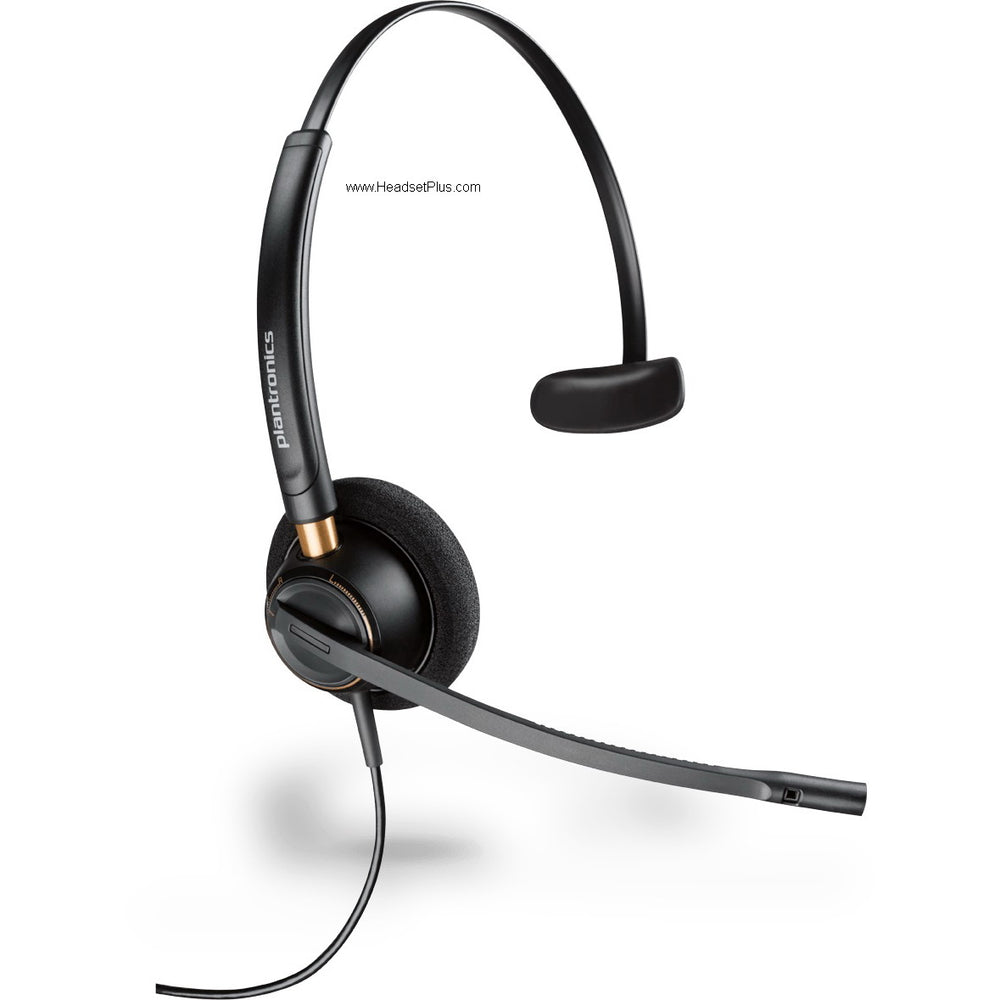
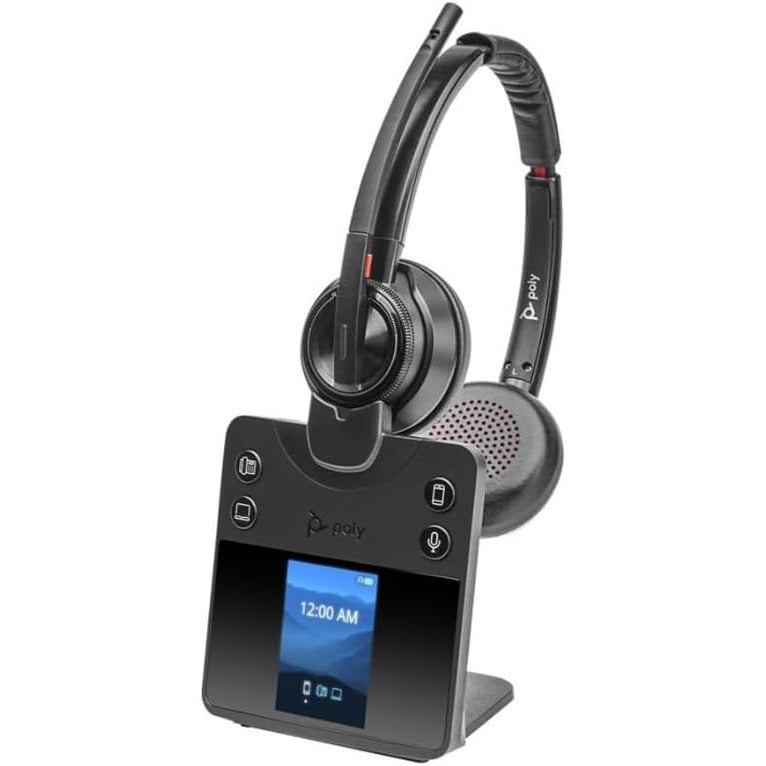
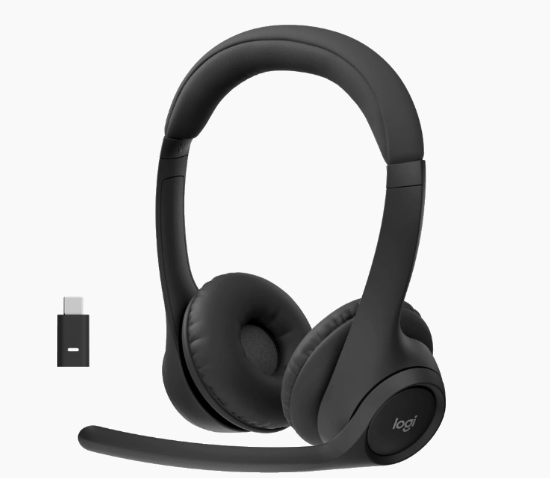
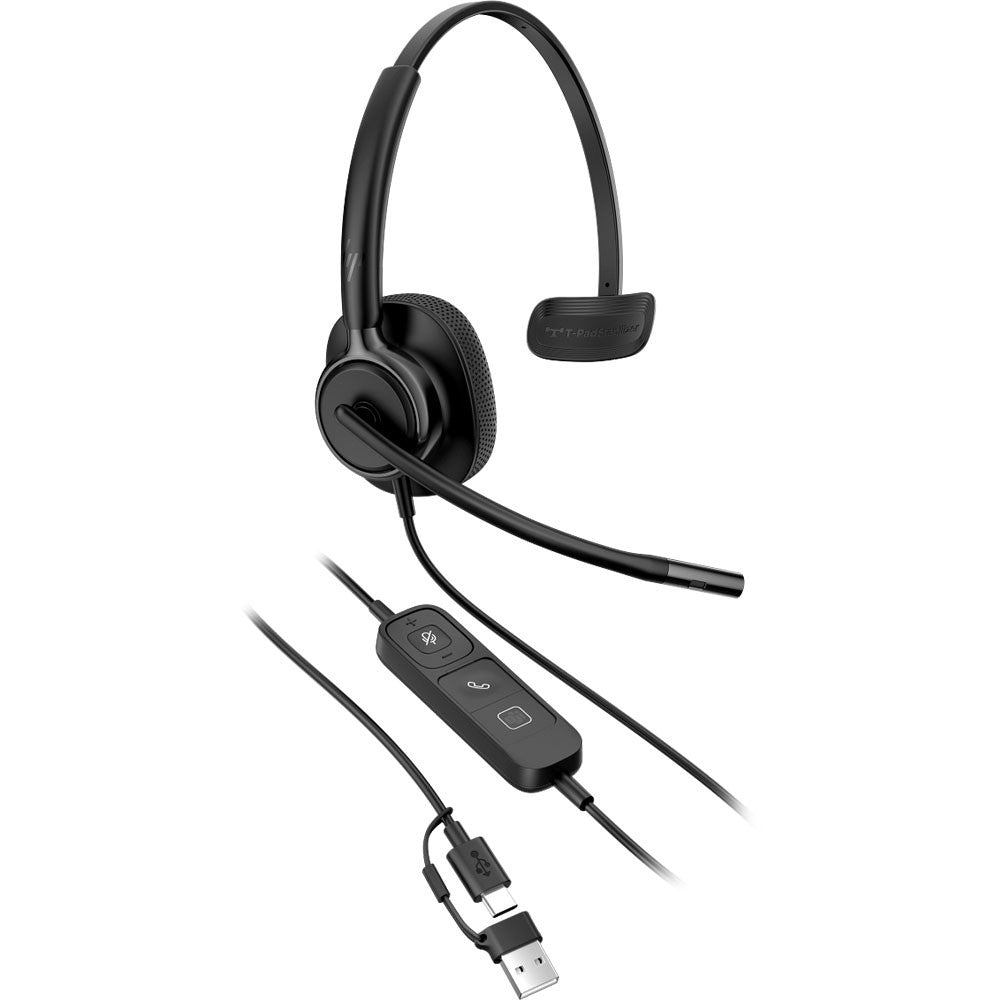
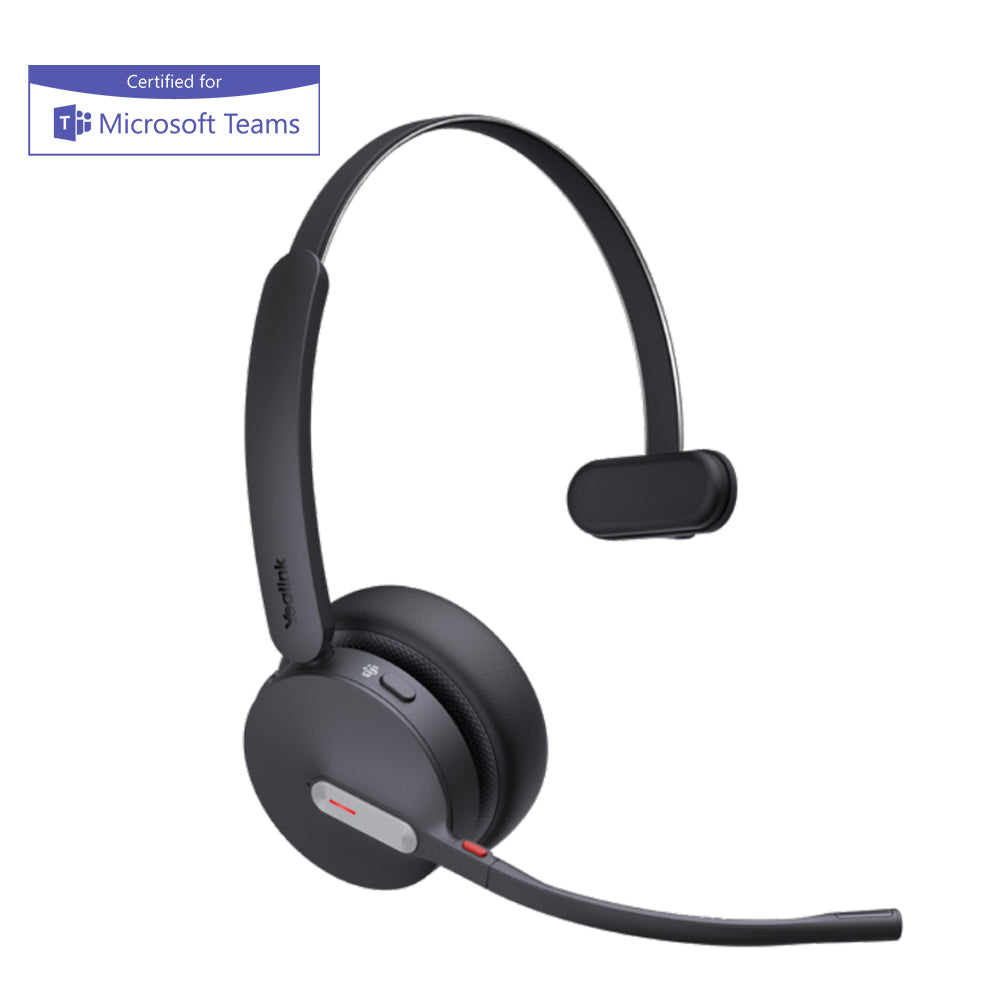
Choosing a wired vs wireless headset for office desk phones comes down to whether the person wearing it stays seated. A corded headset such as the Poly EncorePro HW540 weighs 0.032 kg, needs no charging, and cannot run out of battery halfway through a call, but Poly specifies its cable at 35 inches, so the desk is the whole range. A DECT headset such as the Poly Savi 7310 Office is rated for up to 13 hours of talk time and a line-of-sight range Poly publishes as 590 ft in open area and 180 ft in a typical office. It weighs 0.120 kg, close to four times the corded headset, and answering the desk phone from across the room needs an electronic hook switch cable that does not come in the box. Seated agents and desks shared across shifts do better corded. Anyone who leaves the desk mid-call does better on DECT.
What the two Poly datasheets actually say
- The EncorePro HW540 weighs 0.032 kg and the Savi 7310 Office weighs 0.120 kg, and nearly all of that difference is battery.
- Poly rates the Savi 7310 Office at 590 ft of range in open area and 180 ft in a typical office environment.
- US DECT headsets are capped at 100 mW of transmit power, where the same standard allows 250 mW in Europe.
- Remote answering needs an EHS cable matched to your exact phone, ordered separately from the headset system.
Both headsets below are Poly's own, both are built for the same desk, and Poly publishes a full datasheet for each. Reading the two sheets against each other settles more of this question than any general argument about cords, because the products differ on about seven measurements and agree on everything else.
The two Poly datasheets, side by side
Seven specifications separate a corded office headset from a DECT one, and the rest of both documents reads almost identically.
| Specification | EncorePro HW540, corded | Savi 7310 Office, DECT |
|---|---|---|
| Weight | 0.07 lb, 0.032 kg | 0.26 lb, 0.120 kg |
| Power | None | Up to 13 h talk, 52 h standby, 2 h charge |
| How far you can walk | 35 in of cable | 590 ft open area, 180 ft typical office |
| Speaker bandwidth | 20 Hz to 10 kHz | 100 Hz to 6.8 kHz wideband, 20 Hz to 20 kHz multimedia |
| Microphone bandwidth | 20 Hz to 16 kHz | Not stated on the datasheet |
| Encryption | None, the audio never leaves the cable | DECT Security Step C, 256-bit AES |
| Acoustic limiting | SoundGuard, sounds held below 118 dBA | SoundGuard Digital, sounds held below 118 dBA |
The weight row is the one people notice, because the corded HW540 is 0.032 kg against 0.120 kg for the Savi 7310 Office, and nearly all of that difference is the 500 mAh lithium-ion cell and the radio it feeds. Charging takes 2 hours for 13 hours of talk time and 52 hours of standby, which covers a working day as long as the headset goes back on the base overnight.
The bandwidth rows reward a second look, since Poly specifies the corded headset wider at both ends. The HW540 speaker is rated 20 Hz to 10 kHz and its microphone 20 Hz to 16 kHz. The Savi speaker runs 100 Hz to 6.8 kHz in wideband voice mode, which is the mode a desk phone call uses, and only opens up to 20 Hz to 20 kHz in multimedia mode over the USB link to a computer. That is a real difference on paper. What arrives at your ear is still limited by whatever the phone system sends down the line, so read the wider corded figure as headroom rather than as a promise of clearer calls.
Why the 590 ft range becomes 180 ft in your office
Poly prints both numbers on the same line of the Savi 7310 Office datasheet: up to 590 ft in open area, up to 180 ft in a typical office environment. Open area means line of sight with nothing in between, which describes a warehouse aisle rather than a floor of drywall, glass and steel filing cabinets. Plan around the 180, which on most floors still covers the printer, a colleague's desk two rows over and the corridor outside.
There is also a regulatory reason American range figures trail the ones quoted on European product pages. In the United States, DECT runs from 1920 to 1930 MHz in the UPCS band, which yields five channels, while European DECT gets 1880 to 1900 MHz and ten. Clear-Com's technical guide on DECT, written for the broadcast intercom industry that shares the same band, records that peak transmit power is limited to 100 milliwatts in the US where Europe allows 250. An identical headset design simply has less reach on this side of the Atlantic.
The 1.9 GHz band is reserved for voice, and that is the real advantage
The 1920 to 1930 MHz band that office DECT headsets use carries voice devices and nothing else, by FCC rule. Clear-Com's guide records that when the Commission changed channelization in the remaining UPCS band in 2005, allowing DECT devices to be sold in the US, "these channels are reserved exclusively for voice communication applications and therefore are less likely to experience interference from other types of wireless devices". Set that beside the 2400 to 2483 MHz ISM band, where the same guide notes DECT-type systems have to use frequency hopping with time slot redundancy because those bands are heavily used, and typically carry fewer users as a result.
The reservation is also why Poly can sell DECT into rooms that ban other radios. The Savi 7310 Office datasheet says the headset is "ideal for use in financial, medical, and government environments, where Bluetooth technology is typically banned", and that it is designed to meet DECT Security Step C with military-grade FIPS 140-2 listed features including 256-bit AES encryption. A corded headset arrives at the same place from the other direction, by having no radio to certify at all, which is still the shortest answer to give a security questionnaire.
One consequence catches buyers who shop overseas listings. European DECT products may not be used in the United States or Canada because they interfere with local cellular networks, and Clear-Com notes the prohibition comes from the FCC and from Innovation, Science and Economic Development Canada. An 1880 MHz headset bought cheaply abroad cannot legally be used on a US desk.
The cable that is not in the box
Answering the desk phone without touching it is the feature people think they are buying, and it arrives as a separate line item.
What buyers assume
The wireless headset answers the desk phone on its own, so pressing the button on the headset picks up an incoming call.What the box contains
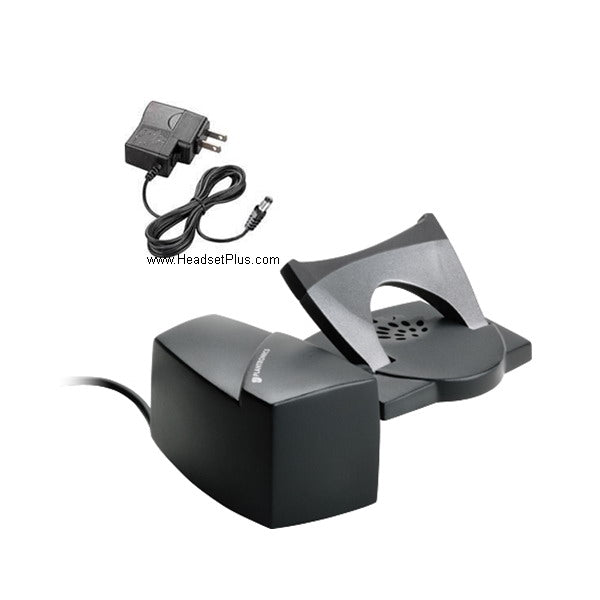
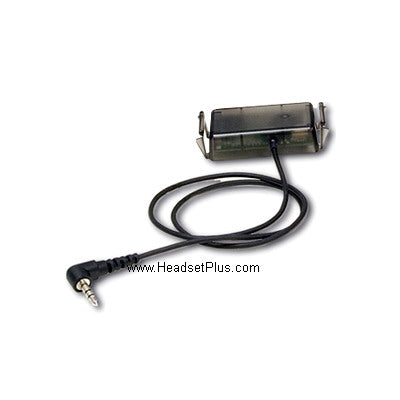
The Savi 7310 Office ships with a headset, an office base, two micro USB cables, a USB-C to USB-A cable, a telephone cable and a quick start guide. Remote answering needs an electronic hook switch cable, bought separately and matched to the phone.An EHS cable communicates electronically with the desk phone to give the wireless headset call control, so ring alerts sound in your ear and calls can be answered and ended without reaching for the handset. It also replaces the older mechanical lifter, and the Headsets Direct listing for the Poly APP-51 says so directly: the cable "eliminates the need for a HL10 handset lifter". The part number is decided by the phone rather than by the headset. The APP-51 covers Poly and Polycom VVX and CCX desk phones alongside Savi headsets including the 7310, and the same page warns that "Poly has several EHS cables, each being unique to a specific telephone and wireless product". Confirm the pairing against your exact phone model before ordering.
Which one to buy for your office
Buy corded for a seat where the person stays put or the desk changes hands between shifts, and buy DECT for anyone who takes calls away from the desk.
Corded is the better buy when
- The seat is fixed and the job is back-to-back calls
- The desk is shared across shifts and nobody owns the charging routine
- The room bans radio transmitters outright
- You would rather wear 0.032 kg than 0.120 kg
Corded costs you when
- People need to answer calls away from the desk, which 35 inches of cable rules out
- One person moves between a desk phone and a laptop all day
- The job involves standing at a cabinet or a whiteboard while still talking
Cost splits along the same line. Budget a DECT setup as two line items rather than one, since the EHS cable for your phone is ordered separately from the headset system and is the part people forget. If the seats you are outfitting are fixed, the money goes further on wired headsets, and what you save on radios buys a better microphone.
Do wireless office headsets work with any desk phone?
A DECT headset system such as the Poly Savi 7310 Office connects to a desk phone using the telephone cable in the box, but answering calls remotely depends on an electronic hook switch cable made for that specific phone. Poly publishes several EHS cables, each one unique to a particular telephone and wireless product, so the phone model decides the part number.
How long does a wireless office headset last on one charge?
Poly rates the Savi 7310 Office at up to 13 hours of talk time and up to 52 hours of standby from a 500 mAh lithium-ion battery, with a charge time of 2 hours. A corded headset such as the EncorePro HW540 has no battery to rate.
Does a wired headset sound better than a wireless one?
On paper the corded headset is specified wider. Poly gives the EncorePro HW540 a speaker bandwidth of 20 Hz to 10 kHz and a microphone bandwidth of 20 Hz to 16 kHz, while the Savi 7310 Office speaker is rated 100 Hz to 6.8 kHz in wideband mode and 20 Hz to 20 kHz in multimedia mode. What reaches the caller is also shaped by the phone system, so the headset specification is only part of the answer.
Can I use a European DECT headset in the United States?
No. European DECT products may not be used in the United States or Canada because they interfere with local cellular networks, and the prohibition is enforced by the FCC and by Innovation, Science and Economic Development Canada. US DECT headsets operate from 1920 to 1930 MHz, while European models use 1880 to 1900 MHz.



Comments (0)