






















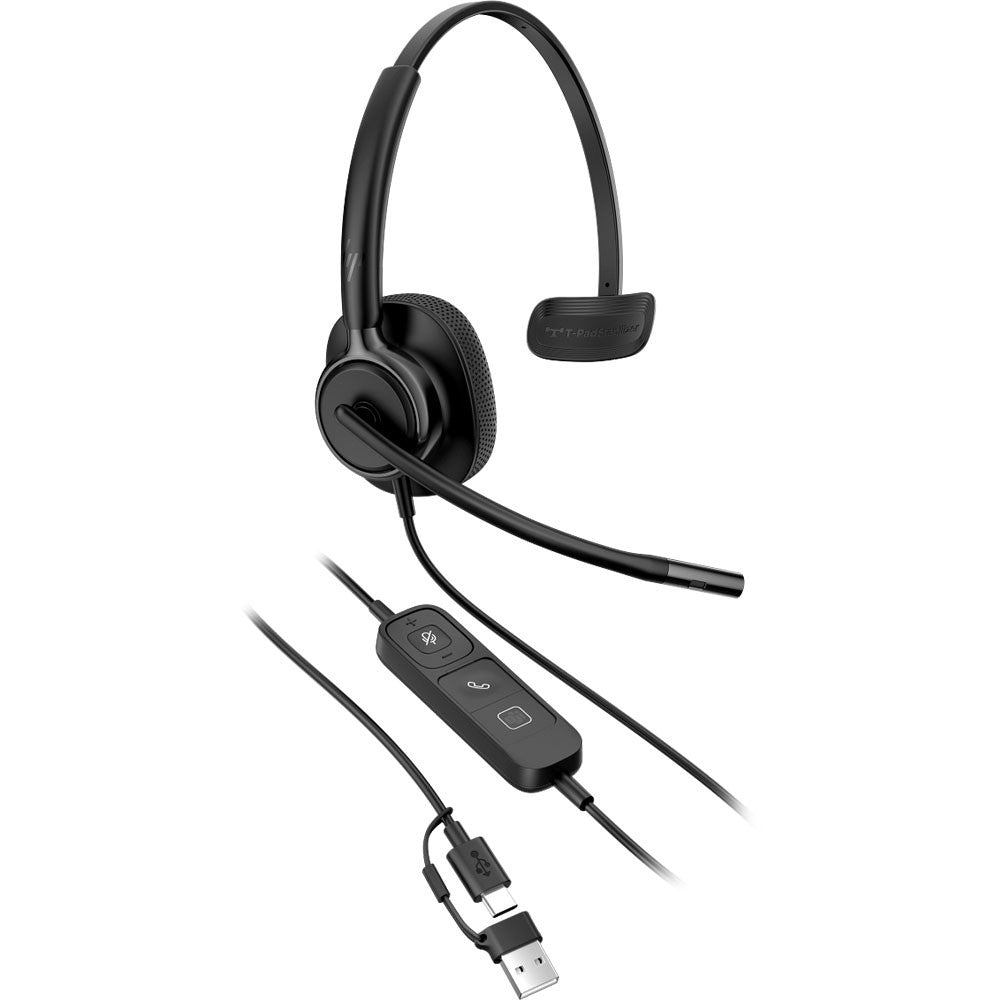

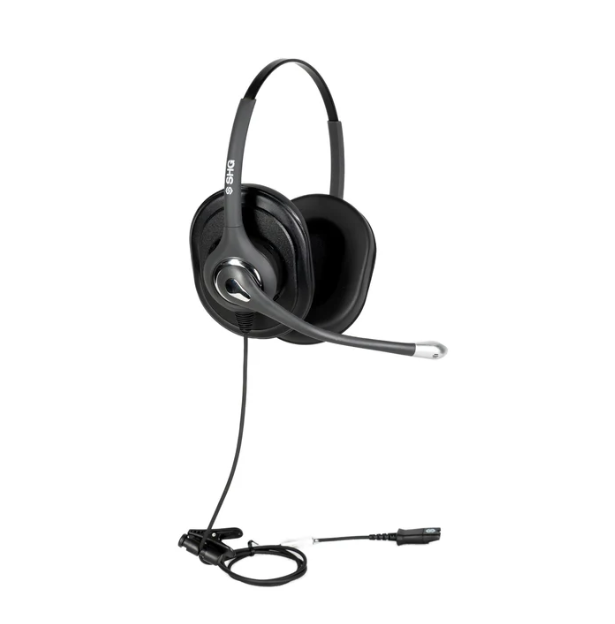

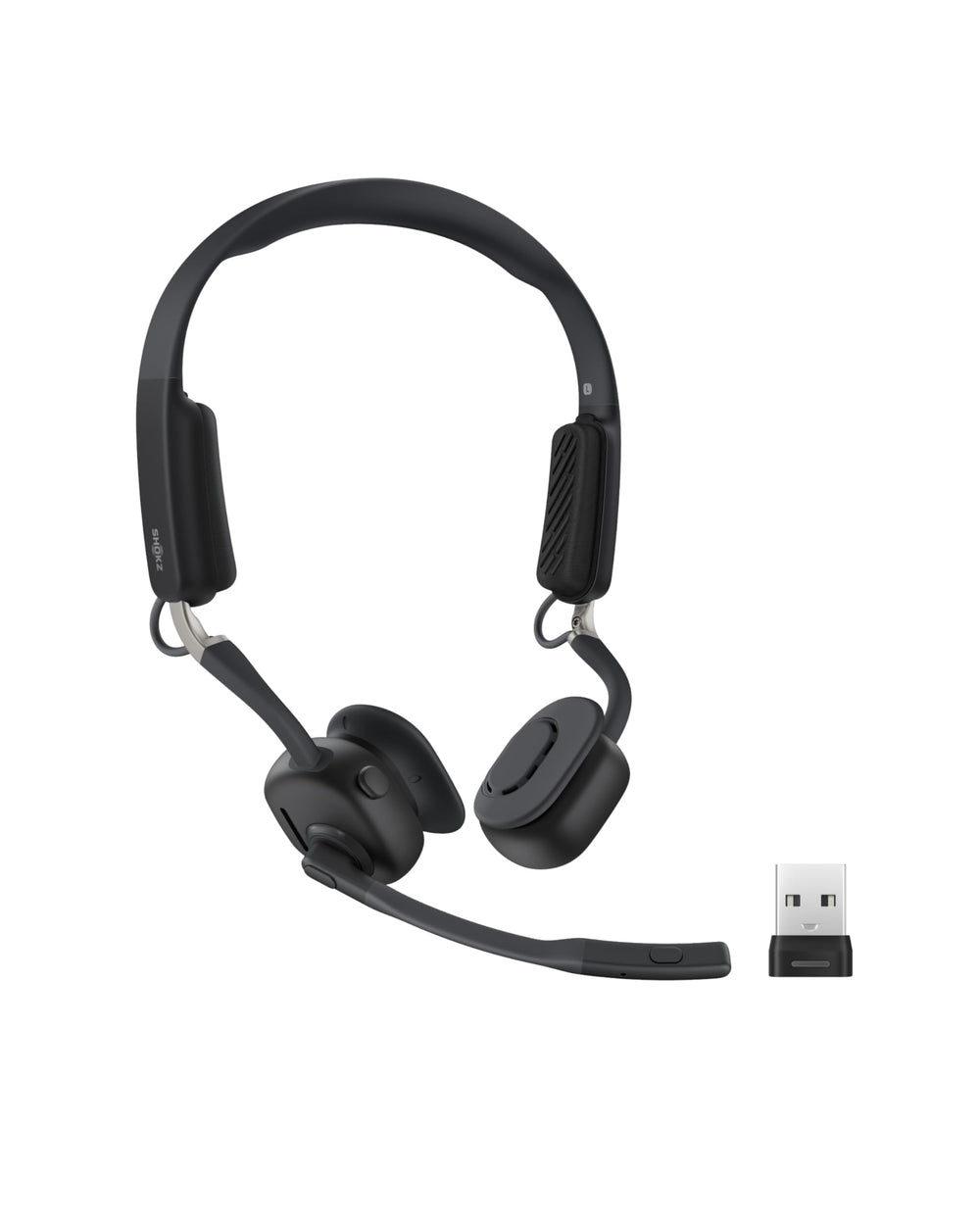

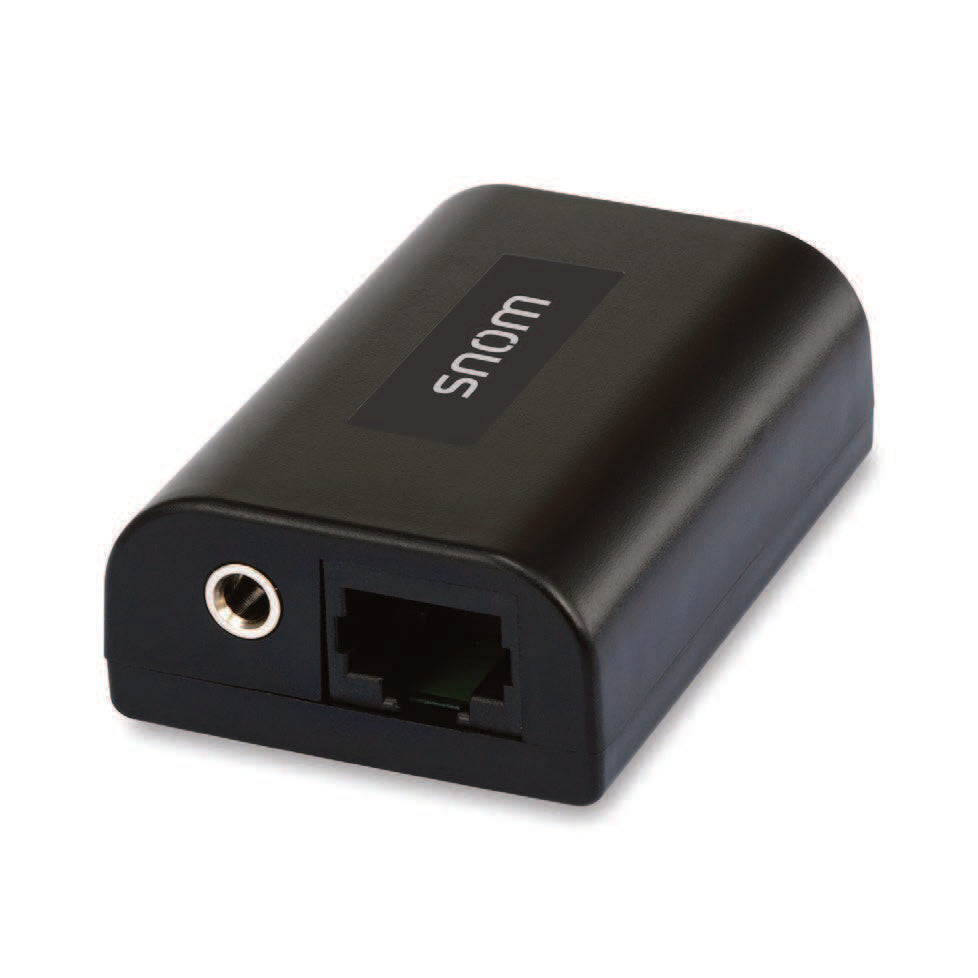
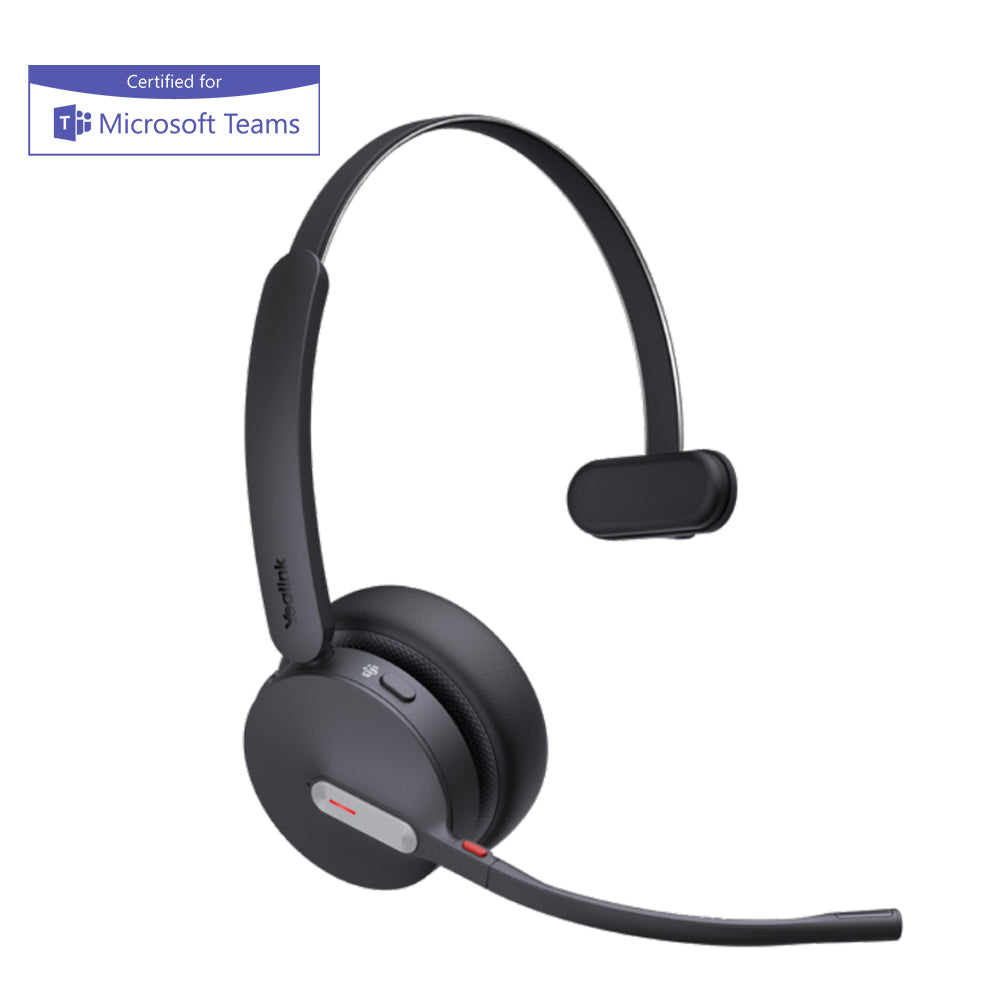


A laptop's built-in mic picks up the dog, the dishwasher, and the sibling in the next room — then feeds your own speakers back into the call. For anyone teaching or studying online, a headset fixes both problems at once. Here's what actually matters when you're buying one, or two hundred.
Key takeaways
- Corded USB is the sensible default for students — nothing to charge, nothing to lose, lower cost per unit.
- Wireless suits teachers who present standing up or move around the room.
- A noise-cancelling microphone helps your listeners; ANC helps you focus. They're different features.
- Stereo (both ears) blocks more of a busy household than mono.
- Buying for a school? Corded models are far easier to manage across shared devices and carts.
What actually matters for online learning
Four things, in rough order of importance:
- A boom microphone. A mic positioned near your mouth picks up your voice and not the room. This is the single biggest upgrade over a laptop.
- Stereo over mono. Covering both ears blocks a meaningful amount of household noise through physical isolation alone — no electronics needed.
- USB over 3.5mm. A digital connection avoids the hum and interference analogue jacks pick up from inside the computer.
- Comfort over a long session. A lesson runs an hour; a school day runs six. Weight and cushion type matter more than they seem in the first ten minutes.
Myth
I need active noise cancelling so I can concentrate during online classes.Reality
Maybe — but check which problem you're solving. ANC reduces what you hear, which helps concentration in a noisy house. A noise-cancelling microphone reduces what your class hears, which is what stops the teacher asking you to repeat yourself. They're separate features, and most budget headsets have the microphone but not ANC. If the room is quiet and the problem is being heard clearly, you don't need ANC at all.Corded USB: the student default
For most students, corded is the right answer. Nothing to charge, nothing to pair, nothing to lose — and the money goes into audio quality rather than a battery.
Jabra Evolve2 30 — the budget pick
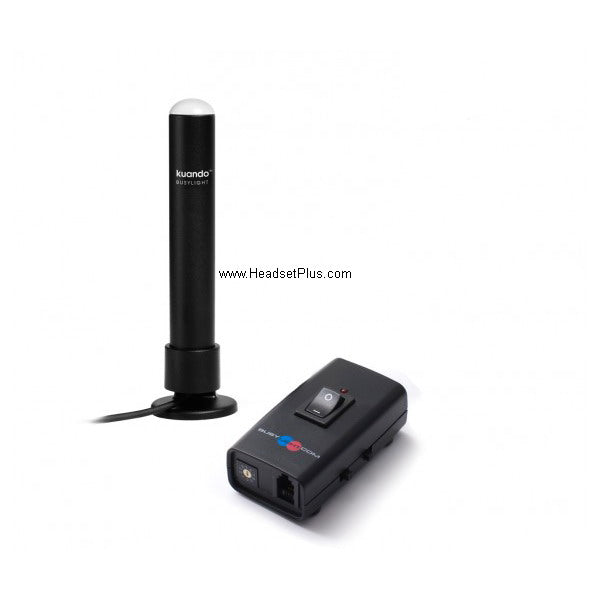
A genuinely capable entry-level headset: controls built into the earcup, a busylight, and a noise-cancelling microphone using two mics that analyse and separate your voice from background noise. The boom rotates 180 degrees so it works on either side. The do-not-disturb light can run automatically or be switched manually — useful in a shared study space.
Jabra Evolve2 40 — the step up
The staff pick. Memory foam ear cushions make a real difference over a full school day, and the noise-cancelling microphone is a step up from the 30. It comes in mono or stereo, USB-A or USB-C, and UC or Microsoft Teams versions — so it fits whatever computers and platform your school runs.
Our guide to UC vs Teams headset variants explains which version to order if you're unsure.
A note on older recommendations
If you're working from an older list, the Jabra Evolve 20 and Plantronics Blackwire C3220 are both discontinued. The Evolve2 30 replaces the Evolve 20 at a similar price, and the current Blackwire 3320 replaces the C3220 — the "MS Skype" certification on the old model refers to Skype for Business, which Microsoft retired in favour of Teams.
Wireless: for teachers who move
If you present standing up, move between a whiteboard and a desk, or teach from more than one spot, wireless earns its cost. Students working at a fixed desk generally don't need it.
Poly Voyager 4320 — the entry wireless option
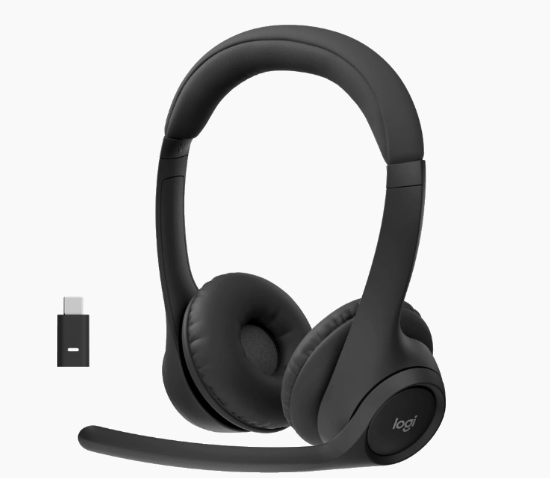
Around 24 hours of talk time and up to 160 feet of range from the included dongle, with Poly's Acoustic Fence microphone technology. Enough battery to forget about it for a couple of days, and enough range to leave the room without dropping the call.
Our Voyager 4320 vs Focus 2 comparison covers whether the step up is worth it.
Poly Voyager Focus 2 — ANC and smart sensors
Digital Hybrid ANC with three adjustable levels, so you set how much of the house to block. Acoustic Fence uses three microphones — two facing you, one outward to measure ambient noise. Mute by lifting the boom, wear it on either side, and smart sensors answer a call when you put it on.
Jabra Evolve2 85 — the long-session option
Up to 37 hours of talk time, with fast charging giving 90 minutes of use from 15 minutes on the cable. ANC that can be switched off, leatherette cushions over both ears, and Talk Through — which pipes outside sound in so you can hear someone in the room without removing the headset. Busylights on both sides, and a 3.5mm cable for devices without USB.
EPOS Adapt 660 — the boomless option
No boom arm at all, using adaptive ANC and EPOS AI to pick up your voice from a microphone array. It looks like ordinary headphones rather than a headset, which some teachers prefer on camera. Includes a cable for corded use where Bluetooth isn't available. The full range is on our EPOS headsets page.
Buying for a school or district
Volume purchasing changes the calculation:
- Corded is easier to manage. No batteries to die mid-lesson, no dongles to lose, no pairing when a device moves between students.
- Standardise on one or two models. Support and replacement parts get simpler, and staff only learn one set of controls.
- Match the connector to your fleet. Chromebooks and newer laptops often need USB-C; older desktops use USB-A. Several models offer both.
- Check the platform. Teams-certified versions add a dedicated button; UC versions work broadly across Zoom, Meet, and Teams.
We handle school and district purchase orders — call with your device fleet and student numbers and we'll work out what fits.
What's the best headset for online school?
For most students, a corded USB stereo headset with a noise-cancelling microphone — the Jabra Evolve2 30 or Evolve2 40. Nothing to charge or lose, and the money goes into audio rather than a battery. Teachers who move around while presenting benefit from wireless instead.
Do students need active noise cancelling?
Usually not. ANC reduces what you hear, which helps in a noisy house, but the more important feature is a noise-cancelling microphone — that's what stops the class hearing your background. Most budget headsets have the microphone without ANC, which is the right trade for a quiet room.
Should I buy corded or wireless for distance learning?
Corded for students at a fixed desk: cheaper, no battery, nothing to lose. Wireless for teachers who present standing up or move around — around 24 hours of talk time and 160 feet of range on an entry model like the Poly Voyager 4320.
Will these headsets work with Zoom, Teams and Google Meet?
Yes, all of them. UC versions work broadly across platforms; MS or Teams versions add native Microsoft Teams integration including a dedicated button. Both work with Zoom and Google Meet.
What should a school consider when buying headsets in bulk?
Corded models are far easier to manage across shared devices — no batteries, dongles, or pairing. Standardise on one or two models to simplify support, and check whether your fleet needs USB-A or USB-C. We handle school and district purchase orders.
The decision comes down to two questions: does the person move while they're on the call, and how noisy is the room around them. Corded stereo handles the majority of student setups; wireless with ANC is for teachers and busy households. Browse the range on our headset for laptop, or call our team at 877-999-3838 — we handle school POs.

Comments (0)