



























RJ9 vs RJ11: the two jacks on an office phone and which one takes a headset
RJ9 vs RJ11 is not a choice between two kinds of headset connector. Both are modular sockets on the same office phone, and only one of them is meant for a headset. The jack usually called RJ9 is a four-position modular connector, the type fitted to telephone handsets and handset cords, so the plug on the end of the curly cord already on your desk is the shape to look for. RJ11 is the six-position jack the telephone line plugs into, with tip and ring on the middle two contacts. A headset goes into a four-position jack every time, either a dedicated headset port marked with a small headset icon or the handset port by way of an amplifier. Counting the contact positions inside each socket settles which is which faster than reading any label, and the two connector bodies are different widths, so the difference is visible before you count.
What settles this before you order a cord
- Four contact positions is the handset and headset side of the phone. Six is the telephone line.
- RJ9, RJ10 and RJ22 are informal names for the same four-position connector, and none of the three is a registered jack. RJ11 is.
- The line jack carries around 90 volts of ringing voltage, which is the reason no headset belongs in it.
- A four-position plug will physically enter a six-position jack, so a cord that fits is not a cord that works.
Anyone shopping for an office phone headset with a phone jack usually ends up on the floor with the phone turned over: two or three sockets in identical gray plastic, icons molded about the size of a grain of rice, and no manual anywhere in the building. The difference between the two sockets that matter is two contact positions, which is a couple of millimeters of plastic.
Why RJ11 is an official designation and RJ9 is not
RJ11 is a registered jack and RJ9 is not, because the registered jack system only ever described the point where equipment meets the public telephone network. Telephone handsets never connect directly to that network, so they were given no registered jack designation at all, and the labels RJ9, RJ10 and RJ22 were attached informally afterward to the same four-position connector. The registered jacks themselves were codified in 1980 in Part 68 of title 47 of the Code of Federal Regulations, and the current version of the standard is maintained by the TIA as TIA-968-A.
The second half of the confusion is that the designation only ever covered the jack. The corresponding plugs and cables were left out of the federal standard, and in everyday use RJ-11 has drifted into a name for any six-position jack regardless of what is wired behind it.
As a pedant, your author greatly prefers to use the terminology x position, y pin miniature modular jack. I use RJ-X as a style description only.
That is the useful way to hold it. RJ9 describes a shape and nothing else: it tells you a plug has four positions, and it tells you nothing about what those four contacts carry, which on a headset port turns out to be the part that decides whether a cord works.
Count the contact positions inside the socket
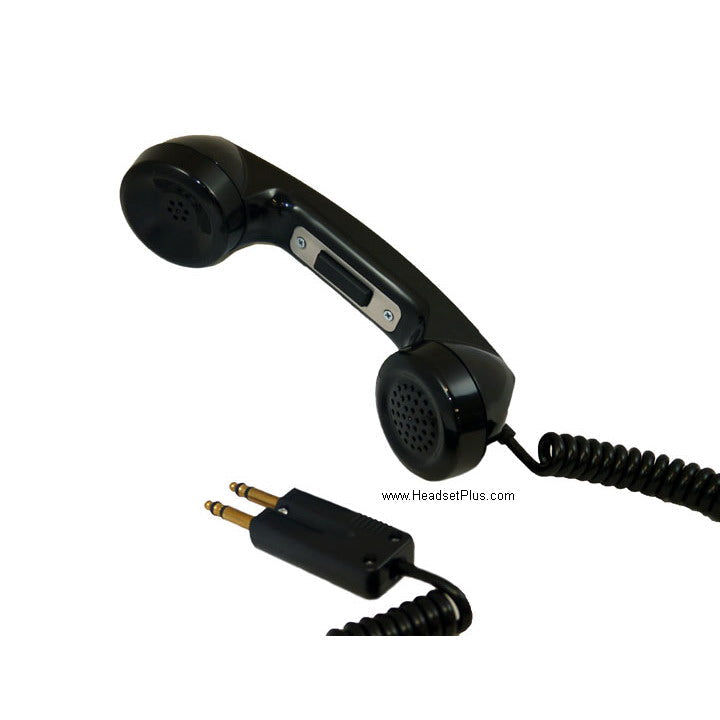
Four contact positions means the handset and headset side of the phone and six means the telephone line, so counting them identifies every socket on the phone without a manual. The four-position connector is the one telephone handsets have always used, which means the reference sample is already on the desk. Unplug the curly cord from the handset, hold that plug next to each socket, and any jack the same width belongs to the headset family.
The wider socket is the line. Where it gets slippery is that the narrower plug will go into the wider jack: it slides in, it can stress the contact springs of the larger jack while it sits there, and the fact that it fit tells you nothing about what the socket does. Fit is not the test. Position count is.
| What you are checking | Four-position jack (RJ9, RJ10, RJ22) | RJ11 |
|---|---|---|
| Contact positions | Four | Six, with the middle two normally wired |
| A registered jack? | No. The name is industry shorthand | Yes, codified under FCC Part 68 |
| What plugs into it | Handsets, handset cords, headsets and direct connect cords | The telephone line coming in from the wall |
| What is on the contacts | Handset audio, wired however the phone manufacturer chose | Tip and ring, at line and ringing voltage |
| Right place for a headset | Yes | No |
What the RJ11 line jack is carrying while you inspect it
The line jack is a live telephone line rather than an audio connection, and that is the electrical reason a headset never goes into it. RJ11 puts tip and ring on the middle two of its six positions, and those two contacts run back to the exchange, which holds the line at a standing DC voltage the whole time the phone is idle. Ringing arrives on top of that.
Nothing in that description resembles a headset connection, which is why the search for a headset with an RJ11 connector goes nowhere useful. What people mean by the phrase is the four-position plug that headset cords actually end in. The genuine six-position RJ11 jack is the line, and there is no arrangement in which a headset belongs in it.
Three phones, and a different route into each one
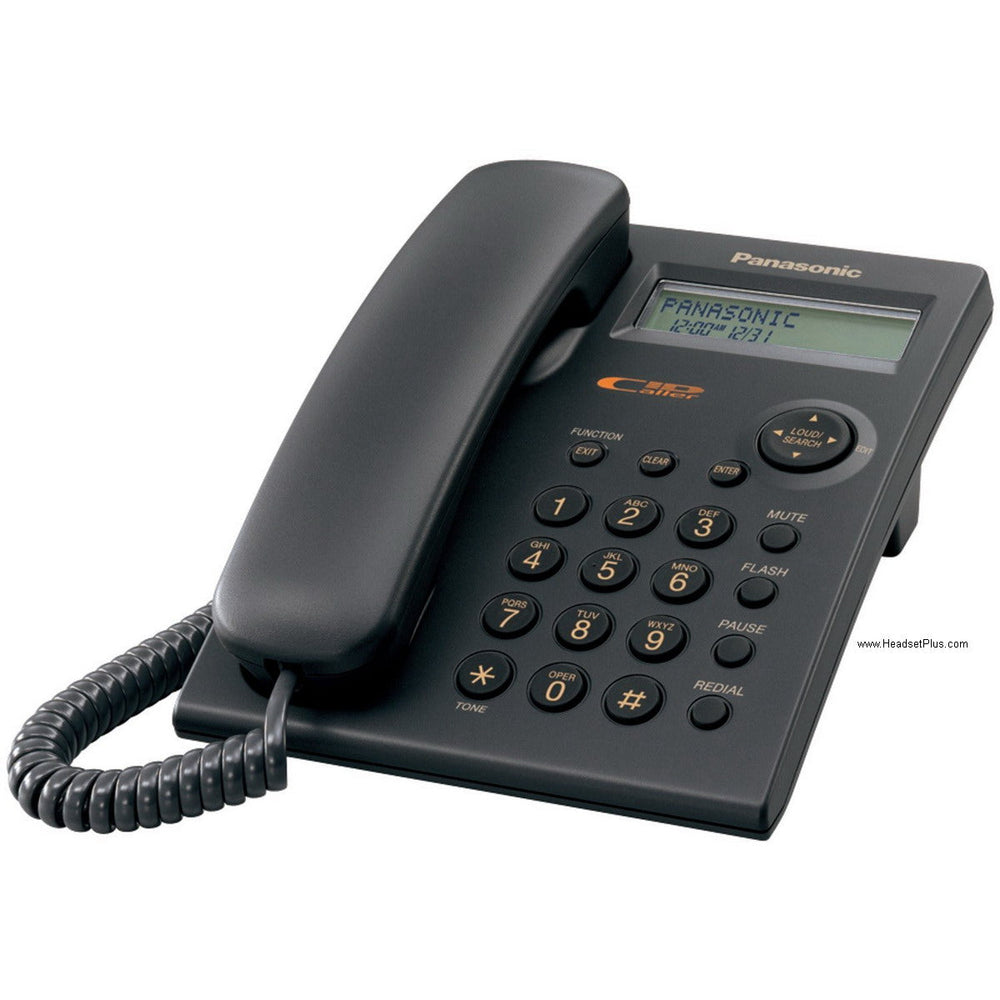
Nearly every business telephone falls into one of three cases, and each one puts different hardware between the headset and the phone. Identifying which of the three is on the desk is the whole job, and it takes one look at the underside.
A phone with a dedicated headset port
This is the easy case: a second four-position socket, usually beside the handset jack and usually marked with a molded headset icon. The phone does its own amplifying, so the only hardware between the headset and the port is a direct connect cord. Everything left to decide is about the headset itself rather than the phone, which is the point at which a wired phone headset shortlist becomes more useful than another connector diagram.
A phone with a handset port and nothing else
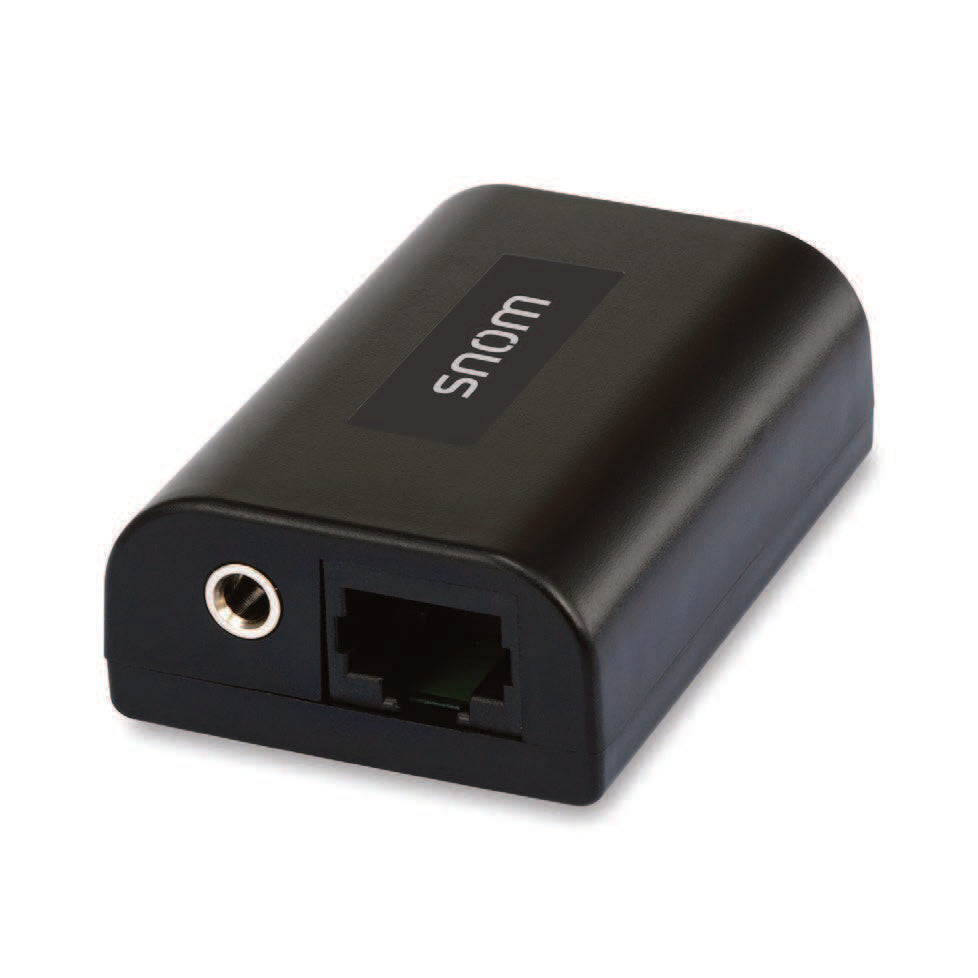
Here the headset borrows the handset connection and an amplifier does the job the phone is not doing. The amplifier sits between the two, the handset plugs into the amplifier, and the phone sees something that looks like its own handset. A headset never connects straight to a business phone in either of these first two cases: a cord or an amplifier is always in the middle, and which one you need depends entirely on whether the phone amplifies internally.
A single-line analog phone with only a line jack on the back
A basic analog telephone still has a four-position handset jack, and that is the headset route on it. The six-position socket on the back is the line and stays the line. This case is where most of the RJ11 headset searching comes from, and the answer is that the connector people are looking for is on the other side of the phone.
Four positions, and still no universal headset cord
Two phones can both have a four-position headset port and still refuse each other's cords, because nothing in the registered jack system fixes the wiring behind that port. The phone manufacturer decides it. That is the practical cost of the naming problem: an unofficial connector name comes with no official pinout attached to it.
The handset side of this connector was originally designed to be forgiving about exactly that. The receiver sits on the two center pins and the transmitter on the two outer pins, so a cord wired in reverse between its ends still routes the signal correctly. Headset ports inherited the shape without inheriting the guarantee, which is why otherwise identical headsets ship with brand-specific bottom cords and why a headset sold as universal generally means universal once the correct cord is fitted to it.
If the socket is right and the cord is right and the headset is still silent, the next place to look is the phone's own menu rather than another cable. Several systems want a headset key programmed or a setting switched on before the port passes audio at all, and on NEC systems that is enough of a procedure to have its own walkthrough in our guide to nec phone headset setup.
What to check, in order
Count the positions, match the cord to the phone brand, then check the phone's settings. Four positions is the headset side and six is the line, so the plug on your handset cord is the pattern you are matching against. Once the socket is settled, the cord is a question about who made the phone rather than who made the headset, and the headset itself is the last decision rather than the first, which is the order our guide to how to choose a telephone headset works in as well.
Is RJ9 the same as RJ22?
In practice, yes. RJ9, RJ10 and RJ22 are used interchangeably for the same four-position modular connector found on telephone handset cords and headset ports, and none of the three is an official registered jack designation, because handsets never connect directly to the public telephone network. A cord sold under any of those three names is the same physical plug.
Can a headset plug into the RJ11 jack on an office phone?
No. The RJ11 jack is the telephone line connection, carrying tip and ring on the middle two of its six contact positions along with the line and ringing voltages. A headset connects to the phone's four-position headset port, or to its handset port through an amplifier. A four-position plug will physically enter the six-position jack, which is why fit is not proof that a socket is the right one.
How do I tell whether my office phone has a headset port?
Turn the phone over and look for a second four-position socket next to the handset jack, usually marked with a small headset icon molded into the plastic. A phone with that port amplifies the headset itself and needs only a direct connect cord. A phone with just one four-position socket needs an amplifier between the headset and the handset jack instead.
Comments (0)