



























If you've only ever used consumer headphones, professional headsets are a different category — built around a microphone your caller can actually hear, and around being worn for eight hours rather than a commute. Here's what separates the styles, and which one suits how you work.
Key takeaways
- Monaural covers one ear and keeps you aware of the room; binaural covers both and blocks more noise.
- On-the-ear designs use a clip instead of a headband — useful if you don't want a band across your hair.
- Convertible headsets include multiple wearing styles in the box, ideal for shared desks and hot-desking.
- Noise-cancelling microphones filter background noise from what your caller hears; voice tube models don't.
- Connector type — RJ9, USB, 3.5mm, or wireless — is a separate decision from wearing style.
What a headset actually is
A headset combines a microphone and one or two earpieces into a single unit you wear, so you can talk on a call with both hands free. That's the whole point: taking notes, typing, pulling up a record, or walking to a filing cabinet without pinning a handset between your ear and shoulder.
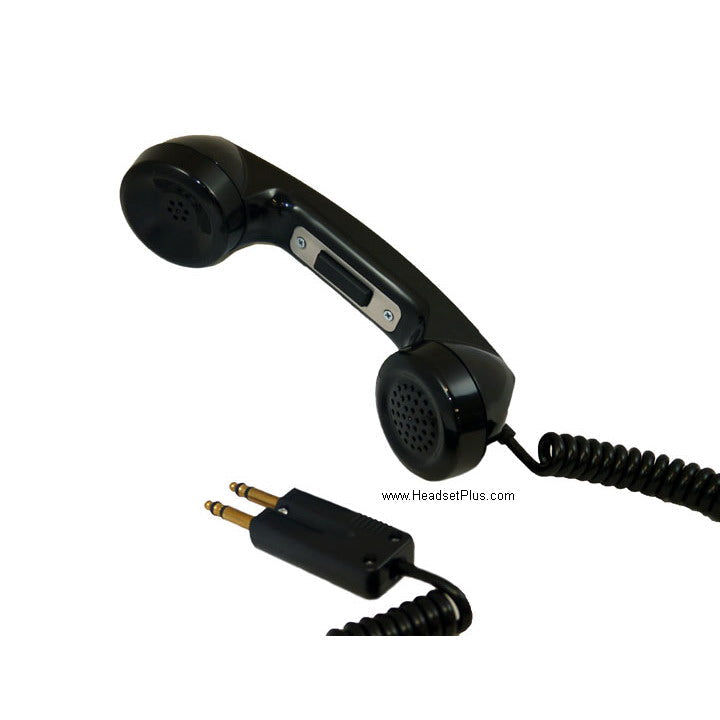
Professional headsets have come a long way from the heavy units telephone operators once wore. Modern models weigh a fraction of that, which matters far more than it sounds when the thing is on your head from nine until five.
Over-the-head: monaural or binaural
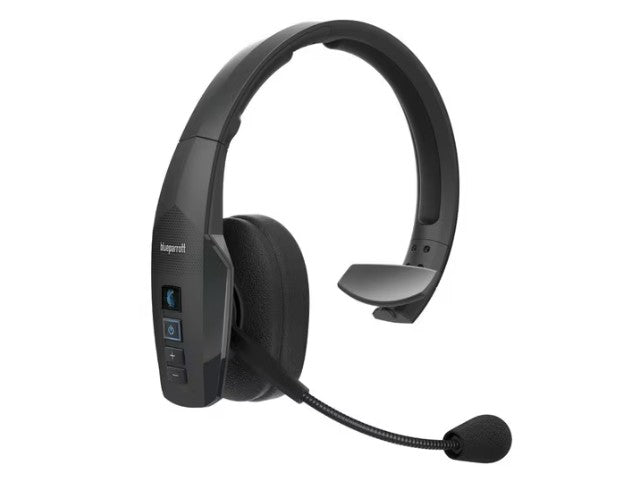
The most common style, worn like standard headphones with a band across the top of the head. It splits into two:
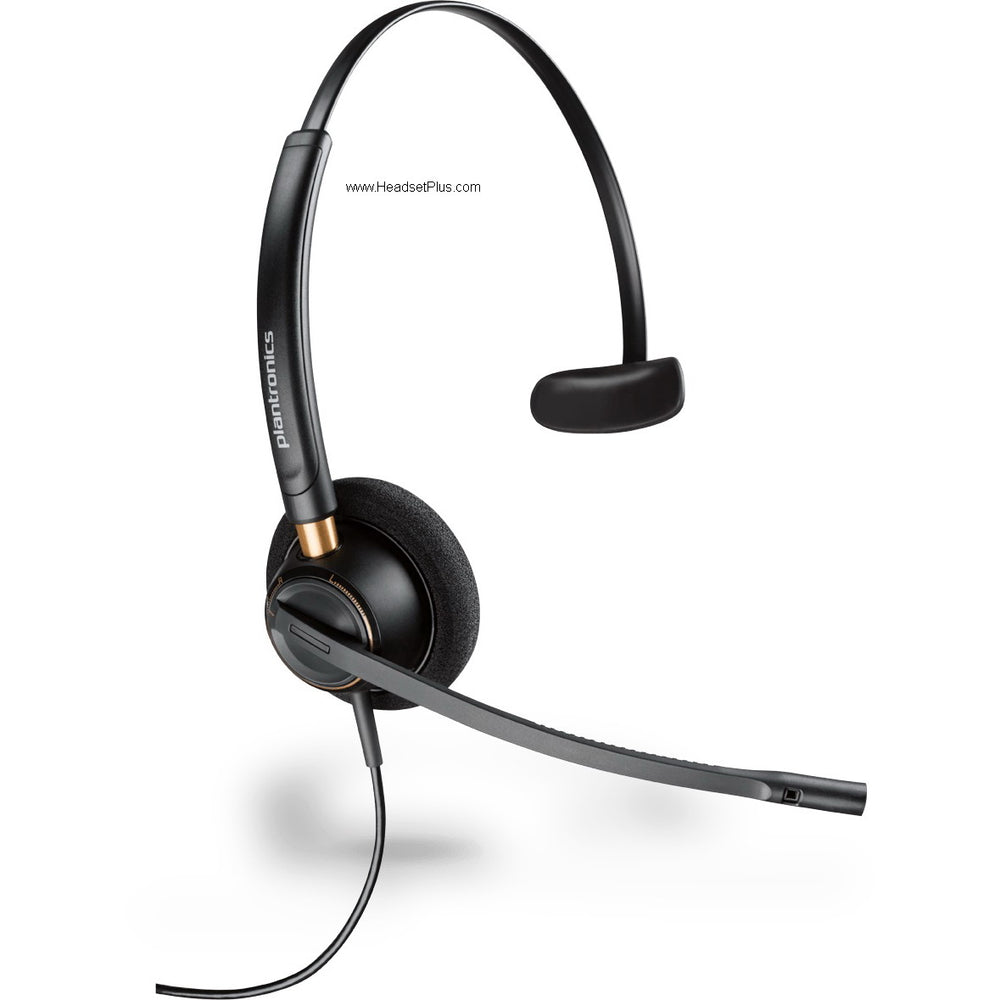
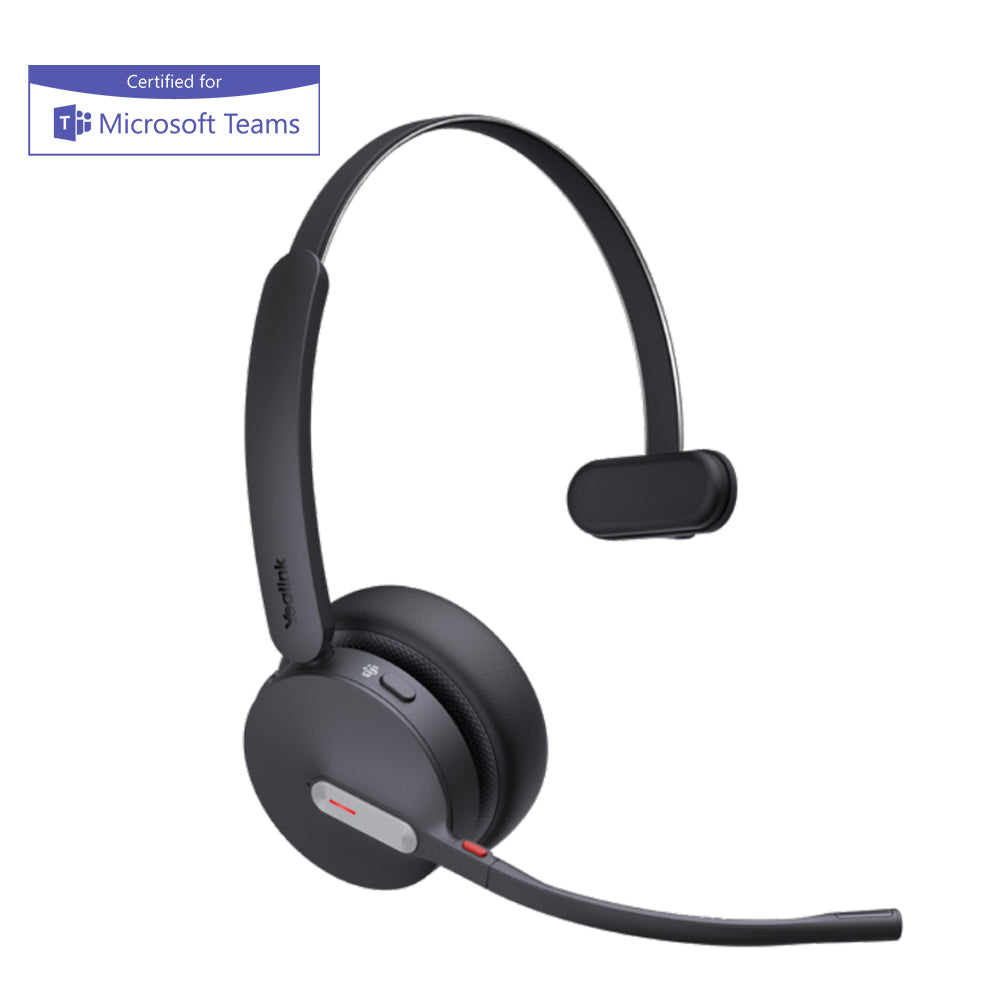
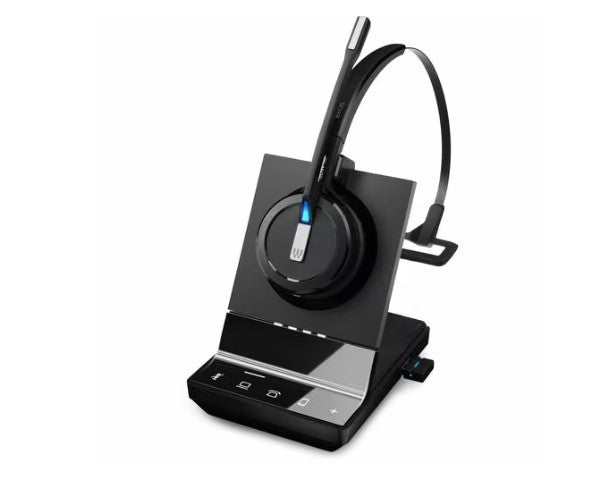
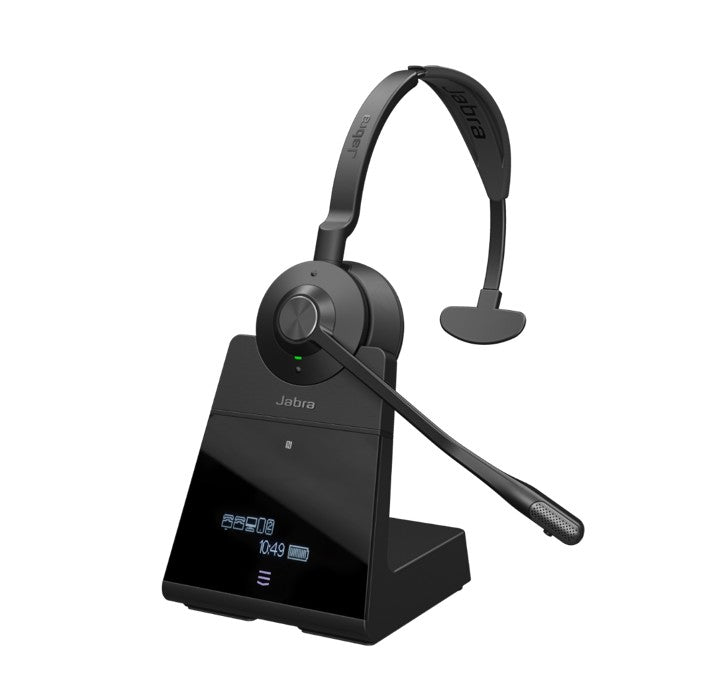
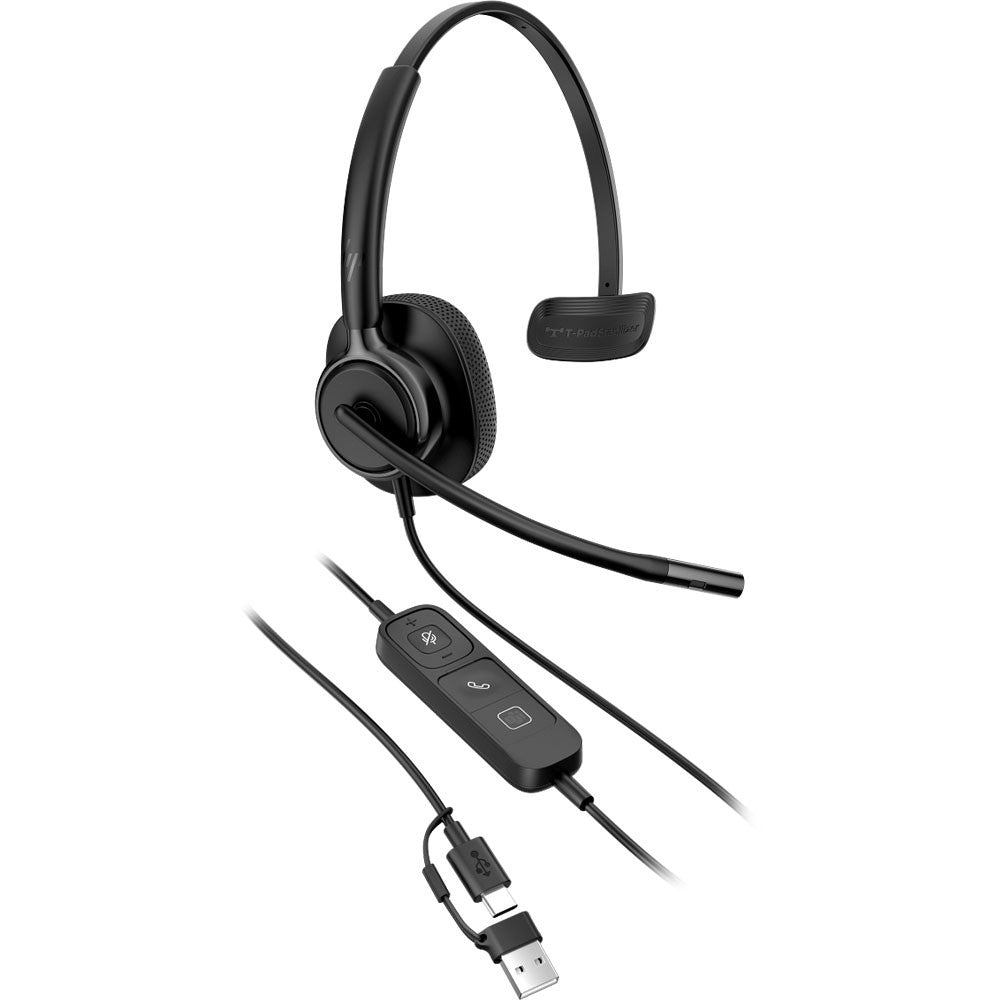
Monaural (one ear): a single earpiece with the microphone on the same side, and a flat pad on the other side to hold the headset steady. You keep one ear open to the room — useful for anyone who needs to hear colleagues, be approachable at a desk, or stay aware of what's happening around them.
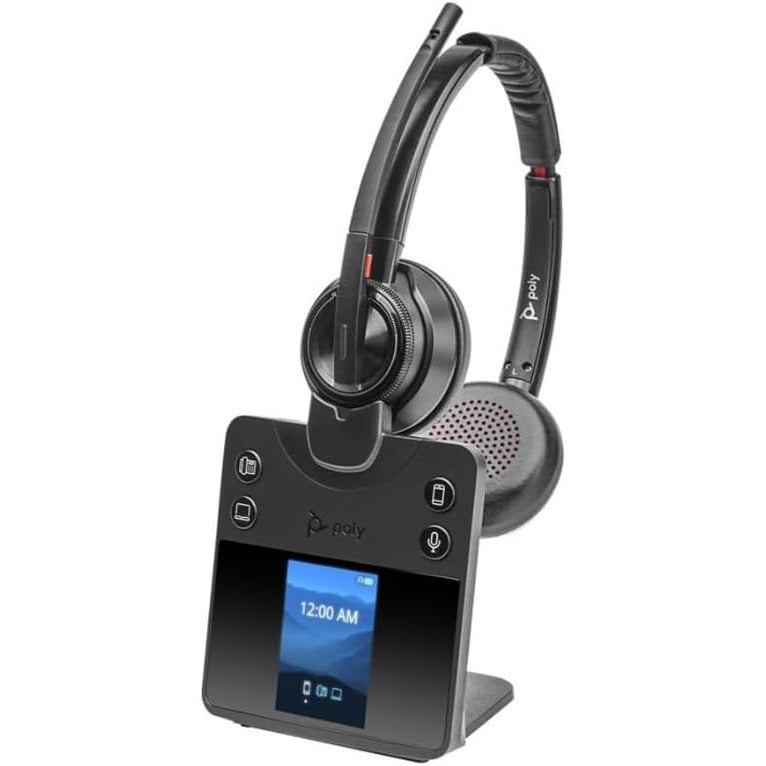
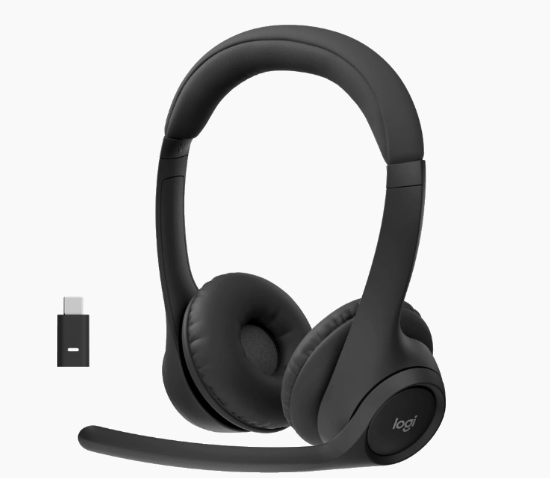
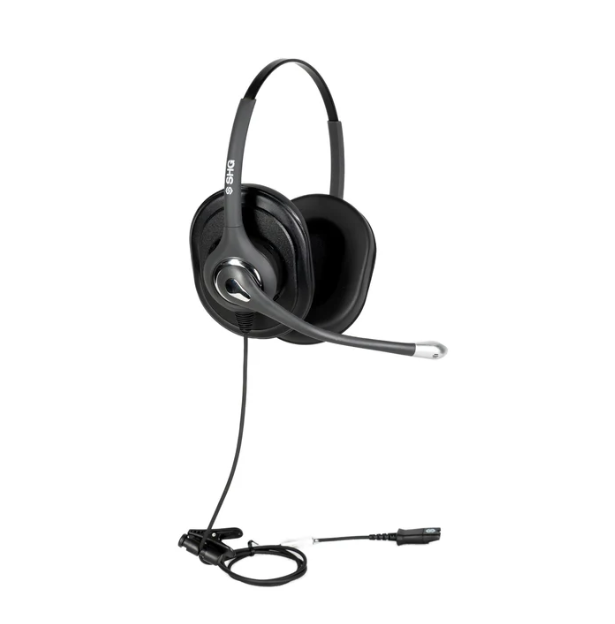
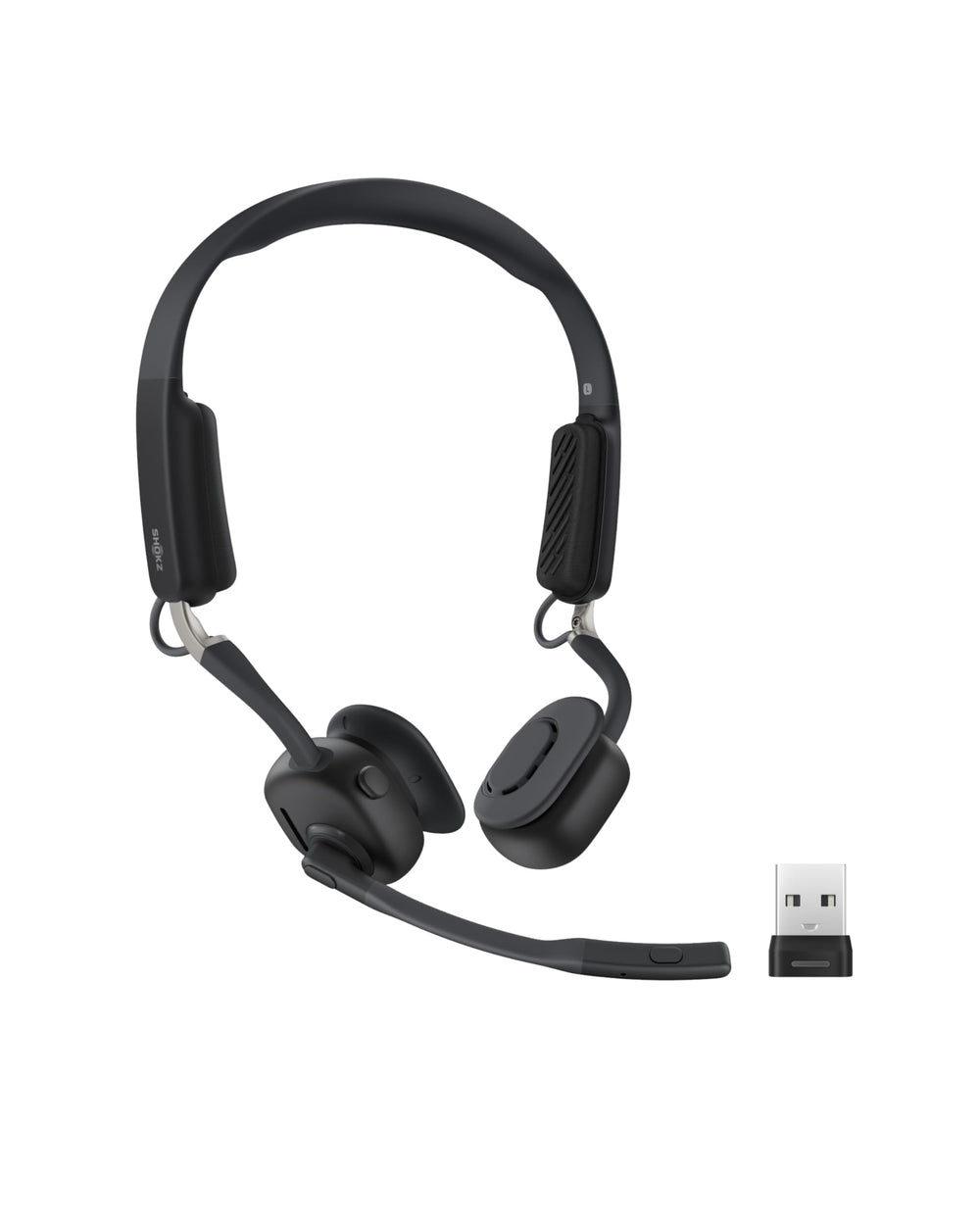
Binaural (both ears): earpieces on both sides with the microphone on one. The extra earcup blocks a meaningful amount of surrounding noise through physical isolation alone, which makes this the better choice on a busy floor or for concentration-heavy work.
Myth
Binaural headsets are the better version — monaural is just the cheaper option.Reality
They solve different problems. Monaural keeps one ear open so you stay aware of your surroundings and can talk to someone standing at your desk. Binaural seals both ears to block a noisy room. Neither is a downgrade — the right one depends on whether your job needs awareness or focus. Plenty of call centres deliberately buy monaural for exactly that reason.On-the-ear
Similar to clip-on headphones: a single earpiece with the microphone on the same side, held by a clip that hooks over your ear rather than a band across your head. The obvious appeal is no headband — worth knowing if that's the thing that's put you off headsets before.
Convertible
Convertible headsets ship with the parts for two or three wearing styles — typically over-the-head and over-the-ear, sometimes behind-the-neck as well — so one headset adapts to the wearer rather than the other way round.
This is the sensible choice for shared desks, hot-desking, or kitting out a team with mixed preferences. The Poly CS540 is the most popular wireless convertible; on the corded side, the EncorePro HW540 covers three styles. The full EncorePro lineup compares the corded range model by model.
Noise cancelling vs. voice tube microphones
This is a separate decision from wearing style, and it affects your caller rather than you.
Noise-cancelling microphones distinguish your voice (close to the mic) from background sound (further away) and filter the background out before it reaches your caller. For any shared office, this is the right default.
Voice tube microphones use a hollow tube carrying sound from near your mouth to the microphone, with no noise cancellation. They're lighter and simpler, and fine in a quiet private office — but in a room with other people talking, your caller hears the room.
For genuinely extreme environments, some industrial headsets use oversized ear cups that physically block around 20 dB of ambient noise. That's passive isolation — a physical seal — rather than active noise cancellation, which uses electronics to cancel sound waves. Both reduce noise, but they work differently and are often confused; our headset terms glossary explains the distinction.
How it connects: the other decision
Wearing style and microphone type are about comfort and audio. Connection type is about what you're plugging into:
- RJ9 (direct connect) — for desk phones with a dedicated headset jack, including many Cisco, Polycom, and Avaya models.
- USB-A or USB-C — for computers and softphones like Teams, Zoom, and Webex.
- 3.5mm — for phones, tablets, and laptops with a headphone jack.
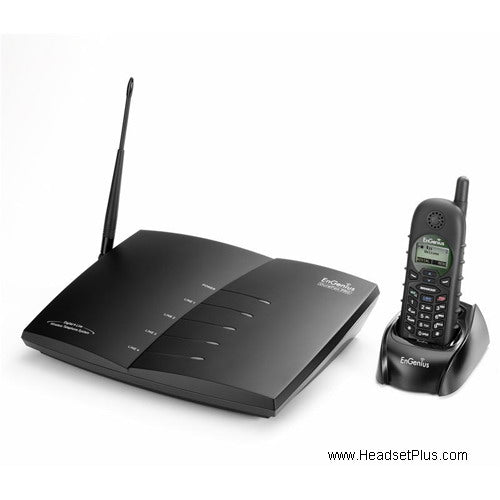
- Wireless (DECT or Bluetooth) — DECT for long range from a desk phone base, Bluetooth for mobile devices and computers.
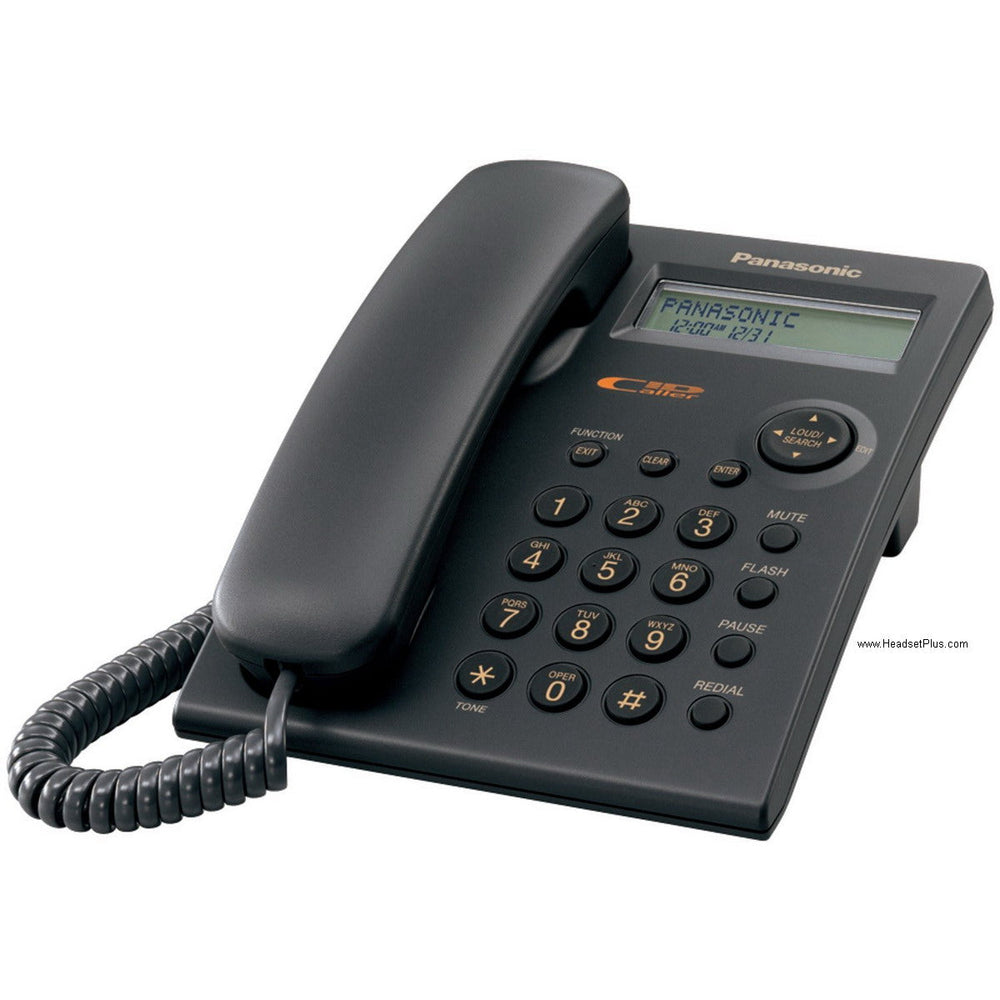
Which connector your desk phone needs isn't always obvious, and it's the most common source of ordering mistakes. Our EHS and cable compatibility guide maps phones to the right connection.
Features worth knowing about
- Microphone volume adjustment — control how loud you sound to callers, separate from your own listening volume.
- Inline volume and mute controls — adjust without reaching for the phone or keyboard.
- Hearing aid compatibility — telecoil-compatible models couple directly to a hearing aid without feedback.
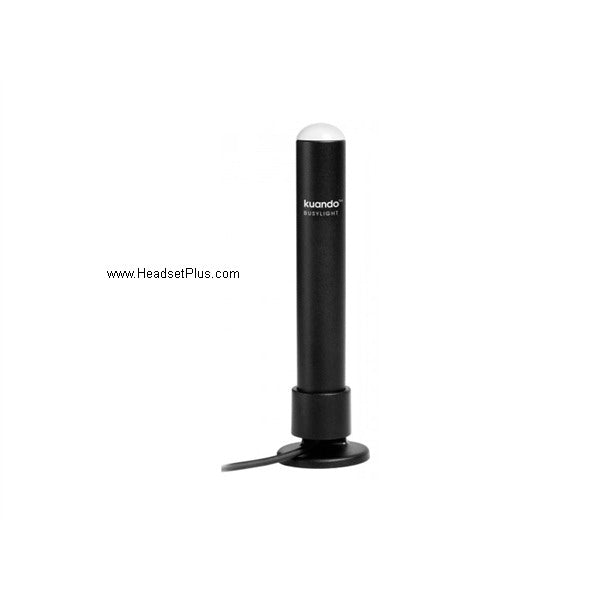
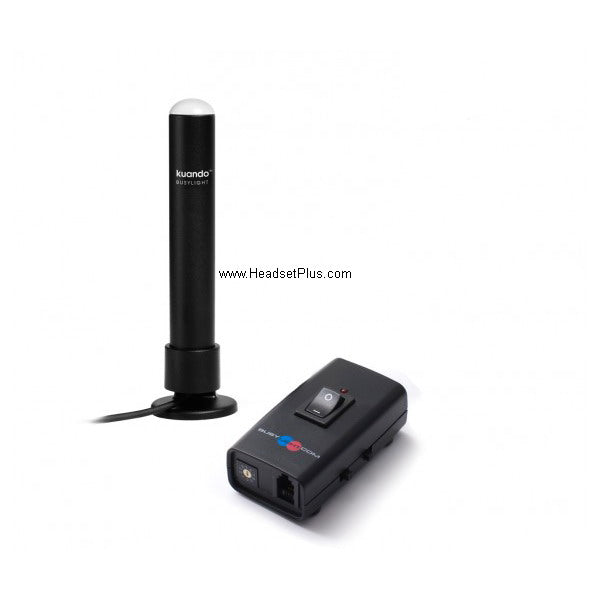
- Busylight — an indicator showing colleagues you're on a call.
What's the difference between monaural and binaural headsets?
Monaural covers one ear, keeping the other open so you stay aware of the room and can talk to people at your desk. Binaural covers both ears, blocking more surrounding noise for better focus. Neither is better overall — it depends on whether your work needs awareness or concentration.
What is a convertible headset?
One that includes the parts for two or three wearing styles in the box — typically over-the-head and over-the-ear, sometimes behind-the-neck. It suits shared desks, hot-desking, and teams where people have different preferences.
What's the difference between a noise-cancelling and a voice tube microphone?
A noise-cancelling microphone filters background noise out of what your caller hears. A voice tube carries sound from near your mouth to the mic with no filtering — lighter and simpler, but your caller hears the room. For any shared office, noise cancelling is the better default.
Do I need an on-the-ear headset if I don't like headbands?
That's exactly what they're for. On-the-ear models use a clip that hooks over one ear instead of a band across the head. A convertible headset is the alternative, since it usually includes both an over-the-ear and an over-the-head option.
Which connector do I need for my desk phone?
It depends on the phone. Many desk phones use RJ9 direct connect, computers use USB-A or USB-C, and mobile devices use 3.5mm or Bluetooth. Because it varies by exact model, check a compatibility guide or call with your phone model before ordering.
Most people land on the right headset by answering three questions in order: one ear or two, corded or wireless, and what it plugs into. If you're not sure on any of them, call our team at 877-999-3838 with your phone model and how you work, and we'll narrow it down.