








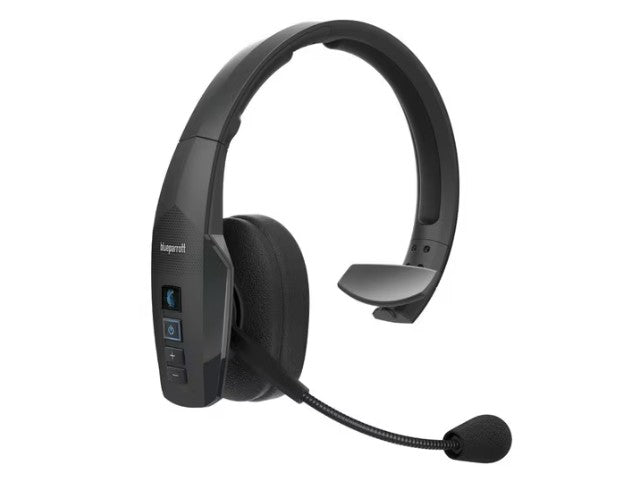



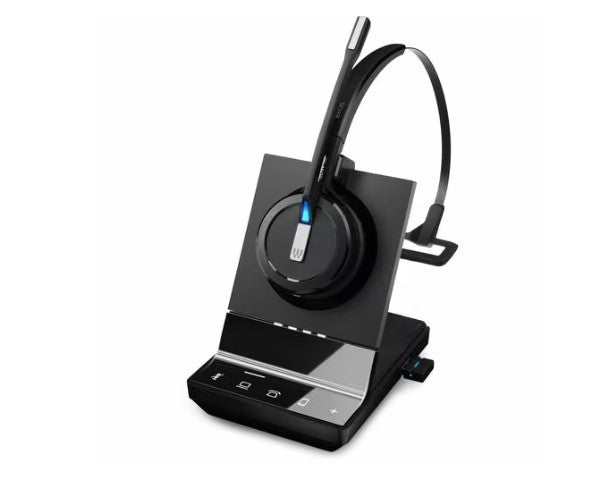












UC vs Teams headset: the short answer
In a UC vs Teams headset choice, you're usually looking at the same headset with different firmware. The Teams version adds a Teams button and carries Microsoft's certification, so it's picked up automatically and its answer, mute and volume buttons are guaranteed to work in Teams. The UC version is built to work across calling apps like Zoom, Webex and softphones for desk phone systems.
If Teams is the only app you call from, get the Teams version. If you use anything else as well, get the UC version.
Check these before you order
- Which app your company uses for calls, not just meetings. Plenty of offices meet in Teams and take phone calls in RingCentral, Zoom Phone or a Cisco softphone.
- The exact part number on the order. The two versions often share one product name and one photo.
- Whether you'll pair a wireless headset straight to the laptop. Teams certification for direct Bluetooth is a separate listing from the headset with its USB dongle.
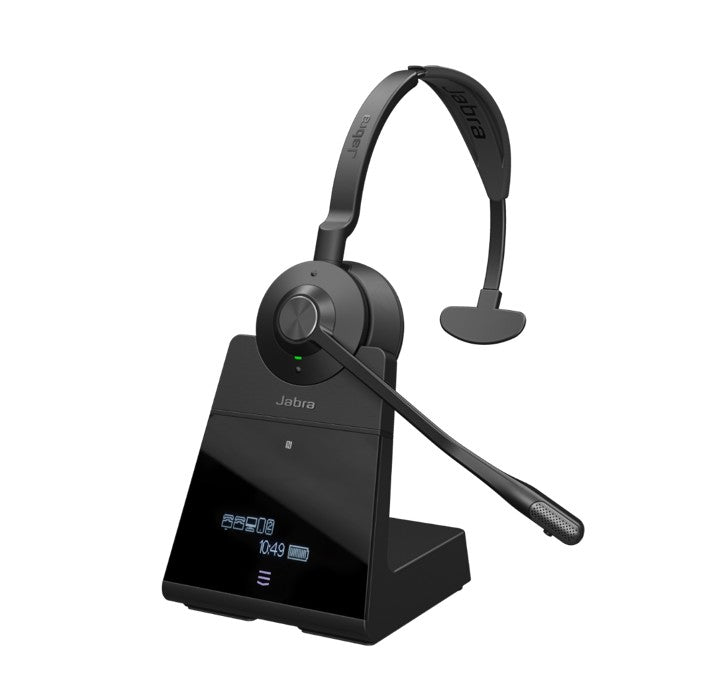
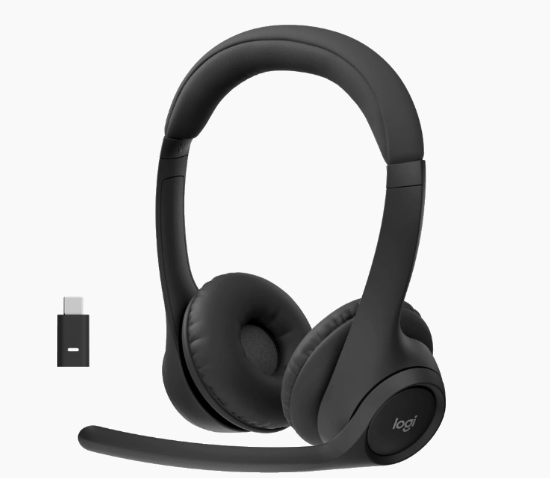
Several of the business headsets we carry come both ways. On the Jabra Evolve2 65 and the Poly Voyager 4320 it's a variant choice on the same page, UC or MS Teams, alongside mono or stereo and USB-A or USB-C. Our Microsoft Teams headsets collection shows the models that come in a Teams version.
What a UC headset is
A UC headset is a headset built for unified communications, meaning calls, meetings and messaging that all run through software on your computer. The UC build is the general-purpose version: it's tuned to answer, end and mute calls across the main calling apps rather than one of them. If you want the longer explanation of the term, we cover what is a UC headset separately.
That's the whole difference behind "unified communications vs Microsoft Teams" on a headset box. Teams is one unified communications app. A UC headset is built for all of them, and a Teams headset is built and certified for that one.
What a Teams certified headset means
A Teams certified headset is one Microsoft has tested and listed as meeting its requirements for audio and for working with the Teams app. Microsoft runs the testing itself and publishes the results.
Here's what that certification promises, in Microsoft's own list of core benefits:
- Teams picks the headset as your audio device on its own, and ranks it first if you have more than one connected.
- The headset registers with Teams when you plug it in, with no setup.
- Answer and hang up, mute and unmute, and volume work from the headset buttons, on Windows and Mac.
- Wideband audio without echo, distortion or dropouts.
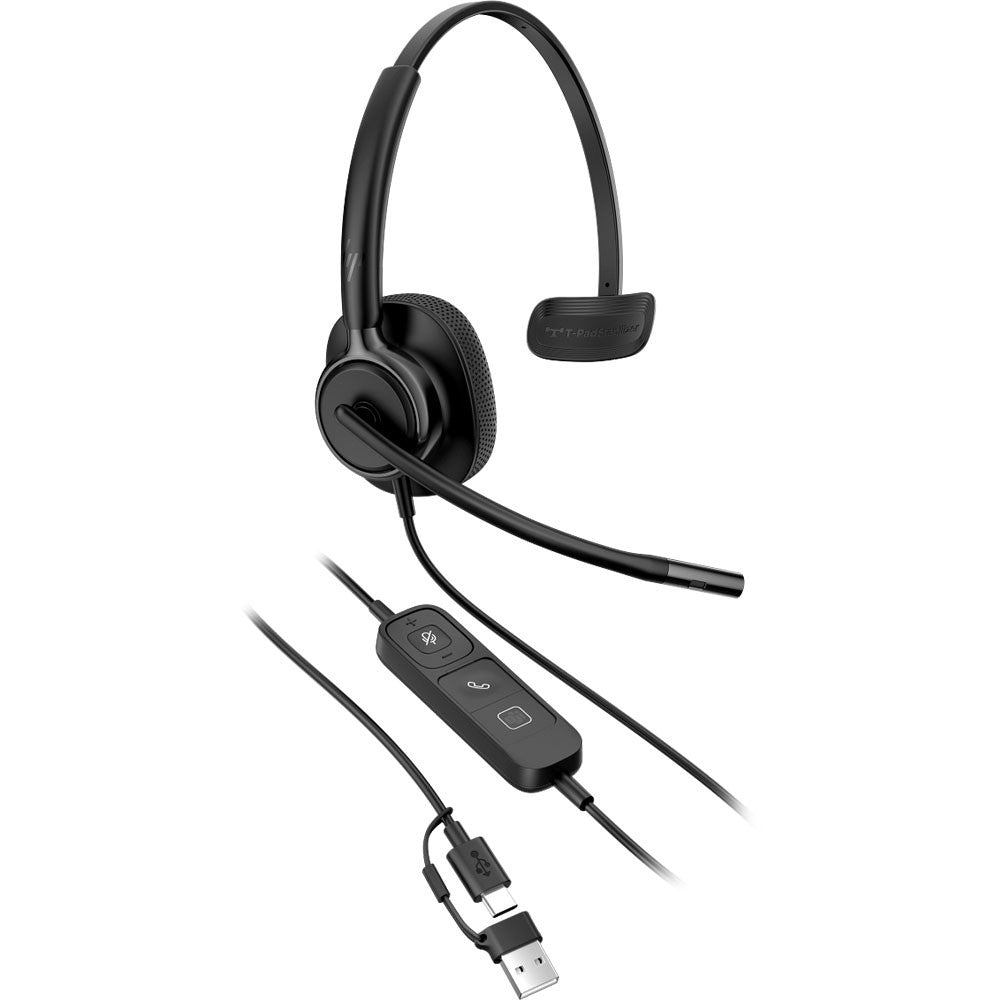
Newer certified models add a dedicated Teams button with a light. The light tells you a meeting is starting, and one press brings Teams to the front or joins you in. Microsoft also designed the program so new features can arrive later as firmware updates.
One catch comes straight from Microsoft's documentation: Teams doesn't support the buttons on a certified headset while another calling or meeting app is running at the same time. If your Teams buttons stop responding, closing Zoom or a vendor softphone is the first thing to try. Our guide to Teams headset buttons not working goes through the rest.
UC version vs Teams version, side by side
The table below compares the two builds of the same headset. The hardware rows are identical, which is the point: the differences are all in firmware and certification.
| What you get | UC version | Teams version |
|---|---|---|
| Speakers, mic, battery, fit | Same | Same |
| Call audio in Teams | Yes | Yes |
| Teams picks it automatically | Not guaranteed; you may have to select it | Yes, part of certification |
| Answer, mute, volume buttons in Teams | Usually, once you select it in Teams settings | Yes, with no setup |
| Teams button and meeting light | No | Yes, on newer models |
| Works with Zoom, Cisco, Avaya and other softphones | Yes, what it's certified for | Yes, audio and basic call buttons |
The row that trips people up is the button row. Jabra's explanation is the clearest: a UC headset in Teams doesn't get the plug-and-play setup, but you can get audio and call control working by choosing it as your device in Teams settings. The Teams version does that for you, and adds the Teams button and notification light. Going the other way, Jabra says an MS headset in another calling app works the same as the UC version for audio and for answer, end, volume and mute, and Poly says its Teams models can be set to another softphone in the Poly Lens app.
How to tell the versions apart by name
The Teams build usually carries a marker in the model name, and each brand uses its own. These are the patterns in Microsoft's certified device list and on our product pages:
- Jabra: "MS" or "MS Teams" in the variant name for the Teams build, "UC" for the other, as on the Evolve2 65.
- Poly (Plantronics): a "-M" suffix on the model, such as Blackwire 3320-M or EncorePro 525-M. Some older Voyager models were sold as "Office" and "UC", and Microsoft lists the Voyager 5200 Office as certified for Teams while the Voyager 5200 UC sits under its older Skype for Business program.
- EPOS (Sennheiser): a "T" after the model number, such as ADAPT 460T or IMPACT 860T.
- Yealink: "Teams" in the model name, such as the UH35 Dual/Mono Teams.
When you're checking a specific model, Microsoft keeps the full list of certified headsets on its Microsoft Learn site, under Teams devices, with a separate tab for headsets certified over direct Bluetooth. That page is the Microsoft Teams certified headsets list, and it's updated as new models pass.
Do I need a Teams certified headset?
No. Any USB or Bluetooth headset your computer recognizes will carry Teams audio. Certification buys you the extras: automatic setup, buttons that are guaranteed to work in Teams, and the Teams button. For one person on one laptop, a UC headset you select once in Teams settings is fine. For an office rolling out dozens of headsets, the Teams build means nobody has to pick the headset in Teams settings on every computer, because each one sets itself up.
Get the Teams version if
- Teams is the only app you make calls and join meetings from.
- You're buying for a team and want every headset to set itself up.
- You want the Teams button to join meetings.
Get the UC version if
- You take phone calls in RingCentral, Zoom, Webex or a Cisco, Mitel or Avaya softphone.
- Your company might move off Teams in the next few years.
- You switch between Teams and another app during the day.
If Teams is on your screen but your phone calls come in through a different system, get the UC version. The Teams button is the only thing you give up, and your call buttons will work in the app that rings.
If your headset connects but Teams won't use it, that's usually a device setting rather than the version you bought. Our guide to a Teams headset not working covers the fixes in order.
Is a Teams vs UC headset different in sound quality?
No. The Teams and UC versions of a headset use the same speakers and microphone, so they sound the same. Microsoft's certification sets a minimum for audio quality on the Teams build, but the UC build comes off the same hardware.
Does a UC version work with Microsoft Teams?
Yes. A UC headset carries Teams audio like any headset, and on Jabra models you can get the call buttons working by choosing the headset as your device in Teams settings. What a UC version doesn't get is the automatic setup and the Teams button.
Can I use a Teams headset with Zoom or another app?
Yes. Jabra says its MS headsets work in other calling apps the same as the UC versions for audio, answering, ending, volume and mute. The Teams button stays tied to Teams. If you use a second app every day, the UC version is still the better fit.


Comments (0)